Can Glucoraphanin Supplement Boost Your Body's Natural Detox?
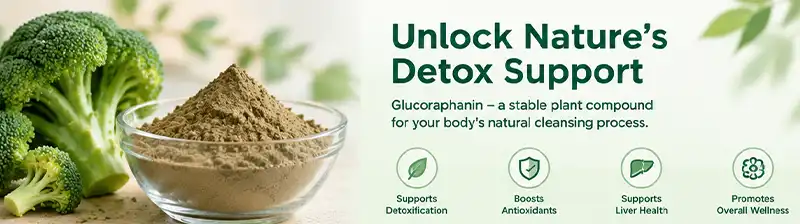
A Glucoraphanin Supplement can actually help your body's built-in cleansing mechanisms. This chemical is mostly found in broccoli seeds and stems. It is a steady precursor to sulforaphane, which activates Phase II detoxification enzymes through the Nrf2 pathway and is very powerful. When we take supplements with this plant-based chemical, it sets off cellular processes that increase the production of antioxidants, support liver function, and make it easier for the body to get rid of dangerous substances. Unlike sulforaphane, which is not stable, Glucoraphanin is very stable. This makes it the best choice for formulators who want to include regular, reliable cleansing support.
Introduction
Glucoraphanin is a naturally occurring compound that is found in cruciferous veggies like broccoli sprouts. It is becoming very popular in the health and fitness industries because it can effectively remove toxins from the body. As people learn more about cellular health and natural cleansing, it opens up a lot of business possibilities in the supplement manufacturing industry. Pharmaceutical companies, nutraceutical companies, and cosmetic brands are looking for high-purity botanical extracts that have measurable health benefits and don't change the way the products are made.
To make better goods that meet customer needs for cleanliness and effectiveness, it's important to understand how natural detoxification works. The science behind how plant chemicals affect human cell processes has changed a lot, which helps us understand how to make new medicines. This in-depth look at Glucoraphanin's biochemical functions, scientific support, and procurement insights can help you make better buying decisions and build stronger relationships between suppliers and clients all along the supply chain.
Understanding Glucoraphanin and Its Detoxification Role
The Biochemical Conversion Process
Glucoraphanin is a stable precursor molecule that is turned into sulforaphane, a powerful bioactive compound, by myrosinase, activating it. This change can happen when plant cells are damaged during food preparation or when bacteria in the gut work in the digestive system of a person. The conversion rate varies a lot—it can be as low as 10–40% when intestinal flora is the only factor, but it can be as high as 50–60% when active myrosinase enzyme is added to the supplement. This difference is very important for companies that make formulations that have known bioavailability patterns.
Activation of the Nrf2 Detoxification Pathway
Through the Nrf2 pathway, the change turns on the body's Phase II cleansing enzymes. This boosts the body's antioxidant defences and lowers inflammation. The Nrf2 signalling system can be activated by sulforaphane from Glucoraphanin Supplement. This increases the production of antioxidant enzymes like SOD, CAT, and GPx in the body by a large amount. These enzymes get rid of free radicals, lower oxidative stress, and stop chronic inflammation. These are all very important for keeping the liver healthy and protecting cells. New research connects Glucoraphanin to possible cancer-preventing effects, but we still need more clinical studies to fully understand how these effects work.
Differentiating Glucoraphanin from Sulforaphane
Knowing the difference between these two chemicals makes it easier to choose the right product and make sure that the purchase is in line with the health benefits and security of the formulation that is wanted. It is sulforaphane that is wanted for its pharmacological effects, but it is naturally unstable, volatile, and sensitive to light and temperature. Glucoraphanin powder solves this problem by keeping the inert, stable precursor form. This form stays bioactive until it is broken down by enzymes during formulation activation or in the gut microbiome of the consumer. This stability solves major problems related to decreasing shelf life, manufacturing scaling, and making sure that dosages are always the same.
Key Benefits and Safety of Glucoraphanin Supplements
Comprehensive Health Benefits Beyond Detoxification
Broccoli extract supplements can help with more than just detoxification. They can also reduce inflammation, boost antioxidant levels, and boost the immune system, which makes them a good choice for managing chronic health problems. The substance blocks the NF-κB pathway and lowers pro-inflammatory factors. This lowers inflammatory reactions and liver fat buildup. These ways of working have made Glucoraphanin-rich mixtures useful ingredients in medical foods and clinical nutrition for treating chronic inflammation and protecting neurons.
Supplementation successfully slows down the buildup of fat in the liver and lowers blood ALT and AST (alanine aminotransferase and aspartate aminotransferase) levels, which has a big positive impact on non-alcoholic fatty liver disease (NAFLD). The compound turns on Phase II detoxification enzymes and stops Phase I enzymes from working. This helps the liver get rid of cancer-causing and harmful substances more quickly. At the same time, it stops hepatic gluconeogenesis, which lowers blood sugar levels and makes insulin work better.
Dosage Considerations and Formulation Variables
Buyers in the business world should think about standard doses based on changes in absorption and formulation, keeping in mind the differences between organic and manufactured sources. Most health products have between 30 mg and 100 mg of normal extract, which equals about 10 mg to 30 mg of real Glucoraphanin. A lot of the time, bigger daily doses are needed in clinical studies to keep blood sulforaphane metabolite levels steady. This usually means taking 100 mg or more of pure Glucoraphanin. The source material—whether it comes from seeds or sprouts—has a big effect on the concentration levels. Sprout extracts are usually less concentrated than seed extracts, so seeds can be used for cleaner extraction and higher values of up to 13–20%.
Safety Profiles and Quality Standards
Safety profiles are well-established, and few side effects have been reported when the drug is used normally. If you choose high-quality Glucoraphanin Supplements that are certified by well-known standards, you can be sure that they are safe and effective, which are important for long-term use and following the rules in professional manufacturing settings. When working with seed-based extracts, you need to do a lot of testing for pesticides. On the other hand, control measures for sprout-based materials are usually easier to handle in hydroponic growing environments. The standard in the industry is to use natural extraction from non-GMO broccoli seeds because of the entourage effect of minor glucosinolates and because consumers like plant-based products with clean labels.
Comparing Glucoraphanin Supplements: Market Landscape and Procurement Insights
Bioavailability and Chemical Stability Differences
To pick between formulations, you need to know how bioavailability, chemical stability, and delivery methods like capsules, powders, or extracts differ. Glucoraphanin is much more stable at high temperatures than myrosinase or sulforaphane. It can handle being heated to boiling water, so it can be used in tea blends or hot drink mixes as long as the enzyme part is kept separate or enclosed. On the other hand, sulforaphane oil needs to be frozen in order to be transported, and it breaks down quickly at room temperature. Glucoraphanin powder can be stored at room temperature for two to three years, which makes the supply chain much simpler and lowers the cost of waste.
Concentration Levels and Cost-Efficiency Analysis
When comparing pure supplements to wider broccoli extracts, you need to look at the amounts of concentration, purity, and how much it costs to buy in bulk. Medical foods and clinical nutrition need high-purity powders, especially ones that are more than 13% assay levels, to keep the amount of biomass load as low as possible while still providing appropriate doses of 30 mg to 100 mg of active ingredient. These higher concentrations are needed for clinical effectiveness without adding the harmful nutrients that are found in whole seed meals. When comparing quotes from suppliers, it's important to use HPLC fingerprinting to make sure the source is real and the quantity is correct.
Supplier Credibility and Certification Requirements
Checking a supplier's credibility by looking at GMP, ISO, third-party lab testing, and their reputation in the market protects purchasing decisions and lets companies get consistent, high-quality Glucoraphanin Supplement raw materials that give them a competitive edge. To make sure that each batch is the same, reputable manufacturers use High Performance Liquid Chromatography, UV spectrophotometers, and rotary evaporators in their thorough testing protocols. A supplier can keep production standards if they have continuous countercurrent extraction tools, double effect concentration systems, and vacuum belt drying powers. The extraction rate can reach up to 98%.
Strategic Procurement of Glucoraphanin Supplements for B2B Clients
Balancing Quality, Pricing, and Supply Chain Reliability
To be effective, procurement must find a mix between quality, price, and the dependability of the supply line, all while following the rules. To get the best deals on prices, buyers can work with reliable makers and trade partners who offer bulk discounts, formulas that can be changed, and flexible subscription plans. The focused application includes high-value B2B areas, such as advanced nutrition products with capsules that work together to help with detox and cellular health. Dual-chamber or delayed-release technologies combine Glucoraphanin with stabilised myrosinase enzyme powder to work like the plant's natural way of repairing damage inside the gut, which increases the amount of sulforaphane that is produced.
Functional beverages and ready-to-drink mixes increasingly utilize this ingredient due to its water solubility and heat resistance. Unlike unstable antioxidants promoting oxidation in liquid suspension, Glucoraphanin stays inactive until it is consumed. This means that it can be stored for 12 to 24 months in acidic beverage bases. This stability trait solves a recurring manufacturing problem that beverage makers who want to use clean-label functional ingredients keep running into.
OEM Capabilities and Production Scheduling
Taking lead times and OEM capabilities into account makes sure that the product fits in with production schedules and meets branding needs. Two types of manufacturers—those with 14 stainless steel extraction tanks that can hold between 500 and 3000 litres of fluid and three fully automatic production lines—can handle both small research orders and large-scale commercial production. This adaptability is very important for both R&D centers that need precise extracts for testing formulations and nutraceutical businesses that are making more goods that are ready to sell. Custom formulas, private labelling, and ingredient customisation services let brands stand out while keeping the supply steady.
Building Long-Term Partnership Value
Adding Glucoraphanin-based goods to your line that are backed by strong science makes them more appealing to the market. Also, being open and honest with your suppliers builds trust throughout the supply chain, which increases your return on investment and customer happiness. Product development times can be sped up by having responsive technical support teams that know about Phase II enzyme induction processes, Nrf2 pathway activation, and formulation stability problems. Suppliers who provide full documentation, such as analytical certificates, stability studies, and toxicology reports, make it easier for regulators to approve products and show they are committed to quality management standards.
Conclusion
Glucoraphanin Supplements are a scientifically proven way to improve the body's natural detoxification processes by turning on Nrf2 and triggering Phase II enzymes. Because it is more stable than direct sulforaphane formulations, this ingredient is very useful for companies that want to make reliable, shelf-stable products that are known to be bioavailable. More studies are finding links between cruciferous compounds and managing chronic diseases. This means that buying workers have more chances to use these useful ingredients in new health solutions. To be successful, you need to work with makers who have strict quality control, strong analytical skills, and open lines of communication throughout the supply chain.
FAQ
1. What conversion rate can we expect from glucoraphanin to sulforaphane in formulations?
Without extra myrosinase enzyme, conversion depends on the bacteria in the gut and changes a lot from person to person, between 10 and 40%. When made with active myrosinase enzyme, conversion is more stable and can go above 50–60%, which leads to more regular treatment results.
2. Why should manufacturers choose glucoraphanin powder over sulforaphane oil?
This preference is based on stability and following the rules. Sulforaphane oil can't be moved until it's frozen, and it breaks down quickly at room temperature. At room temperature, Glucoraphanin powder can be stored for two to three years, which makes the supply chain simpler, cuts down on spoilage costs, and eases logistics while keeping the bioactive potential.
3. Can glucoraphanin withstand standard beverage processing conditions?
Yes, the substance can withstand short amounts of heat up to 100°C, which means it can be used in pasteurised drinks. But if recipes include myrosinase enzyme to improve conversion, the enzyme part needs to be processed or encapsulated separately because heat kills enzyme activity and needs to be activated by gut bacteria instead.
4. How do seed extracts differ from sprout extracts in commercial applications?
Compared to sprout extracts, seed extracts usually have much higher concentrations—up to 13–20% higher—which means they can be extracted more cleanly and with fewer additives. For seeds, pesticides need to be tested thoroughly, but for sprouts, control protocols that are easier to follow work better in hydroponic settings. Each has its own quality assurance issues.
Partner with Fairir for Premium Glucoraphanin Supplement Supply
Shaanxi Fairir Biotech Co., Ltd. invites procurement professionals looking for a dependable Glucoraphanin Supplement manufacturer to learn more about what we can do. Our 10,000-square-meter GMP-certified facility has 14 stainless steel extraction tanks, three fully automatic production lines, and high-tech analytical tools like HPLC and UV spectrophotometers that make extraction 98% efficient. We offer highly pure broccoli seed extracts with assay values above 13%. These are backed by strict third-party testing and full scientific documentation.
Our technical team knows how to activate the Nrf2 pathway, how to combine enzymes in different ways, and how to make sure that different delivery forms are stable. We provide reliable quality that meets the standards for pharmaceutical, nutraceutical, and functional foods, whether you need small batches for study purposes or large-scale output with private labelling and custom formulas. You can talk to our team at sales@fairirbiotech.com about your specific needs, ask for samples, and find out how our low prices and quick service can help your product development efforts in the growing market for detoxification supplements.
References
1. Fahey, J.W., Zhang, Y., & Talalay, P. (1997). Broccoli sprouts: An exceptionally rich source of inducers of enzymes that protect against chemical carcinogens. Proceedings of the National Academy of Sciences, 94(19), 10367-10372.
2. Shapiro, T.A., Fahey, J.W., Dinkova-Kostova, A.T., Holtzclaw, W.D., Stephenson, K.K., Wade, K.L., Ye, L., & Talalay, P. (2006). Safety, tolerance, and metabolism of broccoli sprout glucosinolates and isothiocyanates: A clinical phase I study. Nutrition and Cancer, 55(1), 53-62.
3. Yanaka, A., Fahey, J.W., Fukumoto, A., Nakayama, M., Inoue, S., Zhang, S., Tauchi, M., Suzuki, H., Hyodo, I., & Yamamoto, M. (2009). Dietary sulforaphane-rich broccoli sprouts reduce colonization and attenuate gastritis in Helicobacter pylori-infected mice and humans. Cancer Prevention Research, 2(4), 353-360.
4. Axelsson, A.S., Tubbs, E., Mecham, B., Chacko, S., Nenonen, H.A., Tang, Y., Fahey, J.W., Derry, J.M., Wollheim, C.B., Wierup, N., Haymond, M.W., Friend, S.H., Mulder, H., & Rosengren, A.H. (2017). Sulforaphane reduces hepatic glucose production and improves glucose control in patients with type 2 diabetes. Science Translational Medicine, 9(394), eaah4477.
5. Houghton, C.A., Fassett, R.G., & Coombes, J.S. (2016). Sulforaphane and other nutrigenomic Nrf2 activators: Can the clinician's expectation be matched by the reality? Oxidative Medicine and Cellular Longevity, 2016, Article ID 7857186.
6. Vanduchova, A., Anzenbacher, P., & Anzenbacherova, E. (2019). Isothiocyanate from broccoli, sulforaphane, and its properties. Journal of Medicinal Food, 22(2), 121-126.