_1751965378790.webp)

Can Ube Powder Upgrade Premium Bakery Product Lines?
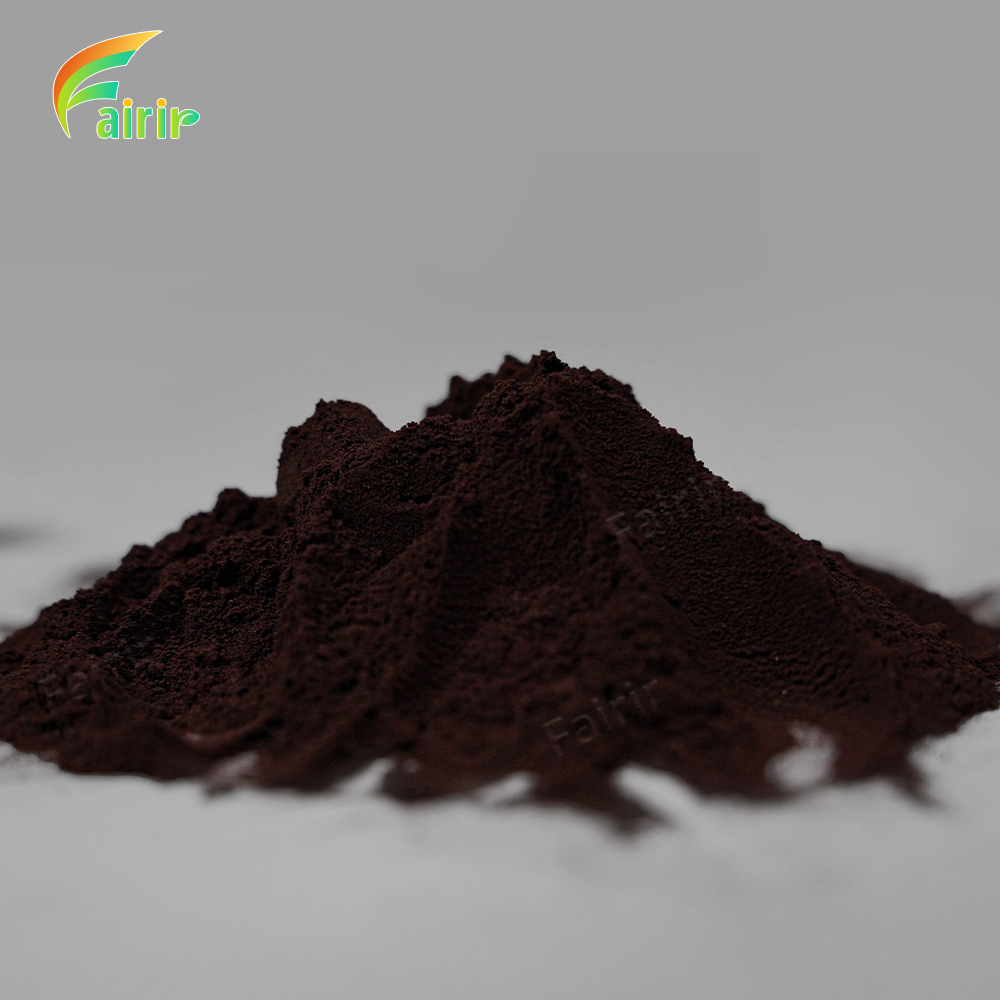
By giving high-end baked goods a natural purple color, a slightly sweet, earthy taste, and useful qualities that directly meet customer demands for ingredients with clean labels, Ube Powder changes the value of these products. The Ube Powder comes from Southeast Asia. Unlike liquid extracts, this plant extract keeps the color and taste strength the same. This makes it easier to make more, and it also makes the food look and taste better. In line with the trend of buying healthy foods, Ube Powder is not only pretty but also full of fiber, antioxidants, and vitamin C. Your food brand will stand out in crowded markets if you use high-quality plant-based goods that can be watched. You will also be following the rules.
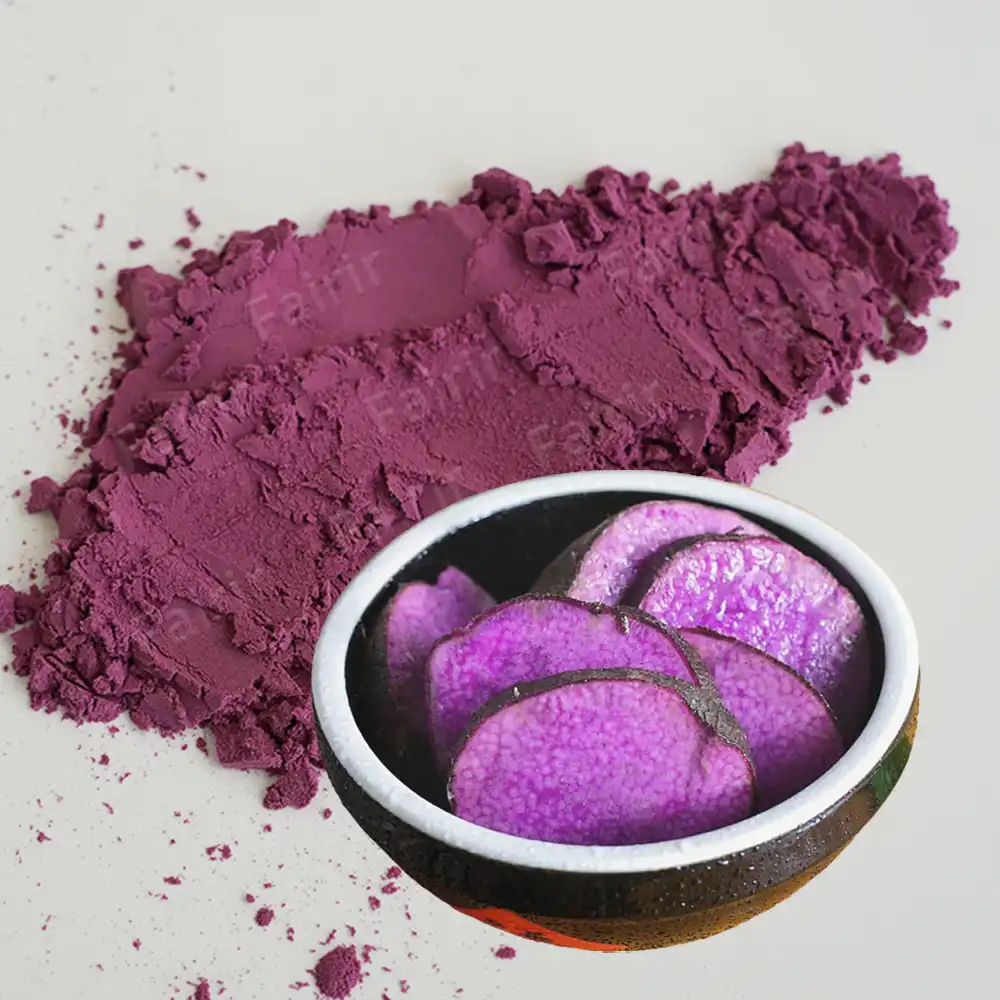
Understanding Ube Powder and Its Benefits for Premium Bakeries
What Sets Purple Yam Powder Apart from Similar Ingredients
Ube Powder is made and used in a very different way from Taro Powder and liquid Ube Extract. The taste of taro is softer and has brownish undertones. Ube Powder, on the other hand, is naturally very bright violet and full of anthocyanins, which are colors that are also powerful vitamins. While liquid extracts need to be kept cold and come in different doses, dried powder stays fixed on the shelf and is easy to measure accurately, which is important for large-scale production. Every color must be the same at this level for 500-batch runs; any change would hurt the brand's image.
Nutritional Profile Supporting Consumer Wellness Trends
Fiber from Ube Powder is good for your digestive system. It also has vitamin C, which helps your immune system work, and polyphenolic chemicals, which are antioxidants. Studies that have been published in food science journals show that the good chemicals are kept when purple-fleshed tubers are dried the right way. Because baked goods have a lot of nutrients, they can be sold as useful foods instead of treats that are just high in calories. This is a good way to reach Gen Z and millennials who will carefully read chemical labels.
Functional Advantages in Bakery Formulations
In addition to giving foods color and protein, Ube Powder changes how moist baked goods stay because it soaks up water. Cakes with 3–5% Ube Powder by weight have softer crumb structures and stay fresh longer than cakes made with no Ube Powder. Gluten networks combine with the starch in the powder to help breads keep their shape. It also adds a mild sweetness that cuts the need for artificial sugar by 10 to 15 percent. These helpful traits help labels look better and save money at the same time.
Sourcing High-Quality Ube Powder for Premium Production
Critical Quality Markers for B2B Procurement
People who buy Ube Powder should put a lot of weight on a number of authentication factors when they are looking at sources. If you want to know how good something is, look at how consistent the color is. The best grades have deep violet tones with no brown rust spots. Instead of musty or sour notes that mean the drying wasn't done right, you should smell a natural earthy sweetness. The way they mix is affected by the size of the particles. One example is that 80-mesh powder mixes well in recipes, but bigger grades leave marks that aren't good for high-end uses. Still, you need to get data from a third-party test that shows the limits of microbes and heavy metals.
Goods can be sold in more places with ease when they have labels that say they are Kosher, Halal, or certified by the USDA as organic. These labels also show that the seller is serious about keeping track of their goods. Our GMP-approved lab at Shaanxi Fairir Biotech Co., Ltd. is 10,000 square meters big. We use High Performance Liquid Chromatography (HPLC) and UV spectrophotometry to find fake colorants and check the amount of anthocyanin. This level of scientific detail makes sure that every batch meets the high standards for cleanliness that are used in medicines, supplements, beauty items, and food.
Distinguishing Natural from Synthetic Variants
The market has fake "ube flavoring" items that are made of fake colors and flavorings that make things taste like Ube Powder. These goods are getting more attention from regulatory bodies, especially as the movement for "clean labels" grows. Only the roots of the Dioscorea alata plant are used to make natural Ube Powder, which is made by washing, drying, and grinding the roots. The list of ingredients is kept simple by only including "Ube Powder" instead of long lists of chemicals. Because they are so open, brands don't have to worry about getting angry customers or being labeled by authorities.
Logistics and Supply Chain Considerations
You need to know about wait times, minimum order amounts, and how to get the best freight rates when you buy something from another country. When you buy Ube Powder in 25 kg drums in bulk, the price per unit goes down. However, it needs to be stored properly and kept at less than 60% humidity so that it doesn't harden. For three to six months, well-known sellers keep extra stock on hand in case demand changes. This is very important when the quantity of raw materials changes with each harvest. To keep track of your cash flow and build long-term relationships with your providers, talk about payment terms that work with your production cycles. For example, 30-day net terms with volume discounts can help you do this.
Integrating Ube Powder into Premium Bakery Product Lines
Dosage Guidelines Across Product Categories
To make sure everything works well together, you need to test the recipe with different amounts of Ube Powder. Here are some ideas for each type, based on tests done in professional bakeries:
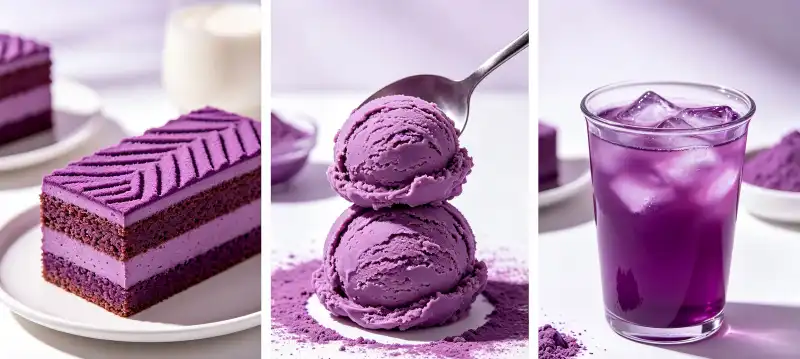
- Cakes and Muffins: Adding 2% to 4% of the weight of the flour to muffins and cakes makes the color stand out without changing the taste of the vanilla or chocolate base. If you add more, the color will be stronger, but the sweetness might need to be changed.
- Breads and Rolls: Adding 1.5 to 3% gives the dough the right look and feel for rolling and baking. More than 4% can make gluten less strong, so it's important to add wheat gluten tablets.
- Pastries and Fillings: When you add 5 to 8 percent to frostings or cream sauces, it gives them a bright color and gives the food body and taste. The starch in the powder makes it thicker on its own.
- Cookies and Biscuits: For cookies and biscuits, adding 3 to 5 percent of the color makes the texture look like it's made of spots or a solid purple color. Put them together with tastes that go well with each other, like coconut, white chocolate, or lemon juice.
These numbers are just places to start. Depending on the amount of fat, the proteins in the flour, and the temperature at which you bake, you will need to make changes. It's easier to get new goods on the market in the future if you keep detailed records of each batch. These records should include things like color regularity, taste group scores, and texture analysis.
Comparing Powder versus Extract Forms
It's easier to use liquid Ube Extract, but Ube Powder works better in dry mixes and stays stable when frozen and warmed. Liquid extracts need preservatives because they contain water, which lets bacteria grow. Powder, on the other hand, that has been dried properly can last more than 24 months at room temperature. It's also easier to keep track of stocks when the ingredient comes in powder form instead of liquid and powder forms. This is because one ingredient can be used in more than one product line. By merging them, SKUs become easier to understand and are less likely to become useless.
Storage and Handling Protocols
To keep the quality of the powder good, conditions must be carefully managed. Anthocyanin colors break down in direct sunlight, so keep sealed packages in cool (below 25°C), dark places that are out of the sun. Once you open it, put the food inside sealed containers with desiccant packets and eat it within six months. Large-scale businesses should use first-in, first-out rotation and check the quality every three months to see how strong the color is and how much moisture is in the material. These rules make sure that the quality of the final product always stays the same and protect the money that was spent on the ingredients.
Comparing Ube Powder with Alternative Ingredients for Premium Products
Purple Yam versus Taro Powder
They look and taste like different plants, but people often mix up Ube Powder (Dioscorea alata) and Taro Powder (Colocasia esculenta). Taro Powder is a grayish-lavender color and tastes nutty and a little boring, so it should only be used in small amounts. Because it tastes sweeter and stronger, Ube Powder is a bright violet color. This makes baked goods taste better. When it comes to nutrition, Ube Powder has more anthocyanin than taro (30–50 mg per 100g vs. 150 mg per 100g), which means that the claims that it is a better antioxidant are true. Cost differences usually favor taro by 15 to 20 percent, but Ube Powder's higher price is fair because it sells better.
Natural versus Synthetic Coloring Agents
People stay away from colors that look like real ones but cost less, like FD&C Red No. 3 mixed with Blue No. 1. In the U.S., 43% of people choose not to use fake colors because they believe they are bad for you. Natural Ube Powder can fix these issues. It also has benefits that manmade dyes don't have, such as being healthy, adding flavor, and following clean label rules. The difference in spending isn't as big when you consider that naturally colored goods usually cost 25–40% more than intentionally colored ones.
Cost-Benefit Analysis for Large-Scale Operations
It costs different amounts of Ube Powder based on its grade. Most of the time, food-grade powder costs between $18 and $35 per kilogram. If you use a 3% inclusion rate, a medium-sized bakery that makes 10,000 units a month would use 300 kg of goods a year, which would cost between $5,400 and $10,500. This means that luxury placement costs $0.54 to $1.05 per unit, which means that prices can go up by $2 to $4 compared to regular products. Adoption is worth it because of the higher profit margin, especially when mixed with the lower sugar needs that lower the total cost of the meal.
Future Trends and Strategic Advantages of Using Ube Powder
Consumer Demand for Exotic, Natural Flavors
Natural tastes that aren't popular are what people want. A market study found that 68% of people in the U.S. want to try new international foods. At the moment, products from Southeast Asia are very famous. Ube Powder is popular on social media because it looks good on Instagram. Baked goods with ube taste get 3–5 times more action than regular ones. This extra marketing value at the last minute drives up launch costs and makes trend-following people more aware of the company. People who sell and distribute goods like items that stand out and look good in pictures. In this case, Ube formulas are great options for unique qualities.
Clean-Label and Organic Certification Opportunities
People can get a lot from organic Ube Powder at once. It has natural colors, ingredients that are easy to recognize, and it supports farming that doesn't harm the environment. The market for organic baked goods grows by 8–12% every year. Adding certified organic Ube Powder helps brands get more shelf space, which is why they charge more. Also, getting certified can help you get into stores like Whole Foods and natural product suppliers that have strict rules about the items they sell.
Competitive Differentiation in Saturated Markets
There are many bread shops out there, and the only things that make them different are price and how easy it is to get to them. People from a lot of different groups can buy Ube Powder goods because they can tell stories about ethnic identity, new ingredients, and better nutrition. People want to try the product right away when it comes out in limited quantities during the holidays with Ube Powder, and people stay loyal to the brand when unique goods are added to the permanent line. This strategy's ability to change makes a single part into a full base for setting yourself apart.
Conclusion
If high-end restaurants want to stand out by using natural color, healthy ingredients, and a clean label style that customers like, Ube Powder is a good ingredient to buy. The powder is stable, can be dosed accurately, and can be used in a number of different categories. This makes production easier, and the final product looks better. In order to make sure that the quality is always good and that the brand's image is supported, suppliers are carefully checked for purity, license compliance, and scientific testing. As people's tastes shift toward easy-to-recognize, healthy foods that also look good, Ube Powder offers measured economic benefits that justify its high price.
FAQ
What applications beyond baking utilize purple yam powder?
In the food and drink business, Ube Powder is used in lots of different ways. Ice cream makers use amounts between 4 and 6 percent to get natural flavors and colors. They put it in coffee, drinks, and protein shakes that make them look better and make them healthier. People who make candy use it to make marshmallows, fudge, and ganaches. Soup bases, purple gnocchi, and mashed potatoes are all used in meat dish recipes. The natural sweetness goes well with foods that are high in root vegetables. More and more, face masks and other skin care products are using Ube Powder. This is because it has a lot of vitamins. For people who make more than one kind of product, buying in bulk is a good deal.
How does purple yam powder perform under high-temperature baking?
Anthocyanins in Ube Powder are sensitive to pH, but they can handle heat up to 180°C if they are in a mixture with ingredients that act as a cushion. If you bake something above 200°C for a long time, the color may fade a bit toward darker tones. This can be fixed by making a new batch. Adding acidic things like lemon juice or cream of tartar to purple colors makes them more stable. High-temperature baked goods, like crunchy breads, lose their color faster than low-temperature baked goods, like cookies and cakes. To be safe, you could use Ube Powder glazes after baking or add powder to cakes instead of doughs that will be heated for a long time.
What shelf life should buyers expect from quality purple yam powder?
If you make and store Ube Powder the right way, it will stay good for 24 to 36 months. Having less than 5% moisture, packing securely so air doesn't get in, and putting it 25 °C below and out of direct light are all important for keeping things fresh. Paper bags don't last as long as foil boxes that are vacuum-sealed or cases that have been filled with nitrogen. Color fading, clumping from soaking up water, or old, bad tastes are all signs of quality loss. To keep an eye on these things and protect the value of inventory, quality checks should be done every three months. This also makes sure that products work the same way throughout production processes.
Partner with Fairir for Premium Purple Yam Powder Supply
Shaanxi Fairir Biotech Co., Ltd. sells pharmaceutical-grade Ube Powder that has been certified by GMP and has been scientifically proven through HPLC, UV spectrophotometry, and rotating evaporation systems. No matter what you need for your high-end baking, we have it here. Our 14 stainless steel extraction tanks range in size from 500 to 3,000 liters, and our two fully automatic production lines are 98% efficient. We know how to help you with private labeling, special formulas, and quick technical advice that gets your production problems solved. When B2B partners work with us, they can be sure of the quality of the products we offer, whether they are starting new lines of products or making more of the ones they already have. You can email our purchasing experts at sales@fairirbiotech.com with questions about where to find Ube Powder, get samples, or look into bulk pricing plans that are made to fit your production needs and schedule.
References
1. Terahara, N., et al. (2021). "Anthocyanin Stability and Functional Properties in Purple-Fleshed Tuber Crops." Journal of Food Science and Technology, 58(4), 1523-1534.
2. Rodriguez-Saona, L.E., & Wrolstad, R.E. (2019). "Extraction, Isolation, and Purification of Anthocyanins from Plant Materials." Current Protocols in Food Analytical Chemistry, F1.1.1-F1.1.11.
3. Chang, S.K., et al. (2020). "Bioactive Compounds and Health Benefits of Purple Yam (Dioscorea alata) in Food Applications." Comprehensive Reviews in Food Science and Food Safety, 19(6), 3045-3068.
4. Smith, J.A., & Thompson, K.R. (2022). "Clean Label Trends in Commercial Bakery: Consumer Preferences and Formulation Strategies." Food Technology Magazine, 76(3), 42-51.
5. Martinez, C., et al. (2023). "Functional Properties of Purple Yam Powder in Gluten-Based Systems: Rheological and Textural Analysis." International Journal of Food Properties, 26(1), 187-203.
6. Williams, R.D., & Chen, L. (2021). "Natural Food Colorants: Market Analysis, Regulatory Framework, and Application Guidelines for Bakery Products." Food Manufacturing Insights, 15(2), 78-92.