_1751965378790.webp)

How Does Centella Asiatica Extract Powder Work in Water-Soluble Applications?
Centella Asiatica Extract Powder works well in water-soluble situations because it delivers its beneficial triterpenes—asiaticoside, madecassoside, asiatic acid, and madecassic acid—through water-based systems. When the powder is properly standardized and processed, it mixes well with water-based products, which lets the active ingredients get into target areas more effectively. The extract improves the skin's barrier function, speeds up wound healing, and lowers inflammation by activating fibroblasts and encouraging the production of collagen types I and III. This makes it very useful in beauty serums, medicinal solutions, and nutraceutical drinks.
Understanding Centella Asiatica Extract Powder and Its Role in Water-Soluble Formulations
To fully understand this interesting plant, you must first know where it comes from and how it is processed. Centella Asiatica, which is also known as Gotu Kola or Tiger Grass, has been used in traditional Asian healing for hundreds of years. With today's technology, the herb's flying parts are turned into a concentrated powder that keeps the herb's healing chemicals and makes it more stable.
Botanical Origins and Extraction Methods
In warm and subtropical areas, Centella Asiatica does best in watery areas. There are very high amounts of pentacyclic triterpenes in the plant; these are its main useful components. To separate these chemicals, manufacturers use solvent extraction or spray-drying methods to make uniform powders with consistent amounts of potency that range from 10% to 95% total triterpenes. Standardization solves a big problem that formulators have: getting stability from batch to batch. Unlike raw plant material, whose content changes a lot depending on how it was grown and when it was harvested, properly processed extract powder always works the same way in every production run.
Chemical Composition and Bioactive Compounds
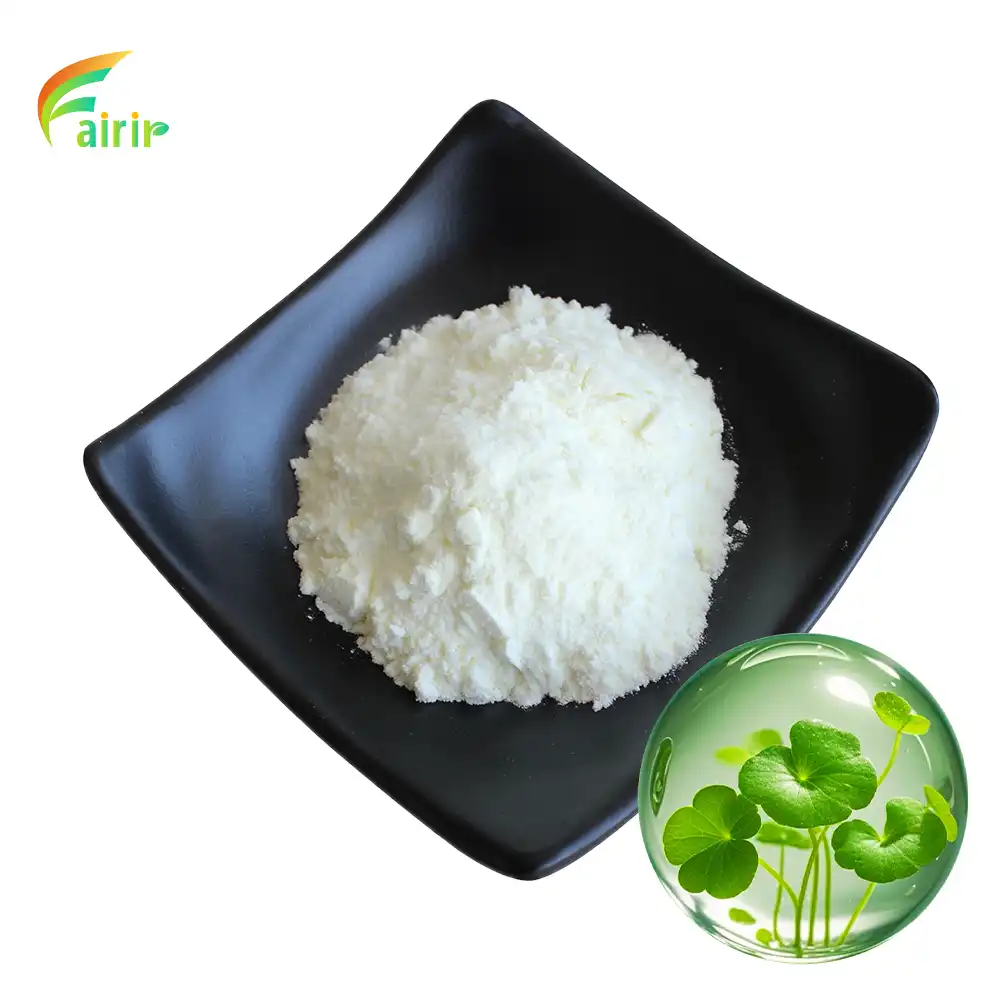
The four main triterpenes in this product are what make it possibly medicinal. Asiaticoside and madecassoside are glycosylated forms that dissolve better in water than their aglycone cousins, asiatic acid and madecassic acid. This molecular structure works well in water-based mixtures where dissolution rate and bioavailability decide how well the medicine works. The powder usually looks like a fine, free-flowing material that is light yellow to off-white and has a mesh size of 80 to 100, which makes it easy to mix quickly with liquids. To meet USP or European Pharmacopoeia standards, good manufacturers keep the moisture level below 5% and keep solvent leftovers to a minimum.
Advantages Over Alternative Forms
Formulators often argue about whether to define extract types in powder or liquid form. The powder shape has clear technical and organizational benefits. Longer shelf life lowers the risk of running out of stock, and increased strength lowers the cost of shipping and the space needed for storage. Unlike liquid extracts that might need stabilizers or show phase separation, powder that has been properly processed stays stable when the humidity is managed. Centella Asiatica Extract Powder is better than raw Gotu Kola powder because it doesn't have any of the chemical leftovers, microbial contamination, or variable active content that can be found in raw plant materials.
How Centella Asiatica Extract Powder Works in Water-Soluble Applications: Core Mechanisms and Use Cases
This extract works well in water-based systems because it works through certain biological processes that give real benefits. Formulators can make the best dosing and mix plans by understanding these processes.
Skin Barrier Repair and Hydration Enhancement
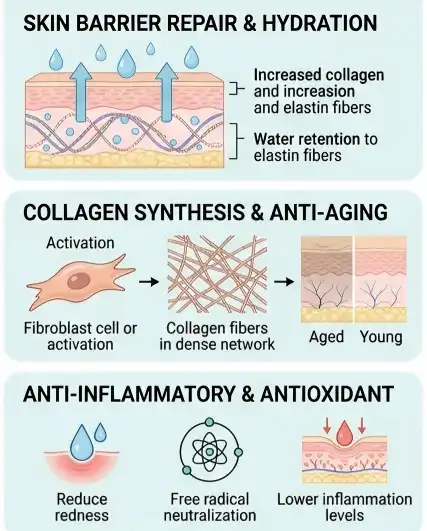
The product improves the skin's protection function in several ways. Asiaticoside increases the production of structural proteins, mainly collagen and elastin, which help keep the structure of the dermis. Clinical studies show that regular use raises the level of humidity in the stratum corneum and lowers the amount of water lost through the epidermis. The substance changes the production of aquaporin-3, a protein that moves water across cell walls. This is the reason why products with standardized extract work better at moisturizing than general plant mixes. When standardized to high purity levels, cosmetic-grade extract powder gives reliable results in high-end skin care products that target sensitive or damaged skin barriers.
Collagen Synthesis and Anti-Aging Effects
Stimulating fibroblasts is another important method. The triterpenes turn on transforming growth factor-beta signaling pathways, which makes more collagen types I and III. This biological reaction stops collagen breakdown that comes with getting older and helps wounds heal. To take advantage of this collagen-boosting effect, the substance is added to anti-aging serums, healing creams after surgery, and scar treatment products. In finished products, the best concentration levels are usually between 0.5% and 3%. However, for certain uses and ingredients that go well with them, changes may need to be made.
Anti-Inflammatory and Antioxidant Properties
The decrease of inflammation is achieved by stopping the stimulation of nuclear factor-kappa B and pro-inflammatory cytokines. The product has a significant antioxidant effect, which means it can fight free radicals that damage cells more quickly. Because of these two qualities, it works really well in after-sun products, toners that reduce redness, and formulas made for skin types that are more sensitive. These anti-inflammatory chemicals can be delivered by the extract to water-based products like face mists and essences without the need for oil-phase incorporation.
Industry Applications Across Sectors
Standardized extracts are used by drug companies to make wound care items and medicines that are taken by mouth to help treat venous insufficiency. Nutraceutical companies use the extract's ability to help the body adapt and its potential to support brain function to make pills and liquid supplements. The biggest market for this ingredient is in cosmetics, where it is used in sheet masks, ampoules, gel creams, and micellar waters. Food and drink companies are looking into using it as a useful ingredient in health drinks, but rules and regulations vary a lot from market to market. A well-known case study from a European skincare brand showed that adding 2% Centella Asiatica Extract Powder to their signature serum made customers' skin smoothness scores 34% higher after eight weeks than with the old recipe.
Comparison of Centella Asiatica Extract Powder Forms and Selection Criteria for B2B Buyers
When making purchasing choices, it's important to carefully consider a number of factors that affect both the performance of the recipe and the efficiency of the supply chain. Understanding the different format choices and the trade-offs that come with them is the first step in the decision process.
Powder Versus Liquid Extract Considerations
Powder extracts are more stable for longer periods of time. If stored properly, they can stay active for at least 24 months in cool, dry places. Usually, liquid extracts need to be kept cool and have a shorter shelf life (12 to 18 months). Powder is cheaper to ship than liquid because it has a higher concentration per kilogram. Shipping one kilogram of 50% standardized powder gives you the same amount of active ingredient as shipping four liters of liquid extract at a 12.5% concentration. Different types of materials need different ways to be handled. For example, powder needs to be processed with controlled dust, while liquid extracts need suitable pumping tools and may need to be heated to control their viscosity. The rate at which something dissolves depends on the particle size and how the surface is treated. Micronized powders dissolve better in water than standard mesh grades.
Pure Extract Versus Blended Formulations
There are both single-ingredient extract powders and unique mixes on the market that combine Centella Asiatica with other plants or carriers that work well with it. Pure extract powders give formulators the most freedom when making medicines because they let them control the exact amounts when mixing different actives. Blended goods may be convenient, but they limit the ways you can customize them and may include parts you don't want. It's harder to prove potency when the ingredients are mixed because analysis methods have to separate and measure each one separately. To keep formulations clear and in line with regulations, procurement managers who work with the pharmaceutical or cosmetics industries usually ask for pure, standardized extracts.
Certification Standards and Supply Chain Transparency
Tough approval shows that a seller is dedicated to quality management. For production sites to get GMP certification, they must follow standard operating procedures, clean according to proven methods, and keep detailed records. Organic approval proves that the source material was grown without using pesticides, which is becoming more and more important for a natural and clean beauty image. Regional trends of buying show that most of the Centella Asiatica Extract Powder comes from China and India, where infrastructure for growing and extracting the plant has grown a lot. Buyers should ask for reports of analysis that show the presence of microbes, the amount of heavy metals, and the active chemical titration. When compared to trading companies that don't directly oversee production, suppliers with ISO-certified analytical labs and full tracking from the field to the finished product offer higher levels of purchase security.
Here are critical evaluation criteria that procurement specialists should prioritize when assessing potential suppliers:
- Quality Documentation Requirements: Certificates of Analysis should have HPLC chromatograms that confirm triterpene profiles, microbe testing results that show compliance with cosmetic or pharmaceutical limits, and heavy metal screening results that show levels below regulatory thresholds. Instead of general specification sheets, suppliers should give paperwork that is specific to each batch.
- Supplier Capability Assessment: The stability of the supply is affected by the manufacturing capacity, especially during times of high yearly demand. When facilities have continuous countercurrent extraction devices, they can consistently make a lot of things. Having separate quality control labs with HPLC, UV spectrophotometry, and other testing tools shows that the company is technically advanced.
- Regulatory Compliance Verification: Buyers should make sure that sellers know what the target market needs in addition to basic GMP certification. The US market requires that cosmetic chemical rules set by the FDA be followed, as well as possible cGMP rules for food supplements. When suppliers know about these models, they lower the risks of importing goods and speed up the time it takes to get into a market.
Together, these evaluation factors show if a connection with a seller will help with long-term formulation goals and keep buying disruptions to a minimum.
Procurement Guide for Centella Asiatica Extract Powder in Water-Soluble Applications
To successfully source goods, you need to carefully compare the skills of potential suppliers with the goals you have for the purchase. The following strategy helps you choose the right vendors and handle your relationships with them.
Identifying Qualified Manufacturers and Suppliers
When compared to distributor agreements, direct producer relationships usually offer clearer price and quality information. Manufacturers with GMP-certified facilities that can separate, concentrate, and dry all at the same time control the whole production process. This lowers the risk of contamination and makes sure that each batch is the same. Site checks, which can be done by someone on the site itself or by a third-party inspection service, make sure that the maintenance records, cleaning validation processes, and training records all match the quality standards that were set. References from current users who use similar applications can tell you a lot about how responsive a seller is, how good their technical help is, and how they solve problems.
Critical Procurement Parameters
Different providers have very different minimum order amounts. Large producers might need at least 100 kilograms, but specialized sources that work with R&D departments might be able to handle 1-kilogram sample amounts. The levels of standardization affect the prices. For example, 95% total triterpene content costs more than 10% standardization, but higher concentrations mean that lower levels of usage are needed in finished products. Lead times rely on how the production is scheduled and how the inventory is managed. Suppliers who keep popular standardization types in stock can deliver faster than those who make to order. Payment terms usually follow foreign trade rules. Letters of credit are used to secure first orders, and net payment terms are possible once a relationship has been established.
Quality Control Measures and Documentation
Specifications that are easy to understand are the first step in strong quality assurance. Triterpene content should include not only the total amount but also the ratios of each product, since asiaticoside, madecassoside, asiatic acid, and madecassic acid have different medicinal effects. Limits on solvent waste must match the intended use—stricter limits are needed for pharmaceutical formulas than for cosmetic uses. The way particles dissolve is affected by their size distribution. The specs should include mesh size ranges and, if desired, details on particle morphology. In addition to certificates of analysis, reliable providers offer stability studies that show how well the product stays potent under different storage conditions. This helps with accurately figuring out the shelf life. Material safety data sheets, allergen warnings, and comments about GMOs and animal tests should all be included in documentation packages to answer the questions that customers are asking more and more often.
Market Trends Influencing Procurement Strategy
Centella Asiatica Extract Powder use is still being driven by rising demand in the clean beauty and K-beauty areas. This can cause supply problems during busy production times. New ideas try to make powders more soluble in water by using particle engineering methods like microencapsulation or co-processing with carriers that are attracted to water. Prices are higher for these changed forms, but they may make formulation creation easier for some uses. Sustainability is becoming a bigger factor in buying choices, with brands looking for suppliers who use responsible farming methods and keep environmental damage to a minimum during extraction processes. Buying plans should find a mix between lowering costs right away and making sure there are enough supplies in the long term. To do this, they might use dual-sourcing or smart inventory placement for important formulation parts.
Conclusion
In conclusion, Centella Asiatica Extract Powder is very useful and flexible in a wide range of water-soluble uses in the medicinal, cosmetic, nutraceutical, and functional beverage industries. Its beneficial triterpenes have benefits that have been proven to work in clinical trials. These benefits include better skin barrier function, faster collagen creation, and strong anti-inflammatory effects. Pay close attention to standardization levels, source certification, and quality documents for a successful execution. Partnering with GMP-certified manufacturers that keep their analytical skills up to date, show openness in the supply chain, and offer technical help during formulation development is good for procurement pros. As the market keeps growing, it's more important than ever to have smart sourcing relationships with dependable suppliers in order to keep formulations consistent and meet customer standards for natural, effective goods.
FAQ
1. Does Centella Asiatica Extract Powder fully dissolve in water?
The amount of standardization and the properties of the particles affect how well they dissolve. Triterpenes that are glycosylated, such as asiaticoside and madecassoside, dissolve better in water than aglycone forms. Powders that are standardized to mild levels usually mix well with water when stirred gently, but for full molecular breakdown, the pH may need to be changed, or co-solvents may be needed. When compared to normal mesh sizes, micronized grades improve the rate of dispersion.
2. How much active potency remains after dissolving the powder?
When properly made, extract powder keeps its full effectiveness when mixed with water-based mixtures, as long as the pH stays stable between 4.0 and 7.0 and the powder doesn't get too hot during processing. Triterpenes break down mostly through hydrolysis in very acidic or basic environments, which can be avoided by designing the mixture correctly.
3. What side effects might occur with water-based Centella products?
Centella extract is very safe in clinical tests, with few side effects reported. Some sensitive people get slight discomfort or allergic contact dermatitis from time to time. Patch testing before wide use can help find possible allergies. Quality control keeps things from getting contaminated and makes sure that the right concentration amounts are used. This lowers the risks for all user groups.
4. How can buyers verify powder suitability for their applications?
Ask for examples that come with full certificates of analysis that show triterpene profiles, microbial counts, and heavy metal screens. Do small-scale tests to see how well the ingredients work together in your specific formulation matrix. Look at how they dissolve, how stable they stay over time, and how they interact with other ingredients in the formula. Check to see if the licenses of your suppliers meet your quality standards and legal requirements.
Partner with Fairir: Your Trusted Centella Asiatica Extract Powder Manufacturer
Shaanxi Fairir Biotech Co., Ltd. runs a 10,000-square-meter GMP-certified plant that is built to extract high-purity botanicals. Our production facility has 14 stainless steel extraction tanks with capacities between 500 and 3,000 liters, two fully automatic production lines that are 98% efficient, and a wide range of analysis tools, such as HPLC, UV spectrophotometry, and rotating evaporators. We offer standard Centella Asiatica Extract Powder with confirmed triterpene profiles, full documentation packages, and variable minimum order amounts that can be used for both large-scale production and research and development. Our skilled staff knows how to meet the technical needs of water-soluble formulas and communicates clearly throughout the whole buying process. Email sales@fairirbiotech.com to talk about your unique needs and ask for certificates of analysis for the products we have in stock right now. We'd love the chance to become your trusted source for high-quality Centella Asiatica Extract Powder, helping you come up with new formulas by providing you with high-quality materials and expert service.
References
1. Brinkhaus, B., Lindner, M., Schuppan, D., & Hahn, E. G. (2000). Chemical, pharmacological and clinical profile of the East Asian medical plant Centella asiatica. Phytomedicine, 7(5), 427-448.
2. Bylka, W., Znajdek-Awiżeń, P., Studzińska-Sroka, E., & Brzezińska, M. (2013). Centella asiatica in cosmetology. Postepy Dermatologii i Alergologii, 30(1), 46-49.
3. Gohil, K. J., Patel, J. A., & Gajjar, A. K. (2010). Pharmacological review on Centella asiatica: a potential herbal cure-all. Indian Journal of Pharmaceutical Sciences, 72(5), 546-556.
4. Hashim, P., Sidek, H., Helan, M. H., Sabery, A., Palanisamy, U. D., & Ilham, M. (2011). Triterpene composition and bioactivities of Centella asiatica. Molecules, 16(2), 1310-1322.
5. Somboonwong, J., Kankaisre, M., Tantisira, B., & Tantisira, M. H. (2012). Wound healing activities of different extracts of Centella asiatica in incision and burn wound models: an experimental animal study. BMC Complementary and Alternative Medicine, 12(1), 103.
6. Sun, B., Wu, L., Wu, Y., Zhang, C., Qin, L., Hayashi, M., Kudo, M., Gao, M., & Liu, T. (2020). Therapeutic potential of Centella asiatica and its triterpenes: A review. Frontiers in Pharmacology, 11, 568032.