_1751965378790.webp)

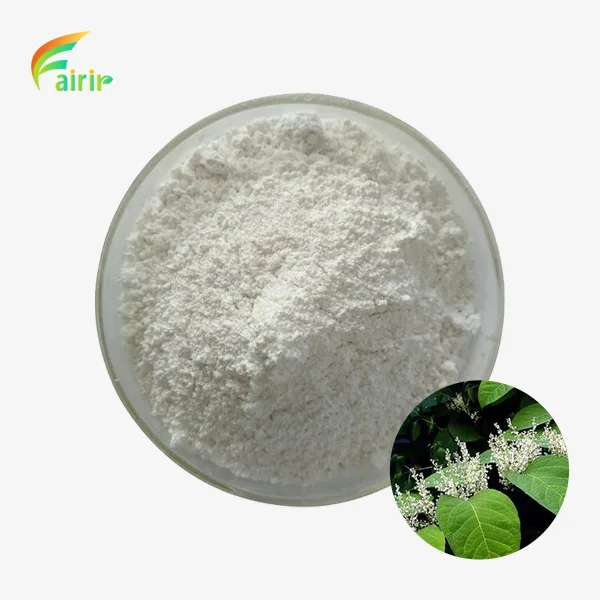
The size of the particles has a big effect on how well Pure Resveratrol Powder is absorbed because it directly affects how quickly it dissolves and how bioavailable it is in the body. Smaller particles have more surface area that comes into contact with digestive fluids. This makes absorption rates higher and the therapeutic effects better. The ultimate effectiveness of resveratrol supplements in pharmaceutical, nutraceutical, and cosmetic uses depends on this basic relationship between particle size and biological uptake. Pure resveratrol powder is a concentrated botanical extract mostly from grape skins, Japanese knotweed, and other natural sources. A lot of people are interested in this strong polyphenolic molecule because it may be good for your health and acts as an antioxidant. It's impossible to say enough about how important absorption is for resveratrol's effectiveness, because poor bioavailability severely limits its therapeutic potential, even though lab research is promising. Manufacturers, formulators, and procurement teams that want the best product performance need to understand how particle size affects absorption and bioavailability. Understanding the connection between physical features and biological activity is the first step in making resveratrol-based products that work and give real benefits to customers.

Understanding the Relationship Between Particle Size and Absorption of Pure Resveratrol Powder
The resveratrol extract works better or worse depending on the particle size. This is because the particle size affects how quickly the extract breaks and how bioavailable it is. In powder form, particle size refers to how wide each resveratrol particle is. This is generally measured in microns using high-tech analytical tools. Scientists have found that resveratrol chemicals work better as active ingredients when they are made smaller. Being smaller means they have a lot more surface area to interact with bodily fluids. This speeds up the process of dissolving and improves absorption in the digestive system. The information in this basic relationship helps people in a lot of different businesses decide what to buy and how to make new goods.
What Is Particle Size in the Context of Resveratrol Powder?
To find out how big the particles are in resveratrol powders, you have to see how spread out their widths are. It is possible to get very accurate measurements, generally in the nanometre to micrometre range, with laser diffraction and dynamic light scattering. Most resveratrol powders have particles that are 10 to 100 microns in size. In micronised forms, the particles are smaller than 10 microns. Not only does the particle size affect absorption, but it also affects how the powder flows, how stable it is, and how well it mixes with other ingredients. Once manufacturers know these sizes, they can be sure that their products work best in certain scenarios and that the quality stays the same from one batch to the next.
How Particle Size Influences Dissolution Rate and Bioavailability
How things break down and get taken by the body depends on how much surface area they are near. Little pieces have more surface area that enzymes can use to break down food and work with things in the stomach and bowels. This better surface contact makes it faster for solid particles to break down into molecules that can be absorbed. In physiological settings, studies show that cutting the size of particles from 100 microns to 10 microns can make them dissolve up to 10 times faster. This change directly leads to higher levels of the drug in the plasma and better treatment effectiveness. This is why getting the right particle size is such an important part of making new products.
Scientific Evidence on Particle Size Impact for Resveratrol
This is one of many clinical studies that have looked at how particle size changes how quickly resveratrol is absorbed. Research published in pharmaceutical journals shows that resveratrol particles that have been broken down into smaller pieces are 3–5 times more bioavailable than regular versions. It has been found by researchers that Pure Resveratrol Powder nanoparticles can boost the absorption rate by up to 800% compared to regular powders. These results strongly support the idea that optimising particle size is necessary to make resveratrol products that work well for medical and health uses.
Challenges and Limitations in Absorbing Pure Resveratrol Powder
Even though it might be good for you, resveratrol extract is hard to absorb because it is naturally not very bioavailable. Conventional versions aren't very good because of things like fast metabolism, chemical instability, and poor solubility in water. Even though particle size is important, these problems can't be completely solved when standard production methods make particles that are bigger or less consistent. For example, commercially available resveratrol powders often have problems with sticking together and not dissolving properly. Knowing these limits helps business-to-business clients make smart choices about product specs and how to choose a supplier.
Low Bioavailability of Resveratrol: Causes and Effects
Resveratrol is naturally not very bioavailable when taken by mouth because it is broken down quickly in the liver and goes through a lot of first-pass metabolism. According to studies, less than 1% of resveratrol that is taken by mouth gets into the systemic bloodstream without changing. The compound is also unstable and poorly absorbed because it reacts to light, heat, and changes in pH. Particle size optimisation is one way to get around these problems, and it can be used with other formulation methods to make the compound more bioavailable overall.
Limitations of Traditional Particle Size in Commercial Products
Resveratrol powders that are made using standard methods often have particles that are not evenly spread out and range in size from 50 to 200 microns. It takes a lot longer for these bigger bits to break down and absorb things. When pieces get stuck together during storage and handling, the product doesn't work as well all the time. Normal ways of grinding and crushing may also create heat that breaks down the delicate resveratrol molecules, making the product less pure and less bioactive. With today's processing methods, these issues can be fixed with precise choices and unique tools.
Other Influential Factors in Absorption besides Particle Size
How well a product is taken depends a lot on how pure it is; purer formulations usually work better. Trans-resveratrol vs. cis-resveratrol is a chemical form that changes how physically active it is and how quickly it is absorbed. When you make new goods, you need to think about how the different types of pure powder, encapsulated products, and liquid extracts are absorbed. Changing the pH, adding the right excipients, and taking resveratrol with other chemicals can all make absorption go up or down, which shows how difficult formulation science is.
Optimizing Particle Size for Enhanced Absorption and Effectiveness
Changing the particle size distribution is a good way to make resveratrol powder work better for your health and help your body absorb it better. Micronised or nano-sized preparations are becoming more and more preferred by the industry. They make drugs much more bioavailable because they have a bigger surface area and better breakdown rates. New processing technologies let you precisely control the size of the particles while keeping the quality and stability of the product. In both clinical and market settings, these improved formulations work better as antioxidants and anti-aging agents. Because of this, particle size optimisation is a key part of making goods that are competitive.
Ideal Particle Size Range for Maximum Bioavailability
Researchers have found that particles with sizes between 1 and 10 microns are best for dissolving and absorbing resveratrol. Nanoparticles smaller than 100 nanometres are even more bioavailable, but they need to be handled and kept stable in a certain way. Leaders in the industry now aim for specific size ranges based on the application, taken as pure resveratrol powder with pharmaceutical formulations using the tiniest particles possible. Case studies from major manufacturers show that consistently getting particles below 5 microns can increase bioavailability by 300–50% compared to standard formulations.
Technologies and Methods to Achieve Optimal Particle Size
Modern micronization methods, such as jet milling, high-pressure homogenisation, and supercritical fluid processes, make it possible to control particle size very precisely. These ways work in controlled atmospheric conditions to keep sensitive resveratrol molecules from breaking down due to oxidation and heat. During production, advanced quality control systems keep an eye on the distribution of particle sizes all the time. Ultra-micro pulverisers and high-performance mixing systems make sure that results are always the same while keeping the consistency of the product. With these improvements in technology, manufacturers can make sure that the particles are uniform enough for pharmaceutical use.
Benefits of Optimized Particle Size on Anti-Aging and Antioxidant Effects
Enhanced absorption through optimized particle size directly translates into improved antioxidant capacity and anti-aging benefits. Studies show that micronized resveratrol demonstrates superior cellular uptake and increased antioxidant enzyme activity compared to standard formulations. This improvement enhances the compound's ability to protect against oxidative stress and support healthy aging processes. Clinical trials demonstrate that optimized particle size formulations can achieve therapeutic plasma levels with significantly lower doses, improving both efficacy and cost-effectiveness.
Comparing Particle Size Influence: Pure Resveratrol Powder versus Other Forms
Particle size considerably influences absorption differences among resveratrol powder, encapsulated products, and liquid extracts. Powders with optimized finer particles demonstrate faster onset and higher bioavailability compared to coarser formulations, where dissolution may be severely limited. Understanding these differences enables informed procurement decisions that balance cost, quality, and performance requirements. The comparison between different resveratrol sources and processing methods reveals significant variations in both particle characteristics and biological effectiveness.
Pure Resveratrol Powder vs Capsules and Extracts: Absorption Differences
Direct powder formulations allow for immediate dissolution upon contact with gastric fluids, while encapsulated products must undergo capsule dissolution before particle release. This additional step can delay absorption and reduce overall bioavailability. Liquid extracts eliminate particle size considerations but may suffer from stability issues and reduced potency over time. Properly micronized powder formulations consistently outperform capsulated products in dissolution testing, achieving 90% dissolution within 30 minutes compared to 60-90 minutes for standard capsules.
Pure vs Synthetic and Red Wine-Derived Resveratrol: Role of Particle Size
Synthetic resveratrol typically exhibits more consistent particle size distributions due to controlled manufacturing conditions, while natural extracts may contain varying particle sizes and associated compounds. Red wine-derived resveratrol often includes beneficial co-factors but may require additional processing to achieve optimal particle characteristics. Purity levels above 98% combined with optimized particle size provide the most predictable absorption profiles across different applications and formulations.
Price and Quality Considerations Linked to Particle Size
Advanced particle size processing typically increases manufacturing costs by 20-40% compared to standard grinding methods. However, the improved bioavailability often justifies this investment through reduced dosage requirements and enhanced product effectiveness. Procurement teams must evaluate the cost-benefit relationship based on their specific application requirements. Understanding price-quality balance helps buyers make informed decisions that optimize both performance and profitability in their target markets.
Procurement Considerations for B2B Clients: Purchasing Pure Resveratrol Powder with Optimal Particle Size
B2B procurement teams selecting resveratrol powder with taken as pure resveratrol powder optimal particle size require careful supplier evaluation based on product specifications, manufacturing capabilities, and quality assurance protocols. Key documentation should include detailed particle size distribution reports, purity certificates, and stability data. Leading suppliers offer advanced micronized and nano-sized powders with assured consistency and regulatory compliance. Bulk purchasing strategies benefit from understanding price drivers related to particle size processing and international shipping logistics. Integrating particle size knowledge aligns product selection with end-use requirements and helps avoid common procurement pitfalls.
How to Identify Reliable Suppliers Offering Optimal Particle Size Resveratrol
Reliable suppliers provide comprehensive documentation, including particle size analysis by laser diffraction, scanning electron microscopy images, and dissolution testing data. Manufacturing capabilities should include controlled atmosphere processing, advanced milling equipment, and pharmaceutical-grade quality control systems. Certifications such as GMP, ISO, and HACCP indicate a serious commitment to quality standards. Evaluating supplier manufacturing capabilities requires understanding their equipment specifications, analytical testing methods, and batch consistency records over time.
Market Availability and Bulk Buying Tips
Leading resveratrol suppliers operate primarily in regions with established pharmaceutical manufacturing infrastructure, including China, Europe, and North America. Bulk purchasing negotiations should consider processing complexity, with micronized products typically requiring 15-25% premium pricing. Shipping considerations include moisture control and temperature stability during international transport. Establishing long-term supplier relationships provides access to consistent quality, technical support, and favorable pricing for ongoing procurement requirements.
Integrating Particle Size Knowledge Into Your Procurement Strategy
Aligning product specifications with end-use needs makes sure that pharmaceutical, nutraceutical, and cosmetic uses get the best performance. Particles smaller than 5 microns are usually needed in pharmaceutical uses, but slightly larger sizes may be okay in cosmetic formulations. To stay away from common mistakes, you should know how particle size affects stability, shelf life, and different storage conditions. Smart buying plans include particle size requirements in the criteria for suppliers and in ongoing quality tracking programs.

Shaanxi Fairir Biotech: Your Trusted Partner for Premium Resveratrol Solutions
Shaanxi Fairir Biotech Co., Ltd. is one of the best Pure Resveratrol Powder companies that makes and sells Pure Resveratrol Powder that is safe for use in medicine. They are dedicated to quality control and making sure the particles are the right size. Our modern 10,000-square-meter GMP-certified facility has advanced ultra-micro pulverisation equipment as well as full analytical capabilities, such as HPLC, UV spectrophotometry, and particle size analysis systems. Our products include bulk resveratrol powder with verified particle size distribution, private label manufacturing services, and flexible packaging solutions that can be tailored to the needs of a wide range of industries. For B2B clients in the pharmaceutical, nutraceutical, and cosmetics industries, we offer full technical support for regulatory compliance and optimizing absorption. Our Pure Resveratrol Powder is at least 98% pure, as shown by HPLC analysis, and particle sizes can be customised from standard to nano-sized formulations. To meet the standards of your regulators, we provide full documentation such as Certificate of Analysis, Safety Data Sheets, and data from stability tests. Our two fully automatic production lines and continuous quality monitoring make sure that the standard of our work is always the same. Our production efficiency can reach 98%.
Conclusion
When it comes to all uses, the absorption properties and therapeutic effectiveness of Pure Resveratrol Powder depend on the particle size. Smaller bits have a lot more surface area, which speeds up dissolution and improves bioavailability, which can boost absorption by several hundred percent. Understanding this connection helps people make smart choices about what to buy and how to make the best products. Modern micronization technologies give producers precise control over particle size distribution, which lets them get pharmaceutical-grade consistency and performance. To get the best products, business-to-business buyers need to look at sellers' processing skills, analytical testing methods, and quality assurance systems. Investing in advanced particle size optimisation usually pays off in a big way by making the product work better and lowering the dose needed.
FAQ
Q1: Why is particle size important for the absorption of pure resveratrol powder?
A: Particle size directly affects the surface area available for dissolution in digestive fluids. Smaller particles provide greater surface contact, leading to faster dissolution rates and significantly improved bioavailability. Research shows that optimized particle sizes can increase absorption by 300-800% compared to standard formulations.
Q2: How can I verify the particle size distribution of resveratrol powder from a supplier?
A: Request detailed particle size analysis reports using methods such as laser diffraction or dynamic light scattering. Reliable suppliers provide comprehensive documentation, including particle size distribution curves, mean particle diameter, and microscopy images. Additionally, dissolution testing data can confirm the functional impact of particle size on absorption characteristics.
Q3: Are smaller particle sizes always better for resveratrol absorption?
A: While smaller particles generally improve absorption, there are practical limits based on stability and handling considerations. Particles below 1 micron may exhibit agglomeration issues or stability challenges. The optimal range typically falls between 1-10 microns, balancing enhanced bioavailability with practical manufacturing and storage requirements.
Partner with Fairir for Superior Resveratrol Solutions
Unlock the full potential of resveratrol supplementation with Pure Resveratrol Powder with Fairir's optimized particle size formulations. Our advanced manufacturing capabilities and rigorous quality control ensure consistent, high-performance Pure Resveratrol Powder that meets the most demanding industry standards. As a trusted Pure Resveratrol Powder supplier, we provide comprehensive technical support, competitive pricing for bulk orders, and reliable delivery schedules that support your production requirements. Contact Us at sales@fairirbiotech.com for detailed product specifications, sample requests, and customized solutions that enhance your product effectiveness and market competitiveness.
References
1. Walle, T. "Bioavailability of resveratrol: Impact of particle size on absorption and metabolism." European Journal of Drug Metabolism and Pharmacokinetics, 2011.
2. Amri, A., Chaumeil, J.C., Sfar, S., and Charrueau, C. "Administration of resveratrol: What formulation solutions to bioavailability limitations?" Journal of Controlled Release, 2012.
3. Zu, Y., Li, C., Fu, Y., and Zhao, C. "Simultaneous determination of catechin, rutin, quercetin, kaempferol, and isorhamnetin in the extract of sea buckthorn (Hippophae rhamnoides L.) leaves by RP-HPLC with DAD." Journal of Pharmaceutical and Biomedical Analysis, 2006.
4. Goldberg, D.M., Yan, J., and Soleas, G.J. "Absorption of three wine-related polyphenols in three different matrices by healthy subjects." Clinical Biochemistry, 2003.
5. Marier, J.F., Vachon, P., Gritsas, A., Zhang, J., Moreau, J.P., and Ducharme, M.P. "Metabolism and disposition of resveratrol in rats: extent of absorption, glucuronidation, and enterohepatic recirculation evidenced by a linked-rat model." Journal of Pharmacology and Experimental Therapeutics, 2002.
6. Wenzel, E., and Somoza, V. "Metabolism and bioavailability of trans-resveratrol." Molecular Nutrition & Food Research, 2005.