_1751965378790.webp)

How Does Purple Yam Ube Powder Improve Product Innovation?
Purple Yam Ube Powder transforms product innovation by offering manufacturers a clean-label solution that combines natural, vibrant purple coloration with functional nutritional benefits. Derived from Dioscorea alata roots, this ingredient addresses multiple formulation challenges simultaneously—replacing synthetic colorants, enhancing texture, and delivering consumer-appealing health attributes. In today's competitive landscape, where transparency and authenticity drive purchasing decisions, ube powder enables brands across food, beverage, nutraceutical, and cosmetic sectors to differentiate premium product lines while meeting strict regulatory standards and sustainability commitments.
Understanding Purple Yam Ube Powder and Its Unique Properties
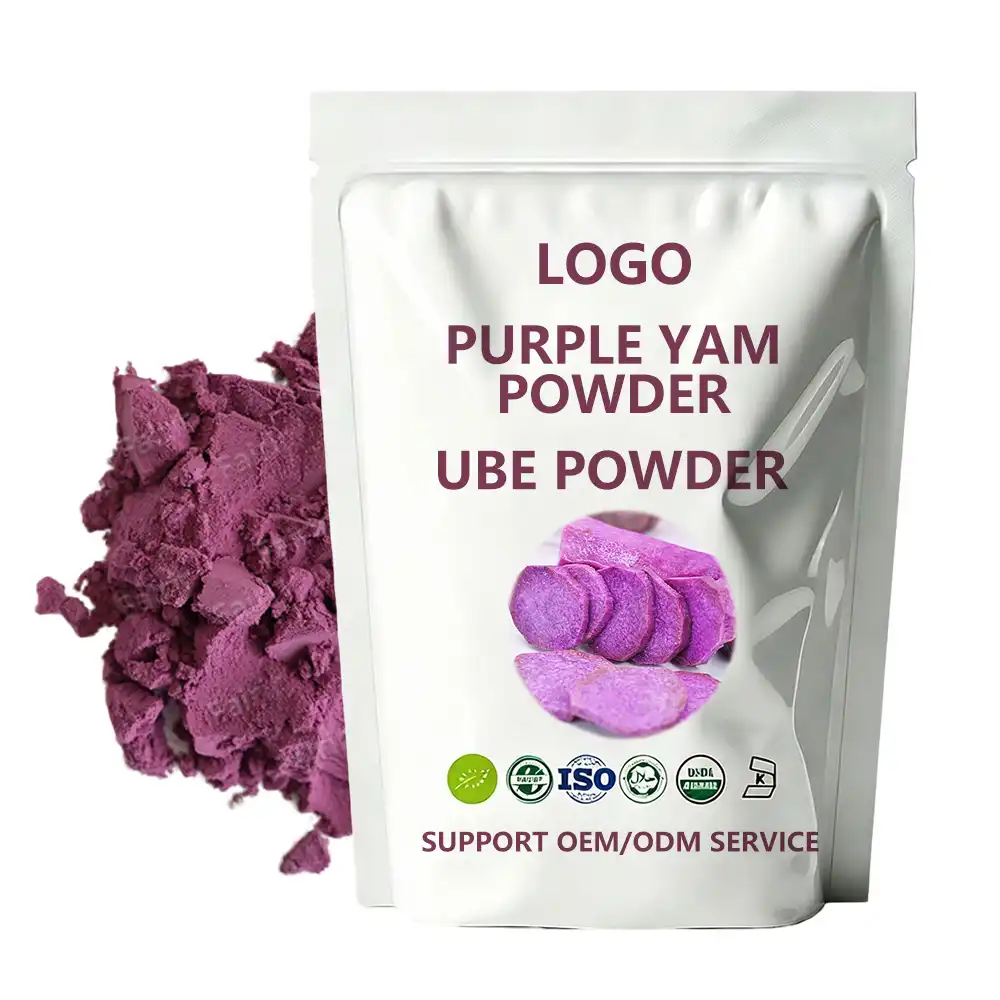
It comes from the tropical purple yam, or Dioscorea alata. This is not the same plant as purple sweet potatoes, even though you might see them mixed up at the store. In formulation work, this difference is very important. If you eat real Purple Yam Ube Powder, it tastes like a mix of nuts, sugar, and vanilla. They taste heavier and less complicated if you eat sweet potato types. Modern ways that keep the bioactive chemicals and anthocyanin colors are used to carefully pick the root, wash it, and then freeze-dry it.
Botanical Characteristics and Production Methods
In our production center, we use GMP-approved standards for making sure that only the best purple yam roots are used. Fresh roots are carefully checked over before they are put into tools that use steady countercurrent extraction. The structure of heat-sensitive anthocyanins is kept safe by temperature-controlled freeze-drying technology. The specs we offer have amounts ranging from 80% to 99%. The dried stuff is ultra-micro-pulverized, which makes bits that are all the same size and spread out evenly in the final mixes. An HPLC and a UV tester are used to check each batch to make sure it is pure and works well.
Distinguishing Ube from Similar Ingredients
People who work in manufacturing often get lost when they try to find purple ingredients. While taro powder tastes and looks like it has spots, it doesn't. It looks the same, but sweet potato powder doesn't have the clear vanilla notes, and its water qualities are different. Purple Yam Ube Powder changes how the dough bakes. These differences have an impact on how the final product feels, how it is made, and how much people like it. When people know these differences between plants, they can pick ingredients that help them reach their innovation goals instead of picking the wrong ones and ruining the quality of the recipe.
How Purple Yam Ube Powder Drives Product Innovation in Food & Beverage Manufacturing
The ingredient gives people new ways to be creative with a lot of different kinds of goods. It meets both real processing needs and market placement needs. In different ways of making things, its natural color stays the same. It also does more than just look good.
Applications in Bakery and Confectionery Products
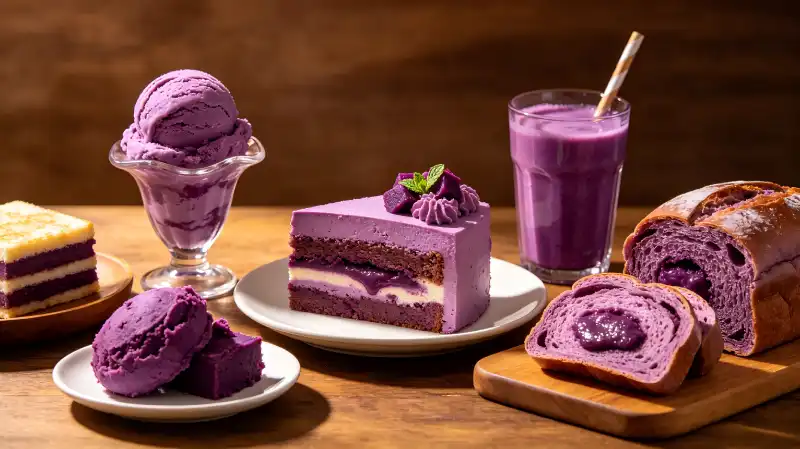
In professional baker's, the powder can be used in place of some flour in gluten-free recipes. Plus, it helps the dough stay wet, so it doesn't dry out. The color stays the same during constant baking tunnel processing because of the heat stability. Under Maillard reaction conditions, it doesn't turn too brown. People who make candy use it to make chocolate ganaches, marshmallows, and caramel sauces because it tastes good with dairy fats. When free water is linked in frozen treat systems, ice crystals don't form. This keeps the taste from getting worse during the normal temperature changes that happen in supply lines.
Dairy Alternative and Plant-Based Product Enhancement
There are plant-based dairy options that don't have to taste bad because Purple Yam Ube Powder can cover them up. The coconut, almond, and oat bases play well with the earthy-sweet notes, and the purple color makes the smell look new and high-end. This part of vegan ice cream makes it more stable and gives it a thick texture because it has a lot of carbohydrates. People who want real plant-forward foods will like these helpful ads because they cut down on the need for many other additives. This makes recipes easier to read on labels.
Comparing Market Solutions: Choosing the Right Purple Yam Ube Powder Supplier
Getting the right provider is very important for keeping output stable, controlling costs, and following rules. When B2B sourcing teams buy things for businesses, they need to think about more than just the price per unit.
Organic Certification and Specification Considerations
Organic-approved Purple Yam Ube Powder costs more, but it lets you sell to niche markets that have strict rules about where the powder comes from. Different certification groups, such as USDA Organic, EU Organic, and EcoCert, have their own rules about how to prepare food and where to get it. There are many certifications for our plant, including ISO22000, FSSC22000, HACCP, and cGMP. These show that we plan how to handle quality at all stages of production. From 80% to 99%, the concentration amount needs to be different for each use. For instance, 80% grades are generally needed for baked goods to Purple Yam Ube Powder work right, while 99% grades are needed for nutraceutical pills to have correct dosing estimates.
Evaluating Supplier Credentials and Quality Systems
In addition to certificates, a provider should be judged on how well they can do analysis work to make sure that each batch is the same. To find chemicals, we use HPLC, UV spectrophotometers to check concentrations, rotating evaporators to make sure solvents are removed properly, and temperature water baths to check stability. These tools let quality control happen in real time, instead of depending on tests done by a third party after the fact. This way, materials that don't meet standards don't get into the supply chain. Partners who can work together to make new things stand out from transactional providers who can only help solve problems because they have clear ways to communicate, like quick access to expert help and paperwork.
Practical Guidelines for Integrating Purple Yam Ube Powder into Your Product Portfolio
If you want to use it properly, you need to know the specific rules for dosage, processing, and keeping for each type of use.
Dosage Recommendations Across Product Categories
Most bread mixes have between 2% and 5% Purple Yam Ube Powder by weight, which is the right amount to get the right color strength and physical effects. Concentrations of 0.5 to 2% are used to make drinks, depending on how clear and strong the taste needs to be. The best inclusion rates for ice cream and frozen treat bases are between 3 and 6 percent. This gives them a nice look and a smooth feel. These groups are just starting points; they need to be changed based on the processing method, the goal sense patterns, and the factors that go well together. Our expert staff helps clients figure out how to dose their goods in a way that meets their quality goals and helps them make the best products possible.
Addressing Allergen Concerns and Safety Verification
There is no gluten, big allergens, or common allergies in purple yams, so it can be used in recipes that are meant to please a lot of people. Between runs, we clean and test our production methods very carefully. For safety reasons, this keeps other plant products made on the same machine from getting dirty. There are Certificates of Analysis in the paperwork packages that show the product is non-GMO, free of BSE and TSE, Purple Yam Ube Powder, and doesn't have any added colors or chemicals. There are places where allergen labeling rules are different, but these promises make it safe to make label claims and regulatory reports. This makes it possible to sell goods around the world without having to change the recipe to fit the needs of different regions.
Future Outlook: The Role of Purple Yam Ube Powder in Market Trends and Innovation Strategies
It's becoming more popular to use natural, traceable ingredients that are true to culture and have benefits beyond just nutrition as customer habits change and rules get tighter.
Emerging Market Demand in North America and Europe
People in North America are becoming more interested in Asian cooking styles. Purple Yam Ube Powder is becoming more famous by being shared on social media and added to the menus of new places. European markets like hearing about goods that are eco-friendly and easy to find ingredients. In these places, established supply lines from Filipino farmers make it possible to tell interesting stories. Market research shows that the use of natural food colorants will grow by more than 10% every year until 2028. This is because people's tastes are changing, and man-made colors are becoming less popular. Brands should be the first to use real Purple Yam Ube Powder products because they help define the category and teach users about it.
Strategic Partnership Development
If you want to have good relationships with your sellers, you need to stop buying things one-time and start working with them to make things together. When companies give different extraction methods, private labeling, and help with formulation issues, it's good for clients. As part of our full-service approach, we provide free samples for small-scale testing before making big claims, technical paperwork to assist with regulatory filings, and quick contact to handle production issues as they arise. Relationships like these give companies an edge over their competitors because they speed up the innovation process, lower development costs, and give companies access to new ingredient technologies that aren't available through networks of product sellers.
Conclusion
Purple Yam Ube Powder is a good ingredient for businesses that want to make new products with clean labels that don't lose any of their taste or usefulness. Because of its natural color, health benefits, and many uses, it can help the food, drink, vitamin, and skin care businesses solve recipe problems. You can be sure that you will always be able to get high-quality ingredients that will help your product do well in the long run if you choose valid sources with strong quality systems, full certifications, and joint service models. More and more, people want to buy things that are real, honest, and good for them. Market trends change quickly, and Purple Yam Ube Powder helps brands keep up with them.
FAQ
1. Is Purple Yam Ube Powder gluten-free and allergen-safe?
As long as the purple yam extract isn't made up of gluten proteins, it can be used in gluten-free goods. Because FALCPA rules say so, the element automatically stays away from all eight major allergens. At our production site, we use tried-and-true cleaning methods to keep other plant materials from getting into our products. Each batch has proof that it has been checked for allergens and doesn't have any GMOs in it. These safety features give manufacturers the peace of mind to use them in lines of products for people who can't or can't eat certain foods. This means you can reach more groups of people without having to make different formulas for each one.
2. How should manufacturers store ube powder to maintain quality?
Keep things in a cool, dry place below 25°C with little to no light. Once a package has been opened, it should be resealed fully. Vacuum-sealed packaging should stay sealed until it is used right away. Don't put it in full sunlight or somewhere with a humidity level above 60%. These conditions will break down the anthocyanin faster and could help germs grow. Putting food in the fridge makes it last longer than if it were stored at room temperature. This is especially useful in hot work areas. When you use first-in, first-out product rotation, you stop the quality loss that can happen after having something for a long time. Take good care of powder, and it will keep its color and taste for 18 to 24 months in a cool place.
3. What certifications verify supplier authenticity and quality?
Trustworthy service providers keep their third-party licenses up to date, which shows that they handle quality in a structured way. GMP certification ensures that production methods are fit for medicinal use. For organic claims, organic certifications from trustworthy groups like the USDA or EU officials are also accepted, as well as food safety management system certifications such as ISO22000, FSSC22000, and HACCP. You can sell to certain groups of people if you get extra approvals, like Halal and Kosher. It is important to check the current certificate's end dates as part of the verification process. Also, the scope should include the ingredients that were bought, not just facility-level certificates that might not apply to all product lines.
Partner with a Trusted Purple Yam Ube Powder Manufacturer
The Purple Yam Ube Powder that Shaanxi Fairir Biotech Co., Ltd. sells is of good quality, and the company has strict quality control checks and quick expert help. The center is 10,000 square meters and is GMP-certified. For extraction and drying, we use the most up-to-date tools. Standards for medicinal grade are always met during production. There are options with concentrations between 80% and 99%, organic and non-organic materials, and flexible packages that can hold anything from small amounts for research to big numbers for business use. We have many standards, such as USDA Organic, ISO22000, HALAL, Kosher, and cGMP, that show how much we care about quality. Our expert team can help you make the product you want by giving you tips on formulation, private labeling, and making custom extraction methods. You can email our team at sales@fairirbiotech.com to get free samples, talk about your needs, or learn how our Purple Yam Ube Powder source can help you grow your business by giving you a steady supply of powder, low prices, and a relationship that is focused on your long-term success.
References
1. Rodriguez-Amaya, D.B. (2019). "Natural Food Pigments and Colorants." Current Opinion in Food Science, 7, 20-26.
2. Champagne, A., Hilbert, G., Legendre, L., & Lebot, V. (2011). "Diversity of anthocyanins and other phenolic compounds among tropical root crops from Vanuatu, South Pacific." Journal of Food Composition and Analysis, 24(3), 315-325.
3. Cuevas, R.P., Pede, V.O., McKinley, J., Velarde, O., & Demont, M. (2016). "Rice grain quality and consumer preferences: A case study of two rural towns in the Philippines." PLoS ONE, 11(3), e0150345.
4. Montilla, E.C., Hillebrand, S., Winterhalter, P., & Moritz, P. (2011). "Anthocyanins in purple sweet potato (Ipomoea batatas L.) varieties." Fruit, Vegetable and Cereal Science and Biotechnology, 5(2), 19-28.
5. Terahara, N., Shimizu, T., Kato, Y., Nakamura, M., Maitani, T., Yamaguchi, M., & Goda, Y. (1999). "Six diacylated anthocyanins from the storage roots of purple sweet potato, Ipomoea batatas." Bioscience, Biotechnology, and Biochemistry, 63(8), 1420-1424.
6. Woolfe, J.A. (1992). "Sweet Potato: An Untapped Food Resource." Cambridge University Press, Cambridge, UK.