How Tetrahydrocurcumin Powder Supports Cellular Health?
Tetrahydrocurcumin powder is a strong antioxidant that protects cells from damage by neutralising free radicals and lowering oxidative stress at the cellular level. This hydrogenated curcumin product is more bioavailable and chemically stable than its parent compound. It protects cell membranes from lipid peroxidation, supports mitochondrial function and helps cells recover from oxidative damage. Because of its molecular structure, it crosses biological barriers more easily, which makes it useful for formulations that aim to protect neurons, extend cell lifespan and reduce inflammation. As demand for science-backed botanical ingredients grows in the pharmaceutical and nutraceutical industries, product developers need to understand how this bioactive compound works within cell systems.
Understanding Tetrahydrocurcumin Powder and Its Role in Cellular Health
The Chemical Nature and Origin of Tetrahydrocurcumin
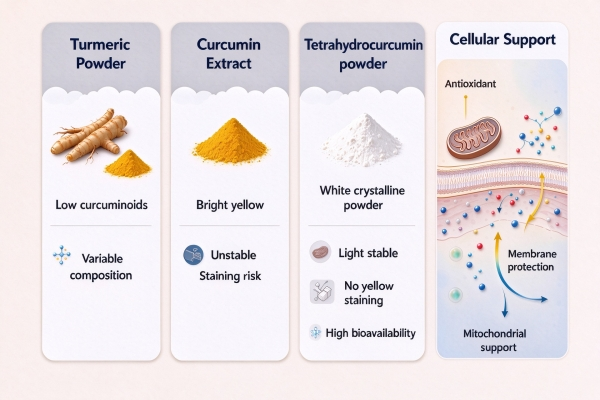
When the body breaks down curcumin from turmeric, tetrahydrocurcumin is one of the main byproducts. Even though curcumin has gotten a lot of attention, its metabolite has unique benefits that are very important in formulation chemistry. The chemical formula C21H24O6 shows a structure that is hydrogenated and doesn't have the conjugated double bonds that are found in the middle chain of curcumin. This difference in structure has direct practical benefits, including better stability across a range of pH levels, resistance to degradation by light, and the removal of the persistent yellow staining that limits curcumin's uses. THC, which looks like a white crystalline powder instead of curcumin's bright yellow colour, can be obtained in two main ways. Small amounts are made by the body naturally, but controlled hydrogenation of pure curcuminoids makes large amounts that are very pure. At Fairir, we use cutting-edge extraction and hydrogenation methods in our GMP-certified plant to make tetrahydrocurcumin that is 98% pure, as shown by HPLC analysis. When making goods for pharmaceutical or high-end nutraceutical uses, where consistency and bioactivity must stay the same across production batches, this level of purity is very important.
Cellular Mechanisms: How Tetrahydrocurcumin Protects and Regenerates
THC's benefits for cells come from several processes that work together in living things at the same time. Basically, this substance is a strong antioxidant that neutralises reactive oxygen species (ROS) that would otherwise damage cell parts by giving up electrons. Because of the way its structure is conjugated, curcumin can sometimes produce ROS, but tetrahydrocurcumin only has antioxidant properties and no prooxidant effects. Oxidative stress happens when ROS production exceeds the body's natural defence systems, damaging lipids, proteins, and DNA within cells. Cell membranes made up of lipids are especially sensitive to peroxidation chain reactions. Studies show that THC stops these harmful chains of events more effectively than many common antioxidants, protecting the health of membranes and helping cells work properly. This protection goes all the way to the mitochondria, which are the energy-producing parts of cells. Oxidative damage builds up with age and is linked to many long-term illnesses. Tetrahydrocurcumin also changes inflammatory signalling pathways at the cellular level. Low-level inflammation that lasts for a long time hurts cells over time, which speeds up ageing and makes diseases more likely to happen. THC changes important transcription factors and cytokines that play a part in inflammatory reactions. This helps keep cellular environments that are good for optimal function instead of being in a constant state of stress. Because it protects cells from damage and reduces inflammation at the same time, THC is very useful for formulas that aim to improve both cellular health and overall health.
Distinguishing Tetrahydrocurcumin from Turmeric and Curcumin Extracts
It can be hard for people who work in procurement to tell the difference between turmeric powder, curcumin products, and tetrahydrocurcumin. It is important to understand these differences to make smart choices about where to source things. Turmeric powder is made from ground, dried rhizomes that have about 3–5% total curcuminoids, as well as volatile oils, starches, and other plant parts. Turmeric is great for cooking, but it's hard to make standardised supplements because it has a low curcuminoid content and a variable composition. Curcumin extracts concentrate the bioactive curcuminoids from turmeric and are usually standardised to 95% curcuminoids (a mix of curcumin, demethoxycurcumin, and bisdemethoxycurcumin). These extracts are stronger and more consistent than whole turmeric, but they have some problems, like not dissolving well in water, breaking down quickly, being unstable in different situations, and leaving a yellow stain on skin, clothes, and manufacturing tools. To make curcumin more bioavailable, many products use enhancers (like piperine) or delivery methods (like liposomes). Tetrahydrocurcumin gets around these problems by changing the structure of its molecules. Research shows that THC has higher bioavailability without the need for enhancement technologies. However, combining THC with advanced delivery methods can make absorption even better. Because it is colourless, it can be used in skin care items, drinks, and other places where stains are a problem. Chemical stability makes it easier to make new recipes and keeps products fresh longer. These useful benefits go along with THC's health benefits for cells, giving business buyers strong reasons to think About using it for the creation of new products.
Comparing Tetrahydrocurcumin Powder with Other Curcumin Derivatives and Supplements
Bioavailability and Potency Considerations Across Curcumin Forms
Bioavailability is a key factor in determining how well an ingredient works. Traditional curcumin is typically poorly bioavailable and often requires absorption enhancers or advanced formulations (e.g., nanoparticle or phospholipid systems) to achieve systemic exposure. In contrast, tetrahydrocurcumin is naturally more bioavailable due to its hydrogenated structure, reaching systemic circulation sooner and persisting longer at equal doses.
|
Measure |
Curcumin |
Tetrahydrocurcumin |
Evidence direction |
|
Systemic exposure after oral intake |
Low plasma concentrations |
Reaches circulation sooner and persists longer at equal doses |
Favours tetrahydrocurcumin; magnitude depends on formulation |
|
Need for absorption enhancers |
Often required (piperine, phospholipid complexes, nanoparticles) |
Not required; advanced delivery can add benefit |
Favours tetrahydrocurcumin |
|
Free-radical scavenging |
Active |
Equal or higher |
Equal or favours tetrahydrocurcumin (Somparn et al., 2007) |
|
Prooxidant activity |
Can generate ROS under some conditions |
Antioxidant only; no prooxidant effect |
Favours tetrahydrocurcumin |
|
Tyrosinase inhibition (skin brightening) |
Weaker |
Stronger than curcumin, kojic acid and arbutin in comparative studies |
Favours tetrahydrocurcumin |
|
Anti-inflammatory signalling (NF-κB) |
More potent IκB kinase inhibition in macrophage assay |
Less active in the same assay; superior effects reported in vivo |
Mixed (Pan et al., 2000; Zhang et al., 2018) |
Production Methods: Natural Metabolism Versus Synthetic Hydrogenation
Almost all commercial tetrahydrocurcumin is made by hydrogenating curcuminoids extracted from turmeric, so understanding how Tetrahydrocurcumin powder is made helps buying teams judge product quality and what suppliers say they can do. Tetrahydrocurcumin occurs naturally in some plant species and in humans as a metabolite of curcumin, but it cannot be extracted from natural sources in amounts large enough for industrial use. The hydrogenation step must be tightly controlled so that conversion is complete without over-reduction or the formation of impurities, and reaction temperature, pressure, catalyst choice and reaction time all affect the quality of the finished product.
At Fairir, we begin with continuous countercurrent extraction equipment to obtain high-purity curcumin, followed by carefully controlled hydrogenation in our GMP-certified plant. We then check each batch using HPLC, UV spectrophotometry and other analytical methods to confirm a purity of at least 98%.
Some sellers label their tetrahydrocurcumin products as "natural", but commercial production always involves chemical processing rather than simple extraction. The quality differences that matter are the origin of the starting material (organic or conventional turmeric), how tightly the process is controlled for purity and consistency, and how standards are verified analytically. Procurement professionals should therefore look past "natural versus synthetic" language and evaluate certifications, analytical methods and supplier quality control systems.
Procurement Guide: How to Source Quality Tetrahydrocurcumin Powder for Your Business
Essential Supplier Evaluation Criteria for B2B Buyers
A reliable tetrahydrocurcumin supplier should show valid manufacturing certification, in-house analytical capability, scalable capacity and formulation support. These four criteria affect product quality, regulatory compliance and long-term success. The table below sets out what to check and what to request.
|
Criterion |
Minimum acceptable standard |
Documents to request |
Red flags |
|
Manufacturing certification |
GMP (pharmaceutical-grade quality documentation, batch consistency, clean production area); ISO 9001 and ISO 22000 show planned quality assurance |
Current GMP and ISO certificates |
Expired or unverifiable certificates |
|
Analytical capability |
In-house lab with HPLC for purity, UV spectrophotometry for content, and testing for heavy metals, microbes and pesticide residues |
Certificates of analysis from multiple recent batches; method descriptions |
Purity claimed without HPLC data; no in-house testing |
|
Capacity and scalability |
Enough capacity for rising demand, with flexibility for both small development batches and large orders |
Facility and capacity description; lead-time commitments |
Cannot state capacity or lead times; capacity too small for forecast demand |
|
Technical support |
R&D help, formulation advice, troubleshooting and regulatory guidance for target markets |
Named technical contact; examples of formulation or stability support |
Purely transactional seller with no technical contact |
Pricing Strategies and Cost-Effectiveness in Bulk Purchasing
The price of tetrahydrocurcumin changes a lot depending on the purity requirements, certifications, order quantities, and where the seller stands in the market. Knowing how prices work in the market helps procurement professionals negotiate well while keeping quality standards reasonable. Ultra-low prices shouldn't be a reason to celebrate—making high-purity THC requires good raw materials, complex processing, and strict quality control, all of which have real costs. Buying in bulk usually saves you a lot of money, but the relationship between volume and price isn't always straightforward. A lot of suppliers set tier prices that break at certain amounts. Knowing these limits helps you place the best order to get the best price while also keeping inventory costs and cash needs in check. Long-term supply deals often get suppliers better prices and let them see how much demand there is, which helps them plan production and buy raw materials. The total cost of ownership is more than just the price of an ingredient per kilogram. Consistent quality makes it easier to formulate and lessens the chance of batch mistakes. Production delays and stock-outs can be avoided with reliable transport. Technical help that is quick to respond cuts down on development time and troubleshooting costs. Smart procurement teams look at these things along with unit price when deciding which sources to work with. They know that the cheapest material often ends up being the most expensive when you add up all the costs.
Logistics, Delivery, and Regulatory Compliance for International Sourcing
When buying botanical extracts from other countries, especially when shipping them from China to North America or Europe, it's important to have good logistics and legal knowledge. Using the right packaging for shipping keeps the quality of the product safe during long shipping times. For smaller amounts, we put our tetrahydrocurcumin powder in vacuum-sealed aluminium foil bags. For larger orders, we use fibre drums that can hold 25 kg of powder and have Tetrahydrocurcumin powder double-layer food-grade polyethylene liners that keep out moisture and contamination. Delivery times affect how we plan our inventory and when we make things. We keep standard specs in stock so that established customers can get their orders within one to three working days. Custom formulations or specialised certifications may need more time, though. Knowing what reasonable deadlines are helps keep work from being interrupted. For urgent needs or smaller amounts, air freight is faster, but it costs more for larger amounts, even though it takes longer to get there. Regulatory requirements vary a lot from one destination market to the next, especially when it comes to botanical extracts that are meant to be used in food, supplements, or cosmetics.
Application Scenarios and Case Studies Demonstrating Cellular Health Support
Nutraceutical and Pharmaceutical Formulations Leveraging Cellular Protection
The health benefits of tetrahydrocurcumin for cells can be used in a wide range of nutraceutical and medicinal products. Antioxidant supplements are the easiest way to use THC, either as the main active ingredient or as part of a mix of antioxidants that work well together. Tetrahydrocurcumin can cross the blood-brain barrier and help protect neurons from oxidative stress and inflammation, which are linked to cognitive loss. This is used in formulations for cognitive health. Products aimed at active older adults combine THC with other ingredients that support cellular longevity, such as omega-3 fatty acids, B vitamins, and other compounds. Cardiovascular health formulations use tetrahydrocurcumin's ability to protect endothelial cells lining blood vessels from oxidative damage while also controlling inflammatory pathways that lead to atherosclerosis. Joint health products use THC because it reduces inflammation and helps cartilage and joint tissue at the cellular level. Sports nutrition uses the compound's ability to reduce oxidative stress caused by exercise and help cells heal. There are a lot of different ways to formulate and deliver the compound. People still like capsules and pills because they are easy to use and familiar. We offer tetrahydrocurcumin that can be put into capsules, tablets, or softgels, and we can give you detailed advice on how to make them dissolve and work best for you. You can put powder blends into healthy drinks, smoothie mixes, and food supplements. Because THC is colourless, it doesn't stain like curcumin does, which limits its use in these forms. THC is more stable than curcumin, which is good for liquid supplements like potions and shot-style supplements.
Case Study: Anti-Inflammatory Product Line Development and Market Outcomes
A medium-sized nutritional supplement business came to us looking to create a high-end line of anti-inflammatory products that would set them apart from the many generic curcumin pills already on the market. Their study showed that tetrahydrocurcumin was a chance—consumers were looking for alternatives backed by science more and more, but THC wasn't being used enough in the supplement market. Together with our scientific team, they came up with a formula that combined 98% pure tetrahydrocurcumin with other anti-inflammatory compounds that were better at being absorbed and working in cells. The process of formulating took several important factors into account. When figuring out the right dose, researchers had to balance evidence of effectiveness from the study literature with practical concerns like capsule size and cost-per-serving goals. Stability tests showed that THC's chemical stability benefits led to a very long shelf life under normal keeping conditions—more than two years without going bad. Bioavailability optimisation used lipid-based delivery to improve absorption while keeping the clean label appeal that their target audience wanted. Market launch focused the product line on supporting cellular inflammation instead of using generic "anti-inflammatory" claims that were already being used by a lot of competitors. The educational marketing focused on the metabolite advantage, explaining that tetrahydrocurcumin is the active form that the body makes from curcumin and that it is delivered straight for better effectiveness. The answer from consumers was better than expected, and the high rate of repeat purchases shows that they really saw benefits. Because of its success, the line grew to include formulations specifically designed for joint health, cognitive support, and physical recovery. All of these were based on the THC platform.
Emerging Opportunities in Cosmetics, Functional Foods, and Clinical Applications
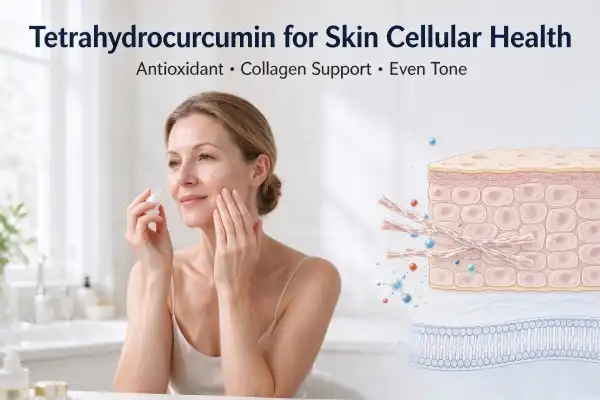
Cosmetic applications represent significant growth opportunities for tetrahydrocurcumin, particularly in anti-aging and skin brightening products. The compound's tyrosinase inhibition capacity makes it effective for addressing hyperpigmentation and uneven skin tone without the staining that limits curcumin cosmetic applications. Formulations incorporate THC into serums, creams, and treatment products targeting photoaging, melasma, and general skin brightening. The antioxidant properties provide cellular protection within skin tissue, supporting collagen preservation and reducing visible aging signs. Functional food applications remain relatively underdeveloped for tetrahydrocurcumin despite promising potential. The neutral colour and chemical stability allow incorporation into beverages, nutrition bars, and other products where yellow staining would prove problematic. Regulatory pathways vary across markets, with some jurisdictions treating THC as a novel food requiring specific approvals. Companies targeting these applications should engage regulatory specialists early in development to navigate approval processes effectively. Clinical applications continue to emerge as research expands understanding of tetrahydrocurcumin's therapeutic potential. Studies investigating neuroprotective effects suggest possible applications in cognitive decline and neurodegenerative conditions. Cardiovascular research explores mechanisms by which THC might support endothelial function and healthy inflammatory responses within vascular tissue. While pharmaceutical development requires extensive investment and regulatory navigation, ingredient suppliers supporting early-stage research contribute to long-term market development. At Fairir, we provide small quantities for research applications, supporting the scientific investigation that ultimately expands commercial opportunities across multiple sectors.
Safe Usage and Dosage Guidelines for Tetrahydrocurcumin Powder
Recommended Dosing Across Product Categories and Demographics
Establishing appropriate dosage recommendations requires balancing efficacy evidence, safety data, and practical formulation considerations. Research literature examining tetrahydrocurcumin's biological activities employs varied dosing protocols depending on specific outcomes investigated. Antioxidant and anti-inflammatory effects in human studies typically utilise doses ranging from 50 mg to 300 mg daily, administered as single or divided doses. Higher doses occasionally appear in research protocols but don't necessarily demonstrate proportionally greater benefits, suggesting a plateau effect for certain endpoints. Product category influences dosing decisions significantly. Dietary supplements positioned for general wellness support often utilise moderate doses in the 100-150 mg range, providing meaningful antioxidant activity while remaining cost-effective for daily use. Products targeting specific therapeutic categories like joint health or cognitive support may justify higher doses backed by research demonstrating benefits at those levels. Cosmetic applications involve topical administration with different dosing considerations—typical formulations incorporate THC at concentrations between 0.1% and 1.0%, depending on product type and positioning. Demographic considerations matter when establishing dosing protocols. Pediatric applications require particular caution and should involve professional medical guidance. Elderly populations represent primary target demographics for many cellular health applications but may require dosing adjustments based on altered metabolism and potential medication interactions. Pregnancy and lactation introduce additional safety considerations, with limited research specifically examining tetrahydrocurcumin in these populations, warranting conservative approaches or professional supervision.
Safety Profile, Potential Side Effects, and Risk Mitigation
Tetrahydrocurcumin demonstrates an excellent safety profile based on available research and the traditional use of curcumin from which it derives. Toxicology studies show minimal adverse effects even at elevated doses significantly exceeding typical supplement levels. This favourable safety profile reflects both the compound's natural origin as a curcumin metabolite and the body's familiarity with processing curcuminoid structures. Gastrointestinal tolerance generally exceeds that of unmodified curcumin, potentially due to improved absorption, reducing GI tract exposure to unabsorbed material. Reported side effects remain rare and typically mild when they occur. Some individuals experience minor digestive discomfort, though this appears less common than with curcumin supplements. Allergic reactions prove extremely rare but remain theoretically possible for individuals with specific sensitivities to Curcuma species. Product labelling should include standard allergen warnings and usage precautions appropriate to the product category and target market regulations.
Quality Assurance, Certifications, and Testing Protocols
Quality assurance begins with Tetrahydrocurcumin powder ingredient specification and verification. Comprehensive certificates of analysis should accompany every batch, documenting identity confirmation, purity analysis, and contamination testing. Identity verification typically employs HPLC, comparing retention times and spectral characteristics against authenticated reference standards. Purity analysis quantifies tetrahydrocurcumin content, with high-quality suppliers guaranteeing a minimum 98% purity. Our analytical methods follow pharmacopeial standards, ensuring accuracy and reproducibility. Contamination testing addresses potential concerns across multiple categories. Heavy metals testing screens for lead, arsenic, mercury, and cadmium—environmental contaminants potentially concentrated during extraction processes. Microbial testing confirms the absence of pathogenic organisms and verifies that total plate counts fall within acceptable limits for the intended application. Pesticide residue testing proves particularly important when using conventionally grown turmeric as a starting material, screening for compounds potentially applied during cultivation. Solvent residue analysis verifies that processing solvents used during extraction and hydrogenation have been adequately removed, meeting pharmacopeial limits. Certifications provide independent verification of quality management systems and specific product attributes. GMP certification demonstrates manufacturing facility compliance with pharmaceutical-quality production standards. Organic certification verifies compliance with organic agriculture and processing standards throughout the supply chain. Additional certifications like Halal, kosher, non-GMO, and allergen-free address specific market requirements and consumer preferences. At Fairir, we maintain comprehensive certification portfolios enabling us to supply material meeting diverse customer specifications and regulatory requirements.
Conclusion
Tetrahydrocurcumin powder is a scientifically proven ingredient that supports cellular health in a number of ways. Its powerful antioxidant activity protects cells from oxidative damage, its anti-inflammatory modulation supports optimal cellular environments, and its high bioavailability ensures that biological effects are felt. These cellular-level benefits can be used in nutraceutical, pharmaceutical, and cosmetic products, making THC a useful ingredient that can meet the growing demand from customers for science-backed functional ingredients. When doing business with another company, it's important to pay attention to their quality management systems, analytical capabilities, certifications, and technical support capabilities. Knowing the differences between tetrahydrocurcumin and regular curcumin products helps purchasing teams make smart choices that are in line with how the product is positioned and what the target market wants. As more studies are done, we'll learn more about how tetrahydrocurcumin supports cellular health. Companies that are ahead of the curve and add this ingredient to their products will be ready to take advantage of opportunities in the rapidly changing wellness market.
FAQ
1. Why does tetrahydrocurcumin offer superior bioactivity compared to regular curcumin?
Tetrahydrocurcumin's hydrogenated structure gives it better stability, higher bioavailability and purely antioxidant activity compared with curcumin. The absence of conjugated double bonds in the central chain removes photodegradation concerns and prevents the prooxidant effects curcumin can show under certain conditions. Research indicates faster absorption and longer systemic circulation, which allows lower doses to reach equivalent biological effects.
2. How can procurement teams assess supplier credibility and product purity?
Buyers should verify manufacturing certifications (GMP and relevant ISO standards) and review certificates of analysis from several recent batches for consistent purity and contamination results. Confirm that purity is measured by HPLC rather than less specific methods, ask whether testing is done in-house or externally, and request customer references from your product category. Test supplier samples through a third-party laboratory before committing to large purchases.
3. What are the typical lead time, packaging and documentation for bulk tetrahydrocurcumin orders?
Standard specifications typically ship within one to three working days, while custom formulations or specialised certifications may take longer. Fairir packs smaller amounts in vacuum-sealed aluminium foil bags and larger orders in 25 kg fibre drums with double-layer food-grade polyethylene liners, and every shipment includes a certificate of analysis. Contact sales for MOQ and quotation details.
4. Can tetrahydrocurcumin be used in both pharmaceutical-grade and food-grade products?
Yes, tetrahydrocurcumin produced under appropriate quality standards suits both pharmaceutical and food applications, although regulatory requirements vary by jurisdiction and product category. Pharmaceutical use typically requires GMP-certified manufacturing and extensive documentation of identity, purity and absence of contamination. Food and supplement markets such as the United States and European Union increasingly demand similar standards, so work with suppliers that can provide the right certifications and consistent quality. Our GMP-certified facility and comprehensive testing protocols support pharmaceutical, nutraceutical and food applications.
Partner with Fairir for Premium Tetrahydrocurcumin Powder Supply
Shaanxi Fairir Biotech Co., Ltd. stands ready to support your tetrahydrocurcumin powder procurement needs with the quality, consistency, and technical expertise your formulations demand. As an established manufacturer with comprehensive GMP certification, advanced analytical capabilities, and production efficiency reaching 98%, we deliver the reliability that pharmaceutical manufacturers, nutraceutical developers, and cosmetic Tetrahydrocurcumin powder formulators require for successful product launches and sustained market growth. Our 10,000 square meter facility, equipped with continuous countercurrent extraction equipment, dual fully automatic production lines, and 14 stainless steel extraction tanks ranging from 500 to 3,000 liters provides the scalability supporting both development quantities and large commercial orders. We maintain rigorous quality control using HPLC, UV spectrophotometry, and comprehensive contamination testing protocols, guaranteeing a minimum 98% purity with complete analytical documentation accompanying every shipment. Multiple certification options, including organic, non-GMO, Halal, and vegan designations, allow you to source material precisely matching your positioning requirements.
Beyond ingredient supply, our experienced technical team provides formulation guidance, stability recommendations, and regulatory support throughout your product development journey. We understand the challenges procurement professionals face balancing quality assurance, cost management, and supply chain reliability—our commitment extends beyond transactional relationships toward genuine partnerships supporting your long-term success. With delivery timelines as rapid as 1-3 working days for standard specifications and competitive bulk pricing structures, we eliminate procurement obstacles that slow innovation. Contact our team today at sales@fairirbiotech.com to discuss your tetrahydrocurcumin powder requirements. Whether you're developing breakthrough cellular health supplements, premium anti-aging cosmetics, or functional food innovations, Fairir delivers the quality ingredients and technical partnership enabling your vision to reach market successfully.
References
1. Majeed, M., Bhat, B., Jadhav, A. N., Srivastava, J. S., & Nagabhushanam, K. (2019). Ascorbic Acid and Tetrahydrocurcumin: Benefits in Cellular Antioxidant Activity and Metabolic Syndrome. Journal of Dietary Supplements, 16(3), 318-332.
2. Panchatcharam, M., Miriyala, S., Gayathri, V. S., & Suguna, L. (2006). Curcumin Improves Wound Healing by Modulating Collagen and Decreasing Reactive Oxygen Species. Molecular and Cellular Biochemistry, 290(1-2), 87-96.
3. Somparn, P., Phisalaphong, C., Nakornchai, S., Unchern, S., & Morales, N. P. (2007). Comparative Antioxidant Activities of Curcumin and Its Demethoxy and Hydrogenated Derivatives. Biological and Pharmaceutical Bulletin, 30(1), 74-78.
4. Yokozawa, T., Kim, Y. J., & Yamabe, N. (2004). Tetrahydrocurcumin Protects Against Peroxynitrite-Induced Renal Damage Through Antioxidative Mechanisms. Biological and Pharmaceutical Bulletin, 27(11), 1740-1743.
5. Okada, K., Wangpoengtrakul, C., Tanaka, T., Toyokuni, S., Uchida, K., & Osawa, T. (2001). Curcumin and Especially Tetrahydrocurcumin Ameliorate Oxidative Stress-Induced Renal Injury in Mice. Journal of Nutrition, 131(8), 2090-2095.
6. Pan, M. H., Lin-Shiau, S. Y., & Lin, J. K. (2000). Comparative Studies on the Suppression of Nitric Oxide Synthase by Curcumin and Its Hydrogenated Metabolites Through Down-Regulation of IκB Kinase and NFκB Activation in Macrophages. Biochemical Pharmacology, 60(11), 1665-1676.