_1751965378790.webp)

How to Choose High-Quality Ube Powder for Manufacturing?
To choose high-quality Ube Powder for making things, you should pay close attention to how pure it is, how consistent the taste is, how stable the production is, and whether the seller has any certifications. If a lab test is clear, the facility is GMP-certified, and every batch is the same quality, manufacturers should give that provider more weight. To make your product stand out, follow the rules, and keep customers happy, you need to pick the right purple yam powder. This is especially important in the food, drink, and supplement industries, where color brightness and taste accuracy are very important for getting people to buy.
Understanding Ube Powder: Origins, Types, and Uses
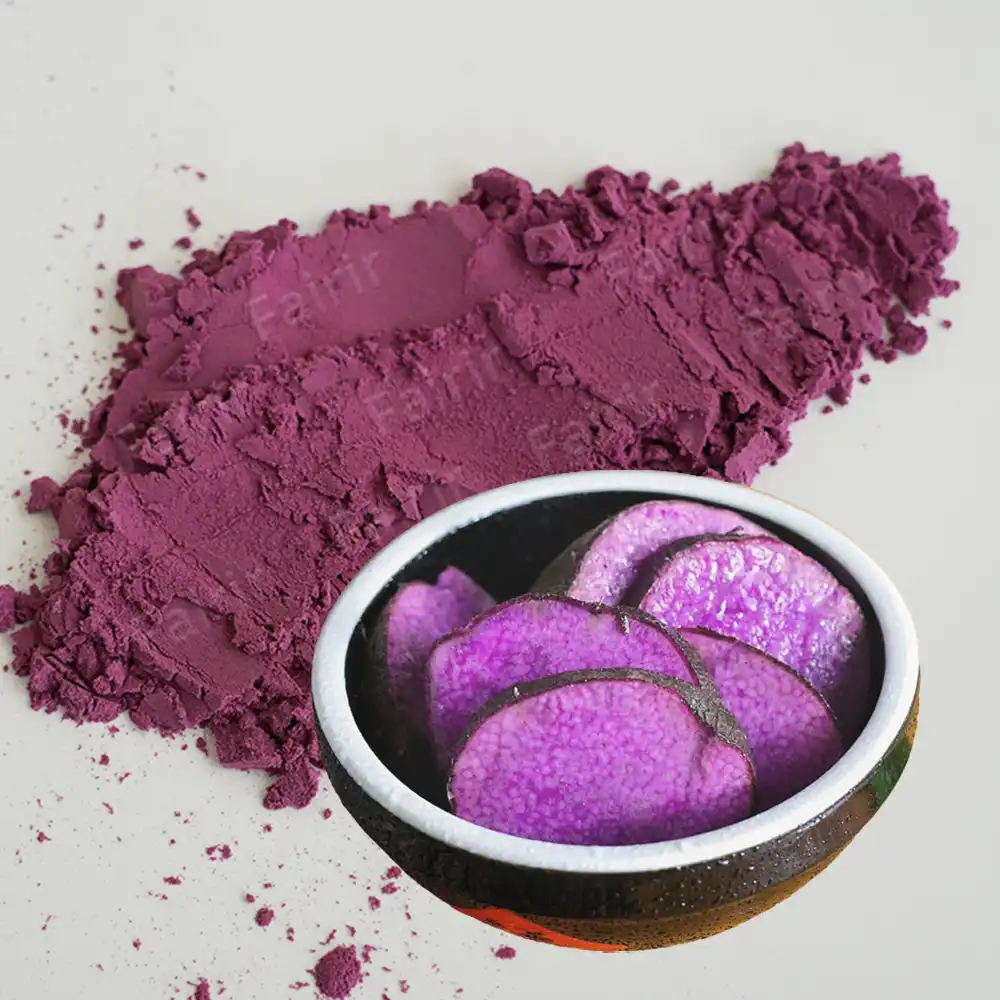
If you're from Southeast Asia, you may have heard of purple yams, which are the main crop that Ube Powder comes from. It's hard to ship fresh ube because it goes bad quickly and comes in different sizes. On the other hand, controlled cooling and grinding are used to make Ube Powder. This makes sure that the particles are all the same size and that the powder is free of germs. After this change, goods can last longer than 24 months if they are kept in the right way. This makes it possible to sell goods all over the world and cuts down on waste in the supply chain.
Nutritional and Functional Characteristics
There are still good things for you in purple yam powder, like fiber, anthocyanins, and micronutrients like vitamin C and potassium. These chemicals help make products with clean labels and back-up claims that natural antioxidants are good for you. It's getting harder to find things that are safe for people with allergies. This fits with the gluten-free idea, which can help the product reach specific groups of people in North America and Europe, where label rules support being honest.
Industrial Applications and Market Demand
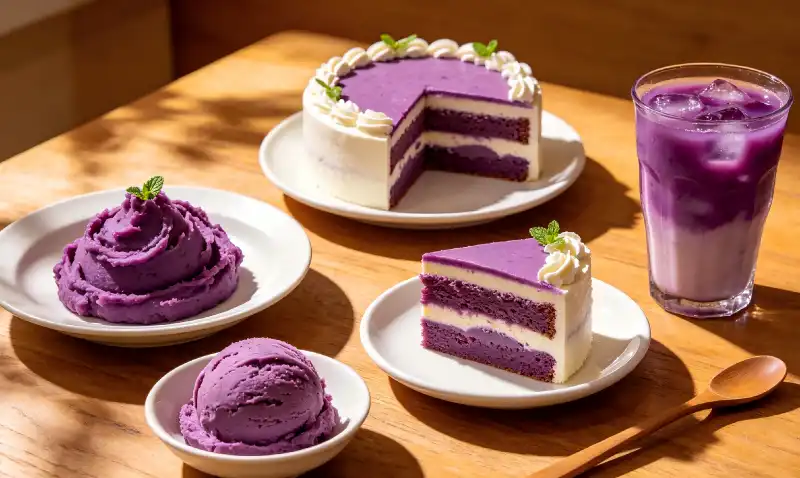
A lot of different things are made with Ube Powder. It is used in restaurants to add a light sweetness and unique purple color to cookies, muffins, specialty bread, and cakes. Drink makers can make shakes and coffee that look great, and ice cream makers can make flavors that aren't available in stores. You can use the vegetable in more than just sweet foods now that you know how to make purple sweet potato pasta and mashed potatoes.
Supplier Landscape and Packaging Standards
Best sellers usually come in a variety of packaging sizes, from 10 kg boxes to 500 kg bulk bags, so they can be used for both small and big production. Things do not rust or get wet while they are being shipped in aluminum foil bags that are vacuum-sealed and have moisture shields. When dealing with international packages that need a long time to arrive, it's especially important for buying teams to know how to use these forms. This way, they can keep quality high while also keeping costs low.
Core Criteria for Selecting High-Quality Ube Powder
A lot of things need to be carefully thought through in order to choose high-quality purple yam powder. The people who work in buying need to set realistic standards that are in line with the needs of the end product and the standards for manufacturing.
Purity and Ingredient Composition
Real Ube Powder should only contain dried purple yam and not any dyes, fillers, or carriers that aren't mentioned. If a growing method has been approved as organic by the USDA or the EU, it means that it does not use GMOs or other illegal chemicals. Heavy metal levels must be kept below certain levels (less than 1ppm for arsenic and less than 0.5ppm for lead), and the Certificate of Analysis must show that there are no sulfur dioxide levels above 10ppm, which can cause allergic reactions.
Sensory Quality and Batch Consistency
Color standardization is still very important. The tastes should be natural and sweet, with no sharp or off notes from oxidation. Sensory screens that check the smell can tell if something is old or if there are problems with fermentation. The product doesn't clump and stays liquid when mixed when the moisture level is between 4 and 8 percent.
Shelf Life and Storage Logistics
Purple yam powder used in industry works for 24 to 36 months as long as it is kept at controlled temperatures below 25°C and relative humidity below 60%. When suppliers offer nitrogen-flushed packaging, their goods are even safer because they keep anthocyanins from breaking down too much through oxidation. To keep the color strength and nutrient profiles when moving to warmer places, processes that are responsive to temperature are needed. The cold chain is used to make this happen.
Certifications and Quality Management Systems
GMP certification means that a company follows the rules for making drugs. For example, they teach their workers, keep their tools clean, and keep track of their batches. It is important to follow HACCP rules so that the risks of biological, chemical, and physical waste are all carefully looked at. If a business is approved by ISO 22000, it means they have good food safety management that blends plans with real-world controls. These requirements make it safer to buy things and make it easy for regulators in certain places to say yes. A very important part of quality control is the infrastructure. With High Performance Liquid Chromatography, suppliers can measure the amount of anthocyanin that is present. UV spectrophotometers can measure how stable the color is when it is exposed to fake light. Today, we can safely remove bioactive chemicals with tools like ultrasonic cleaners and rotating evaporators. The Shaanxi Fairir Biotech building is where we keep these analytical tools and 14 extraction tanks made of stainless steel. The sizes of the tanks range from 500 to 3000 liters. This makes it possible to make a lot of precise things at once.
Comparing Ube Powder with Alternative Ingredients
Comparing useful substitutes through study helps people decide what to buy. Finding out how the different ingredients work helps you pick the best ones for your product and your budget.
Ube Powder vs. Taro Powder
Real Ube Powder is a deep purple color and has a unique flavor. Taro powder, on the other hand, is more lavender-colored and less sweet. The method needs to be changed because taro is starchier, which changes how quickly it soaks up water when baked. The price of taro is about 15 to 20 percent less, but the colors aren't as rich, so higher inclusion rates are often needed. This could make any gains from the beginning go away. People who make high-end promises about "authentic ube" can't use taro instead. This is to protect the integrity of their business.
Powder vs. Liquid Extract Forms
If you use liquid Ube Powder extracts, the taste gets stronger, but it's harder to control how wet dry-mix recipes are. It gets harder to make predictions for restoration, and controlling microbes needs ways to keep things alive. It is easier to keep track of goods when they are in powder form, and shipping costs are lower because water doesn't add to the weight. Powder forms also work perfectly with businesses that make pills, tablets, and powder mixes. It is best to use extract types for liquid supplements where speed of dissolution is more important than ease of handling.
Bulk Procurement vs. Small-Batch Purchasing
When you buy in bulk, usually with at least 100 kg, you can get price cuts of 12 to 18% and a steady supply because the contracts are renewed every three months. On the other hand, small businesses may lose quality when they have to wait a long time. It is better to buy in small amounts (10–25 kg) for research and development (R&D) and to adapt to changes in demand every year, but it costs more per unit and to ship. Buyers who plan look at both the rate of change in goods and the volume prices. Most of the time, they mix bulk sales with flexible plans for extras.
Navigating the Procurement Process for Ube Powder
It takes careful thought about sources and well-thought-out business planning to find good purple yam powder. Getting rid of risks starts with being clear and doing your research.
Identifying Reputable Suppliers
Sellers who are honest show a lot of papers, such as business licenses, export permits, and test results from third-party labs. Make sure that the pictures of the building don't just show stock photos of drying rooms and extraction equipment. The pictures should actually show these things. Well-known companies in your field can give you examples of customers. If a provider lets you check their factories, it means they value openness at work, which is a key sign of trust for long-term relationships.
Understanding Pricing Structures
Ube Powder ranges in price from $18 to $45 per kilogram, depending on how pure it is, whether it is certified organic, and how much you order. Premium organic types cost 30–40% more because they have to follow strict rules when they are grown. It costs a lot to ship things. It costs about $2 to $4 per kilogram to ship bulky items by sea, but up to $8 to $12 per kilogram to ship important orders by air. It is based on unified tariff code 0712.90.85 and is about 6.4% of the total landing cost in the U.S.
Direct Manufacturer Relationships vs. Online Marketplaces
Business-to-business (B2B) websites are helpful, but they charge fees that can be as high as 25% to 35%. When you work with makers like Fairir, you skip the middle guys. And now you can get private labeling, customizable packaging, and easy payment terms. Direct ties let you connect with support teams of experts who know how to use ingredients in certain cases. This speeds up the process of making formulas better.
Logistics and Customs Considerations
It is part of foreign sourcing to make sure that all the paperwork is in order, such as phytosanitary licenses, certificates of origin, and FDA Prior Notices for U.S. goods. Lead times for boat freight from Asian sources are usually 25 to 35 days, so you need to plan for extra stock. Goods stay fresh while moving on warm seas in barrels that can control the temperature. When you know the Incoterms (FOB, CIF, or DDP), it's clear who pays for what and who takes the risk. This keeps you from arguing over broken goods.
Practical Tips and Quality Assurance for Using Ube Powder in Manufacturing
To get the most out of Ube Powder, it needs to be checked carefully and handled carefully throughout the whole process.
Sample Testing and Sensory Evaluation
Before you place a big order, ask for 500g to 1 kg samples to be sent so that you can test them thoroughly. Try the material in water, oil, and high-sugar environments to see how well it melts and spreads. Test how long samples will last by storing them at 40°C for 14 days and then compare how well they keep their color and taste to fresh food. There should be at least five trained professionals in each sensory group. These professionals should use standard scoring systems to rate how something looks, smells, tastes, and feels. What the seller says is backed up by tests in the lab. HPLC tests show that the amount of anthocyanin in food is usually between 80 mg and 150 mg per 100g. It was checked for bacteria, and the Total Plate Count is less than 1,000 CFU/g. The numbers for yeast and mold are also less than 100 CFU/g, and the test for E. coli is negative. Both Salmonella and E. coli. The heavy metal screening with ICP-MS makes sure that USP standards are met. We always follow these rules at our 10,000-square-meter GMP center. This keeps expensive product returns and brand damage from happening.
Industrial Applications and Formula Development
You can add them to cake mixes and cookie dough at rates of 2 to 5 percent. This is good for bakeries because they add color without changing the shape. Concentrations used in most ice cream recipes are between 3 and 8 percent. This is a good mix between color strength and taste effect. Between 1% and 3% of photogenic purple can be added to smoothie bases and coffee mixes to make them purple. You need to be careful when using tasty foods. Adding 0.5 to 2% to pasta or mashed potatoes makes them look more interesting without taking away from the rich tastes. The quality of the result depends on how it is hydrated. Blending the dry ingredients first makes sure they are spread out evenly, and making slurries before mixing the wet ingredients keeps them from sticking. If the temperature is high, you should keep the item away from it for a long time above 80°C, because it breaks down anthocyanins and makes colors look dull. How colors look changes based on the pH level. It is said that colors turn red in acidic places and blue in alkaline places. This gives you freedom to mix colors in interesting ways.
Storage and Contamination Prevention
Places where things are made need to have different storage areas where the temperature and humidity can be tracked. When packages are covered, delicious smells like cocoa or vanilla don't get into other foods. When you use FIFO to move your goods, you make sure that older items are used up before new ones arrive. Rust poisoning doesn't happen with tools made of stainless steel or food-grade plastic. Bug sprays and air systems with HEPA screens are used on a regular basis to protect the quality of the ingredients. The fact that we have two fully automatic lines that are 98% efficient in our production infrastructure shows that we are serious About using secure working places to keep contamination at bay. Vacuum belt drying systems and continuous countercurrent extraction tools cut down on the number of places where people touch the material. To make sure that finished goods are spread out evenly, ultra-micro pulverizers make sure that the bits are spread out the same amount.
Conclusion
To choose high-quality purple yam powder, you need to think about your manufacturing goals, your brand's reputation, the powder's technical specs, the source's qualifications, and how to get it to your factory. Tests in a lab must be done by buyers to make sure the goods are clean. They must also make sure that the quality of each batch is the same and look for papers that show the products follow all the rules. Cost-benefit choices are easier to make when you can compare different items. The supply chain also works better when you know how to buy things and handle transportation. To keep a brand's image safe and make sure that goods always work the same way, strict quality control measures are put in place. For example, samples are tested and kept clean. You can change the way you buy products from a one-time deal to a long-term relationship that supports innovation and market competitiveness when you work with sellers who have a lot of experience, are easy to talk to, and have advanced production skills.
FAQ
Is Ube Powder safe for consumption in dietary supplements?
Ube Powder made from food-grade Dioscorea alata is considered GRAS when it is made according to FDA rules. Sellers you can trust will include allergy statements that show the product is gluten-free and free of other major allergens. Testing things for microbes makes sure they don't have any germs and can be used to hold nutrients. The serving sizes are safe to use every day because they have been screened for heavy metals.
Does purple yam powder contain gluten or common allergens?
Because real Ube Powder doesn't have gluten in it, it can be used in recipes that don't have gluten. There is a chance of cross-contamination in places that make things from wheat. Customers can feel safe shopping at suppliers with gluten-free production lines because they have been approved by allergy control. Always look at the Certificate of Analysis to see how the building is run and how shared equipment is used.
What are optimal storage conditions for bulk quantities?
In climate-controlled rooms that stay between 18 and 25°C and have a relative humidity below 60%, keep big purple yam powder in containers that can't be opened. Nitrogen washing makes food last longer by removing the air that breaks down anthocyanins. So that stock doesn't sit around for more than 24 months, FIFO rules should be used to move it around. Check the structure of the package often for signs that water is getting in or the seal is breaking.
Partner with Fairir for Premium Ube Powder Supply
At Shaanxi Fairir Biotech Co., Ltd., you can get good purple yam powder. They are ready to help you with your business needs. Their production is recognized by GMP, and they have strict rules in place to make sure the standard. The state-of-the-art HPLC, UV spectrophotometry, and spinning evaporators in our 10,000-square-meter building make sure that every batch meets the strict standards for medicines. Thanks to our 14 stainless steel extraction tanks and two fully automatic production lines that work 98% of the time, we can give stable quality at a fair price. Our skilled staff can help you quickly with technical issues and communicate clearly, whether you need a few samples for research and development or a lot of them packed in a way that fits your needs. Send us an email at sales@fairirbiotech.com to get samples, fair prices, and full specs from a Ube Powder maker you can trust and who wants your long-term success.
References
1. Champagne, E.T., & Bett-Garber, K.L. (2019). Functional Properties and Food Applications of Purple Yam (Dioscorea alata) Powder. Journal of Food Science and Technology.
2. Rodriguez-Amaya, D.B. (2016). Natural Food Pigments and Colorants. Current Opinion in Food Science, Vol. 7, pp. 20-26.
3. Harakotr, B., & Suriharn, B. (2021). Anthocyanin Stability and Degradation Kinetics in Purple Yam Extracts During Processing and Storage. Food Chemistry, Vol. 341, Article 128239.
4. Stevenson, D.G., & Eller, F.J. (2018). Rheological and Physicochemical Properties of Purple Yam Flour in Food Systems. International Journal of Food Properties, Vol. 21, No. 1, pp. 167-182.
5. Liu, Y., & Zhao, G. (2020). Quality Control Strategies for Botanical Powders in Nutraceutical Manufacturing. Journal of AOAC International, Vol. 103, No. 4, pp. 1042-1049.
6. FDA Center for Food Safety and Applied Nutrition (2018). Guidance for Industry: Botanical Raw Materials in Dietary Supplements. U.S. Department of Health and Human Services.