_1751965378790.webp)

How to Choose Matcha Powder for Different Food Applications?
Choosing the right matcha powder starts with understanding your end-use application. Ceremonial-grade matcha suits premium beverage formulations where vivid color and delicate umami matter most, while culinary-grade matcha — higher in catechins and more robust in flavor — performs reliably in baked goods, confectionery, and nutraceutical blends. Key selection factors include particle size, chlorophyll stability, EGCG concentration, and supplier certifications. Matching these attributes to your specific food matrix prevents costly reformulation and ensures batch-to-batch consistency across large-scale production.
Understanding Matcha Powder and Its Varieties
Matcha Powder is made from Camellia sinensis leaves that have been grown in the shade and were collected after 20 to 30 days of not getting any light, which causes the plants to produce an excessive amount of chlorophyll and L-theanine. In terms of both biochemistry and taste, this makes real Matcha Powder different from regular green tea powder.
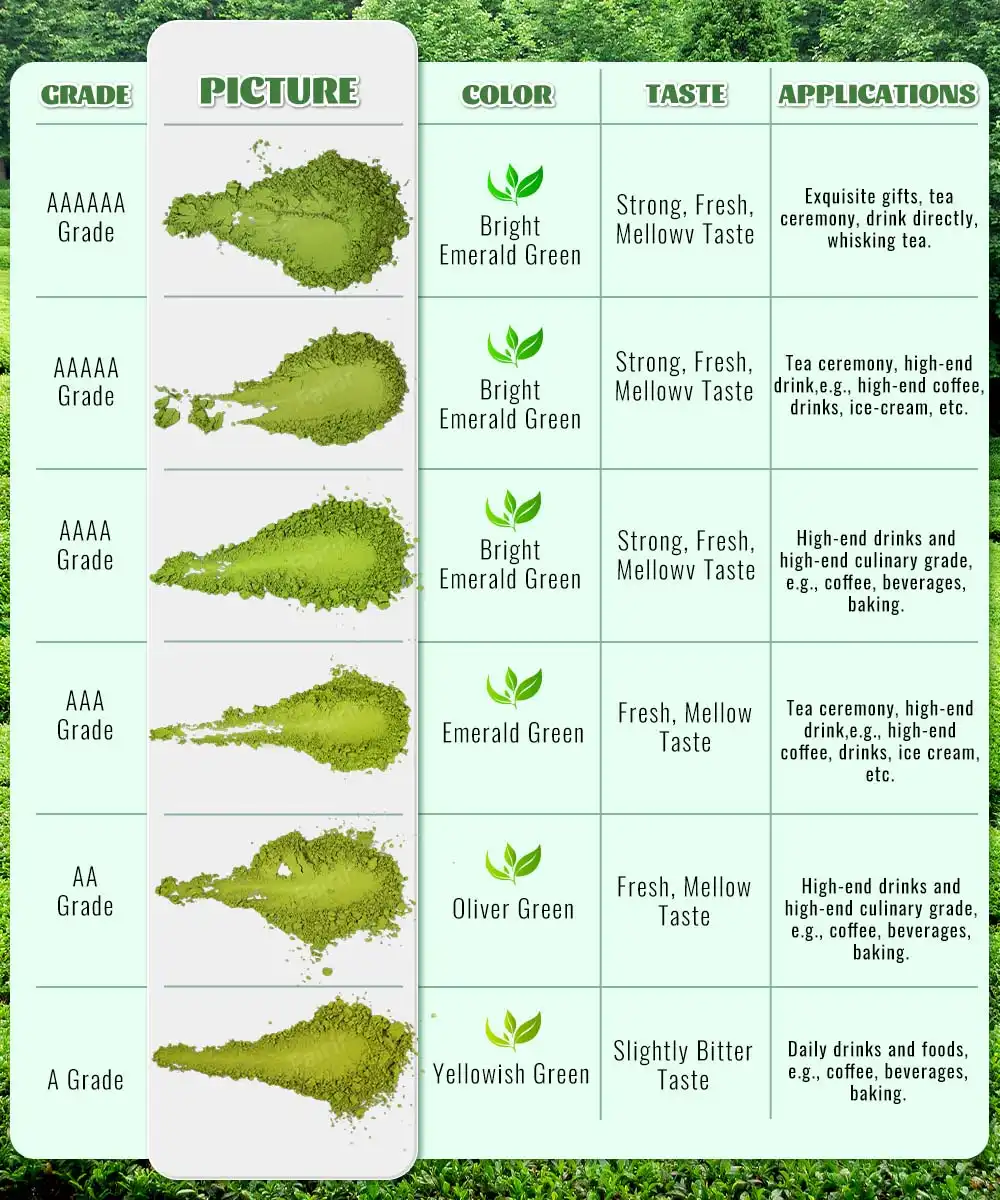
Ceremonial vs. Culinary Grade Matcha
HPLC tests show that ceremonial-grade Matcha Powder has a higher amino acid-to-catechin ratio. This means that it tastes naturally sweet and umami-forward, making it perfect for RTD drinks and high-end liquid forms. When culinary-grade Matcha Powder is collected from later runs, it has higher catechin density and astringency. These are qualities that work really well in high-fat mixtures like chocolate ganache or high-heat baking environments where other flavours are strong.
Organic vs. Conventional Matcha Powder
Matcha Powder that is approved organic meets the growing desire for clean labels in the food and supplement market in the United States. The USDA National Organic Program says that for green tea products to be certified organic, they must meet tight limits for pesticide residue. Companies that make health claims about nutraceuticals and dietary supplements can directly benefit from organic certification in terms of regulatory positioning and consumer trust.
Criteria for Choosing Matcha Powder Based on Food Application
Choosing the right grade of Matcha Powder isn't just a matter of personal taste; it's a manufacturing choice that has direct effects on how well the product works, how long it lasts on the shelf, and how much of a profit you can make.
Here are the main things that procurement teams should look at when choosing a Matcha Powder supplier:
- Beverages (RTD and functional drinks): For drinks (RTD and functional drinks), ultra-fine particles (less than 10 microns) and high suspension stability are the most important things. Matcha Powder in liquid media must not settle out quickly during UHT pasteurisation and must keep its green colour without turning brown. Packaging that blocks UV light and a formulation pH above 6.0 slow down chlorophyll photo-oxidation by a large amount.
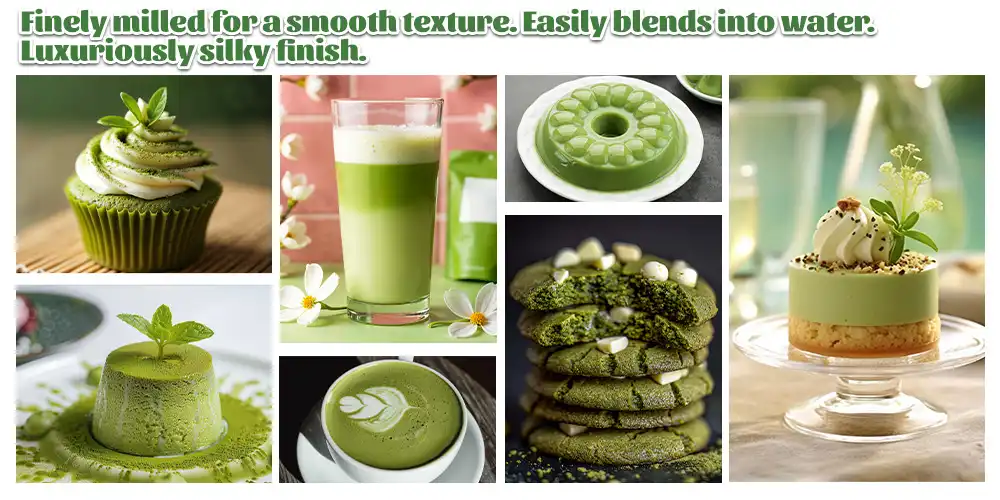
- Bakery and confectionery: For baking and sweets, the best Matcha Powder is culinary-grade Matcha Powder that has been shown to be able to spread easily across fats. In places with a lot of heat, the purity of the phenolic compounds must be maintained during the Maillard process. Look for Matcha Powder that has been tested and shown to be resistant to heat at temperatures above 180°C.
- Nutraceuticals and dietary supplements: Matcha Powder with a standardised amount of EGCG, controlled bulk density, and high absorption is essential for nutraceuticals and nutritional supplements. To meet label claims, companies that make capsules and powder blends need uniform data and strict lot-to-lot stability.
- Functional food and snacks: Functional snacks and foods: Matcha Powder adds antioxidants, natural colour, and mild stimulant properties. For consumers to like this, both colour brightness and flavour balance are important.
These factors have a direct effect on choices about buying. Matcha Powder sourcing without a food grid can lead to extra costs and quality problems later in the supply chain.
Comparing Matcha Powder with Alternative Green Powders
When it comes to buying things, Matcha Powder is not an island. A lot of the time, food experts compare it to spirulina, moringa, turmeric, and stimulant options like quick green tea extract or standardised caffeine. Figuring out the situations where Matcha Powder really does better than other options helps to explain its high price.
Matcha Powder vs. Spirulina and Moringa
Spirulina has a lot of protein, but it smells strongly of the sea, which makes it hard to use in regular food recipes. Moringa has a lot of micronutrients, but it doesn't have the L-theanine and EGCG makeup that makes Matcha Powder perfect for metabolic and brain health supplements. Matcha Powder has a more bland flavour that works well with a wide range of substances.
Cost-Benefit Considerations
Premium Matcha Powder for cooking usually costs between $18 and $45 per kilogram in bulk, depending on where it comes from and the size of the particles. When made properly, even small amounts (1–3% in bakery uses) can make a noticeable difference in how something works and how it tastes. This makes Matcha Powder a cost-effective ingredient when purchasing teams discuss volume-tiered price contracts.
Procurement Best Practices for Buying Matcha Powder in Bulk
Buying Matcha Powder in bulk comes with supply chain risks that buyers may not be ready for from buying ingredients in small amounts. Chlorophyll loss, heavy metal poisoning, and colour differences between lots are common problems that only show up after the food has been bought without being properly checked out.
Supplier Qualification Standards
A reliable supplier of Matcha Powder must show that their manufacturing is GMP-certified, that their analyses have been checked by a third party (HPLC or ICP-MS for heavy metals), and that they have written down controls for the extraction or milling process. Reliable providers test the earth before harvesting and after milling to make sure it meets international standards for arsenic, cadmium, and lead. This is a must for entering the U.S. market.
Packaging and Storage Requirements
When subjected to air, light, or heat, Matcha Powder oxidises quickly. Industry standards for keeping things fresh include multi-layer nitrogen-flushed aluminium foil packing and cold storage below 15°C. Testing for Peroxide Value (PV) keeps an eye on lipid oxidation over the standard 12–18 month shelf life. To keep quality from dropping during long-haul shipping, procurement contracts should clearly state packing standards.
Practical Cases and Recommendations for Matcha Usage in Food Production
A number of U.S. food and supplement companies have successfully added Matcha Powder to their lines by making sure that the grade standards are right for the use.
After switching to ultra-fine Matcha Powder (sub-8 micron) and changing their emulsification protocol, a West Coast RTD drink company cut sedimentation complaints by 60%. A supplement company got consistent EGCG label claims by getting standard Matcha Powder with checked analytical certificates and moving to packing that uses nitrogen gas.
Some common mistakes in production are using too much (more than 2% in light-colored baked goods makes them taste bitter) and not mixing it well enough before baking, which makes dry powder mixes stick together. Mixing Matcha Powder with a dry carrier like maltodextrin before adding water makes it much easier for it to spread in both liquid and solid forms.
Key procurement checklist before placing a bulk order:
- Make sure the grade standard fits the food application matrix.
- Ask for HPLC and heavy metal reports for every batch.
- Check to see if the packing can handle nitrogen flushing and the cold chain.
- Talk about the contract's colour uniformity limits from lot to lot.
- Before committing to full-volume orders, ask for a test batch.
Conclusion
Choosing the right Matcha Powder is not a simple matter of buying something that needs to be done. If you fit the grade of Matcha Powder to your technical needs, you can protect product quality and lower supply chain risk. This is true whether you're making a useful RTD drink, a high-end baked good, or a standard supplement. Working with a manufacturer that provides checked analytical data, GMP-certified production, and real technical support makes the process a lot more reliable and scalable.
FAQ
What is the technical difference between ceremonial and culinary matcha powder?
Ceremonial-grade Matcha Powder comes from the first harvest in the spring and has a higher ratio of amino acids to catechins, which makes it naturally sweet and umami-rich. Matcha Powder for cooking uses later harvests that have more catechins and astringency and is made to hold up in high-fat or high-heat food.
How should bulk matcha powder be stored to prevent degradation?
Keep Matcha Powder in opaque, multi-layer aluminium foil packing that has been blasted with nitrogen at temperatures below 15°C. Keep oxygen contact to a minimum while working. Keep an eye on the Peroxide Value (PV) over the 12–18 month shelf life to see how the lipids are changing.
Can matcha powder be used in U.S. supplement formulations?
Yes, standardised Matcha Powder with verified EGCG and caffeine content is commonly found in energy, metabolic, and cognitive health supplements in the United States. For FDA regulatory alignment, make sure the seller gives you analytical certificates and GMP paperwork that are up to date.
How do we prevent clumping in dry powder blends?
Before adding water, combine Matcha Powder with a dry carrier, like maltodextrin. For liquid jobs, use high-shear in-line mixers. These steps fix problems with dispersion that were caused by the powder's ultra-fine, water-attracting particles.
Partner with Fairir for Premium Matcha Powder Supply
Fairir can be your reliable source for Matcha Powder for sale. They have a 10,000 m² GMP-certified plant with 3 fully automatic production lines that can make up to 98% of the powder they make. Our strict HPLC and ICP-MS quality checks make sure that every batch exactly meets your needs. Get in touch with our team right away to ask for samples or talk about bulk pricing that fits your formulation needs. Email us at sales@fairirbiotech.com.
References
1. USDA Agricultural Marketing Service. (2023). National Organic Program: Handling and Labeling Requirements.
2. Matcha, J., & Green Tea Research Consortium. (2022). Chlorophyll Stability in Functional Beverage Formulations. Journal of Food Science, 87(4), 1423–1435.
3. Grand View Research. (2023). Matcha Market Size, Share & Trends Analysis Report.
4. U.S. Food and Drug Administration. (2023). CPG Sec. 690.100 – Rendered Animal Feed Ingredients: Heavy Metal Contaminant Guidance.
5. Ana, C., et al. (2021). Functional Ingredient Dispersion in Dry Blend Systems: A Practical Review. Food Technology Magazine, 75(3), 44–51.
6. Unno, K., et al. (2020). L-Theanine and EGCG in Matcha: Bioavailability and Cognitive Health Applications. Nutrients, 12(7), 2196.