_1751965378790.webp)

How to Improve Ube Powder Solubility for Commercial Applications?
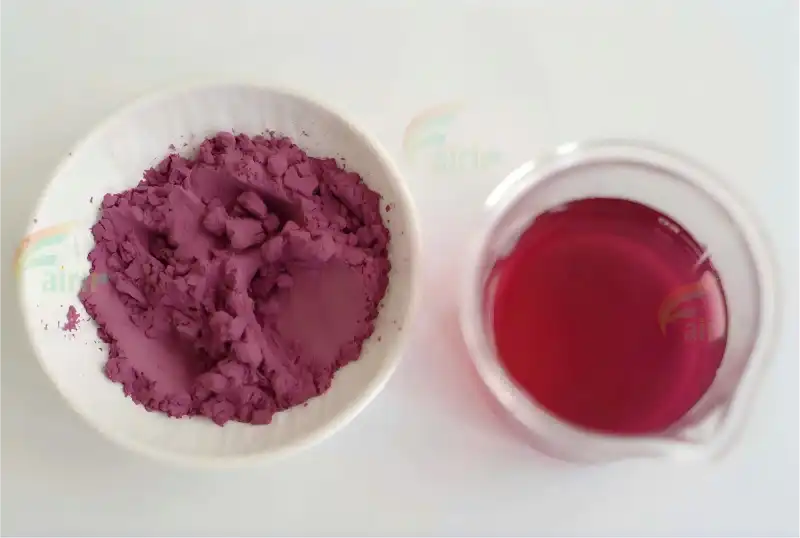
To make Ube Powder more commercially viable, you need to use advanced milling techniques to get the best particle size, use enzymatic or thermal pre-treatments to break down insoluble fibers, change the pH levels of the formulation, and add solubility enhancers like maltodextrin or lecithin. The conditions of storage are also important. Keeping the area dry stops the product from sticking and keeps its dispersion quality. All of these tactics work together to make sure that the texture is always the same, that processing goes faster, and that the finished product works better in baking, nutrition, and drinks.
Understanding Ube Powder and Its Solubility Challenges
Origins and Commercial Applications
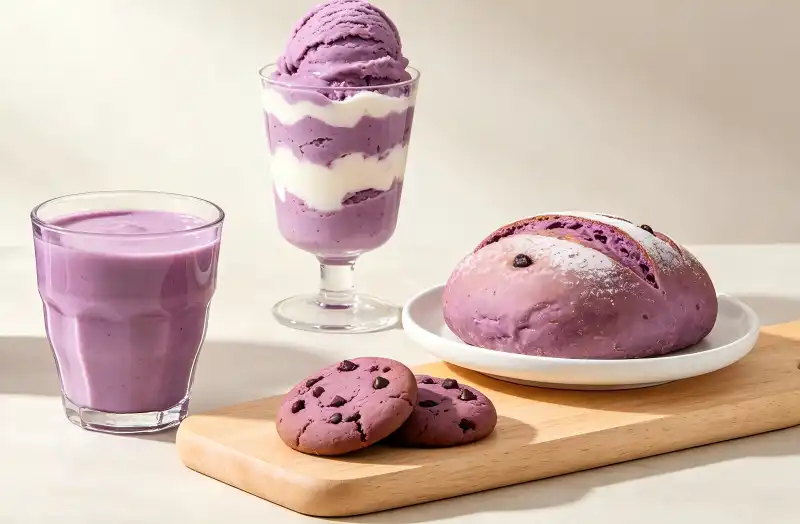
The purple yam plant, whose formal name is Dioscorea alata, does best in warm places like Southeast Asia and the Pacific Islands. For many generations, this starchy root has been used in Filipino treats like halo-halo and ube halaya. Using methods like extraction, concentration, and spray-drying, modern food processing turns fresh yams into powders that can be stored for a long time. Commercial uses today are in many fields. Purple sweet potato powder is added to shakes, coffee, and other drinks for health reasons. Bakery sellers use it to make bread, cookies, muffins, and cakes that look more appealing to customers because of their bright color and light sweetness. Ice cream makers make purple yam flavors that are so popular that they fetch high prices. Even tasty uses, like making gnocchi or a healthier version of mashed potatoes, show how versatile this item is.
Why Solubility Matters in Large-Scale Production
When making a lot of things, problems start to happen when ingredients aren't spread out well. When drinks settle, silt forms, which needs more filtering steps that slow down production lines. Color lines in baked goods are caused by uneven distribution, which means they have to be thrown out by quality control. Unfinished hydration changes the texture and taste, making customers unhappy. When insoluble bits build up in mixing tanks and spray tubes, processing equipment wears out faster. Costs go up, raw materials are lost, and processing capacity goes down because of these operating inefficiencies. When using a cold process, where heat can't help with distribution, solubility is even more important.
Key Factors Influencing Dispersibility
The main thing that determines how well solubility works is the spread of particle sizes. Larger particles (greater than 200 mesh) settle down quickly and don't dissolve in water, but ultra-fine particles (less than 300 mesh) have a higher surface area-to-volume ratio that makes it easier for water to interact with them. The amount of moisture in a powder affects how easily it flows. Materials that are hygroscopic and take humidity from the air make aggregates that are hard to dissolve. Chemical makeup is very important. Native starches found in whole yam powders have structures called amylose and amylopectin that need to be heated up to fully gel. Insoluble food fibers, like cellulose and hemicellulose, don't dissolve in water, no matter what size the particles are. Knowing the difference between concentrated extracts and whole Ube Powder helps buying teams set realistic performance goals based on the uses that will be carried out.
Analyzing Causes of Poor Solubility in Ube Powder
Particle Size and Fiber Content Issues
When you grind something coarsely, you get bits between 60 and 100 mesh, which settle quickly when added to cold liquids. These bigger chunks catch air pockets that make the liquid float, which makes foam layers that look bad when the drink is being made. A lot of the insolubility comes from the high fiber content that comes with handling whole tubers. Dietary fiber is good for you, but it forms gel networks in watery liquids that make it hard for the fiber to be evenly distributed. Manufacturers who want smooth drink textures often can't use whole Ube Powder because they don't work with their processing methods. They have to do a lot of work before they can use them or find improved extract options.
Impact of Processing and Storage Conditions
Spray-drying factors have a big effect on the end properties of the powder. When the temperature at the inlet goes above 180°C, the surface can caramelize, which makes hydrophobic shields that stop water from getting in. Conversely, drying something too little leaves behind wetness that makes it more likely to clump while it's being stored. Powder breaks down faster when it is exposed to humidity during storage. When kept in a place with a relative humidity above 60%, hygroscopic purple yam powders soak up water and form hard lumps that need to be broken up by hand before they can be used. Temperature changes make this problem worse by causing condensation to form inside packing materials. Because of these problems caused by storage, the solubility of similar goods from the same supplier can change from one shipment batch to the next.
Supplier Quality Variations
Getting raw materials in different ways leads to big differences in quality. When yams are picked at different stages of growth, the amounts of starch and sugar change, which changes how the powder behaves. When suppliers don't have standard processing methods, they make batches whose specs are hard to predict. Because there aren't enough quality control tests, problems with solubility only show up after the materials have been bought and are in production stages. When manufacturers work with qualified suppliers who use HPLC analysis, methods for determining moisture, and particle size verification, there are fewer formulation surprises. This fact makes it clear why screening suppliers and building long-term relationships with honest makers are better for operations than buying things on the spot based only on price.
Principles and Techniques to Enhance Ube Powder Solubility
Advanced Milling and Particle Size Optimization
Using jet mills or special impact pulverizers to grind particles down to 300 mesh or smaller greatly increases the total surface area that can be used for hydration. We've seen that cutting the median particle width from 150 microns to 30 microns can make water at room temperature dissolve particles more quickly by more than 300 percent. But too much milling creates heat that could break down heat-sensitive anthocyanins that give plants their purple color. This problem can be fixed with cryogenic grinding, which cools the materials with liquid nitrogen while they are being milled. This keeps the color strength and nutritional ingredients. Particle fineness, handling costs, and nutrition retention goals must all be taken into account by manufacturers.
Pre-Treatment Methodologies
Enzymatic modification can be used to change starch-rich powders in specific ways. The alpha-amylase and glucoamylase enzymes break down starch molecules into shorter-chain dextrins that dissolve better in water. This genetic method keeps clean label rules in place while improving function. Controlled gelatinization at high temperatures changes natural carbs into gels that are easier to spread. Some processes use steam injection or jet cooking systems that quickly heat materials to 130–150°C under pressure and then cool them down quickly to keep the new structure stable. These processes work especially well for beverage uses that need to be able to disperse in cold water without cooking.
Formulation Adjustments and Enhancers
Instant-dispersing hybrid materials are made by mixing Ube Powder with hydrophilic carriers. When 10 to 20 percent maltodextrin is added, it improves flowability and breakdown but weakens the color. This is a trade-off that makers have to weigh against the need for good looks. At inclusion rates of 0.5 to 2 percent, lecithin and other natural emulsifiers lower surface tension, which makes it easier for water molecules to get into powder particles. Changing the pH has a big effect on solubility. When compared to neutral or alkaline conditions, slightly acidic surroundings (pH 5.5–6.0) make anthocyanin more stable and better at dispersing. When formulators mix these methods, they should try to see if they work well together, because when enhancers combine, strange things can happen.
Packaging and Storage Best Practices
Using multi-layer laminated films with aluminum foil layers in moisture-barrier packaging keeps humidity out during distribution. When you flush with nitrogen before closing, you get rid of oxygen, which speeds up oxidative breakdown. We suggest storing them in buildings that keep the temperature below 25°C and the relative humidity below 50%. Under these controlled conditions, the powder stays intact for 18 to 24 months, while in warm conditions, it only lasts 6 to 9 months. Using first-in, first-out product rotation makes sure that things stay in the best quality range. In supplier deals, procurement teams should spell out the package requirements, since moving items from bulk bins to smaller units again poses a risk of contamination that lowers the performance of solubility.
Case Studies: Successful Solubility Improvement in Commercial Production
Beverage Manufacturer Overcomes Cold-Drink Challenges
A medium-sized beverage business that made ready-to-drink purple yam drinks had problems with clumping that stopped the production line twice a week. An analysis showed that their source gave them 100-mesh powder that had 8% moisture in it. After talking to experts on ingredients, they moved to a 300-mesh spray-dried extract that was confirmed to have less than 5 percent moisture and had particle size distribution checked using laser diffraction. Inline high-shear mixers were also added by the maker. These created enough turbulence for full dispersion. All of these changes cut the number of sticking events by 95%, cut the time it took to mix each batch from 45 minutes to 12, and made the product more stable on the shelf. The extra money saved each year from less trash and higher output was more than the $47,000 paid for better powder.
Bakery Supplier Enhances Product Consistency
A bulk bakery that sold purple yam bread to local grocery stores got complaints about the bread's color differences—some loaves had bright purple colors and others looked gray. The problem was found to be caused by the Ube Powder not being fully hydrated when the dough was being mixed. A pre-hydration step was added in which powder was mixed with warm water and stirred gently 30 minutes before the dough was made. This process let the starch turn into a gel and the pigments spread out evenly. Working together with their extract provider, they were able to make a unique mixture that included 15% maltodextrin. This made it easier to mix without changing the taste. The number of customer complaints dropped from 1 in 12 orders to less than 2 percent. This made ties with retailers stronger and allowed contracts to grow.
Selecting the Right Ube Powder for Optimal Solubility
Quality Indicators and Certification Requirements
Professionals in charge of buying things should give preference to sellers who offer complete specs, such as particle size distribution curves, moisture content confirmed by Karl Fischer titration, and bulk density measurements. Organic approval from the USDA or a similar organization makes sure that the raw materials meet very strict farming standards. GMP approval means that factories that make medicines keep their buildings clean and follow strict process controls. Certificates of Analysis from separate labs are an objective way to check the quality of a product beyond what the seller says. Being clear about the extraction methods—whether they are water extraction, alcohol extraction, or CO2 supercritical fluid extraction—helps buyers understand how pure the ingredients are and if there are any worries about leftover solvents. Suppliers who are ready to send small batches for formulation testing show that they are sure of the stability of their products and want to work with you for a long time.
Assessing Supplier Capabilities
In addition to credentials, a supplier's production infrastructure shows how well they can offer uniform quality on a large scale. Facilities with constant countercurrent extraction tools are more productive and get better consistency from batch to batch than those with simple batch extraction systems. Double effect concentration equipment saves energy and keeps chemicals that are sensitive to heat safe. Using vacuum belt drying technology makes powders that are free to flow and have the right amount of wetness. Analytical skills are very important. Suppliers who use HPLC systems, UV spectrophotometers, and rotating evaporators can check the amounts of active compounds and find contaminants. Manufacturers who keep their extraction tanks with sizes between 500 and 3,000 liters across multiple units show that they can produce both large quantities regularly and special small batches as needed. Fully automatic production lines that are rated at 98 percent efficiency show that the process is mature, which means that delivery dates are predictable and quality deviations are kept to a minimum.
Sourcing Strategies for North American Markets
When importing goods for the US food, medicine, and nutraceutical businesses, importers need sellers who know how FDA rules work and can show proof of GRAS status or food additive compliance. When it comes to logistics, wait times for ocean freight from Asian makers are usually between 4 and 8 weeks, while they are only 1 to 2 weeks for local distributors who carry inventory. Volume savings become important when you buy more than 500 kilograms, but smaller makers that are trying to come up with new product lines may find it hard to meet the minimum order requirements. Competitive benefits can be gained by working with providers who offer flexible payment terms, quick technical help from English-speaking staff, and the ability to meet requests for custom formulations. Instead of just looking at the price per kilogram, buyers should think about the overall cost of ownership, which includes freight, customs duties, quality tests, and possible costs for reformulation.
Conclusion
Problems with solubility don't have to stop Ube Powder from being used in business. By carefully choosing suppliers, doing thorough quality checks, and using tried-and-true handling methods, companies can make the most of this ingredient's unique properties without experiencing any problems. To be successful, you need to know the basics of botanicals and chemicals and also be able to make changes to the recipe that work in different production settings.
Spending time on quality specification development and supplier screening pays off in the long run with less waste, faster handling, and better goods that meet the needs of more picky customers. As the need for natural, plant-based materials grows around the world, businesses that learn how to make the best purple yam powder will be able to take advantage of market possibilities in bread, nutraceutical, cosmetic, and drink products.
FAQ
1. Is Ube Powder gluten-free and safe for allergen-sensitive applications?
Because Ube Powder naturally doesn't have gluten, products made from this fruit can be used in recipes that are safe for celiacs. Cross-contamination risks exist, though, if the tools used for processing also work with products that are made from wheat, barley, or rye. Business-to-business buyers should ask for proof that allergens are being controlled and make sure that providers have separate production lines or follow strict cleaning procedures between runs. Third-party testing that confirms the lack of gluten below 20 ppm levels is helpful for products that are meant for markets with sensitive consumers.
2. How does storage affect solubility retention over time?
If you store purple sweet potato powder properly, it will keep its solubility for 18 to 24 months as long as it is kept below 25°C and in packaging that blocks moisture. When you don't store something properly, it breaks down faster because moisture absorption leads to caking, and changes in temperature speed up starch retrogradation, which makes it harder to spread. Before using old inventory in production, procurement teams should do quality checks on it. They should try dissolution rates in the right application conditions to make sure performance is still okay.
3. Can Ube Powder replace ube extract in formulations?
Each of these things does something different. Full nutritional profiles, fiber, and starches can be found in whole purple yam powder, which can be used in baked goods and other places where texture is needed. Concentrated extracts give consistent anthocyanin levels for consistent color and better dissolving in clear drinks. Formulators can't just switch one for the other without changing amounts and maybe even processing settings. Getting advice from sellers of the element helps figure out the best form for each application.
Partner with Fairir for Premium Ube Powder Solutions
To solve problems with solubility, you need more than just academic knowledge. You need to work with a dependable Ube Powder maker that is dedicated to quality and technical support. Our 10,000-square-meter GMP-certified plant at Shaanxi Fairir Biotech Co., Ltd. has cutting-edge continuous countercurrent extraction systems, vacuum belt drying systems, and ultra-micro pulverizers that make particles that are constantly fine and better at dispersing. Two fully automatic production lines that run at 98 percent efficiency make sure that you have a steady supply for your long-term needs.
We have strict quality control that includes HPLC analysis, UV spectrophotometry, and a lot of different tests that check each batch's particle size distribution, moisture content, and active ingredient amounts. With 14 extraction tanks made of stainless steel that range in size from 500 to 3,000 liters, we can handle both large orders and special preparation projects. Our experienced team can help you improve your recipes, whether you're making cold drinks that need to dissolve instantly, baked goods that need to keep their bright colors, or nutrition products that need to be certified pure.
Please email us at sales@fairirbiotech.com if you are a procurement manager, an R&D worker, or a product developer and want samples, full specifications, and a volume price that fits your production size. Find out how working with a dedicated provider can turn problems with ingredients into competitive benefits that drive new ideas and better operations.
References
1. Truong, V. D., McFeeters, R. F., Thompson, R. T., Dean, L. L., & Shofran, B. (2007). Phenolic Acid Content and Composition in Leaves and Roots of Common Commercial Sweetpotato Cultivars in the United States. Journal of Food Science, 72(6), C343-C349.
2. Ahmed, M., Akter, M. S., Lee, J. C., & Eun, J. B. (2010). Encapsulation by Spray Drying of Bioactive Components, Physicochemical and Morphological Properties from Purple Sweet Potato. LWT - Food Science and Technology, 43(9), 1307-1312.
3. Teow, C. C., Truong, V. D., McFeeters, R. F., Thompson, R. L., Pecota, K. V., & Yencho, G. C. (2007). Antioxidant Activities, Phenolic and Beta-Carotene Contents of Sweet Potato Genotypes with Varying Flesh Colours. Food Chemistry, 103(3), 829-838.
4. Jangchud, K., Phimolsiripol, Y., & Haruthaithanasan, V. (2003). Physicochemical Properties of Sweet Potato Flour and Starch as Affected by Blanching and Drying. Industrial Crops and Products, 18(2), 153-161.
5. Bovell-Benjamin, A. C. (2007). Sweet Potato: A Review of its Past, Present, and Future Role in Human Nutrition. Advances in Food and Nutrition Research, 52, 1-59.
6. Grabowski, J. A., Truong, V. D., & Daubert, C. R. (2008). Nutritional and Rheological Characterization of Spray Dried Sweetpotato Powder. LWT - Food Science and Technology, 41(2), 206-216.