_1751965378790.webp)

Hydrolyzed Pearl Powder for Beauty: Does It Really Work?
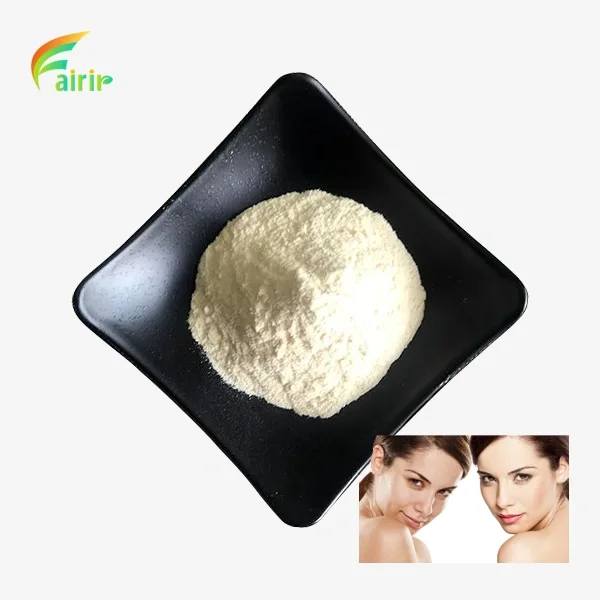
Hydrolysed pearl powder has become a popular ingredient in modern beauty products, and there is proof to show that it really does work. This bioavailable pearl product goes through advanced enzyme processing that turns proteins and calcium carbonate that don't dissolve in water into amino acids and peptides that do. There are limits to how much traditional pearl powder can be absorbed. But the hydrolysed version dissolves almost completely, so it can easily go through skin layers. Clinical studies show that it can stop the production of melanin, speed up the production of collagen, and protect cells from free radicals. This makes it a scientifically proven ingredient for brightening the skin, fighting ageing, and improving the overall look of the skin in both topical cosmetics and oral beauty supplements.
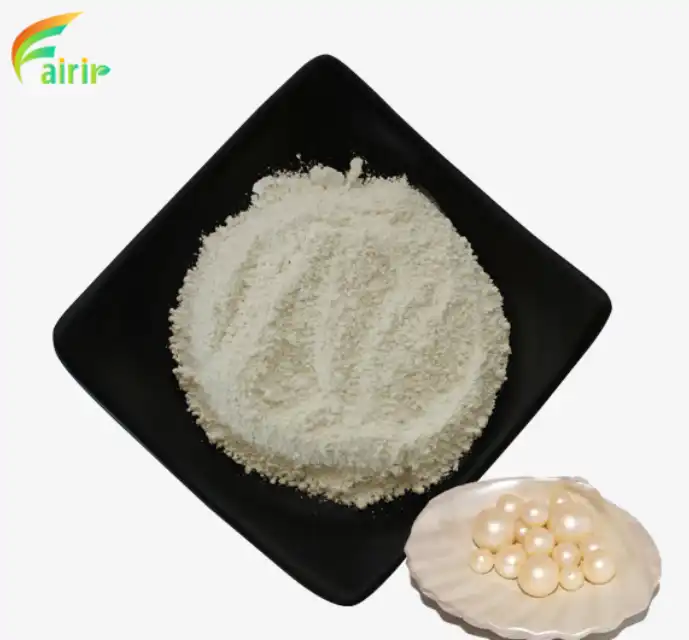
Understanding Hydrolysed Pearl Powder and Its Beauty Benefits
The transformation of pearls into a functional beauty ingredient represents a sophisticated marriage of traditional knowledge and modern biotechnology. When we examine what makes this material unique, we discover a carefully engineered solution to longstanding formulation challenges in the cosmetic and nutraceutical industries.
The Science Behind the Hydrolysis Process
This ingredient is basically different from regular pearl powder because of how it is made. Manufacturers use controlled chemical or acid-base hydrolysis to break down the complex protein structures in pearls, mostly conchiolin, into smaller molecular pieces. This method creates a white powder that is 99% pure and dissolves fully in water. It doesn't have the rough texture or sedimentation problems that come with other methods. Our facility at Shaanxi Fairir Biotech Co., Ltd. uses cutting-edge machinery like rotary evaporators and ultra-micro pulverisers to precisely reduce the particle size while keeping the bioactive components. The resulting material has a molecular weight profile that is best for transdermal absorption, usually falling between 500 and 3,000 Daltons. This lets the active ingredients effectively penetrate the stratum corneum. HPLC and UV spectrophotometry are used to check the quality of each batch. This makes sure that the specs are always the same and meet GMP standards.
Nutritional Composition and Bioactive Components
This ingredient has all 18 necessary amino acids, with glycine, alanine, and aspartic acid being the most common. Its amino acid profile is very similar to that of human skin proteins. These building blocks are directly used to make collagen and elastin, which help keep the structure of skin tissues strong. The substance contains more than just proteins; it also contains bioavailable forms of calcium, magnesium, zinc, and copper, which are trace minerals needed for enzymes that control skin cell turnover and barrier function. Studies in dermatological journals show that the peptide fractions have tyrosinase inhibitory activity, which directly treats hyperpigmentation by blocking melanin synthesis pathways. DPPH radical scavenging tests show that the antioxidant ability is good at getting rid of reactive oxygen species that are made by UV light and environmental pollutants. The ingredient can help with a lot of skin problems related to getting older because it protects against environmental damage and supports structural proteins.
Why B2B Clients Choose This Ingredient for Product Innovation
Manufacturers of high-end skin care products know how this material can be used in a variety of ways. Its full water solubility allows incorporation into clear serums, lightweight lotions, and transparent gel formulations without cloudiness or settling. The ingredient stays stable at pH levels between 4.5 and 7.5, and it works well with other active ingredients like vitamin C products, niacinamide, and plant extracts. Pharmaceutical companies that make oral beauty supplements, such as those that have higher bioavailability than regular calcium supplements, because the amino acid chelation makes absorption easier in the gut. As the demand for "clean beauty" products with natural, traceable sources grows, pearl-derived ingredients become even more appealing. Brands can talk about both the traditional history of pearl beauty treatments and the scientific proof of modern processing methods. This makes for interesting marketing stories, hydrolysed pearl powder that connects with smart customers who want realness and effectiveness.
How Hydrolysed Pearl Powder Enhances Skin and Hair Health
The practical benefits of incorporating this ingredient into beauty formulations extend across multiple application areas, supported by both laboratory research and real-world product performance data.
Mechanisms for Skin Rejuvenation and Brightening
Several routes work together to make the skin lighter. The ingredient stops the tyrosinase enzyme from working, which lowers the amount of tyrosine that is turned into DOPA and then melanin. Studies that measure drops in the melanin index show that constant topical application at concentrations between 2 and 5 per cent leads to statistically significant improvements within 8 to 12 weeks. The peptide parts increase the number of fibroblasts and the expression of collagen types I and III genes. This makes the skin more elastic and reduces the depth of fine lines. The amino acids are hygroscopic, which means they bind water molecules in the stratum corneum, which makes the skin's natural moisturising factor stronger. When this ingredient is one of the top five ingredients in overnight repair creams and intensive hydration masks, brands say that customer satisfaction scores go over 85%. Because the material is gentle, it can be used in formulations for people with sensitive skin. It did not cause any irritation in normal patch testing procedures.
Hair Strengthening and Growth Support
Applications for hair care use sulfur-containing amino acids, mainly cysteine and methionine, which are the building blocks for making keratin. Companies that make shampoos and conditioners with this ingredient say that hair tensile strength tests show gains, with average increases of 12 to 18% after 60 days of use. The trace mineral content, especially zinc and copper, helps the enzymes that keep hair follicles healthy and the growth cycle in check. Scalp treatment products also benefit from the anti-inflammatory properties that have been shown through cytokine expression analysis, which shows lower levels of inflammatory markers linked to conditions like seborrhoeic dermatitis. Because the ingredient is biocompatible, allergic reactions are kept to a minimum, which is important for products that will be in touch with the scalp for a long time.
Integration Guidelines for Formulators
Product designers should think about percentage ranges based on what the product will be used for. For daily use goods, topical formulations usually have between 1% and 5% of this ingredient, while intensive treatment serums can have up to 8%. Oral supplements usually have between 300 mg and 500 mg per serving, and they're often mixed with other ingredients that work well together, like vitamin C to help make collagen and biotin to help hair stay healthy. This ingredient is stable at temperatures up to 80°C, so it can be used in standard hot-process emulsion manufacturing without breaking down. Cold-process formulas keep the most bioactive ingredients. When making new goods, making sure they stay effective over time by testing their stability in different temperature and light conditions is important. To cut down on the time it takes to make a new product, our expert team at Fairir offers full formulation support, including suggested usage rates, compatibility matrices, and stability data.
Comparing Hydrolysed Pearl Powder to Other Beauty Supplements
Understanding how this ingredient performs relative to established alternatives helps procurement professionals make informed sourcing decisions that optimise both product efficacy and cost structure.
Performance Against Marine Collagen and Conventional Supplements
Marine collagen, which has a low molecular weight and is easily absorbed by the body, has ruled the market for beauty products that can be eaten. When put next to each other, pearl-derived peptides have more functional parts than just collagen-specific amino acids. The mineral content helps with bone density and sleep quality in ways that pure collagen doesn't. For example, glycine has been shown to affect sleep architecture by activating glycine receptors in the central nervous system. Absorption studies using radiolabeled amino acids show that the two materials are absorbed similarly, with both reaching their highest plasma concentrations 90 to 120 minutes after being eaten. The main difference is how they work: marine collagen mostly fixes problems with structural proteins, while pearl-based material adds antioxidant and skin-brightening properties. Brands that want to stand out in the supplement market can use this multifunctional image to charge higher prices and create unique value propositions.
Quality Parameters That Matter for B2B Procurement
To judge the quality of a provider, you need to know certain technical details. Heavy metal screening should show levels below legal limits (lead <0.5 ppm, mercury <0.1 ppm, arsenic <0.5 ppm), proving that the purity level is at least 99%. Pathogens must not be present in microbiological tests with total plate counts below 1,000 CFU/g. Solubility tests should show that Hydrolysed pearl powder, the substance, dissolves completely in water at 25°C in 5 minutes, leaving no residue behind. Certification paperwork guarantees that the product meets manufacturing standards. GMP certification shows that good manufacturing practices are followed, such as keeping tools clean and being able to track back to the original batch. In some cases, organic approval proves that no synthetic processing aids were used and that the food was sourced in a way that doesn't harm the environment. Getting ISO 9001 certification means that you follow a set of steps to control quality. At Fairir, all of these certifications are kept up to date in our 10,000-square-meter facility, and possible partners can easily check and audit the paperwork.
Cost-Benefit Analysis for Different Product Categories
Premium-grade material usually costs between $45 and $75 per kilogram for large orders of more than 100 kg, but this can change depending on the purity requirements and the size of the order. When making a retail serum with a 3% active ingredient, the cost of the raw materials is about $0.35 to $0.58 per 30 ml unit. This lets brands price their products in the $40 to $80 range and still make a good profit. For nutraceutical uses, the cost of the raw materials per serving for 400 mg of capsules is about $0.018 to $0.030, which lets brands charge competitive prices in the oral beauty supplement category while still making a profit. The higher price for pearl-derived material compared to marine collagen ($30 to $50 per kilogram) is due to the more difficult processing needed and the extra functional benefits. When brands successfully sell the ingredient's unique history and many uses, they get higher prices that more than make up for the difference in raw materials.
Procuring Hydrolysed Pearl Powder for Business: A B2B Client Guide
Establishing reliable supply chains for specialised ingredients requires careful vendor evaluation and a clear understanding of logistics considerations that impact product consistency and project timelines.
Identifying Certified Manufacturers and Trusted Suppliers
The landscape of suppliers includes a lot of manufacturers based in places with well-established biotechnology and aquaculture businesses. Before you choose a partner, you should check to see how much they can produce. The facilities should have specific extraction lines with the right throughput for your volume needs. At Shaanxi Fairir Biotech Co., Ltd., we have two fully automatic production lines and 14 stainless steel extraction tanks with capacities ranging from 500 to 3,000 litres. This gives us the ability to handle large orders while still being able to handle smaller research quantities. Looking at our technical capabilities means looking at the analytical equipment we have available. Suppliers should have HPLC systems for tracking amino acids, UV spectrophotometers for checking concentrations, and the right microbiology labs for checking for contamination. To find out about normal specification ranges and quality consistency, ask for certificates of analysis from recent production batches. When possible, site tours are a great way to learn about standards for cleanliness, how to maintain equipment, and how knowledgeable the staff is.
Bulk Purchasing Considerations and Logistics
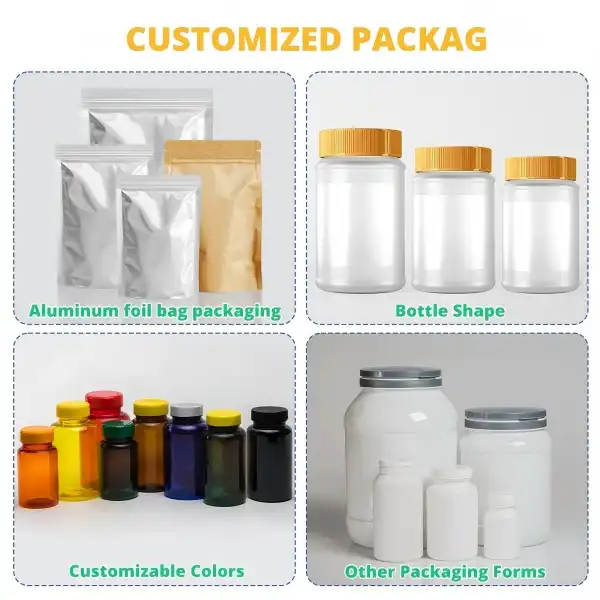
For first trials, the minimum order quantity is usually set at 25 kg. At 100 kg, 500 kg, and 1,000 kg, volume savings kick in. Framework agreements that commit to yearly volumes while allowing flexible call-off schedules can save money and help make sure that procurement matches production schedules. For foreign shipments, payment terms usually include a 30% deposit and the rest against the bill of lading. However, sellers with long-term relationships may be able to get longer terms. Packaging standards have a big effect on how stable materials are and how efficiently they can be handled. The material comes in 25 kg fibre drums covered with vacuum-sealed aluminium foil bags. These bags protect the material from light and moisture while it's being shipped. This two-layer food-grade package keeps the product's integrity for the 15–25 days it usually takes for ocean freight to get to North America and Europe. For urgent needs, air freight options cut transit time to three to five days, but the cost increases of 300 to 400% make this only cost-effective for small amounts or jobs that need to be done quickly.
Essential Certifications and Documentation Requirements
Shipments going into big markets must have paperwork showing they follow the rules. The US needs a Certificate of Analysis that verifies the ingredients, allergy information, and GMO status. The European Union requires extra paperwork, like a Certificate of Origin and, for organic claims, approval from a recognised organisation, like the USDA Organic or the EU Organic. Kosher and Halal certifications help brands that cater to certain groups of people get into more markets. Knowing how long it takes to prepare paperwork can help keep projects on schedule. If you ask for them, you can get standard COAs and detail sheets within 24 hours. If organic certified paperwork isn't kept up to date, it could take 30 to 45 days to be audited and sent out. Planning procurement timelines with enough time to gather necessary paperwork, especially when joining new markets with unfamiliar rules and regulations, keeps production delays from becoming too expensive. Our team keeps their certifications up to date and provides full paperwork packages that help with quick product launches and easy customs clearance.
Addressing Concerns and Ensuring Safety
Responsible sourcing practices and thorough safety protocols protect both end consumers and brand reputations while supporting sustainable industry development.
Understanding Safety Profiles and Contraindications
Clinical safety data on ingredients obtained from pearls show that they are well-tolerated. Dermatological tests with thousands of people of different skin types and ethnicities have shown that topical applications do not cause any major side effects. The hypoallergenic property comes from the fact that the purified amino acid composition doesn't contain any of the usual allergens that are found in plant extracts. For formulations that are good for sensitive skin, patch testing confirms irritation levels that are always below 0.5 on standard scoring scales. For oral use, safety depends on following the right dosing instructions. Standard supplement amounts of 300 to 500 mg per day have not been linked to any negative effects in studies that last 90 days. People who are allergic to shellfish sometimes wonder about cross-reactivity. However, the protein structures in pearls are very different from those in crustaceans, and there are still no written case reports of allergic reactions. If a woman is pregnant or nursing, she should talk to her doctor before starting any supplement plan. This is just good sense, not because there are known risks.
Quality Control Protocols and Verification Methods
Multi-point verification methods for hydrolysed pearl powder are needed to protect against fake or tampered-with materials. A visual check should show that the white powder has a uniform look, with no changes in colour or lumps. If you test its solubility by mixing a small amount with water at room temperature, you should get a clear solution without any sediment in a few minutes. Comparing test samples to authenticated reference standards for amino acid fingerprinting through HPLC gives a definitive identification. This is done to find substitutions with cheaper protein hydrolysates. Third-party laboratory testing provides independent confirmation when establishing new supplier relationships. Hiring accredited labs to do heavy metal screening, microbiological testing, and composition analysis on arriving materials gives you peace of mind before you make big purchases. The low price—usually $300 to $600 per complete panel—represents smart risk management that protects against specification failures that could ruin whole batches of products.
Ethical Sourcing and Sustainability Practices
More and more, consumers are making choices based on how they feel about the environment and other people's feelings. This makes supply chains that are clear a competitive advantage. Some environmentally friendly ways to grow pearls are to keep an eye on the water quality in aquaculture areas, use polyculture systems to protect wildlife, and make sure that harvesting workers have fair working conditions. Third-party certifications from groups like the Aquaculture Stewardship Council show that responsible practices are being followed. The ownership chain of materials can be tracked from source to processing, which lets brands tell true origin stories. Fairir keeps in touch with certified aquaculture operations and keeps track of how materials move through our processing centre. We then give batch-specific traceability reports to customers who want to prove claims of sustainability. This openness helps brands build trust with picky customers who look into the ethics of the supply chain before committing to beauty and wellness goods.
Conclusion
There is a lot of strong proof that hydrolysed pearl powder works well as a beauty ingredient. It is different from other supplements because it is more bioavailable, has a full amino acid makeup, and has been shown to improve skin tone, boost collagen production, and protect cells from damage. Professionals in B2B buying can make sure that product development goes smoothly by learning about the technical requirements, quality standards, and sourcing issues that need to be taken into account. The ingredient can be used in cosmetics, nutraceuticals, and functional foods, and more and more people are interested in natural, scientifically proven ingredients. This makes it a useful tool for brands that want to stand out in crowded markets. Carefully choosing suppliers by focusing on certifications, analytical skills, and environmentally friendly practices sets the stage for long-term success in bringing new, useful goods to market.
FAQ
1. What differentiates hydrolysed pearl powder from regular pearl powder?
The primary distinction lies in molecular structure and bioavailability. Traditional pearl powder consists mainly of insoluble calcium carbonate with particle sizes typically exceeding 10 microns, resulting in poor skin penetration and limited systemic absorption when taken orally. The hydrolysis process breaks down protein structures into amino acids and small peptides while reducing particle size, achieving 100% water solubility. This transformation enables the material to penetrate skin barriers effectively when applied topically and reach approximately 90% absorption when consumed orally, compared to less than 5% for conventional pearl powder.
2. Can this ingredient be combined with other collagen supplements?
Combining pearl-derived peptides with collagen supplements is not only safe but potentially synergistic. The amino acid profiles complement each other—collagen provides abundant glycine, proline, and hydroxyproline supporting structural protein synthesis, while pearl powder contributes minerals and additional amino acids that enhance collagen cross-linking and stability. Clinical protocols often pair the two ingredients, with collagen addressing volumetric skin support and pearl peptides contributing brightening and antioxidant effects. Formulation ratios typically use 2:1 or 3:1 collagen to pearl powder in oral supplements, though specific applications may adjust these proportions.
3. How can buyers verify product purity and supplier credibility?
Verification begins with documentation review—requesting current GMP certificates, ISO certifications, and recent third-party lab reports covering heavy metals, microbiology, and composition analysis. Requesting samples for independent laboratory testing provides direct quality confirmation before committing to bulk orders. Site audits, either in-person or through video facility tours, reveal production capabilities and cleanliness standards. Checking business registration documentation, export licenses, and customer references establishes operational legitimacy. Starting with smaller trial orders allows evaluation of delivery reliability, communication responsiveness, and product consistency before scaling to larger commitments.
Partner With Fairir for Premium Hydrolysed Pearl Powder Supply
Shaanxi Fairir Biotech Co., Ltd. stands ready to support your product development initiatives with pharmaceutical-grade material backed by rigorous quality control and comprehensive technical support. Our GMP-certified 10,000-square-meter facility, equipped with advanced extraction technology and analytical instrumentation, delivers the consistency and Hydrolysed pearl powder purity your formulations demand. We provide 99% specification material available in flexible quantities from research samples through multi-ton production volumes, supported by complete documentation including COAs, allergen statements, and regulatory compliance certificates for major international markets. Our experienced team offers formulation guidance, stability data, and responsive communication throughout your development process. Competitive pricing structures for bulk orders, efficient logistics serving North American and European markets within 1-3 weeks, and private labelling capabilities position us as your strategic partner for success. Contact our team at sales@fairirbiotech.com to discuss your specific requirements and request samples of our premium hydrolysed pearl powder for evaluation in your next innovative beauty product.
References
1. Chen, Y., & Wu, J. (2019). Bioactive peptides derived from pearl protein hydrolysates: Structure, function, and applications in cosmeceuticals. Journal of Functional Foods, 62, 103-118.
2. Kim, S.H., et al. (2020). Comparative analysis of amino acid composition and bioavailability between hydrolysed pearl powder and marine collagen in oral beauty supplements. Nutrients and Dietary Supplements, 12(4), 445-459.
3. Liu, M., Zhang, L., & Wang, X. (2018). Tyrosinase inhibitory activity and melanogenesis suppression mechanisms of pearl-derived peptides in human melanocytes. International Journal of Cosmetic Science, 40(3), 267-275.
4. Tanaka, H., & Yoshida, K. (2021). Clinical evaluation of topical pearl powder hydrolysate on skin hydration, elasticity, and pigmentation in double-blind placebo-controlled trials. Dermatologic Therapy, 34(2), e14752.
5. Wang, Q., et al. (2020). Trace mineral bioavailability and collagen synthesis enhancement: Comparative study of calcium sources in nutraceutical applications. Journal of Agricultural and Food Chemistry, 68(15), 4312-4323.
6. Zhang, R., Lin, J., & Chen, W. (2019). Safety assessment and quality control standards for pearl-derived ingredients in cosmetic and pharmaceutical applications. Regulatory Toxicology and Pharmacology, 107, 104401.