_1751965378790.webp)

Is Culinary Matcha Powder Right for Food Manufacturing?
Culinary matcha powder represents a compelling opportunity for food manufacturers seeking to integrate functional, natural ingredients into their production lines. Matcha Powder, derived from shade-grown Camellia sinensis leaves, offers robust flavor profiles, consistent color stability, and nutritional benefits that align with clean-label consumer demands. Cooking matcha, on the other hand, is made to be used in industrial settings. It saves money without giving up the health benefits of antioxidants that green tea products have. We believe that food companies can use cooking matcha to make their goods stand out from the rest as long as they know about the different grades, how to make sure that the matcha is compatible with their processing, and how to get matcha that is uniform and follows the rules.
Introduction
Buyers, R&D teams, and production workers are all interested in culinary matcha powder because it has become an important part of the food business around the world. A lot of care goes into making Matcha Powder that is good enough for tea events and looks and tastes great. This type of Matcha Powder, on the other hand, is better for cooking because it tastes stronger and costs less. This is why companies that make drinks, sweets, baked goods, and health products are very interested in it.
There is a greater need for useful natural things, and makers have to pick which ones to use. You can cook with this matcha powder, and it tastes just like real green tea. It can also be used to make things in factories. People who are in charge of buying things can use this guide to learn about the differences between grades of Matcha Powder, figure out which grades are best for different tasks, and plan where to get the powder in a way that meets quality control standards. We think that making these points clearer will help businesses make better choices when they need to buy food from each other when prices are low.
Understanding Culinary Matcha Powder in Food Manufacturing
What Defines Culinary Matcha Powder
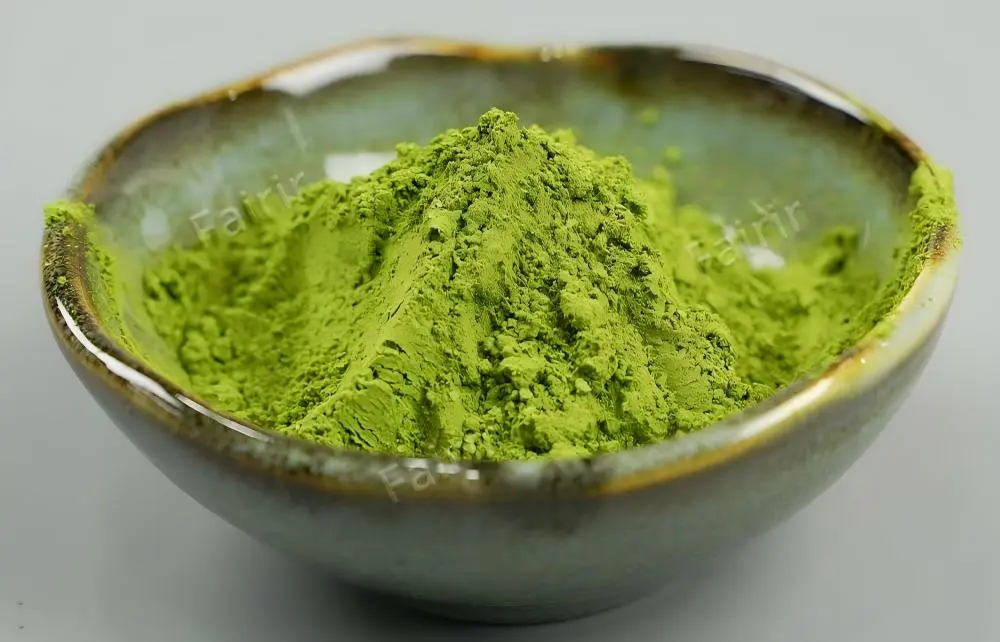
Matcha Powder for cooking is a finely ground green tea product that is renowned for its vivid emerald colour and distinct umami flavour. It's made to be used in food processing plants. Tencha leaves that have been growing with little sunlight for 20 to 30 days are picked as the first step in the product's making. This shading process physically forces the plant to make too much chlorophyll and some amino acids, such as L-theanine. These chemicals change the powder's colour and make it less useful.
Production Methods and Quality Parameters
To keep the potent aromatic chemicals and heat-sensitive nutrients, real Matcha Powder is ground on a granite stone that stays cool. Most commercial luxury types have micro-particles that are 5 to 15 microns wide, or 1,000 to 2,000 mesh. This helps them mix with liquids better and gives them a smooth taste. Microbes and enzymes can't grow or break down food while it's being kept if the moisture level stays below 4% at all times.
Functional Properties for Industrial Use
If a company wants to use Matcha Powder for its health benefits, they need to know what goes into it and how it works. This plant-based ingredient must have at least 5% total catechins and more than 2% L-theanine for the functional claim to be true. For these substances, EGCG (Epigallocatechin gallate), which is a natural antioxidant, is the most important physical sign. Being bright green on the CIELAB colour space means that the chemical structure was kept and there wasn't much thermal breakdown during processing. This is shown by a high negative a* number.
Key Considerations for Using Culinary Matcha Powder in Food Manufacturing
Grade Distinctions and Cost Implications
What makes the best Matcha Powder for cooking? Look at a few things that will change how it tastes, how much it costs, and where you can buy it. For different grades, the leaves are picked at different times of the year and are not the same. Later-picked leaves have a stronger, sourer taste. A lot of different types of food use them because they work well in mixed recipes. Real Matcha Powder can be bought at prices that let people make a lot of it. This is because there are different kinds.
If people know about these changes, they can get a better deal on price and quality. There are a lot of ways that gourmet matcha powder is better for you than high-end ritual matcha powder. It also costs a lot less per kilogram. You can make ice cream, baked goods, and drink bases all at the same time.
Storage Protocols for Bulk Industrial Use
Matcha Powder needs to be kept in very specific ways to keep its freshness and bright colour. This is especially important when it comes to large amounts that are used in businesses. The quality drops quickly when it comes in contact with heat, water, or light, which breaks down green molecules and oxidises catechins. For the longest life, keep covered items in cool, quiet places where the temperature stays below 25°C, and the humidity stays below 60%.
Users of first-in, first-out inventory management should make sure that their stock doesn't go bad too quickly. The right way to store things affects how consistent they are from batch to batch, which is important for keeping the colour consistent for the end product's look.
Processing Compatibility and Thermal Stability
It's important to make sure the product works well with ways that need to be heated, like baking, pasteurization, or hot-filling. To keep the chemicals in Matcha Powder pretty steady at high temperatures, it's not a good idea to be around them for a long time at temperatures above 80°C. This can weaken their antioxidant qualities and turn the colour dark. Production engineers should use their own unique processing settings to test for stability. This way, they can be sure that tastes stay the same and nutritional claims are kept throughout the manufacturing process.
Benefits and Challenges of Culinary Matcha Powder in Food Production
Consumer Appeal and Market Positioning
Adding Matcha Powder to food has many benefits, such as making it more appealing to consumers and meeting the growing demand for products with clear labels. Because green tea ingredients are naturally protective, health and lifestyle-related product marketing stories are more likely to be believed. Products that contain Matcha Powder can be classed as either cleansing, helping you lose weight, or improving your brain health. It's because people like useful foods with clear lists of what's in them.
The name is easy to remember because it is bright green and stands out on store shelves. In addition to giving both sweet and spicy foods more depth, umami also makes them look better.
Functional Benefits for Product Development
Matcha Powder has real-world uses in formulating that go beyond its value in the business world. There is evidence that the L-theanine in it helps the brain work better, and catechin antioxidants naturally preserve food, which can sometimes make things last longer. When Matcha Powder is properly processed, it dissolves in water. This means that it can be mixed evenly in liquids without separating or settling, which can happen with other plant seeds.
Scientists and engineers can use these helpful traits to create fresh concepts for a lot of different products, from ready-to-drink beverages to nutrition bars. The simple ingredient lists are great for people who care about their health.
Operational Challenges and Risk Management
Clients in the business world also need to think about issues like variations between runs, the chance of contamination, and side effects that could weaken quality control programs. The taste, colour, and amounts of active chemicals can be different when Matcha Powder is picked in different places or at different times. To cut down on these issues, it's important to have strict quality control rules when working with sellers.
If you are worried about pollution, especially with heavy metals or chemical residues, you should have a third party test the food. Companies that make goods should be able to see full records of tests that prove the goods meet government standards for lead, cadmium, and agricultural chemicals. Many people think Matcha Powder is safe, but it does contain caffeine, so people who are sensitive to it should be warned.
You should also think about how to save money, since real, high-quality Matcha Powder costs more than flavourings or colours that are made in a lab. Procurement teams have to find a way to balance the need for quality with the limitations of their budgets by carefully choosing vendors and keeping their promises about volume.
How to Select and Procure the Right Culinary Matcha Powder for Food Manufacturing
Supplier Evaluation Criteria
If someone wants to sell cooking Matcha Powder, they need to offer real, high-quality Matcha Powder with a clear supply chain and certifications that can be checked. GMP certification, organic certifications when possible, and proof of being able to trace back to the growth areas are all important parts of the evaluation process. Along with standard processing tools and quality control labs, suppliers should be able to show that they can regularly make a lot of things.
We at Fairir have a 10,000-square-meter GMP-certified building full of cutting-edge tools for extraction and analysis that help us understand these buying goals. To make sure that all of our production batches meet the same quality standards, we use HPLC, UV spectrophotometry, and other analytical tools to look at the phytochemical profiles.
Certification and Compliance Requirements
It is important to check the supplier's credentials and make sure they follow international standards when choosing a strategic vendor. When you go to the store to buy organic food, look for signs that say they have been approved by the USDA, the EU, or JAS. It is very important for clean-label placement that farming methods don't leave behind any synthetic pesticides. These certificates show that they do.
You should show proof of Good Manufacturing Practices, ISO quality systems, and food safety practices like HACCP application along with organic approval. A third party is hired to do regular checks to make sure that compliance is still being met and to lower the risk of buying.
Volume Capacity and Logistics Considerations
Companies that make industrial food need to be able to make enough to support businesses that are growing. Before you buy from someone, find out how well they can extract data, how much stock they have, and how reliable their lead times are. Suppliers who have many production lines that are good at getting things out of the ground can handle more orders and quickly restock.
It's just as important to have good logistics for big operations. Check to see what shipping options the supplier has, what kinds of packaging they offer that will keep the quality of the product, and if they can set delivery times that work with your production planning cycles.
Practical Applications and Case Studies of Culinary Matcha Powder in Food Manufacturing
Beverage Industry Applications
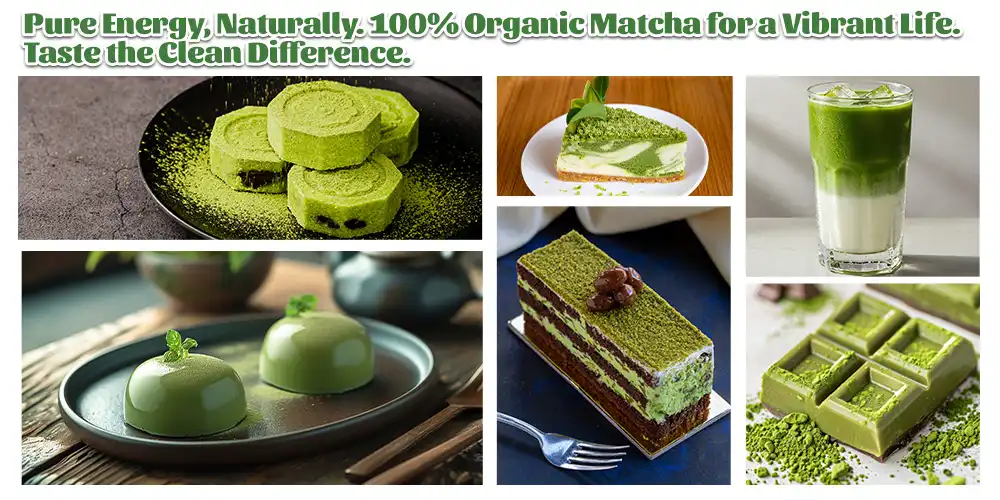
Matcha Powder used in cooking can be used in many different kinds of goods, but the most growth potential is in drinks. Matcha Powder has been added to ready-to-drink teas, milkshakes, smoothies, and even sports drinks and has worked out well. The powder is easy to mix with hot or cold drinks, and if it's made right, it stays coloured for a long time.
Big companies have come up with signature Matcha Powder blends that make their drinks stand out. These blends combine earthy tea notes with flavours that go well with them, like citrus, vanilla, or coconut. If you want something healthy to eat instead of coffee, these will be good for you because they have L-theanine and vitamins.
Bakery and Confectionery Integration
Bakeries use Matcha Powder because it can handle heat and add taste to difficult mixtures. Baking powder that is made for cooking works well in cakes, cookies, muffins, and desserts. It gives them a unique green colour and a mild umami flavour that goes well with sweet tastes. It's important to find the right dose—usually between 1% and 3% by weight—so that the colour is strong enough without overpowering other flavours.
Companies that make sweets have used Matcha Powder as the main flavouring in high-end chocolate bars, cakes, and treats. It's because Matcha Powder is naturally bitter, and chocolate is naturally sweet. Together, they make sophisticated tastes that can be sold for a lot of money in speciality stores.
Dairy and Non-Dairy Product Development
Companies that make ice cream and frozen desserts have made Matcha Powder a signature flavour because of how it looks and tastes. The ingredient mixes well into both plant-based and dairy-based mixtures and doesn't change when frozen or shipped. In the same way, yoghurt makers have come out with tastes that include Matcha Powder to appeal to people who are health-conscious.
People who make goods can keep up with new market trends while still meeting quality and efficiency standards by knowing how to choose the right ingredients and put them together in the right way.
Conclusion
Matcha Powder is a highly useful ingredient for food companies that want to come up with new ideas, use clean labels, and make functional products. To be successful, you need to know the changes between grades, store and handle things the right way, and work with sources who have a history of managing quality. Keeping costs down and making sure that every batch is the same isn't easy, but real Matcha Powder is worth the trouble because it works well and is popular in the market. Because they only get this ingredient from approved sources, companies can be sure that it will help their goods stand out and meet the growing demand for natural formulas that are high in antioxidants.
FAQ
What distinguishes culinary matcha from ceremonial grade matcha?
Late-harvest Matcha Powder leaves with slightly stronger, more powerful flavours are used in cooking so that the flavours don't change when the food is processed. These types are ceremonial and are meant to be drunk straight up like tea. They have mild tastes. When it comes to cost, cooking types are good for mass production because they make useful items that are similar.
Does matcha maintain stability during high-temperature processing?
The chemicals in Matcha Powder are pretty stable at high temperatures, but being around them for a long time above 80°C can make them less protective and change the way they look. Manufacturers should test the stability of their products for specific uses to find the best processing parameters and keep the products' good looks and useful features during the production process.
What are optimal storage conditions for bulk matcha inventory?
Bulk Matcha Powder needs to be kept in dark, cool places where the temperature is below 25°C and the relative humidity is below 60%. The containers should be tightly shut to keep the air out. To maintain batch-to-batch uniformity, which is an important part of quality production, it is important to keep chlorophyll whole and catechin compounds from oxidising by limiting their exposure to oxygen, light, and water.
Partner with Fairir for Premium Matcha Powder Supply
Fairir has a lot of experience making plant extracts and making sure the quality of their goods. Manufacturers who need a trusted source for Matcha Powder can use Fairir. Our GMP-certified building has 14 stainless steel extraction tanks that can hold between 500 and 3,000 litres of liquid. It also has three fully automatic production lines and a 98% extraction rate. Large amounts can keep coming in because of this infrastructure. It helps industries that need them.
In addition to being able to produce, we also offer full technical support through our skilled and experienced staff and cutting-edge analytical tools. HPLC, UV spectrophotometry, spinning evaporators, and other tools are used in our quality control lab to look at phytochemical profiles and make sure that all the requirements are met. We can make custom formulations, private labelling, and changes to the way ingredients are used to meet your product development needs.
Competitive pricing helps build long-term relationships with buyers, and our prompt contact means that your procurement questions will be answered quickly and professionally. You can email our sales team at sales@fairirbiotech.com to talk about your Matcha Powder needs, get samples of our goods that have been fully approved, or find out how our manufacturing skills can help you find the best ingredients.
References
1. Weiss, D.J., & Anderton, C.R. (2003). Determination of catechins in matcha green tea by micellar electrokinetic chromatography. Journal of Chromatography A, 1011(1-2), 173-180.
2. Kochman, J., Jakubczyk, K., Antoniewicz, J., Mruk, H., & Janda, K. (2021). Health benefits and chemical composition of matcha green tea: A review. Molecules, 26(1), 85.
3. Ku, K.M., Choi, J.N., Kim, J., Kim, J.K., Yoo, L.G., Lee, S.J., Hong, Y.S., & Lee, C.H. (2010). Metabolomics analysis reveals the compositional differences of shade grown tea (Camellia sinensis L.). Journal of Agricultural and Food Chemistry, 58(1), 418-426.
4. Horie, H., Mukai, T., & Goto, T. (1997). Chemical components of matcha and powdered green tea. Journal of the Culinary Science Society of Japan, 30(1), 14-18.
5. Graham, H.N. (1992). Green tea composition, consumption, and polyphenol chemistry. Preventive Medicine, 21(3), 334-350.
6. Yamamoto, T., Juneja, L.R., Chu, D.C., & Kim, M. (1997). Chemistry and applications of green tea. CRC Press, Boca Raton, Florida.