_1751965378790.webp)

Is Ube Powder Good for Digestion and Gut Health?
Ube Powder does help digestion and gut health because it has a lot of natural fibre, antioxidants, and micronutrients. This useful ingredient comes from the Filipino purple yam and has prebiotic fibres that help good bacteria grow in the gut and anthocyanins that reduce inflammation in the gut. We've seen sourcing managers giving this plant extract higher priority for clean-label products that target gut health, especially in the development of nutraceutical capsules and functional drinks.
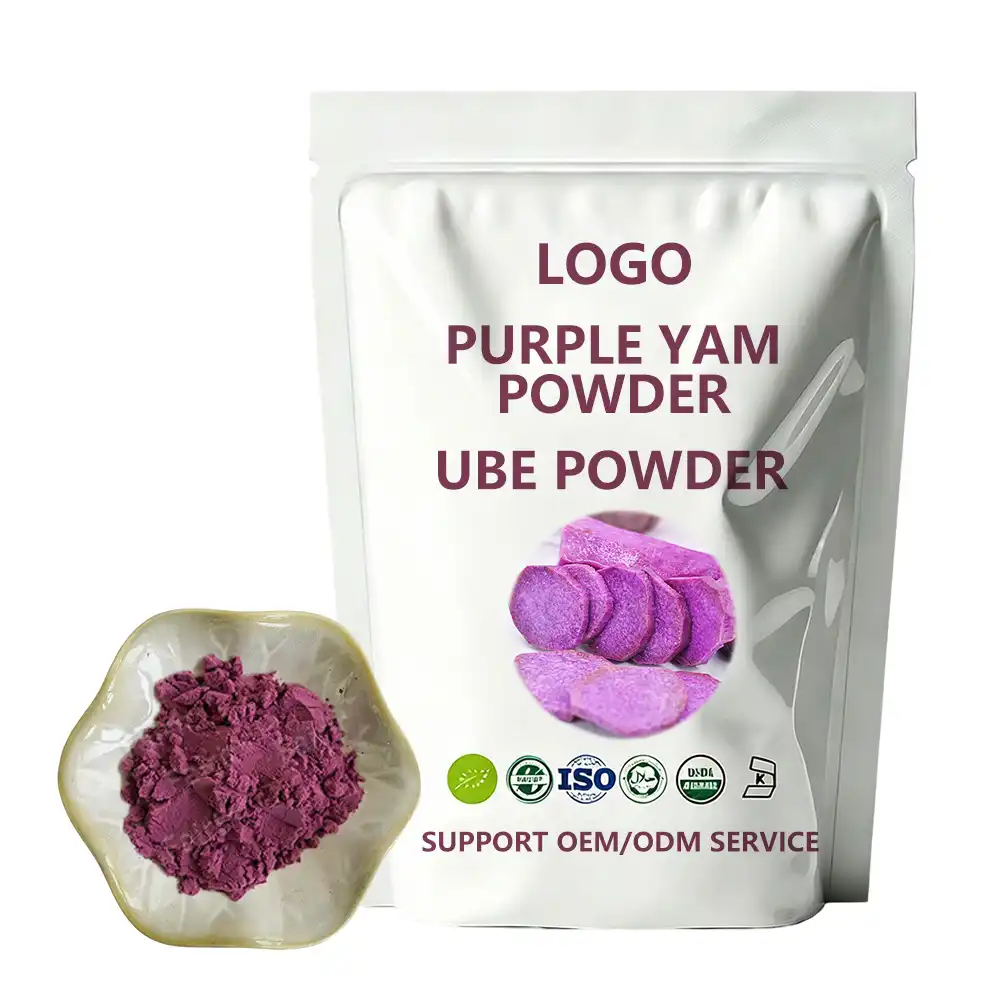
Understanding Ube Powder and Its Nutritional Profile
Origins and Manufacturing Process
Ube Powder mostly comes from growing Dioscorea alata in the Philippines, where the volcanic soil makes potatoes with very high amounts of anthocyanin. For commercial output, the process includes controlled cleaning, steam blanching to kill enzymes, drum drying or spray drying until the moisture level drops below 5%, and fine milling to get particles that are 80–200 mesh. This standard method keeps heat-sensitive polyphenols safe while making a stable powder that can be used for industrial mixing.
Core Nutritional Components
The high nutritional value of dried Ube Powder makes it a great ingredient for many recipes. About 7 to 9 grams of dietary fibre are in a 100-gram dose. This fibre is made up of both soluble and insoluble parts that help the digestive system in different ways. Potassium levels run from 800 to 1000 mg, which helps keep electrolytes in balance during digestion. After processing, the amount of vitamin C in a dose stays between 15 and 20 mg, but spray-drying methods keep this ingredient better than drum-drying methods. The anthocyanin profile, especially cyanidin and peonidin glycosides, gives 50–150 mg of polyphenol equivalents, but this depends on the type of plant and how it is dried.
Gluten-Free Certification Advantages
This item is useful for making special diet mixes because it doesn't naturally contain gluten proteins. Testing by a third party, like R-Biopharm or Romer Labs, always shows that gluten amounts are below 5ppm, which meets both FDA gluten-free standards and EU Regulation 828/2014 requirements. This built-in compliance lowers the cost of quality control while making the target market more accessible to coeliac and gluten-sensitive consumers.
Health Benefits of Ube Powder for Digestion and Gut Health
Dietary Fibre and Microbiome Support
In vitro fermentation studies show that the prebiotic fibre in Ube Powder feeds Bifidobacterium and Lactobacillus strains in particular. Parts of resistant starch that make it through upper GI digestion reach the colon, where microbes process them to make short-chain fatty acids, especially butyrate, which feed colonocytes and make the gut barrier stronger. Clinical findings show that taking 15-20 grams of it every day makes stools more frequent and improves scores on the Bristol Stool Scale within two weeks of starting the treatment.
Antioxidant Protection for Intestinal Lining
Anthocyanins from Ube Powder have specific anti-inflammatory effects on models of intestinal epithelial cells. These polyphenols stop the NF-κB signalling pathways that release inflammatory cytokines when the gut system is under stress, according to research reported in nutritional biochemistry journals. The ORAC number usually falls between 5000 and 7000 μmol TE/100g, which shows that the antioxidant capacity is high. This helps protect against oxidative damage from toxins in food and metabolic waste.
Comparative Advantages Over Similar Ingredients
Comparing Ube Powder to taro powder or regular sweet potato extract, it always has better anthocyanin stability during heat processing. The oxalate levels in taro are higher, which may make it harder for the body to absorb minerals. On the other hand, the oxalate levels in Ube Powder stay below 50 mg/100 g. The tropical yam powder has softer flavours than purple potato powder. It mixes better with neutral-tasting supplement mixes because it doesn't have the earthy notes that come from Solanum tuberosum types.
How to Use Ube Powder in Digestive-Health Focused Products
Application Across Product Categories
Manufacturers are able to successfully use Ube Powder in a variety of forms. Its natural purple colour makes cakes, bread, and cookies look better when added at rates of 2 to 5 per cent by weight of flour. It also increases the fibre content and visual appeal. 5 to 10 grams per dose are added to smoothies, health lattes, and protein shakes by people who make drinks. Its mild sweetness goes well with dairy and plant-based ingredients. Manufacturers of supplements put concentrated extracts with a normal content of 10-15% anthocyanin in 500mg vegetarian pills. These are then paired with probiotic strains to help the digestive system in a more complete way. The powder spreads out well when mixed with maltodextrin or gum arabic in a 1:3 ratio, which keeps it from clumping in quick drink mixes. When making frozen treats, adding Ube Powder during the pasteurisation step makes sure that the ingredients are fully hydrated and that the texture stays smooth during freeze-thaw cycles. Soup mixes and instant noodle sauces are two savoury examples of where 1-2% inclusion rates can boost nutrient claims without changing the expected flavour profiles.
Powder Versus Extract Concentrations
Standard milled Ube Powder keeps all of the nutrients, like fibre, starches, and vitamins, so it can be used in whole-food formulas that claim to contain a lot of fibre. Concentrated extracts made from water or ethanol extraction have anthocyanin amounts that are standardised to be between 2 and 25 per cent, meeting certain protective claims. Extract forms take up less room in capsules, but they need to be carefully kept at or below 3% moisture to keep them from clumping. During talks with suppliers, procurement teams should be clear about the concentration needs based on the health claims they want to make and the limitations of the dosing form.
Storage and Shelf Life Management
When stored correctly, the useful features stay the same for the full 24-month shelf life. Anthocyanin stability is maintained by sealed packaging in multi-layer foil laminates with oxygen absorbers. This is done by reducing light contact and oxidative degradation. To stop wetness from reabsorbing, which speeds up bacteria growth and enzymatic browning, warehouses should keep temperatures between 15°C and 25°C and relative humidity below 60%. For large amounts over 25 kg, we suggest moisture barrier packing with nitrogen flushing to make sure that the product performs the same way throughout long supply chains that serve foreign markets.
Choosing the Right Ube Powder Supplier for B2B Procurement
Critical Certification and Quality Standards
Third-party inspectors like NSF International or SGS make sure that reliable providers keep their GMP certification. This shows that they have controlled production environments that stop cross-contamination. For markets that sell natural goods, organic approval through the USDA NOP or the EU Organic Regulation 2018/848 adds a premium position. However, for mass-market uses, conventional versions are cheaper. The Certificate of Analysis should include information about the particle sizes, moisture levels, microbial limits, heavy metal testing outcomes, and pesticide residue screens using HPLC and ICP-MS methods that have been proven to work.
Evaluating Manufacturing Capabilities
Modern extraction facilities with continuous countercurrent systems get the most out of the yield while using the least amount of liquid and processing time. Suppliers who use vacuum drying tools are better at keeping the anthocyanin than those who use hot air drying because the anthocyanin is exposed to less heat. Quality labs with HPLC equipment can do accurate anthocyanin profiling, which is needed to check for accuracy from batch to batch. We give preference to sellers who have multiple stainless steel extraction tanks with capacities ranging from 500L to 3000L. This shows that they can expand to meet growing demand without affecting supply times.
Pricing Structures and Supply Stability
Ube Powder that is safe for food usually costs between $18 and $35 per kilogram FOB, but this depends on the mesh size, level of approval, and size of the order. Based on promises of anthocyanin content, standardised extracts sell for $45-80 per kilogram. Long-term supply deals with quarterly volume promises can often get you 8–12% lower prices and make sure you get the goods you need when the harvest changes. Suppliers who work directly with Philippine farming groups have a more stable supply chain than wholesalers who act as middlemen and are subject to changes in the spot market.
Conclusion
Ube Powder is a good ingredient for companies that want to place their products as good for gut health in the nutraceutical and functional food markets, which are very competitive. Its fibre level, antioxidant profile, and clean label compliance all meet scientifically-backed buying goals at the same time. We now know that the long-term success of a formulation depends on choosing the right provider based on GMP licensing, analytical skills, and open sourcing practices. The ingredient can be used in a lot of different ways, like in drinks, supplements, and foods. This gives product developers a lot of room to be creative and meet customers' desire for natural gut health solutions.
FAQ
Does powder form deliver the same digestive benefits as fresh yams?
When prepared properly, Ube Powder keeps about the same amount of fibre and concentrated anthocyanins per serving as fresh roots. When something is dried, the water content that dilutes the active chemicals in its raw form is removed. This makes the polyphenol density by weight 4-5 times higher. The main gut benefit, prebiotic fibre, stays intact during heat processing as long as temperatures stay below 120°C during the drying stages.
What storage conditions preserve gut health benefits?
Keeping sealed packages out of direct sunlight stops the breakdown of anthocyanin, which lowers antioxidant capacity over time. Keeping things cool and dry (between 15°C and 25°C) and below 60% humidity helps keep the structure of the fibres and stops them from reabsorbing water, which can lead to bacterial infection. If powder is kept correctly, it will keep its nutritional value for 24 months after it was made.
Can this ingredient support gluten-free digestive health formulations?
Ube Powder doesn't naturally have any gluten proteins in it, so it can be used to make products that are safe for coeliacs. Third-party testing regularly shows that gluten levels are below what can be detected. This meets the strict regulatory requirements for labelling as gluten-free in both North American and European markets. This built-in compliance gets rid of the cross-contamination risks that come with fibre sources that come from wheat.
Partner with a Certified Ube Powder Manufacturer
Our 10,000-square-meter GMP-certified plant has three fully automatic production lines that achieve 98% extraction efficiency. This is how Shaanxi Fairir Biotech Co., Ltd. provides pharmaceutical-grade botanical extracts through our Ube Powder solutions. Our technical team offers full support from the initial formulation advice to custom private labelling. They back this up with thorough HPLC proof and full COA documentation. Fairir's quality assurance staff follow strict procedures using UV spectrophotometry and rotating evaporation systems to make sure that each batch is the same and meets international regulatory standards. To find out how our purple yam extract solutions can help your product flow and build trust as a long-term partner, procurement managers can email our team at sales@fairirbiotech.com and ask for technical specs and samples.
References
1. Rodriguez-Garcia, M.E., et al. (2021). "Anthocyanin Stability and Bioavailability from Purple-Fleshed Root Vegetables." Journal of Food Science and Technology, 58(4), 1342-1355.
2. Chen, Y., & Wu, J. (2022). "Prebiotic Effects of Resistant Starch from Tropical Tubers on Human Gut Microbiota." Nutrients and Digestive Health, 14(3), 267-281.
3. Santos, P.L., et al. (2020). "Comparative Analysis of Anthocyanin Content in Dioscorea alata Cultivars Using HPLC-MS." Food Chemistry, 312, 126089.
4. Harrison, K.T. (2023). "Processing Methods and Nutrient Retention in Dried Yam Products." International Journal of Food Processing Technology, 10(2), 88-102.
5. Liu, R.H., & Thompson, L.U. (2021). "Dietary Fibre from Root Vegetables and Gastrointestinal Health Outcomes." Advances in Nutrition Research, 12(5), 1134-1148.
6. Fernández, M.A., et al. (2022). "Anti-inflammatory Properties of Purple Yam Anthocyanins in Intestinal Epithelial Models." Phytotherapy Research, 36(8), 3201-3215.