_1751965378790.webp)

Matcha Powder for Ice Cream, Gelato and Frozen Desserts
In the market of frozen desserts, matcha powder has emerged as one of the functional ingredients that is in most demand. A vibrant emerald color, layered umami taste, and a significant antioxidant profile are all delivered by this product, which is derived from Camellia sinensis leaves that have been cultivated in shade and stone-milled to a superfine consistency. All of these characteristics are achieved without the use of any artificial agents. It is crucial to have a solid grasp of how matcha powder works in frozen matrices in order to get consistent and market-ready outcomes, regardless of whether you are developing a luxury gelato line or expanding a plant-based ice cream offering.
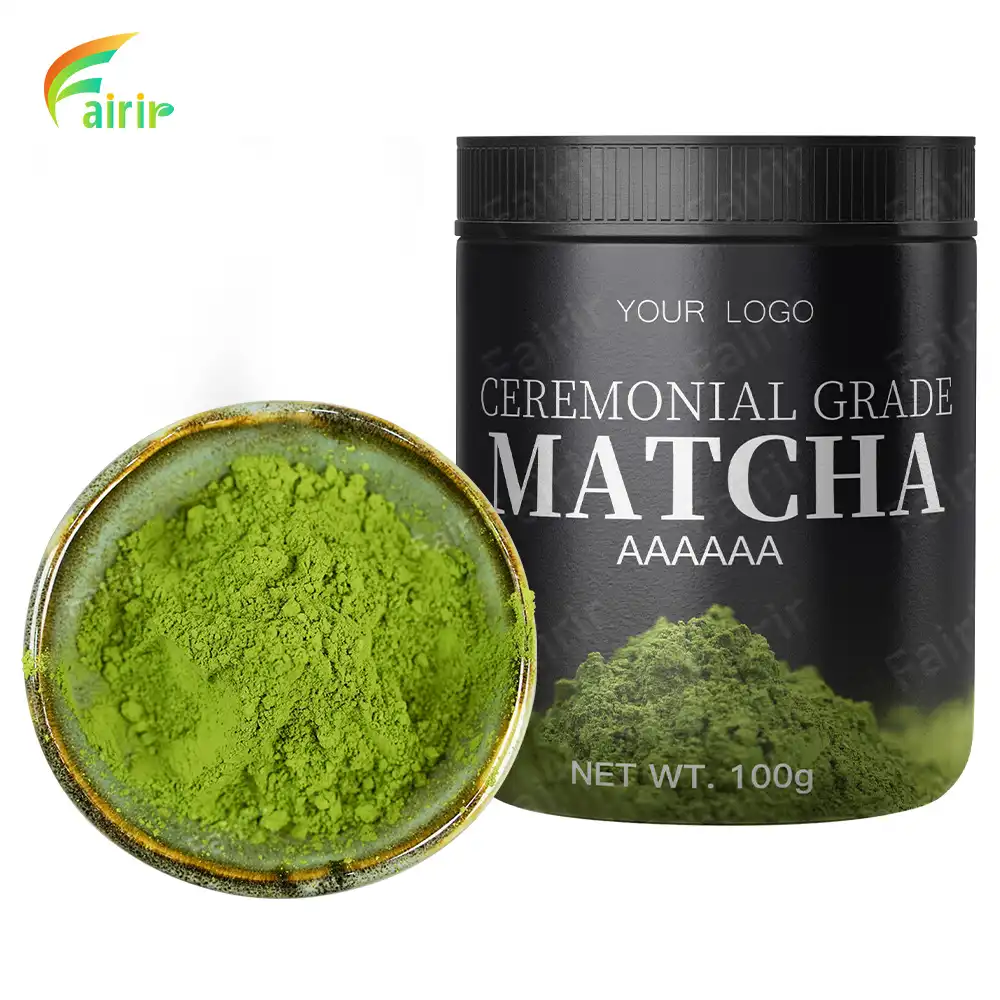
Understanding Matcha Powder and Its Role in Frozen Desserts
Not all types of green tea do well when they are cold. True Matcha Powder is shaded for twenty to thirty days before picking. This leads to a substantially larger concentration of chlorophyll and L-theanine in the powder. The powder that comes out is rich in color, smooth in flavor and has got a lot of depth that you don't get from conventional ground tea.
Ceremonial, Culinary and Organic Grades: A Guide
An HPLC analysis validated the superior ratio of amino acids to catechins in ceremonial-grade Matcha Powder. This gives it a richer and gentler flavor. Matcha Powder from later flushes has a higher catechin and astringency content which makes it perfect for cutting through the fat and sugar layers in ice cream and gelato. Organic Matcha Powder goes into that clean label, which is becoming increasingly crucial in the U.S. for high-end products. Before bulk purchase, procurement teams should ensure the grade they chose is consistent with the flavor objectives and label claims.
Important Sensory and Functional Characteristics in Frozen Products
One of the nicest things about the Matcha Powder for business is the vibrant green color due to charotechins a and b. Mintel’s 2023 analysis found that the major reason customers bought premium frozen snacks was because they looked distinctive. Matcha Powder fits under the functional and health-focused category because of the caffeine and EGCG (epigallocatechin gallate) content. That’s something of increasing interest to U.S. food and beverage manufacturers.
Advantages of Using Matcha Powder in Ice Cream, Gelato, and Frozen Desserts
It makes financial sense to use Matcha Powder in frozen treats since it is on trend in the market and also helps in the actual manufacture. According to Grand View Research, the global Matcha Powder Market size is expected to increase at a CAGR of over 8% till 2030. It was valued at over USD3.5 billion in 2023. One of the top five flavors on restaurants’ menus and on social media, Matcha Powder is one of those flavors of frozen treats that people often speak about.
The main benefits that make Matcha Powder a high-value ingredient option are:
- Stable to heat and freeze natural colorant: Matcha Powder is a natural color that is heat and cold resistant. It doesn't bleed or break apart when it freezes, the way artificial colors do. Its chlorophyll matrix is physically stable at temperatures below -18 °C, meaning that it is less likely to alter its shape if maintained frozen for a long time.
- Clean label antioxidant source: Culinary Grade Matcha Powder offers about 34 mg of EGCG catechins per gram. This promotes the clean-label product positioning, where companies may now claim their products are high in antioxidants without adding chemical preservatives.
- Compatibility with dairy and plant bases: Matcha Powder blends nicely in milk-fat emulsions and in coconut and oats based choices. It can also be blended with dairy-based and plant-based bases. The particles are amphiphilic thus can be disseminated equally if added at the proper moment in the mix.
Food and beverage producers now have an adaptable science-based ingredient that may help them meet several different culinary and marketing goals simultaneously. Also, the buying managers who buy in bulk don’t need to employ as many specialty additives, so the bill of materials is easier to grasp.
How to Incorporate Matcha Powder into Ice Cream, Gelato, and Frozen Dessert Recipes
When incorporating Matcha Powder, it is essential to pay close attention to the sequence in which the processes are performed as well as the quantities of each component. In the event that the powder is not distributed evenly, it has the potential to impart a rough texture, an uneven color, and a flavor that is not compatible with the particular product. Because of all of these factors, the product seems to be of lower quality.
Grade and Dosage Selection for Frozen Applications
Matcha Powder of a culinary grade is frequently utilized in the production of commercial ice cream. This powder accounts for between 1.5% and 2.5% of the base mix. Generally speaking, gelato is more successful with proportions that are somewhat lower (1.2% to 2.0%) due to the fact that the flavor is more intense. When using sorbet, there is less chance of runoff, and the foundation is more substantial. When there are no bitterness-masking substances present, the majority of individuals do not enjoy the flavor of something when the amount of bitterness is more than three percent.
Mixing Techniques That Preserve Antioxidant Integrity
Before adding it to the main base, it is far less likely to stick if you first combine Matcha Powder with a little amount of warm liquid (between 40 and 50 degrees Celsius). This is due to the fact that the powder has an extremely tiny mesh size and is capable of absorbing water. Following the mixing of the components, either high-shear mixing or direct homogenization is performed to ensure that they are distributed uniformly. Because of this, it is essential for companies that make health claims to maintain a pasteurization temperature that is lower than 80 degrees Celsius. More of the EGCG bioactivity is preserved as a result of this.
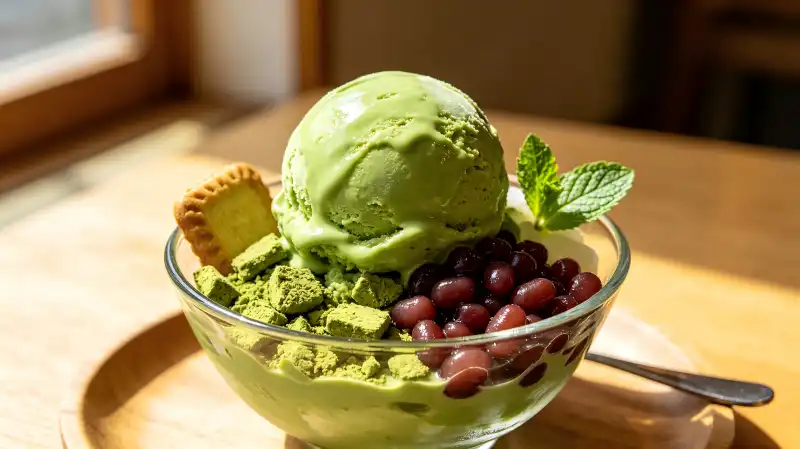
How to Select and Procure the Best Matcha Powder for Frozen Dessert Production
When you acquire Matcha Powder you have to think about how you are going to track it, certify it and make sure that every batch is the same as the next one. Your history counts. People consider that Matcha Powder from Japan notably from Uji or Nishio is of greater quality. But you may get well cultured Matcha Powder from other parts of the world for cheaper money without sacrificing much in terms of function, provided the supplier satisfies generally accepted quality requirements.
A good Matcha Powder source should have GMP-certified plants, HPLC-verified catechin profiles, organic and non-GMO certification, and a supplier that can always deliver you a lot of powder. If you want to sell something in the U.S., you have to prove that it fulfills heavy metal criteria. This may be done by means of ICP-MS tests after cutting the object.
If you are buying anything, vendors with bulk handling capabilities, nitrogen-flushed packing lines and documented cold-chain protocols are a great assistance. The vendor should test for peroxide value (PV) to demonstrate the changes in the lipids throughout the standard 12-18 month shelf life. Ask for certificates of analysis (COA) for each batch.
Using Matcha Powder as a Competitive Edge in the Frozen Dessert Market
High grade Matcha Powder may now be bought at places other than fine art stores. Matcha Powder flavors have been trickling into large U.S. retailers like Whole Foods and Trader Joe's since 2021. This means the genre has matured and is now appreciated by majority. Brands may confidently include the authorized organic Matcha Powder to their frozen delights and boast about the health advantages of antioxidants, natural origin and sustainability. Gen Z teens and young adults are particularly interested in these three items and are willing to pay extra for them.
New company ideas include Matcha Powder gelato created with oat or cashew bases, reduced sugar Matcha Powder ice cream for diabetics, and Matcha Powder-swirl styles that make the frozen aisle seem more attractive. All these product concepts need a consistent supply of Matcha Powder. That is, from the commercial point of view, the management of the quality of the supplier is no less significant than the product concept itself.
Conclusion
It is one of the few things that can make frozen treats taste delicious, perform well, and become renowned all at the same time. Matcha powder is one of those things. For you to be able to create a line of excellent products that are based on Matcha Powder, you need to select the appropriate grade, understand how to spread the powder, and collaborate with a reliable supplier. Investing in excellent Matcha Powder today will allow a firm to maintain their lead over the competition for a considerable amount of time. This is because an increasing number of individuals are seeking for frozen desserts that are high in antioxidants and have clean labeling. Numerous individuals are aware of the element in and of itself. What sets this apart from other things is the quality of the work that is done and the consistency of the supply chain.
FAQ
What kind of matcha powder is ideal for use in the manufacturing of ice cream for commercial purposes?
The Matcha Powder that is manufactured for cooking is commonly used in ice cream and gelato. This is due to the fact that it has a greater number of catechins and a more robust flavor that works well in sweet and fat-filled mixtures. In the event that you take the appropriate quantity, the ceremonial grade does not enhance your senses and is more expensive.
How should matcha powder be stored in bulk so that its quality is not compromised?
The matcha powder is extremely susceptible to damage from light, air, and water. Preserve in opaque, multi-layered aluminum foil that has been filled with nitrogen and stored at a temperature below 15 degrees Celsius. Checking the peroxide value on a regular basis is recommended in order to monitor the lipid breakdown that occurs during the shelf life of the substance.
Are there allergies that are important to the labeling of frozen desserts that matcha powder contains?
The Matcha Powder that is produced from tobacco plants is not considered to be a significant allergy by the Food and Drug Administration (FDA). However, the paperwork provided by the supplier need to be examined in order to determine whether or not there are any potential dangers of cross-contamination during the grinding process. This is of utmost significance for establishments that deal with allergies such as tree nuts or other substances.
Is it possible to include matcha powder into vegan baked goods and frozen desserts?
Indeed. Matcha Powder is a great complement to plant-based mixes, such as those produced from oats, cocoa, almonds, and cashews all of which are examples. Because it does not require any instruments that are manufactured from animals, it is compatible with other certification systems that are designed for vegans.
Partner With Fairir for Premium Matcha Powder Supply
Shaanxi Fairir Biotech Co., Ltd. has a GMP-approved factory that is 10,000 m² and has three fully automatic production lines that can make up to 98% of what they need to make. Companies that make food, vitamins, and products trust Fairir to sell them Matcha Powder for sale. They offer batches that have been checked using HPLC, help with organic certification, and a variety of ways to buy in bulk. To get samples and more information, you can email our team at sales@fairirbiotech.com right now.
References
1. Grand View Research. (2023). Matcha Market Size, Share & Trends Analysis Report.
2. Mintel Group Ltd. (2023). Global Food & Drink Trends: Flavor and Visual Innovation in Frozen Desserts.
3. Kochhar, S. L., & Gujral, S. K. (2020). Plant Science: Theory and Practical. Cambridge University Press.
4. Journal of Food Science. (2022). Stability of EGCG and Chlorophyll in Frozen Dairy Matrices. Wiley Online Library.
5. U.S. Food and Drug Administration. (2023). Import Alerts and Heavy Metal Compliance for Botanical Ingredients.
6. Tea & Coffee Trade Journal. (2022). Matcha's Mainstream Moment: From Café to Frozen Aisle.