_1751965378790.webp)

Pure Resveratrol Powder: Bioavailability and Absorption Facts
It is very important to know how soluble and absorbed the active ingredients are when you make or buy plant extracts for use in medicine, supplements, or beauty items. As a polyphenolic stilbenoid, Pure Resveratrol Powder comes from Japanese knotweed and grape skins. However, it is hard to process, which limits its use in business and medicine. Little of it gets into the bloodstream, even though it's at least 98% pure, because it breaks down quickly on the first pass and doesn't mix well with water. This is an important part of absorption that we talk about to help procurement managers, formulators, and R&D teams find the best places to get things and make new goods that work well in the long run.
What Is Pure Resveratrol Powder and Why Bioavailability Matters?
When looking at raw materials to make something or buy a lot of them, it's helpful to know what Pure Resveratrol Powder is made of and how it is taken.
Defining Purity Standards and Chemical Identity
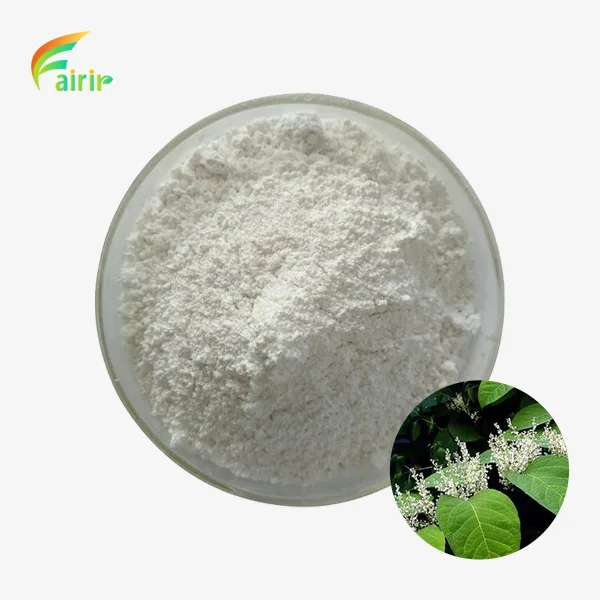
Trans-resveratrol (CAS 501-36-0) is a solid powder that is off-white to white in color and has a defined melting point. Between 253°C and 255°C is where it freezes. High-purity grades that have been proven by HPLC (High-Performance Liquid Chromatography) usually have assays of 98% or more. The cis-isomer doesn't bind to sirtuin proteins as well as the trans-isomer does, so this molecular similarity ensures uniform biological action. Procurement teams need to make sure that the product fits certain standards. For example, the particles should be less than 10 microns (D90), there should be less than 1% moisture, and the product shouldn't contain any toxins like emodin (<1 ppm) or polycyclic aromatic hydrocarbons (<2 ppb).
The Bioavailability Challenge in Resveratrol
Some people take very large amounts of resveratrol by mouth, but the amounts in their plasma are still very low, usually in the nanomolar range. Without being changed, researchers have found that taking trans-resveratrol by mouth only makes a small amount of it accessible. During phase II metabolism, it is broken down in the liver and stomach. Free resveratrol can only be taken in by cells in small amounts because it is quickly broken down into sulfate and glucuronide metabolites. Formulators can make smarter delivery changes if they know about this metabolic block, and buyers can find sources that can give them micronized or complexed forms that get around these issues.
Why Absorption Efficiency Matters for Product Developers
You can tell how important it is to improve absorption of Pure Resveratrol Powder when you make something by how pure it is and how well it works as a medicine. This difference needs to be taken into account by companies that make anti-aging vitamins, heart health goods, or nutraceuticals that focus on life so that they can give users clear benefits. A resveratrol extract that is 98% pure but not well-made will not work as well as one that was well thought out and is easier for the body to use. Before you buy something, you should think about more than just the price and how pure the raw material is. If you want to make the end product more useful, you should also think about how well it works with tools that help the body absorb it better.

Factors Affecting Bioavailability and Absorption of Resveratrol Powder
A lot of things can affect how well Pure Resveratrol Powder is taken in and used by cells, which can change how it is made and how sources are picked.
Trans-Resveratrol Versus Cis-Resveratrol: Structural Significance
The trans-isomer is the biologically active form. It is a strong antioxidant that turns on SIRT1. When the product is made or stored, it can be exposed to UV light or heat, which can change it to the cis-form. The cellular power of this form is smaller. Good providers need to use photo-protective packaging, such as vacuum-sealed metal foil bags, and do stable tests that follow ICH guidelines to make sure the trans-isomer stays the same over time. If someone is buying something to be used in a long-term process or to ship to another country, they should ask for stable data that shows the isomer will stay pure for more than 24 months at room temperature.
Particle Size and Dissolution Kinetics
It's a BCS Class II chemical, which means it doesn't dissolve well in water (less than 0.05 mg/mL) and can easily go through a lot of things. You can use jet cutting or micronization to break up bits. This makes a huge difference in how much surface area comes into contact with stomach juices. These things break down and absorb things faster. Micronized powders (particle size D90 <10 microns) are better for the body than normal mesh types. Technical datasheets should show the range of particle sizes when comparing different sources. Laser diffraction analysis should be used to make sure that the range of sizes is the same from batch to batch. It is very important to follow this standard when making pills or tablets that are meant to work quickly.
The Role of Co-Ingredients and Excipients
How resveratrol is made has a big impact on how much of it is absorbed. It is easier for things to dissolve in the gut when they are carried by lipophilic carriers, such as medium-chain triglycerides, phospholipids, or liposomal packing systems. If you take it with piperine, which comes from black pepper extract, the glucuronidation routes get stopped. Up to 1500% more plasma is made when this is done. Mineral fillers or high-fiber frames, on the other hand, may bind to resveratrol and make it harder for the body to absorb. Formulators should study dissolution and permeability during development, and buying teams should give more weight to sellers who can help optimize formulations and suggest excipients that work well with the formula.
How to Maximize Absorption of Pure Resveratrol Powder in B2B Applications
Advanced Delivery Systems: Liposomes and Nanoformulations
Encapsulation technologies are a big step forward in getting around the natural things that make it hard for the body to absorb resveratrol. Liposomal delivery systems, which surround the active ingredient in phospholipid bilayers, facilitate direct cellular uptake. This keeps it from breaking down too fast. Formulations for nanoparticles that use solid lipid carriers or polymer structures also make them break down better and stay in the bloodstream longer. There are cheaper ways to mix powders, but these methods make digestion better—often by 5 to 10 times. That's why they should be priced higher in the competitive nutrient market. When providers offer private labeling and custom formulation services for liposomal or nano-resveratrol goods, brands can make their products stand out by giving them absorption profiles that are based on science.
Synergistic Ingredient Combinations
When bioenhancers are carefully mixed with resveratrol, it makes it work Pure Resveratrol Powder work better as a medicine. Piperine has been studied the most as an uptake increase. It works by stopping glucuronidation enzymes in the gut and liver. Quercetin is another flavonoid that works with the first one to make it more antioxidant and make the plasma half-life longer. It does this in several different but connected ways. Fatty acids that are omega-3 help the body break down fats better. When making products for heart health or metabolic support, putting resveratrol with these other chemicals that work well together makes the products more valuable for users. Managers in charge of buying things should look for places that can give them both the main active ingredient and the right co-extracts. This will make the supply chain easier to use and make sure that every batch works with the others.
Timing and Dosage Considerations in Product Positioning
It works better for dissolving and lymphatic movement when eaten with moderate-fat foods, but it may work less well when you're hungry. Each serving of most market foods has an amount of 100 mg to 500 mg. When absorption is low, higher amounts make up for it. With sustained-release versions, you can be exposed to them for longer, which may make them more useful by smoothing out changes in plasma concentration. These tips help you pick the right shape for your product, such as pills that work right away, tablets that work over time, or powdered stick packs. They also help with advertising claims about how to use the product most effectively.
Comparative Analysis: Pure Resveratrol Powder Versus Alternative Forms
To pick the best format, you need to carefully consider the pros and cons of how well Pure Resveratrol Powder absorbs, how stable it is, and how much it costs, all of which are important for large-scale production.
Powder Versus Capsule and Liquid Formulations
A lot of different dose types are made with resveratrol powder as the main ingredient. This gives the people who make them a lot of freedom. It is easier and more accurate to measure doses with encapsulated powders, but they also have extra ingredients that might affect digestion. Most of the time, this makes them better for your body than dry powder mixes. It's not all the same how stable they are. Powders last longer if they are stored in a place with controlled temperature. Liquids, on the other hand, need stabilizers because they can break down or form crystals over time. They also have very different costs to make. When done on a big scale, mixing powders and putting them in capsules is cheap. But making softgels costs more up front and requires a minimum order number. Buyers should pick a style that fits their desired price range, their ability to make the product, and the tastes of the final audience.
Organic Versus Synthetic Resveratrol Considerations
Natural resveratrol, like that found in Japanese knotweed or grape skins, usually meets the criteria for being organic. This makes it appealing to people who like to buy things with clear labels. Chemical synthesis makes manmade analogs that are similar to the real thing but may be cheaper and have less pollution from farms. Acceptance by regulators varies. Natural extracts usually don't have as many problems in markets that value plant sources. On the other hand, manufactured forms may face customer questions even though they are chemically the same. The quality levels of natural and synthetic sources should be the same if you buy from a trusted company that uses tried-and-true extraction or synthesis methods. People decide what to buy based on how the brand is positioned, the rules in the target places, and the price.
Procurement Insights: Selecting Reliable Pure Resveratrol Powder Suppliers
The qualifications, quality methods, and logistical skills of providers must be carefully reviewed to make sure that the supply chain for high-purity Pure Resveratrol Powder is safe. This is done to make sure that rules are followed and to lower the chance of buying.
Essential Quality Certifications and Documentation
There is a strict rule called GMP (Good Manufacturing Practice) that Pure Resveratrol Powder requires that all materials used, supplements, or beauty items must comply with. The ISO 9001 mark shows that a company has a strong quality management system. The ISO 22000 or HACCP mark shows that a company follows rules for food safety. You can reach more people if your food is certified Organic, Kosher, or Halal. Full Certificates of Analysis (COA) should be given by suppliers for each production batch. These COAs should show HPLC purity, microbial limits, heavy metals, pesticide residues, and solvent residues. Stability tests were done in both fast and real-time situations to back up claims about shelf life. Paperwork that shows where the raw plant materials came from and where the finished powder came from makes things clear and makes it easier for regulators to check. When looking at possible partners, make sure the skills they say they have are real by asking to see third-party audit reports and proof that they follow the law.
Pricing Structures and Minimum Order Quantities
When you buy a lot of high-purity resveratrol, the price is based on how much you order, the grade of purity, and any extra services you need, such as micronization or organic certification. Most of the time, MOQs are between 25 kg and 100 kg, and lower limits save you more money. A big part of the total landing cost is the freight and import taxes. This is especially true for packages from other countries that need to be kept at a certain temperature. A lot of different buyers can find what they need from suppliers who offer different packing options, from small samples for R&D to fiber drums for mass production. A good way to get better prices and first picks when supplies are low is to make long-term deals for supplies that offer a certain amount each year. Not only should buyers make a model of the unit price, but they should also include freight, handling, and any quality risks that could come up.
Sample Testing and Supplier Verification
As a first step in your study, you should have samples checked by a third party to make sure what is said about cleanliness, particle size, and contamination levels is true. The material should be mixed with the expected excipients to see how well it dissolves, flows, and works with those ingredients. To learn about a supplier's reputation, talk to people in the same industry, check to see if they are a member of trade groups, and see how well they've done with similar buyers in the past. Communication that is on time and the ability to help with technology are signs of a friendship that will last. You can lower the risk of a supply loss by making sure you have enough production capacity and backup sources of raw materials, such as multiple extraction lines. Shaanxi Fairir Biotech Co., Ltd. has 14 extraction tanks made of stainless steel. The tanks are between 500 and 3000 liters in size. Plus, there are three fully automatic lines that get 98% of the oil out of the plants. Our 10,000-square-meter building and the machinery that goes with it make sure that batch output is always the same and that orders are filled quickly and in line with global procurement schedules.

Conclusion
To fully understand resveratrol absorption, you need to know a lot about its chemical and physical properties, how it affects the body's metabolism, and the best ways to take it in. Product makers and purchasing managers should give more weight to sellers who not only offer pure raw materials but also technical know-how, strong quality systems, and a range of production choices. The way the product is delivered, the ingredients that work well with it, and the dose types all play a direct role in how well it works and how it stands out in the market. You can help your business make resveratrol-based products that are good for customers and can compete with tough rivals by learning about trans-isomer stability, particle size optimization, and new ways to package those products. The key to long-term growth in this fast-paced market is to build strategic relationships with providers based on being open, following the rules, and running reliable businesses.
FAQ
1. What is the optimal dosage range to maximize bioavailability?
Clinical tests show that plasma levels can be found at doses of 150 mg to 500 mg per day when taken with substances that help the body absorb the fat carriers. Higher doses might help make up for low intrinsic bioavailability, but they might not raise systemic exposure by the same amount because of processes that stop working when they reach a certain level.
2. How can I verify the authenticity and purity of resveratrol powder from suppliers?
There should be HPLC certificates that show that the trans-resveratrol amount is at least 98% on the certificates you ask for. Make sure that the batch numbers on the COAs match up, and have approved labs do tests on your behalf. Compare the GMP, ISO, and organic marks that a seller has with the records of the groups that gave them out.
3. Are there safety concerns with high-purity resveratrol at typical dosages?
Studies on people have shown that trans-resveratrol is very safe at amounts of up to 5 grams per day. No major side effects have been reported. If the numbers are very high, you might feel some mild stomach pain. A lot of people in the US and Europe agree that resveratrol is safe as long as it is used correctly in functional foods and dietary supplements.
Partner with Fairir for Premium Trans-Resveratrol Supply
Shaanxi Fairir Biotech Co., Ltd. is ready to help you get resveratrol powder. It comes in different sizes of micronized particles, is guaranteed to be 98% pure by HPLC, and comes with all the necessary paperwork, like COA, SDS, and stable data. Our Xi'an plant is GMP-certified and has fully automatic extraction lines that achieve 98% extraction efficiency, which is the best in the business. This allows for steady batch production. You can try our products for free, use your own brand name, and change the ingredients in the pills, tablets, softgels, and chews. Delivery times are quick—one to three days. With ISO, HACCP, Kosher, and Halal certifications, you can be sure that our organic, non-GMO, gluten-free, and vegan Pure Resveratrol Powder meets all international safety standards. Send an email to sales@fairirbiotech.com to talk about your specific technical needs, get full product specs, or arrange for samples to be sent to you. There is quick technical help and clear contact so that we can build long-term relationships with you that help you make new products and do well in the market.
References
1. Walle, T. (2011). Bioavailability of resveratrol. Annals of the New York Academy of Sciences, 1215(1), 9-15.
2. Boocock, D. J., Faust, G. E., Patel, K. R., Schinas, A. M., Brown, V. A., Ducharme, M. P., & Brenner, D. E. (2007). Phase I dose escalation pharmacokinetic study in healthy volunteers of resveratrol. Cancer Epidemiology Biomarkers & Prevention, 16(6), 1246-1252.
3. Johnson, J. J., Nihal, M., Siddiqui, I. A., Scarlett, C. O., Bailey, H. H., Mukhtar, H., & Ahmad, N. (2011). Enhancing the bioavailability of resveratrol by combining it with piperine. Molecular Nutrition & Food Research, 55(8), 1169-1176.
4. Amri, A., Chaumeil, J. C., Sfar, S., & Charrueau, C. (2012). Administration of resveratrol: what formulation solutions to bioavailability limitations? Journal of Controlled Release, 158(2), 182-193.
5. Gambini, J., Inglés, M., Olaso, G., López-Grueso, R., Bonet-Costa, V., Gimeno-Mallench, L., & Borrás, C. (2015). Properties of resveratrol: in vitro and in vivo studies about metabolism, bioavailability, and biological effects in animal models and humans. Oxidative Medicine and Cellular Longevity, 2015, Article ID 837042.
6. Singh, C. K., & Ahmad, N. (2015). Resveratrol and cancer: challenges for clinical translation. Biochimica et Biophysica Acta (BBA)-Reviews on Cancer, 1852(6), 1178-1185.