_1751965378790.webp)

Ube Powder Benefits: Can It Boost Your Immunity?
In recent years, purple yam powder, also called Ube Powder, has gotten a lot of attention because it has a lot of health benefits and may help your immune system. This bright purple ingredient comes from Dioscorea alata and has anthocyanins, vitamins C and A, and dietary fibre. These all work together to help the immune system by protecting cells and producing antioxidants. Regularly eating foods high in anthocyanins has been shown to lower inflammation markers and boost the body's natural defences. This makes Ube Powder a more valuable ingredient in health-focused products in the pharmaceutical, nutraceutical, and functional food industries.
What is Ube Powder and Why Does It Matter in B2B Procurement?
Understanding the Processing and Quality Standards
Ube Powder is a carefully processed form of dried purple yam that is extracted, dried, and milled to make an ingredient that can be stored for a long time and is good for large-scale production. The powdered version is better than fresh Ube or concentrated extracts because it has uniform particle size distribution, standardised moisture content, and predictable solubility properties that make formulating easier. The way a product is made has a big effect on its quality. Spray-drying and vacuum-drying technologies keep more of the nutrients that are damaged by heat than traditional air-drying methods. Manufacturers who care about quality use HPLC and UV spectrophotometry to check the amount of anthocyanin in their products. This makes sure that the product is consistent from batch to batch and meets the standards for medicinal and nutrition grade products.
Supply Chain Advantages for Procurement Managers
Purple yam powder is useful for more than just making things easier. An extended shelf life range from 18 to 24 months under proper storage conditions, lowers inventory turnover pressures and lessens waste throughout the delivery network. Transportation costs drop greatly compared to fresh or frozen alternatives, while warehouse requirements stay simple with standard cool, dry storage parameters. These operational efficiencies directly lead to higher profits and a more stable supply chain. This is especially helpful when handling delivery networks that span multiple regions or dealing with changes in seasonal availability.
Market Demand Drivers and Application Versatility
According to recent market data, the use of natural colourants and functional ingredients in the food production industry in North America is growing at rates higher than 8% per year. The growth shows that people are moving toward plant-based, allergen-friendly items that taste good and are good for you. These needs can be met by Ube Powder in a wide range of products, from frozen treats and baked goods to ready-to-drink drinks and healthy supplements. Its natural origin story and cultural realism make it stand out in the market, which is good for health-conscious people looking for new flavour experiences.
Health and Nutritional Benefits of Ube Powder: Immunity Boost Explained
Antioxidant Capacity and Cellular Protection
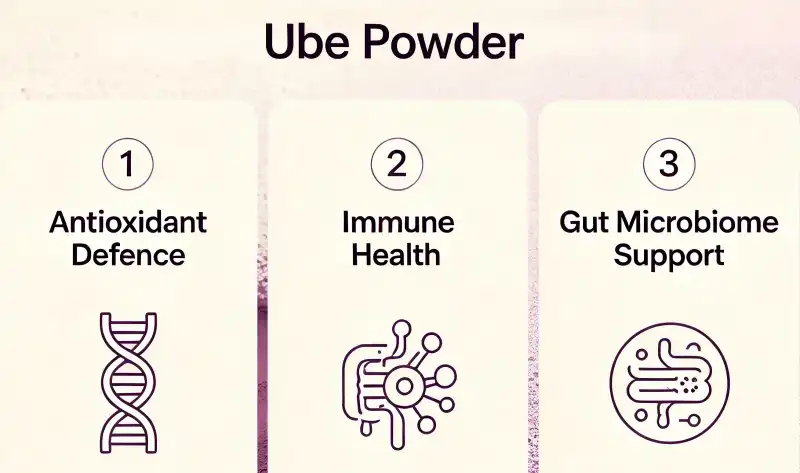
Anthocyanins, which are strong polyphenolic compounds that have been widely studied in peer-reviewed nutritional science journals, give Ube Powder its unique purple colour. The ORAC (Oxygen Radical Absorbance Capacity) tests show that these beneficial molecules have free radical scavenging activity that is on par with or higher than that of blueberries and blackberries. Anthocyanins help neutralise reactive oxygen species that would damage DNA, proteins, and lipid walls if they weren't there to protect cells from harm. This defence system directly supports the health and function of immune cells, making it easier to recognise and fight pathogens.
Vitamin Content Supporting Immune Response
In addition to anthocyanins, purple yam powder has high amounts of vitamins C and A, which are both known to be important for maintaining a healthy immune system. Vitamin C helps the body make white blood cells and improves the barrier function of the skin, which is the body's first line of defence against germs in the surroundings. Vitamin A controls the growth and division of lymphocytes, which are specific immune cells that are important for adaptive defence. Depending on how it was processed and where the raw materials came from, a 100-gram amount of good Ube Powder usually gives you 15 to 20% of your daily vitamin C needs and 8 to 12% of your daily vitamin A needs.
Prebiotic Fibre and Gut Health Connection
A new study has found strong connections between the microbiome of the gut and immune function. Dietary fibre plays a key part in these connections. Within the gut environment, purple yams have resistant starch and complex carbohydrates that work as prebiotics, helping only good bacterial types grow. During fermentation, these microorganisms make short-chain fatty acids, which are chemicals that change how the body reacts to inflammation and make the gut barrier stronger. The gut-immune axis is a new area of nutritional immunity study. Fibre-rich foods like Ube Powder are at the centre of this area of research because they help the digestive system and the immune system.
Practical Uses of Ube Powder in Product Development and Procurement Considerations
Formulation Applications Across Product Categories
Product makers like Ube Powder because it can be used in a lot of different ways, from sweet to savoury. It can be used as a natural colourant and a partial flour replacement in baking recipes. Its ability to hold on to moisture helps keep products fresh for longer. The powder mixes easily into cake batters, cookie doughs, and bread recipes at amounts usually between 3% and 8% by weight, based on the colour strength and flavour profile that is wanted. It is used as a base for smoothies, plant-based milk options, and speciality latte mixes because its earthy sweetness goes well with vanilla, coconut, and caramel flavours. Ice cream makers like that it has a clean label and can be used to make visually appealing products without using fake colours. The natural sugars in it also help the texture become smooth during the freezing process.Savoury applications represent an expanding frontier for purple yam powder adoption. A lot of creative cooks and food scientists add it to pasta dough to make colourful gnocchi and noodles that are both visually appealing and good for you. Making soups and sauces thicker and adding a slight flavour to them is helped by it. Snack food companies are looking into how it can be used in extruded and baked chips for health-conscious customers.
Quality Control and Storage Best Practices
Paying attention to certain external factors is needed to keep the nutritional value and usefulness of Ube Powder throughout the supply chain. Light speeds up the breakdown of anthocyanin through photochemical processes. This is why opaque or UV-protective materials are needed for packing. Controlling the temperature is also very important. The best temperature range for keeping is between 15 and 20°C, so that the powder doesn't absorb water or become active with enzymes that change its flow properties. To stop microbes from growing and keep things from sticking, the relative humidity should stay below 60%. These requirements make it clear how important it is to choose providers who have climate-controlled warehouses and strong quality management systems that include regular stability testing methods.
Supplier Evaluation Criteria for Procurement Teams
Decisions about strategic sourcing depend on thorough models for evaluating suppliers that look at a lot of risk and performance factors. Verification of certification should include GMP compliance, organic status if appropriate, and third-party testing results showing that heavy metals, chemical residues, and microbes are not present. Production capacity and scalability should be carefully looked into, especially when figuring out how much will be needed in the future or how demand will change with the seasons. Consistent lead times and minimum order numbers have a direct effect on planning supplies and the amount of working capital that is needed. We suggest making scorecards that rank these factors based on how important they are to the company. This will allow for fair comparisons between possible supply partners.
How to Choose the Best Ube Powder for Your Business Needs
Quality Parameters and Specification Verification
People who work in buying who are smart know that not all Ube Powder is of the same quality. The particle size distribution has a big effect on how well it dissolves and spreads. For example, smaller mesh sizes (usually 80–100 mesh) work better in beverage applications, while coarser grades work better in bakery formulas where adding texture is desired. Standardising the amount of anthocyanin in powder makes sure that the colour stays the same from batch to batch. Premium types have 150 to 300 mg of anthocyanin per 100 grams of powder. High-quality goods have a purple yam content of 95% or more on a dry matter base, which means they don't have any fillers or other materials that act as carriers.
Organic Certification and Sustainability Considerations
Different foreign markets have different rules when it comes to organic approval. The USDA Organic, the EU Organic, and other similar standards have different rules about what needs to be checked. The extra money that these certified products cost is usually between 20 and 40 per cent more than regular ones. This is because they are grown without using manmade fertilisers and pesticides. Beyond just following the rules, buyers who care about the environment are looking more closely at how suppliers handle the environment. This includes things like using renewable energy, reducing the amount of water they use, and making sure their suppliers have fair labour certifications that show they are socially responsible throughout agricultural supply chains.
Private Label Capabilities and Partnership Flexibility
Suppliers that offer private label services and custom mixing can help manufacturers who want to stand out by using their own formulas. Through this partnership method, we can work together to create one-of-a-kind specs that are perfect for each application. These specifications could include helpful ingredients such as adaptogens, probiotics, or flavour masking agents. Contract manufacturing agreements give brands more freedom by letting them outsource production while still protecting their intellectual property with secret agreements. When choosing a seller, looking at these skills can help you have more strategic choices and get new products to market faster.
Conclusion
When it comes to B2B procurement workers who want to make immune-boosting products that fit with current customer health trends, Ube Powder is a great ingredient option. Its antioxidant action, vitamin content, and prebiotic fibre all work together to help the immune system in a number of different ways. The ingredient works well in competitive food production settings because it is stable during preparation, easy to transport, and can be used in a variety of ways. Successful procurement strategies focus on carefully evaluating suppliers, making sure their quality meets strict standards, and making sure they are in line with the sustainability goals of the organisation. They also make sure that costs stay low by making smart volume promises and building long-term partnerships.
FAQ
Is ube powder naturally gluten-free?
Because Ube Powder doesn't have any gluten proteins in it, it can naturally be used in gluten-free recipes. To keep goods that contain wheat from getting contaminated when they are handled on shared equipment, factories should either have separate processing lines or strict cleaning and validation procedures.
Can ube powder completely replace fresh ube in recipes?
To get the density of fresh Ube, rehydration ratios usually need one part powder to three parts liquid. However, there are still differences in texture because the cellular structure changes when it dries. When an ingredient is crushed, its flavour strength increases, so smaller amounts are often needed than with fresh ingredients in standard recipes.
How long does ube powder maintain its nutritional properties?
Good Ube Powder can keep 80–90% of its original anthocyanin content for 18–24 months if it is kept in the right way, with the right amount of temperature, humidity, and light exposure. Accelerated stable testing methods help predict how long something will last in different storage conditions, which helps decide when it goes bad.
Partner with Fairir for Premium Ube Powder Supply
Shaanxi Fairir Biotech Co., Ltd. has a 10,000-square-meter GMP-certified factory with modern continuous countercurrent extraction systems, vacuum belt drying equipment, and ultra-micro pulverisers that make sure the quality and stability of their products are the best. We have 14 stainless steel extraction tanks that range in size from 500 to 3,000 litres. These are backed up by three fully automatic production lines that can remove up to 98% of the material. HPLC, UV spectrophotometry, and rotary evaporation tests are all part of our quality assurance methods. They make sure that every batch of our Ube Powder meets strict medicinal and nutraceutical standards. As a provider of Ube Powder with a lot of experience, we offer reasonable bulk prices, a wide range of customisation options, quick technical support, and reliable shipping schedules that help you plan your production. You can email our team at sales@fairirbiotech.com to get certificates of analysis, set up sample shipping, or talk to our extraction experts about your individual formulation needs. They know how to meet the needs of foreign markets.
References
1. Chen, L., & Huang, G. (2019). Anthocyanins: Modified Stability and Bioavailability in Functional Foods. Journal of Food Science and Technology, 56(3), 1283-1295.
2. Montoya-Rodríguez, A., & de Mejía, E.G. (2021). Bioactive Compounds in Purple-Fleshed Tubers and Their Health Benefits. Comprehensive Reviews in Food Science and Food Safety, 20(4), 3891-3912.
3. Singh, B., & Kaur, A. (2020). Antioxidant and Immunomodulatory Properties of Dioscorea Species: A Systematic Review. Phytotherapy Research, 34(8), 1847-1863.
4. Williams, P.A., & Phillips, G.O. (2022). Natural Food Colourants: Chemistry, Stability and Applications. International Journal of Food Science & Technology, 57(2), 668-682.
5. Zhou, Y., & Wang, M. (2021). Prebiotics and Gut Microbiota: Implications for Immune Function. Nutrients, 13(6), 1943-1961.
6. Kumar, S., & Pandey, A.K. (2023). Chemistry and Biological Activities of Purple Yam (Dioscorea alata): A Comprehensive Review. Food Chemistry Advances, 2, 100187.