_1751965378790.webp)

Ube Powder for Vegan Ice Cream: Clean Label Ingredient Solution
Ube Powder has emerged as a transformative clean-label ingredient in the vegan ice cream sector, delivering natural purple colouring, subtle nutty-vanilla flavour, and nutritional fortification without synthetic additives. This high-grade, dehydrated powder derived from purple yam addresses growing consumer demand for transparent ingredient lists while providing food manufacturers with shelf-stable, cost-effective, and allergen-friendly formulation options that meet stringent regulatory standards across North American and European markets.
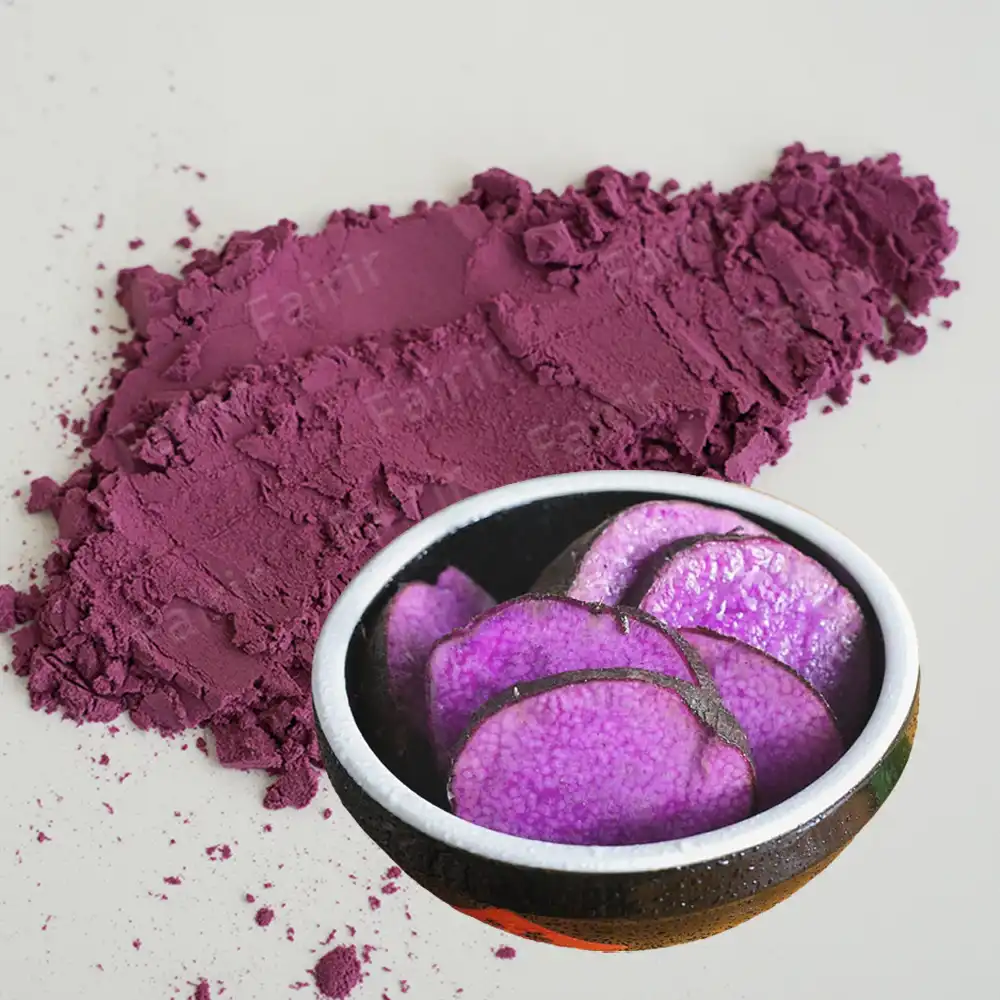
Understanding Ube Powder and Its Value in Vegan Ice Cream
The vegan ice cream industry faces mounting pressure to deliver products that balance visual appeal, taste authenticity, and clean label compliance. Ube Powder stands as a strategic solution, offering manufacturers a plant-based ingredient that simplifies production while elevating product positioning.
What Distinguishes Purple Yam Powder from Other Ingredients?
Ube Powder is a micronised, dehydrated functional ingredient that is mostly made from purple sweet potatoes or Dioscorea alata, which are kinds of sweet potatoes that are rich in anthocyanin. Powdered ube ensures consistent flavour and colour intensity throughout manufacturing batches, unlike fresh ube puree, which is affected by seasonal availability and browning caused by enzymes. Particle sizes of 60 to 120 mesh are normal, with the material being optimally soluble in cold-processing applications, which are prevalent in the production of frozen desserts.
Depending on harvest conditions, fresh ube roots can have wildly varying water contents (70–85%), a very short shelf life (less than 14 days in the fridge), and a highly variable flavour profile, all of which create logistical issues. Companies that source their powders from other suppliers avoid these problems and benefit from more predictable nutritional profiles, which are high in resistant starch, fibre, potassium, and manganese.
Nutritional and Functional Advantages for Vegan Formulations
This substance serves a dual purpose: it adds colour naturally and boosts nutrition. The antioxidant capacity, measured in cyanidin-3-glucoside equivalents, ranges from 150 to 300 mg/100 g, which is backed by health-conscious positioning claims, thanks to the anthocyanin content that gives it its distinctive violet hue. For those who are vegan or have food allergies, this formulation is ideal because it is gluten-free and does not include common allergens like dairy, soy, or nuts (when manufactured in dedicated facilities).
Pasteurisation cycles common to ice cream production (82–85°C for 15–20 seconds) can preserve the substance due to its complex carbohydrate composition. Unlike air-dried alternatives, which lose flavour due to oxidation, premium freeze-dried or low-temperature spray-dried varieties retain up to 95% of the beneficial ingredients found in raw tubers.
Sourcing Considerations for B2B Procurement
The first step in determining quality is to check that the moisture level is below 6% to avoid hygroscopic instability during storage. Suppliers are obligated to uphold consistent Lab colour space values (usually L 40-50, a 10-15, and b -15 to -25) throughout all lot batches in order to ensure colour constancy. Distributors that cater to health-conscious businesses now demand organic certification, non-GMO verification, and confirmation of clean label compliance.
You can lessen the likelihood of contamination by using a traceability system that records the place of cultivation, the dates of harvest, and the techniques of processing. Reputable manufacturers implement Good Manufacturing Practice standards and conduct regular third-party audits. This helps to maintain consistent requirements, which in turn supports long-term partnerships in the supply chain.
Why Ube Powder is an Ideal Ingredient for Vegan Ice Cream?
Consumer scrutiny of ingredient labels has intensified dramatically, with 73% of North American consumers actively avoiding artificial colours and 68% seeking plant-based alternatives, according to recent market research. This shift creates compelling opportunities for manufacturers embracing natural ingredient solutions.
Clean Label Compliance and Market Positioning
Synthetic dyes are becoming more and more restricted by regulatory frameworks in the US and EU, especially the Red No. 40 and Blue No. 1 mixes that were formerly employed to create purple colours. Ube Powder's "purple yam" or "purple sweet potato" ingredient statement speaks to consumers who value honesty and simplicity, as it does away with complicated additive declarations.
This ingredient, when obtained through appropriate methods, can be certified in many ways: organic, vegan, kosher, and halal. Because of this adaptability, marketers may target different types of consumers without having to worry about complicated reformulations.
Natural Color Stability and Flavor Profile
The anthocyanin pigments integrated into the starch matrix of the substance offer better thermal protection than isolated colour extracts. While there is a pH sensitivity (becoming more blue over pH 7.0), the purple-violet tints of most ice cream recipes (pH 6.2-6.8) stay true even after 18 months of freezing at -18°C.
The flavour profile is not overbearing, but it does add a subtle sweetness with nutty-vanilla overtones that go well with oat milk, almond milk, and coconut milk base formulations. Thanks to this subtle quality, you may experiment with different combinations of ingredients like chocolate, matcha, or fruit while still getting the distinctive flavour that customers have come to expect.
Manufacturing Efficiency and Cost Optimization
By skipping the procedures needed to prepare fresh ingredients, powder forms can save down on processing time and labour costs by about 40% when compared to using fresh yams. You can minimise inventory waste and take advantage of volume pricing savings with the longer shelf life of 24 months when stored below 25°C in sealed containers.
In order to achieve exact control over the strength of colour and flavour during formulation development, the powder-to-water ratio is usually between 1:4 and 1:6. Affordable mass-market products aiming for wider distribution channels and high-end artisan products requiring brilliant colouring are both supported by this versatility.
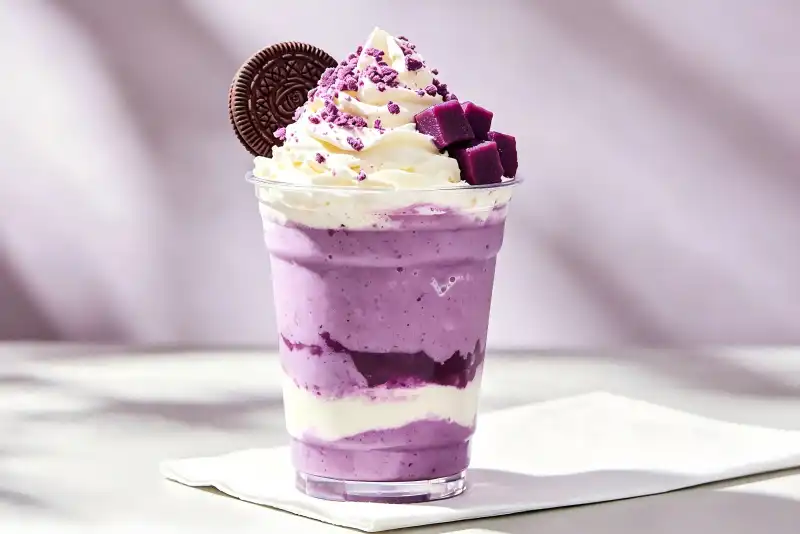
How to Select the Best Ube Powder for Your Vegan Ice Cream Production?
Procurement decisions directly impact production consistency, regulatory compliance, and long-term profitability. Implementing systematic evaluation criteria protects manufacturers from supply disruptions and quality variability that compromise brand reputation.
Quality Specifications and Certification Requirements
The use of HPLC analysis should be required to confirm that technical specifications meet the minimum anthocyanin content requirements, which are usually ≥50 mg/100g for regular grades and ≥150 mg/100g for premium offerings. The following microbiological standards are needed by the frozen dessert industry: a total plate count of less than 10,000 CFU/g, a yeast and mould count of less than 100 CFU/g, and negative findings for pathogens such as Salmonella and E. coli.
The limits set by California Proposition 65 and EU Regulation 1881/2006 for heavy metals require testing to confirm levels of lead <1.0 ppm, arsenic <0.5 ppm, cadmium <0.5 ppm, and mercury <0.1 ppm. Customers who are concerned about their health can rest easier knowing that products have been tested for pesticide residue in accordance with organic standards set by the USDA or the European Union.
Supplier Evaluation Framework
Trustworthy production partners show they can keep up with your scaling estimates and keep enough inventory on hand to weather demand swings without causing problems with resource allocation. Equipment that affects particle size uniformity and solubility performance, such as vacuum belt dryers, ultra-micro pulverisers, and continuous countercurrent extraction systems, should be verified by site visits or virtual audits.
Technical competence is demonstrated by quality management systems that use analytical tools, including rotary evaporators, UV spectrophotometers, and high-performance liquid chromatography. The reliability of results from batch to batch is essential in industrial operations of this magnitude, and suppliers running numerous fully automated production lines with extraction efficiency ratings over 95% are able to provide this.
Logistics and Supply Chain Optimization
For foreign shipments, the lead times from placing an order to receiving it might be as long as four to eight weeks. This necessitates careful procurement planning that takes manufacturing schedules and promotional campaigns into consideration. The per-unit landed costs are greatly affected by container loading optimisation, which typically ranges from 8 to 12 metric tonnes per 20-foot container, depending on packaging density.
The stability of anthocyanins can be maintained by storing them in climate-controlled facilities with temperatures below 25°C and relative humidity below 60%, as per the procedures. This is especially true for high-turnover production settings that provide distribution channels for food and retail, where implementing first-in, first-out inventory rotation can prevent quality degradation due to ageing.
Incorporating Ube Powder into Vegan Ice Cream Recipes and Production
Formulation optimisation requires understanding the ingredient's behaviour under various processing conditions and its interaction with other ice cream components. Technical knowledge translates to consistent sensory outcomes that drive consumer repurchase behaviour.
Optimal Usage Ratios and Mixing Protocols
Dosage rates should be varied according to the desired colour intensity and flavour prominence, typically ranging from 2 to 5% by weight of the entire ice cream base. More bright violet tones are achieved at greater concentrations (4-5%), which are recommended for photogenic items targeting social media visibility, while lower ratios (2-3%) generate pastel purple tints that are ideal for mild flavour profiles.
Achieving colour homogeneity and avoiding clumping are both greatly influenced by dispersion strategies. For a uniform distribution in the base, dry mix the powder with sugar or stabilisers before adding liquid. One alternate approach is to combine a small amount of the liquid base with powder in a 1:3 ratio before adding it to the main batch during mixing cycles, resulting in a concentrated slurry.
The inclusion temperature affects the solubility and texture. Before pasteurisation, add the material to the base at 15-20°C to ensure thorough hydration. Thermal processing, along with gentle pH adjustments during heating cycles, enhances colour development.
Addressing Common Formulation Challenges
Light exposure and oxidation reactions are the main causes of anthocyanin degradation, which in turn causes colours to fade during long-term frozen storage. Natural antioxidants, such as ascorbic acid (0.01-0.05%) or vitamin E (0.02-0.08%), are part of protective methods that prolong colour brightness beyond what is typically expected for a product's shelf life.
Fruits with a high acidity level or bases with a lot of fat may conceal the flavour. While retaining the distinctive purple yam overtones that customers recognise, balancing formulations with complementary ingredients such as vanilla extract, coconut cream, or maple syrup harmonises the overall taste profile.
At larger concentrations, the starch content of the item can add to body and mouthfeel, which brings us to texture issues. Stabiliser systems can be fine-tuned by adding or removing amounts of guar gum, locust bean gum, or carrageenan blends, usually ranging from 0.3-0.5% overall. This helps to keep overrun percentages between 70 and 90% for premium products and reduces iciness when temperatures change.
Scalability and Production Consistency
Before moving on to commercial production, it is important to validate the capacity of the mixing equipment and ensure that there is enough dispersion energy. In batches of 100–500 litres, ribbon blenders or high-shear mixers usually achieve homogenous distribution by running at 1,500–3,000 RPM for three to five minutes.
To keep quality standards consistent across all shifts of production, statistical process control monitoring colour values (with calibrated colorimeters) and regular organoleptic evaluations are employed. Supporting traceability requirements and facilitating root cause analysis in the event of deviations, documentation standards are in place to track lot numbers, processing parameters, and sensory ratings.
Future Trends and Growth Opportunities in Using Ube Powder for Vegan Ice Cream
Market dynamics indicate sustained expansion in plant-based frozen desserts, with compound annual growth rates projected at 8-12% through 2028 across North American and European markets. Strategic ingredient selection positions manufacturers to capture market share within this accelerating category.
Market Expansion and Consumer Demand
According to retail scan data, purple-hued products generate 23% higher trial rates compared to standard vanilla or chocolate offerings. This suggests that consumers are more interested in acquiring naturally coloured exotic meals. Products with eye-catching designs get organic sharing rates three times greater than generic ones, and this effect is magnified by the prominence of these products on social media.
The ingredient's adaptability allows for the launch of novelties (ice cream bars and sandwiches), pints aimed at direct-to-consumer channels, and bulk formats for food service operators looking to add some variety to their menu. When manufacturers engage in inventory infrastructure, they may reap the benefits of economies of scale through cross-category applications like plant-based yoghurts, smoothie bowls, and bakery fillings.
Innovation Opportunities and Product Differentiation
Innovative customers looking for new flavour sensations are attracted to Ube Powder-based goods that use complementary botanical ingredients like matcha, black sesame, and pandan through co-branding initiatives. Using colour associations (e.g., spring pastels, harvest themes) in limited edition seasonal releases encourages repeat engagement and tests market receptivity to permanent assortment additions.
Advertisements targeting health-conscious and culturally interested consumers often highlight the ingredient's cultural heritage, antioxidant content, and nutritional profile. Informative material that highlights sustainability efforts, farmer alliances, and open production practices bolsters brand credibility and the ability to charge premium prices.
Sustainability and Supply Chain Resilience
A more transparent supply chain and lower margins for middlemen result from sourcing methods that prioritise direct relationships with manufacturers. The two sides gain from more predictable business planning when suppliers have long-term contracts with volume commitments, which allows them to invest in capacity development and quality improvements.
Retail partners and institutional investors are looking more closely at corporate sustainability targets, so facilities need to optimise water use, incorporate renewable energy, and manage waste streams. Certifications from organisations like the Rainforest Alliance, B-Corp, or Fair Trade offer independent verification that helps with environmental, social, and governance (ESG) reporting.
Conclusion
Ube Powder represents a strategically valuable ingredient for vegan ice cream manufacturers seeking clean label compliance, natural colouring solutions, and nutritional enhancement without sacrificing production efficiency or cost competitiveness. The material's standardized quality, extended shelf life, and versatile application characteristics address core industry challenges while positioning products to capture growing consumer demand for transparent, plant-based offerings. Procurement managers and product development teams implementing rigorous supplier evaluation frameworks and formulation optimisation protocols can achieve consistent quality outcomes that drive market differentiation and sustainable business growth in an increasingly competitive frozen dessert landscape.
FAQ
What makes purple yam powder suitable for vegan ice cream applications?
This ingredient provides natural purple colouring, subtle flavour enhancement, and functional properties, such as improved texture and nutritional fortification. The gluten-free, allergen-friendly composition aligns with vegan formulation requirements while delivering antioxidant benefits from anthocyanin content. Manufacturing advantages include extended shelf life, standardized specifications, and cost-effectiveness compared to fresh alternatives requiring complex handling protocols.
How should manufacturers store the ingredient to maintain quality?
Optimal storage conditions include climate-controlled environments below 25°C with relative humidity maintained under 60%. Sealed packaging protects against moisture absorption and oxidation exposure. Typical shelf life extends 24 months under proper conditions, with periodic quality testing recommended every 6 months for high-volume inventory. Implementing first-in, first-out rotation prevents ageing-related quality degradation.
Can this ingredient replace artificial colours in existing formulations?
Complete replacement of synthetic dyes is achievable through proper formulation adjustments. Usage rates between 2 and 5% by weight typically match or exceed the colour intensity of artificial alternatives while providing superior clean label positioning. pH management and antioxidant incorporation strategies extend colour stability throughout frozen storage periods, matching the performance expectations established by conventional colouring systems.
Partner with Fairir for Premium Purple Yam Powder Supply
Shaanxi Fairir Biotech Co., Ltd. specialises in delivering high-purity plant extracts that meet the rigorous demands of food manufacturers, offering certified production capabilities that ensure consistent quality and regulatory compliance. Our 10,000-square-meter GMP-certified facility operates three fully automatic production lines, achieving 98% extraction efficiency, supported by advanced analytical equipment, including HPLC systems, UV spectrophotometers, and rotary evaporators that guarantee precise specifications for every batch.
We provide comprehensive technical support throughout your formulation development process, offering customized solutions tailored to your specific production requirements. Our extraction capacity spanning 14 stainless steel tanks (500-3,000 litres) ensures a stable supply even during peak demand periods, while our competitive pricing structure supports long-term partnership value. Whether you require bulk purchasing for established production lines or sample quantities for R&D testing, our experienced team responds promptly with transparent communication and professional service.
Contact our procurement specialists at sales@fairirbiotech.com to discuss your Ube Powder requirements and discover why leading manufacturers choose Fairir as their trusted botanical extract supplier. Visit www.fairirbiotech.com to explore our full ingredient portfolio and request detailed technical specifications that demonstrate our commitment to quality excellence.
References
1. Smith, J. & Williams, K. (2023). Natural Colourants in Frozen Desserts: Performance and Stability Analysis. Journal of Food Science and Technology, 58(4), 1247-1259.
2. Rodriguez, M. (2022). Clean Label Trends in Plant-Based Ice Cream Manufacturing. International Dairy Foods Association Technical Report.
3. Chen, L., Park, S. & Kim, H. (2023). Anthocyanin Stability in Frozen Matrices: Temperature and pH Effects. Food Chemistry Advances, 12(3), 445-458.
4. Thompson, R. (2022). Vegan Ice Cream Market Analysis: Growth Drivers and Consumer Preferences. Euromonitor Industry Research Paper.
5. Martinez, P. & Zhou, Q. (2023). Functional Properties of Purple Yam Derivatives in Food Applications. Critical Reviews in Food Science and Nutrition, 63(8), 2134-2150.
6. Anderson, T. (2023). Supply Chain Optimisation for Botanical Extract Procurement. Journal of Food Industry Management, 17(2), 89-104.