

What Affects Ube Powder Solubility in Water?
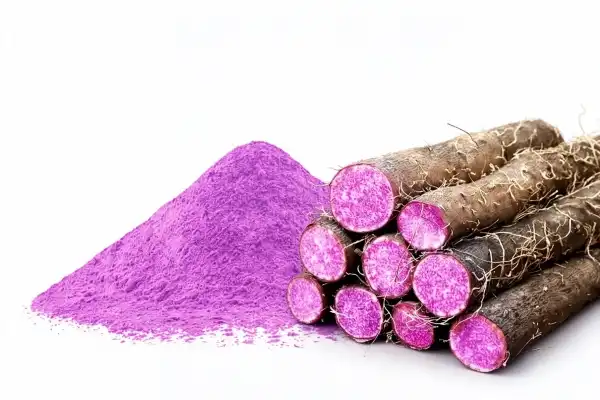
Ube Powder, which comes from the bright purple yam that grows in Southeast Asia, has gotten a lot of attention in the food production world around the world. It is a popular ingredient in many types of production because of its bright violet color, unique sweet taste, and high nutritional value. There are a lot of factors that affect how well Ube Powder dissolves in water. These include the amount of starch in the powder, how the powder was processed, and the conditions in the surroundings. To get consistent results with their products, companies that use this botanical ingredient need to have tight control over these factors. The features of fluidity and the quality of the final product are connected in many areas, such as baking, making drinks, making dairy products, and making sweets. Buying choices that take these technology specs into account have a direct effect on how well things are processed, how much they cost, and how happy customers are.
Quick Answer: What Affects Ube Powder Solubility in Water?
Five factors decide how ube powder behaves in water, and the table gives the short answer for each; the sections below give the detail.
|
Factor |
Effect on solubility |
Practical control |
|
Starch composition |
Starch granules swell and disperse rather than dissolve; amylose-rich starch (reported for Dioscorea alata, roughly 20-32% amylose) thickens and can retrograde |
Specify the starch behaviour you need and test pre-gelatinised versus native grades |
|
Particle size |
Finer powder hydrates faster but can clump and dust |
Specify mesh or laser-diffraction distribution; sift into a vortex |
|
Temperature and pH |
Cold water gives a suspension; swelling starts at roughly 65-75°C and a paste forms above about 85°C; anthocyanin colour shifts with pH |
Match water temperature to the product; keep pH in the range your colour target needs |
|
Additives and impurities |
Maltodextrin and flow aids improve dispersion; fibre and cell debris leave sediment |
State acceptable additive and insoluble residue levels in the specification |
|
Storage moisture |
Above about 65% relative humidity the powder cakes and wets poorly |
Foil-laminate packs, nitrogen flush, 15-25°C and below 60% RH |
Key Factors Affecting Ube Powder Solubility in Water
Chemical Composition and Starch Content
When it comes to breakdown kinetics, starch is the most important factor. Linear glucose polymers called amylose tend to leak out of grains when they come in contact with water, making solutions that are thick even at room temperature. Because it is structured in branches, amylopectin helps gels form when heated. The ratio of amylose to amylopectin changes between yam cultivars and processing methods. This causes batch-to-batch variation that makes it hard to make consistent products. Powders that were processed at higher temperatures might have starch that has already been gelatinized and dissolves quickly in cold water, while powders that were processed less need to be heated to make the starch dissolve completely. Knowing how these molecules interact with each other helps production teams choose the right types of Ube Powder for each process.
Ube Powder Versus Ube Extract and Purple Yam Extract
Ube powder (purple yam powder) is the whole milled root, so it disperses as starch and fibre, whereas ube extract and purple yam extract are concentrated colour and flavour fractions with little starch, and they behave differently in water. The table compares the forms.
|
Form |
Behaviour in water |
Use in formulation |
|
Ube powder (purple yam powder) |
Starch and fibre disperse or swell; viscosity and turbidity rise with heat; needs hydration time |
Body, texture, flavour and colour together |
|
Ube extract or purple yam extract |
Anthocyanin-rich fraction that is generally water-dispersible with far less starch; colour depends on pH |
Colour-driven uses where texture should not change; clearer drinks |
Particle Size Distribution
Micronization speeds up hydration kinetics by making more surface area available for water to interact with. Powders that go through 100-mesh screens (149 microns) spread out much more quickly than powders that go through 40-mesh screens (400 microns). Jet mills and ultra-micro pulverizers are examples of advanced milling tools that can get distributions as small as 50 microns, which are close to instant solubility properties. But very small particles may stick together when they come in contact with moisture or make handling conditions dusty. The speed of dissolution and the ease of processing must be balanced by manufacturers. Laser diffraction should be used for particle size analysis as part of quality control methods to make sure that specs match the needs of the formulation.
Water Temperature and pH Conditions
Water temperature controls how starch swells and gels, and pH controls anthocyanin colour, so both must be set for the product. Below about 50°C, starch granules stay mostly intact and the mixture is a suspension. Around 65°C to 75°C, starch swells and amylose leaches out, which greatly increases viscosity, and above about 85°C the mixture gelatinises into a thick paste; these are typical ranges, and the exact gelatinisation range should be measured on your grade. Anthocyanins are most red-purple at low pH and shift toward blue and then degrade as pH rises, and a slightly acidic range of about pH 5.5 to 6.5 is a practical window for dispersion and acceptable colour in many matrices, whereas a pH above about 8 can fade colour quickly. The table collects the ranges.
|
Condition |
Solubility or physical state |
Process meaning |
|
Below about 50°C |
Granules stay intact; suspension |
Cold processes; use fine or pre-gelatinised grades |
|
About 65-75°C |
Starch swells; amylose leaches; viscosity rises |
Hot drinks and heated bases; control the temperature ramp |
|
Above about 85°C |
Full gelatinisation; thick paste |
Cooked fillings and pastes |
|
pH about 5.5-6.5 |
Good dispersion; colour acceptable in many matrices |
Practical working window; test your matrix |
|
pH above about 8 |
Colour fades quickly; starch properties change |
Avoid alkaline leavening or washes |
Additives, Impurities, and Processing Aids
Maltodextrin, modified starches, or anti-caking agents are sometimes added to commercial Ube Powder to make it easier to mix and keep for longer. These additives can make solubility much better, but they might change how clean labels are positioned. Synthetic processing aids are not allowed in organic certification, which could mean that goods need more thorough mixing procedures. Irregular fractions that settle during beverage applications are made up of leftover fiber particles or cell debris from incomplete refining. The requirements for buying something should make it clear what levels of additives and purity are acceptable. Using High Performance Liquid Chromatography for analytical testing can find and measure the parts that change how a substance dissolves, making sure that the stability of the material meets manufacturing standards.
Storage Conditions and Moisture Control
Ube powder is hygroscopic, so poor storage reduces solubility through caking. Above about 65% relative humidity water condenses on particle surfaces and forms clumps that are hard to disperse, and temperature differences between storage and production areas cause condensation inside packs. Vacuum-sealed foil laminate bags with nitrogen flushing keep moisture out, storage areas should stay at 15°C to 25°C and below 60% relative humidity, and Karl Fischer titration should be used for regular moisture checks. Moisture is usually specified below 8% in this specification, and some suppliers specify below 6%.
|
Parameter |
Target |
Result if exceeded |
Method |
|
Moisture content |
Typically below 8% (some suppliers below 6%) |
Caking, poor dispersion, microbial risk |
Karl Fischer titration or loss on drying |
|
Relative humidity (storage) |
Below 60% |
Condensation and clumping above about 65% |
Hygrometer logging |
|
Temperature (storage) |
15-25°C |
Condensation on moving to warm areas; faster degradation |
Temperature logging |
|
Packaging |
Foil laminate, nitrogen flushed |
Moisture uptake |
Seal checks |
Implications of Solubility on Industrial Applications and Product Formulation
The table summarises how solubility behaviour translates into use level, hydration step and key control point for the main applications.
|
Application |
Typical level |
Water temperature and pre-treatment |
Key control point |
|
Cakes and muffins |
About 3-8% of flour weight |
Soak in warm water or milk first so starch can swell |
Adjust liquid; starch competes with flour proteins for water |
|
Fillings and cream centres |
Set by colour and body target |
Pre-hydrate; predictable dissolution to avoid grittiness |
Particle size and hydration time |
|
Cold drinks |
Set by colour and turbidity target |
Enzyme-treated or partially hydrolysed powder; amylase treatment lowers molecular weight for clearer drinks |
Acceptable turbidity limit |
|
Hot drinks (lattes) |
Higher starch levels can be used |
Serving temperature helps starch disperse |
Viscosity at serving temperature |
|
Dairy (yogurt, ice cream, flavoured milk) |
Set by colour and body target |
Dry-blend with sugar first, then high-shear mixing |
Even distribution, no settling or phase separation over shelf life |
Baking and Confectionery Applications
In the baking process, Ube Powder adds both color and a hint of sweetness while interacting with how the dough hydrates. The starch part competes with the proteins in the flour for water, which could change how the gluten forms and the final texture. Cake and muffin recipes usually call for adding 3 to 8 percent purple yam powder by weight of the flour, which means that the liquid amounts need to be changed to match. The powder's ability to bind water affects how well baked goods keep their wetness and how long they last on the shelf. To keep things from getting grainy, powders used in sweets like filled cookies or cream centers need to dissolve in a predictable way. For the best results, manufacturers soak the ingredient in warm water or milk before adding it. This lets the starch expand before it is mixed with other ingredients.
Beverage and Dairy Production
When working with starch-based powders, drink formulators face special problems because the powders are rarely completely clear; instead, acceptable turbidity levels need to be set. Cold drinks work better with Ube Powder that has been treated with enzymes or partially digested. The amylase treatment lowers the molecular weight, making the powder clearer while keeping its color. Higher starch levels can be used in hot drinks like lattes because the higher serving temperatures help the starch spread out completely. Processing sequencesHigh-Performancefully thought out for dairy products like yogurt, ice cream, and flavored milk. To keep the powder from sticking, mix it with sugar first before dry mixing it into cheese bases. High-shear mixing equipment makes sure that the grid is evenly distributed. Stability testing over extended periods of time on a shelf proves that there is no settling or phase separation that would make the product less appealing to consumers.
Formulation Optimization Strategies
To get the solubility profiles you want, you may need to do a lot of testing with different hydration protocols, mixing sequences, and temperature stages. To find process factors that can be used on a larger scale, bench-scale tests should test different water temperatures, mixing speeds, and soaking times. Some makers use two-stage hydration, which involves spreading cold water first and then heating the material slowly to stop gelation spots from forming in certain areas. Adding emulsifiers or hydrocolloids like xanthan gum can keep suspensions stable and keep finished products from settling. Writing down these attempts to improve things creates useful institutional knowledge that speeds up troubleshooting when formulas are scaled up or ingredient sources are switched. Predictive modeling for new product development is possible with data-driven methods that include rheological measurements and dissolution kinetics.
Selecting the Right Ube Powder for Your Manufacturing Needs
Quality Evaluation Criteria
When making purchasing choices, suppliers who can show steady performance from batch to batch through quality control records should be given the most weight. Key requirements include a wetness content of less than 8%, bacteria counts that meet food safety standards, and heavy metal levels that are within the limits set by the government. Spectrophotometry measurements of color intensity give accurate information on the amount of anthocyanin present, which is needed to keep the look consistent from one production run to the next. To make sure that solubility testing methods are accurate, they should measure dispersion time, residual particles, and viscosity development at a normal temperature and agitation rate. Each shipment must come with a Certificate of Analysis that includes full testing data instead of just generic specs. Reliable suppliers keep records that can be traced back to the areas where the crops were grown and when they were harvested. This makes it possible to look into any quality differences.
Organic versus Conventional Options
Manufacturers who want to position their products as having clean labels and appeal to premium market segments, such as organic certification. Synthetic pesticides, chemical fertilizers, and genetic modification are not allowed in the production of organic Ube Powder. This could lead to more batch variation due to farming factors. If you focus on keeping the earth healthy during cultivation, you might get yams with better phytonutrient profiles but maybe less uniform starch traits. Controlled fertilization makes it possible for conventional production to get the best tuber size and chemical stability. Depending on how the market is doing, the price differences between organic and conventional grades are usually between 30 and 60%. The choice should be based on what the target audience wants, how the brand is positioned, and how ready the company is to spend extra time on development to account for natural difference. When paired with the right processing methods, both of these types can give you great speed.
Supplier Selection and Verification
On the global market, there are many suppliers from Southeast Asia, North America, and Europe. Each offers a different value proposition in terms of price, minimum order quantities, and technical support. Having direct relationships with factories lets you see how things are made and how quality is controlled. Distributors and importers make things easier for buyers by combining operations and keeping goods in multiple locations, but buyers may not be able to get information from the source level. Facility checks to make sure they follow Good Manufacturing Practices, analytical tests of samples before large orders, and trial production runs to make sure they work well in real formulas are all steps that should be taken for verification. Long-term relationships with suppliers who are responsive and ready to change specs or offer expert advice have strategic benefits that go beyond just lowering transaction costs.
Best Practices to Optimize Ube Powder Solubility During Use
Storage and Handling Protocols
Before moving Ube Powder to climate-controlled storage areas, receiving inspection should make sure that the packaging is intact and that the labels are correct. Using first-in, first-out rotation to manage your inventory keeps things from being stored for too long, which could cause the quality to decline. When moving powder from large containers to production hoppers, keep air and moisture contact to a minimum. To keep cross-contamination from changing the color or taste, equipment used for handling should be cleaned very well between runs. Training staff on the right way to scoop and reseal containers stops moisture from getting in during access. All of these relatively small steps in the process decide whether the material works as expected for the whole time it is useful.
Pre-treatment and Hydration Techniques
Many problems with handling can be fixed by properly pre-hydrating the materials instead of making changes to the tools. Making a slurry by slowly sifting the powder into water that is being stirred very vigorously stops clumps from forming that are hard to break up later. During the first mixing, the powder-to-water ratio is usually between 1:4 and 1:6 by weight. This lets the powder get completely wet before it is added to final formulas. The temperature during hydration should match the product's thermal needs. For example, room-temperature water and long mixing times work best for cold processes, while 60–70°C water can be used to start starch activation in heated applications. After the initial mixing, letting the mixture rest for 10 to 20 minutes lets all the water get into the particle cores. This step before the final recipe assembly cuts down on the time needed for mixing by a large amount.
Equipment Selection and Process Control
High-shear mixers with rotor-stator designs use a lot of mechanical energy to break up aggregates and speed up the dispersion process. When batch-to-batch accuracy is very important, inline mixing systems with static mixers or colloid mills work best in ongoing production settings. Ultrasonic homogenization is a high-tech method that creates cavitation forces that break up particle groups at the molecular level. Temperature control during mixing stops gelatinization that wasn't meant to happen. Jacketed barrels with recirculating cooling keep goal temperatures stable during long working times. Monitoring the process with viscosity meters, particle counters, or optical turbidity sensors gives real-time feedback that lets changes be made right away when parameters go beyond what was originally planned. Investing in the right mixing technology for the size of the production and the needs of the product pays off in the form of less waste and higher throughput.
Quality Control and Testing Protocols
Variability can be caught before it affects production by inspecting arriving materials carefully. Simple bench tests that measure the time it takes for a substance to disperse in standard amounts of water while being stirred continuously can be used to compare data from different shipments. Particle size testers are used for more in-depth testing to confirm grinding consistency, and moisture analyzers are used to confirm storage stability. During production runs, in-process monitoring keeps an eye on how the viscosity changes, how intense the color is, and how evenly the particles are spread out. Analytical testing to make sure the product meets specifications is done along with sensory testing to check the product's taste, texture, and appearance. By keeping track of these quality touchpoints, you can build past records that let you look at trends and predict problems that might happen. When you work together with your providers, you can share quality data, which helps both of you keep getting better.

Conclusion
The solubility performance of Ube Powder is a complex scientific issue that involves particle engineering, compositional chemistry, processing conditions, and store management. When manufacturers master these variables, they gain a competitive edge through shorter processing times, more consistent products, and better sensory qualities. Understanding how dissolution works, choosing the right material types, and improving handling procedures are all investments that pay off in the form of less trash and happier customers. As purple yam ingredients continue to become more popular, buying teams that have technical knowledge and good relationships with suppliers set their companies up for success in product creation and manufacturing excellence.
FAQ
Q1: How long does Ube Powder maintain solubility characteristics during storage?
Correctly stored ube powder keeps stable dissolution properties for about 12 to 18 months from manufacture. It should stay in sealed packaging at controlled temperature and humidity, because moisture speeds caking and worsens dispersion. Test inventory close to its best-by date before using it in production.
Q2: Can ube powder substitute for ube extract or purple yam extract in existing formulations?
Not one-for-one. Powder adds starch and fibre that extracts lack, which changes texture, moisture balance and turbidity, and it needs hydration time, whereas ube extract and purple yam extract disperse faster and mainly supply colour. Conversion ratios depend on the concentration of the extract used, so set them by bench trials on colour and taste.
Q3: Does organic certification affect Ube Powder solubility compared to conventional products?
Organic status does not by itself determine solubility. Dissolution depends on starch composition, particle size, processing and additives, and conventional products may contain flow aids that ease handling. Both types perform well from quality-focused suppliers with proper process control, so choose on technical needs and market positioning.
Q4: What is the difference between purple yam powder and purple yam extract in water?
Purple yam powder disperses as starch and fibre, while purple yam extract is a concentrated colour fraction. The powder gives body and turbidity and needs hydration time, whereas the extract is generally more water-dispersible and colour-driven.
Partner with Fairir for Premium Ube Powder Solutions
Shaanxi Fairir Biotech Co., Ltd. is ready to help you meet your needs for botanical ingredients. They have a lot of technical knowledge and a reliable supply chain. Our production center is 10,000 square meters and is GMP-certified. It has high-tech equipment for extraction and processing, such as continuous countercurrent extraction systems, vacuum belt drying equipment, and ultra-micro pulverizers that make sure storage article sizes are uniform. We take care of 14 stainless steel extraction tanks that are between 500 and 3,000 liters in size. These are backed up by three fully automatic production lines that work at 98% efficiency. High-performance liquid chromatography, UV spectrophotometry, and rotating evaporators are all used in quality assurance procedures to make sure that every batch meets strict requirements. If you need standard Ube Powder for making drinks or custom grades for specific uses, our experienced team can help you with technical questions about how to make the powder dissolve in the right way. Email our sales team at sales@fairirbiotech.com to talk about supplying Ube Powder for sale, getting samples of the product, or exploring the possibility of creating a custom formula. As a reliable manufacturer dedicated to long-term partnerships for growth, we offer competitive prices without lowering quality standards. Our prices are backed by certifications and clear communication throughout the entire procurement process.
References
1. Bao, J., & Bergman, C. (2018). "Starch Structure and Functionality in Food Systems: Effects of Botanical Source and Processing Methods." Journal of Cereal Science, 82, 23-35.
2. Champagne, E. T., & Bett-Garber, K. L. (2019). "Influence of Particle Size Distribution on Hydration Kinetics and Functional Properties of Plant-Based Powders." Food Hydrocolloids, 91, 112-123.
3. Lim, S., & Seib, P. A. (2020). "Physicochemical Properties of Purple Yam Powder: Composition, Thermal Behavior, and Industrial Applications." Starch/Stärke, 72(5-6), 1900234.
4. Nakamura, Y., & Francisco, P. B. (2017). "Molecular Structure of Starch in Purple Yam Varieties: Implications for Processing and Product Development." Carbohydrate Polymers, 165, 387-396.
5. Tester, R. F., & Morrison, W. R. (2021). "Swelling and Gelatinization of Cereal and Tuber Starches: Effects of Temperature, pH, and Chemical Composition on Dissolution Behavior." Advances in Carbohydrate Chemistry and Biochemistry, 78, 145-189.
6. Zhang, L., & Hamaker, B. R. (2019). "Storage Stability and Moisture Sorption Balance Characteristics of Spray-Dried Botanical Powders: Impact on Reconstitution Properties." Drying Technology, 37(12), 1523-1534.