

Why Choose an Astaxanthin Supplier with Global Manufacturing Strength?
When B2B buying workers pick an Astaxanthin Supplier with production power around the world, they know that the quality will be the same, that the supplier will follow the law, and that the supply lines will be stable. An Astaxanthin Supplier with a lot of different skills should have cutting-edge extraction technology, production rates that can be changed, and quality standards that are in line with international standards. Their track record shows that they can make both natural and artificial astaxanthin. Their job is to make sure that your formulas are safe and successful enough to be used in food, medicine, supplements, and beauty items. They can also help with creativity and building long-term relationships.
Understanding the Importance of a Globally Strong Astaxanthin Supplier
Defining the Role of Modern Astaxanthin Suppliers
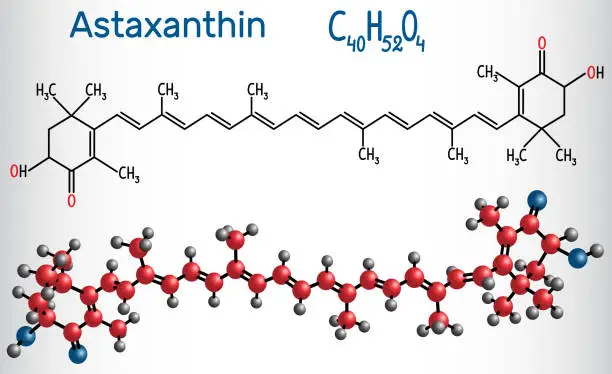
Astaxanthin Suppliers help businesses in lots of different areas get the strong vitamins they need. The astaxanthin they use comes from natural sources like Haematococcus pluvialis algae. They clean it up and make sure it meets standards. For business use, they can also make astaxanthin from chemicals. Natural astaxanthin is not the same as man-made astaxanthin. The 3S,3'S stereoisomer configuration of natural astaxanthin from algae is generally better than that of man-made forms. This means that it is more soluble and has better antioxidant action. This difference helps the people who buy the ingredients pick ones that fit with how the brand is positioned and what customers want.
Key Benefits of Partnering with Globally Capable Manufacturers
When you work with manufacturers that are known all over the world, you can use cutting-edge extraction technologies that make the product work better while keeping the ingredients pure. To keep the antioxidant properties of the product while it is being handled, big suppliers spend a lot of money on systems like vacuum belt drying, double-effect concentration systems, and constant countercurrent extraction systems. The supply chain needs to be strong when dealing with yearly changes in the supply of raw materials or the problems of shipping goods from one country to another. Global sellers keep several buying networks and extra supplies on hand in case something goes wrong and to make sure that production plans stay on track.
Addressing Common Sourcing Challenges in Astaxanthin Procurement
When you get astaxanthin from places you can't trust, quality differences are always a problem. Different batches can have different amounts of strength because of changes in growing conditions, extraction methods, and quality control processes. This can make it hard for R&D teams to come up with new products. Because of safety concerns about heavy metals, chemical residues, and microbial contamination, sources need to be closely watched, and testing methods need to be very thorough. Companies that sell supplements need to know about FDA rules for supplements, EFSA rules for markets in Europe, and GMP methods for pharmaceutical-grade goods to meet the needs of different government bodies.
Key Quality and Certification Standards for Astaxanthin Suppliers
Essential Quality Benchmarks for Astaxanthin Ingredients
The most important benchmark for any astaxanthin supplier's ingredients is the astaxanthin content on a stated basis, because "2%" or "10%" means very different things in a beadlet, an oleoresin or a water-dispersible powder. Natural products are commonly standardised at about 1% to 10% astaxanthin depending on form, and pharmaceutical-grade materials can be more concentrated. The table lists the typical commercial forms; confirm exact specifications on each supplier's HPLC results.
|
Form |
Typical astaxanthin content (HPLC) |
Typical applications |
Checks to request |
|
Oleoresin |
About 5% to 20% |
Softgels, oil-based cosmetics |
Residual solvents (if solvent extraction), ester profile, oxidation markers |
|
Beadlets or microencapsulated powder |
About 1% to 2.5% |
Hard capsules, tablets, dry blends |
Microbial limits, heavy metals, wall-material compatibility with clean-label claims |
|
Cold water dispersible (CWD) powder |
About 1% to 2.5% |
Functional drinks, water-based cosmetics |
Dispersion stability, emulsifier and carrier compliance for the target market |
To compare prices fairly, convert them to cost per gram of astaxanthin: a 2% beadlet holds 20 g of astaxanthin per kilogram, so divide the price per kilogram by 20, while a 10% oleoresin holds 100 g per kilogram, so divide by 100. Traceability tools that record where the algae were grown and how they were processed make the supply line visible, and toxicity, allergen and stability studies under different storage conditions support confidence that the product performs after opening.
Critical Certifications That Validate Supplier Credibility
A seller who has GMP approval makes medicines that follow good production practices. Standard working methods are written down, records are kept on each batch, and the facility is checked on a frequent basis. It is made sure that the same process controls are used for all production runs by ISO 9001 quality management systems. The same is done for food safety by ISO 22000 management standards. When farming methods are approved by the USDA, the EU, or other similar groups, it means they are safe and don't use synthetic pesticides or fertilizers. It's easier to get to markets in North America and Europe if you register with the FDA and show that you agree with EFSA rules. This speeds up the clearance process.
Business Impact of Rigorous Quality Standards
Qualitative standards that are very strict lower the risk of buying by making sure that all amounts of ingredients work the same way. When the supply chain breaks down, better tracking tools let you act quickly on possible quality problems. This protects the image of your brand. Customers who are picky about safety and honesty will think more highly of your business if you only work with certified providers. Putting money into quality right away means fewer broken products, fewer complaints from customers, and a stronger place in high-end markets where where materials come from is important.
Evaluating Global Manufacturing Strength in Astaxanthin Suppliers
Comparing Extraction Methods and Production Technologies
Haematococcus pluvialis must be grown under controlled stress conditions that help it make astaxanthin to get a natural algae extract. Once the trash is gathered, it is either ground up mechanically or treated with enzymes to break it down into cells. The cells are then taken out using supercritical CO2 devices or food-grade ethanol. These methods keep astaxanthin in its natural ester form while adding carotenoids and fatty acids that help the body use it better. A synthetic way to make astaxanthin is to use chemical synthesis from petroleum ingredients. This low-cost astaxanthin is good for feeding animals, but it doesn't have the complex lipid structure that you can find in wild products.
Quality Control Measures Throughout Manufacturing
These days, providers check the quality of every step of the production process. The first step is to use UV spectrophotometry to check how strong the raw materials are at the start. During the extraction process, spinning evaporators concentrate the active chemicals. The right temperature and pressure are always being used thanks to constant tracking. Ultra micro pulverizers make the particles of a finished formula melt more quickly by making the sizes of the particles more even. High-performance liquid chromatography is used to check finished goods for heavy metals, bacteria, and extra solvents before they are sent out to customers. These different kinds of controls make sure that steadiness is kept from batch to batch, which is something that formulators can rely on.
Our GMP-approved plant in Fairir, as an Astaxanthin Supplier, is 10,000 square meters and has 14 stainless steel extraction tanks that can hold anywhere from 500 to 3,000 liters. Along with them are three fully automatic lines that can get rid of up to 98% of the stuff. We have HPLC systems, UV spectrophotometers, rotating evaporators, and temperature water baths as part of our full set of analysis tools. These help us check the quality of every step of the production process.
Supply Chain Advantages of Large-Scale Manufacturing
Some sellers have flexible minimum order numbers, so they can handle both full container loads and smaller test amounts when they can handle them. The size of the production plant has a direct effect on unit costs. Costs can be lowered by automating tasks and making the best use of raw materials in bigger buildings. Logistics work better when sellers keep their stores in key spots near major shipping hubs. Less time and money are spent on freight because of this. People stay with the same providers for a long time if they take the time to learn about your specific formulation needs and offer technical help that goes beyond just providing ingredients by working with you to make new products.
Comparing Top Astaxanthin Suppliers: What Sets Global Leaders Apart?
Astaxanthin Bulk Powder: Pricing Models, Forms and Cost per Milligram
Astaxanthin bulk powder prices vary by orders of magnitude, and a headline price per kilogram means little until you know the form, the astaxanthin content, the source and the documentation behind it. Algal astaxanthin is expensive because cultivation is costly and the yield per cell is small, and 5% oleoresin or 2% beadlet products start at much higher prices than feed-grade pigment. Synthetic astaxanthin costs less per kilogram, but it is a feed-grade material and cannot be used in human supplements or food, so it should not appear in a human-product price comparison. Total cost of formulation, including the dose needed and the marketing value of natural sourcing, gives a more accurate estimate than the ingredient price alone.
|
Price driver |
Effect on quotations |
|
Source |
Algal (H. pluvialis) material is the legitimate human-use source and carries the highest cost; feed-grade synthetic is not comparable |
|
Form and astaxanthin content |
Compare cost per gram of astaxanthin: price per kg divided by grams of astaxanthin per kg (2% = 20 g; 10% = 100 g) |
|
Documentation |
Novel food or notification references, isomer data and full COAs add cost but protect compliance |
|
Order size |
Sample lots cost most per kilogram; large-volume agreements cost least |
|
Logistics |
Freight, duties and storage change total landed cost |
Analyzing Product Purity Reports and Testing Protocols
These are the best sellers. They come with full certificates of analysis that list the amount of astaxanthin, the stereoisomer composition, and the outcomes of any tests that were done to check for contamination. By comparing purity records, you can see that different service providers have different levels of how thoroughly they analyze and how well they follow the rules. If the potency stays the same across multiple batch tests, that means the process is well controlled. On the other hand, if the difference is big, it means the manufacturing isn't stable. This is an example of careful quality control, not just achieving basic standards: heavy metal levels well below the limits of measurement and microbial counts well within the safety margins.
Customer Service Elements That Drive Procurement Success
When you ask for samples, sellers will quickly show you how willing they are to help you come up with new recipes before they make big claims. As companies get better, they give away free samples that come with all the paperwork you need to do an assessment. Certain payment options, like letter of credit options, net payment terms, and price tiers based on sales, can work for businesses of all kinds. The person you work with on a specialized account is the only one who knows your business goals, technology needs, and legal limitations. This makes it easier to talk to each other and solve problems more quickly throughout the relationship.
How to Choose the Right Astaxanthin Supplier for Your Business
Screening Criteria for Supplier Evaluation
You shouldn't just believe what the Astaxanthin Supplier says; before you decide on a supplier, you should check the status of their license through outside sources. The GMP papers should have recent review dates and proof of the work that was done on them. To figure out how much you can make, you need to know how much is being used now and how much can be added in the future to follow your growth plan. When sellers are transparent about their prices, they make it clear where they get their goods, how much it costs to prepare them, how much it costs to test for quality, and how much it costs to ship them. This is better than keeping prices secret when they change at any time.
Assessing Reputation and Operational Reliability
That person or business becomes well-known over time if they always meet shipping schedules, deliver high-quality goods, and help customers. You can learn a lot about a supplier's skills in similar cases by getting examples from customers in the same business. Every day, being able to respond to communication is important. People trust service providers who quickly answer complex questions, keep them informed about orders, and deal with problems in a clear way. Reliable deliveries include ones that show up on time, have the right information filled, and are handled safely during travel so that goods don't go bad.
Our team at Fairir is made up of skilled workers who are committed to strict quality control and friendly customer service reps who can quickly meet your needs. We've worked with food companies, health brands, nutrition companies, and companies in the past, so we know how to do a lot of different kinds of tough jobs. We are in Shaanxi Province's Xi'an City. Getting to us is easy by car or truck, and we keep our prices low by running our business quickly and making long-term connections with our suppliers.
Negotiation Strategies for Favorable Terms
To get a good minimum order amount, you need to show that you're likely to buy from them again and again, not just once. For the first order, sellers are more likely to lower their MOQ if the customer can clearly show how they can buy more. It is important to be clear about the quality standards when making a contract. These should include rules for what levels of strength are acceptable, what standards of cleanliness are needed, and how to test the product. If you want to get the most out of your supplier's technical know-how, look for ways that you and they can work together to make unique products that benefit both of you. This is called co-development.
Conclusion
To find a good Astaxanthin Supplier for global production, you should check their quality systems, make sure they follow certifications, look at their output skills, and see if they are willing to work with you. Suppliers who spend money on new extraction technologies, strict testing methods, and friendly customer service will give you regular ingredients that are good for the image of your brand. When you think about both price and quality, you can come up with buying strategies that will last, keep prices low, and protect the recipe's identity. A good service is more than just a place to get items. They become a partner that helps you grow your business over time and with all of your products by giving you new ideas and making sure you follow the rules.
FAQ
Q1. What certifications should reliable astaxanthin suppliers maintain?
Reliable suppliers keep GMP certification for pharmaceutical-grade production methods, ISO 9001 for consistent process quality and ISO 22000 for food safety. USDA or EU organic certification shows organic growing and processing, and FDA facility registration should be backed by a regulatory basis for the ingredient itself, such as a novel food authorisation in the EU. Each certificate covers a different thing, so check the scope of each.
Q2. How do manufacturing processes affect astaxanthin quality?
The extraction method strongly affects safety, usefulness and absorption. Supercritical CO2 extraction protects the antioxidant better than harsh liquid methods, controlled temperature handling prevents breakdown during concentration and drying, and modern equipment such as rotary evaporators and vacuum belt dryers keeps the ingredient pure. Automated production lines make each run more consistent and reduce contamination risk.
Q3. Can I request samples of astaxanthin powder for sale before committing to bulk orders?
Yes, professional providers give samples with the analytical paperwork you need, such as certificates of analysis for purity, potency and safety. Formulation teams can check performance, compatibility and sensory quality before committing to large volumes, and the response to a sample request shows the level of service you can expect.
Q4. Can synthetic astaxanthin be used in human supplements or food?
No, not in the US or EU. Synthetic astaxanthin is permitted as a color additive in fish feed, and in the EU the novel food authorisation for astaxanthin covers oleoresin from Haematococcus pluvialis algae, not synthetic material. Human-use buyers should specify algal astaxanthin and request the regulatory documents for their market.
Q5. How should I compare astaxanthin bulk powder quotations?
Compare astaxanthin bulk powder quotations by cost per gram of astaxanthin, source and documentation, not by price per kilogram alone. Divide the price per kilogram by the grams of astaxanthin in a kilogram (for example 20 g in a 2% beadlet), and check that each quote states the form, HPLC content and regulatory basis.
Partner with Fairir: Your Trusted Astaxanthin Powder Supplier and Manufacturer
If a business is looking for a reliable Astaxanthin Supplier offering astaxanthin powder for sale, with a history of producing high-quality goods and full quality control systems, we welcome them. Fairir's laboratory is GMP-certified and has up-to-date extraction technology, together with analytical tools such as HPLC and UV spectrophotometry, and we can serve both large orders and unique formulas. Our skilled team supports you with technical questions through full-scale production and shipping. You can use our methods for natural astaxanthin extracts for medicine, health goods, nutraceutical formulations and food ingredients, with the regulatory documents your market requires. Email us at sales@fairirbiotech.com to talk about your purchasing goals, get product samples and find out how our production strength can give your brand a stable supply, fair prices and a long-term relationship.
References
1. Ambati, R.R., et al. (2014). "Astaxanthin: Sources, Extraction, Stability, Biological Activities and Its Commercial Applications." Marine Drugs, 12(1), 128-152.
2. Capelli, B., Bagchi, D., and Cysewski, G.R. (2013). "Synthetic Astaxanthin is Significantly Inferior to Algal-Based Astaxanthin as an Antioxidant and May Not Be Suitable as a Human Nutraceutical Supplement." Nutrafoods, 12(4), 145-152.
3. Guerin, M., Huntley, M.E., and Olaizola, M. (2003). "Haematococcus Astaxanthin: Applications for Human Health and Nutrition." Trends in Biotechnology, 21(5), 210-216.
4. Higuera-Ciapara, I., Felix-Valenzuela, L., and Goycoolea, F.M. (2006). "Astaxanthin: A Review of its Chemistry and Applications." Critical Reviews in Food Science and Nutrition, 46(2), 185-196.
5. Shah, M.R., et al. (2016). "Astaxanthin-Producing Green Microalga Haematococcus pluvialis: From Single Cell to High Value Commercial Products." Frontiers in Plant Science, 7, Article 531.
6. Yuan, J.P., Peng, J., Yin, K., and Wang, J.H. (2011). "Potential Health-Promoting Effects of Astaxanthin: A High-Value Carotenoid Mostly from Microalgae." Molecular Nutrition & Food Research, 55(1), 150-165.