_1751965378790.webp)

Why Is Purple Yam Ube Powder Popular in Asian-Inspired Foods?
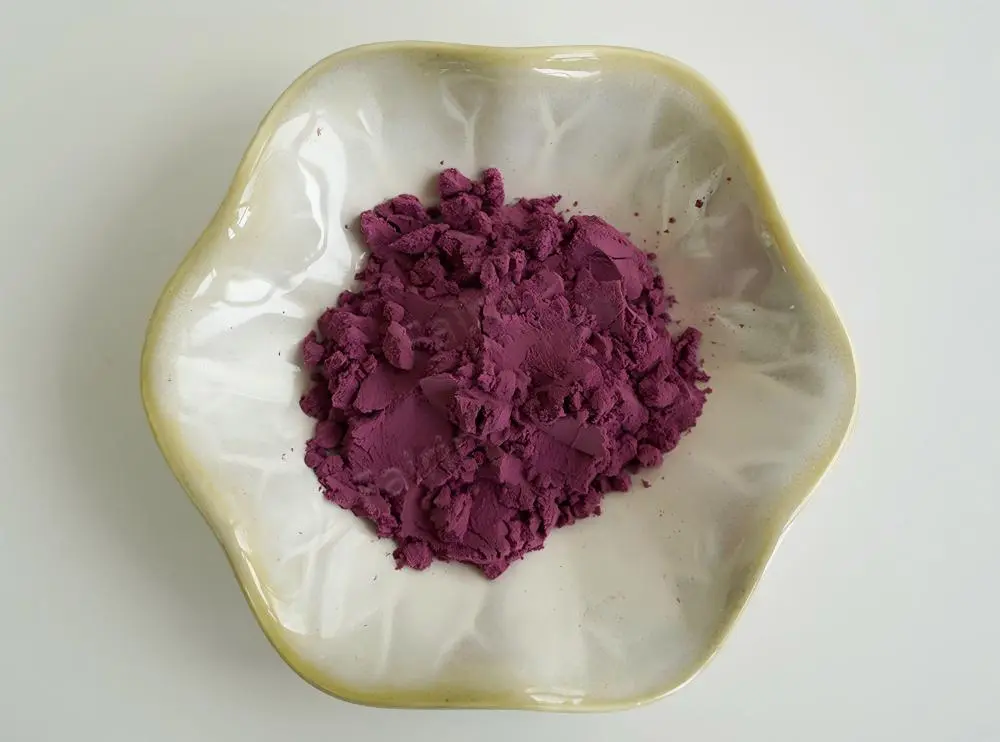
Purple Yam Ube Powder has become very famous in Asian-inspired food markets because of its beautiful natural violet color, real nutty-sweet taste, and huge range of uses in commercial food production. This premium ingredient comes from Dioscorea alata and meets the growing customer demand for clean-label, aesthetically pleasing goods. It also gives food makers consistent quality, longer shelf life, and reliable functionality. Standardized Purple Yam Ube Powder is better than synthetic colorants or fresh tuber options because it doesn't depend on the season and works consistently in a wide range of food and drink products, including frozen sweets and candy.
Understanding Purple Yam Ube Powder: Origins and Characteristics
Botanical Identity and Sourcing Distinctions
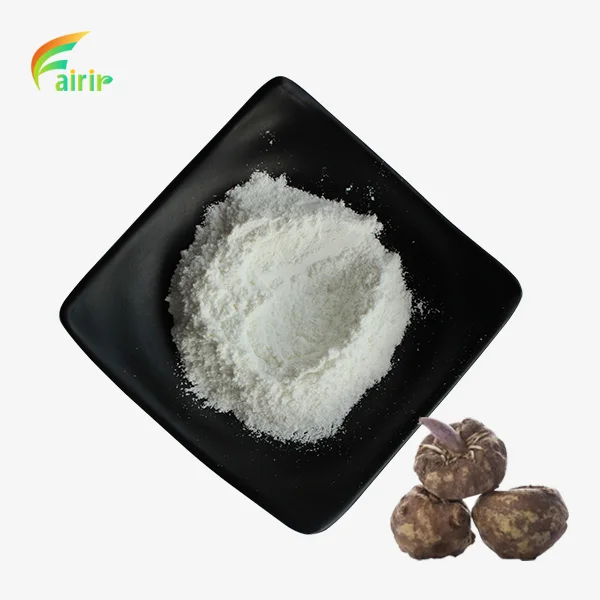
Purple Yam Ube Powder comes from Dioscorea alata, a species of true yam that grows naturally in Southeast Asia, mostly in the Philippines. This difference in plants is very important for people who work in buying. Real ube has a taste that is different from purple sweet potatoes (Ipomoea batatas) or taro (Colocasia esculenta). It has earthy sweetness layered with faint vanilla notes. The root tubers are carefully chosen from reliable growers who only use types that are high in anthocyanins. This makes sure that the powder's deep purple color stays stable during processing.
Advantages Over Fresh Ube and Synthetic Alternatives
When working with fresh ube, commercial food makers face big problems: it turns brown quickly because of enzymes, the taste intensity changes with the seasons, and managing the cold chain is hard. These problems can be fixed with standardized Purple Yam Ube Powder. Our production method uses advanced freeze-drying technology and ultra-micro pulverization to keep the root's natural flavor compounds and nutritional value while getting particle sizes between 80 and 120 mesh. This even texture makes sure that the particles are spread out evenly in liquids and mix easily into dry mixtures. The powder form also gets rid of the need for artificial colorants like Red No. 40 and Blue No. 1. This meets the needs of clean label regulations and customer tastes for ingredients that are easy to recognize.
Why Purple Yam Ube Powder Is a Preferred Ingredient in Asian-Inspired Foods
Sensory Appeal and Authentic Flavor Delivery
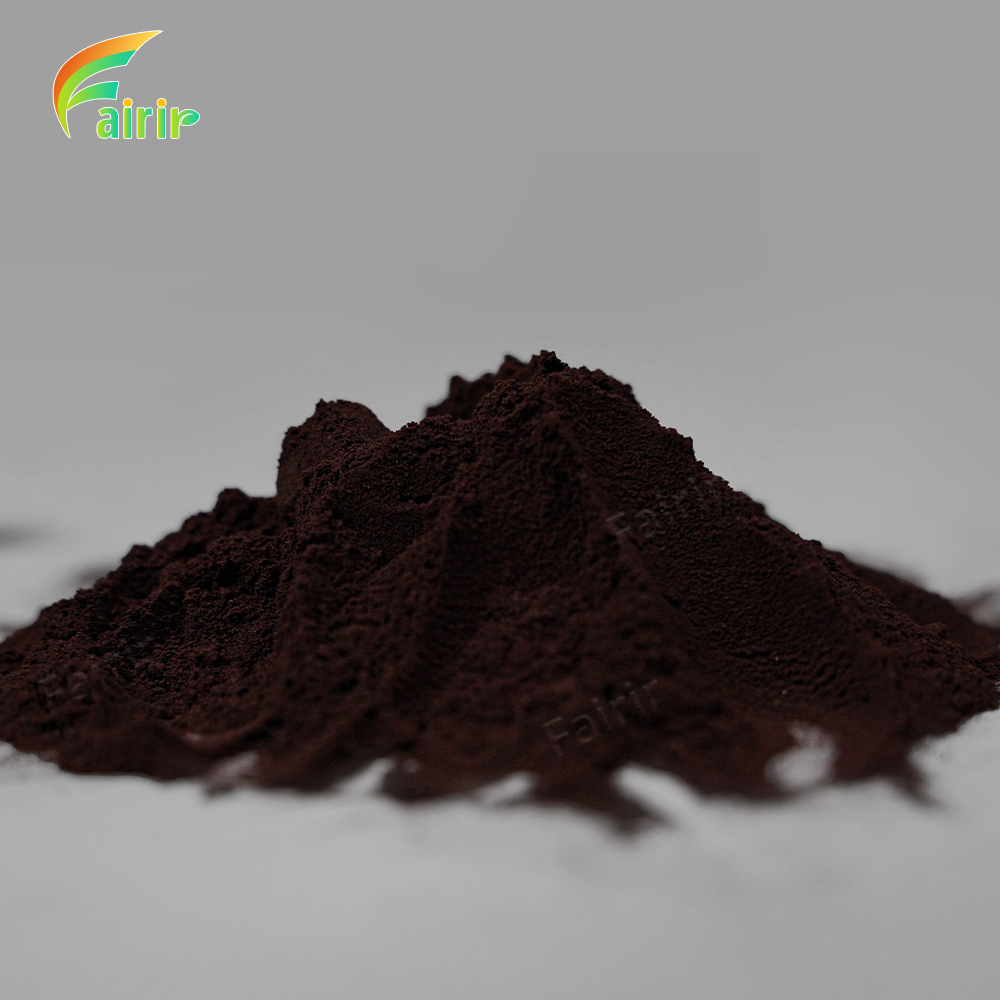
The bright purple color of Purple Yam Ube Powder makes an instant visual effect, Purple Yam Ube Powder which is important in today's Instagram-driven food culture for getting people to interact on social media and be curious. It tastes naturally sweet, nutty, and vanilla-y, and it goes well with both traditional Asian sweets and new mix recipes. In traditional Filipino ube halaya, the powder makes it easier to make while still giving customers the original taste they want. Modern uses of the ingredient in purple ube lattes, smoothie bowls, and specialty ice creams show that it can appeal to Western markets looking for new sensory experiences that are based in cultural identity.
Versatility Across Food Applications
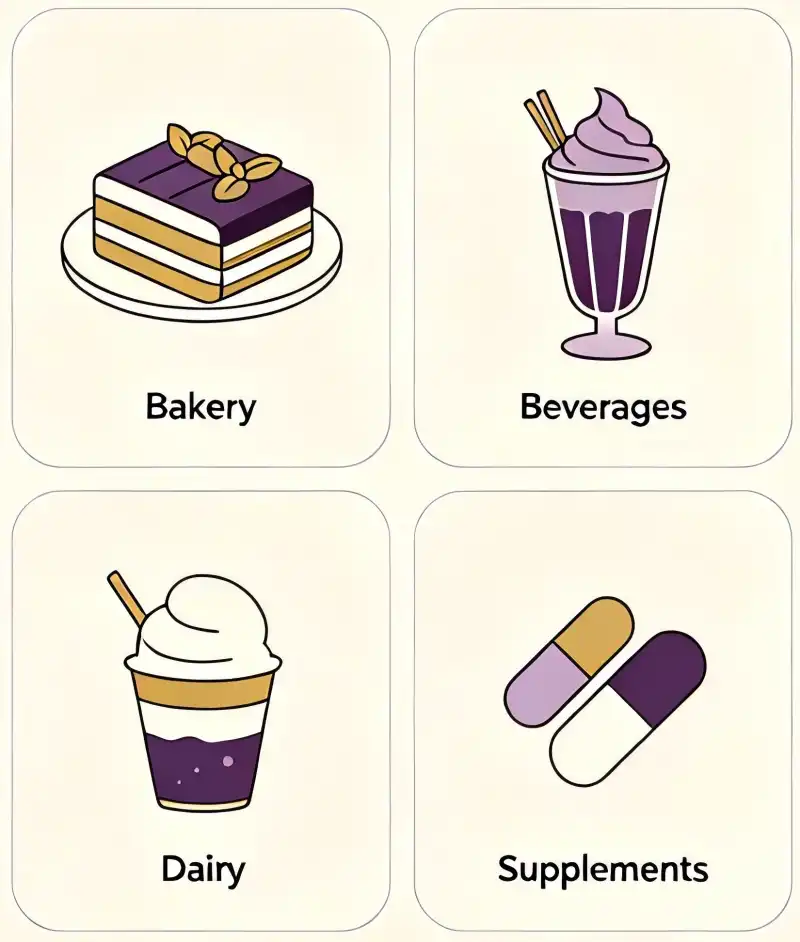
One big benefit is that manufacturing is flexible. In baking, Purple Yam Ube Powder can be used as a natural colorant or as a partial flour replacement. It can help make gluten-free recipes better while also keeping the wetness in and preventing sticking. The powder's ability to bind water is useful in making frozen desserts because it keeps the creamy texture throughout distribution cycles and reduces the formation of ice crystals. Beverage formulators like how stable it is in suspension—good micronized powders don't settle to the bottom of ready-to-drink systems, so they don't need extra gums or stabilizers. Manufacturers of sweets use the powder because it is stable at high temperatures. Unlike many natural colorants, ube's anthocyanins keep their color when baked or extruded at temperatures above 180°C.
How to Select and Procure High-Quality Purple Yam Ube Powder for Commercial Use
Evaluating Product Purity and Certifications
When making purchasing choices for Purple Yam Ube Powder, suppliers who offer thorough analytical paperwork should be given the most weight. Ask for Certificates of Analysis (COA) that show the amount of pigment, the amount of wetness, the number of microbes, and the heavy metal screening results. Thin Layer Chromatography (TLC) and High-Performance Liquid Chromatography (HPLC) are two tests that reputable makers use to check the profiles of the ingredients and find signs of fraud. To be even more sure, look for certifications like Kosher, Halal, USDA Organic, FSSC22000, HACCP, and ISO22000, which show that the food meets the standards of international food safety management systems. EU Organic and EcoCert approvals show that products can be tracked all the way through the supply chain, from how they are grown to how they are packaged.
Practical Procurement Considerations
Bulk orders usually start at 25 kg and are packed in fiber drums with double-layer food-grade polyethylene cores and outer vacuum-sealed aluminum foil bags. These are important for keeping the goods dry and free of rust while they are being shipped internationally. Pricing goes down as more promises are made. Making long-term supply deals can save you 15 to 20 percent on costs compared to buying on the spot, and they also give you priority during times of high demand. Just-in-time inventory plans are supported by things that can be delivered in one to three business days. This cuts down on the costs of storage and the capital that is stuck in ingredient stores. We provide free samples so that you can check the quality and make sure they work with your needs before placing a large order.
Comparing Purple Yam Ube Powder with Alternative Ingredients
Ube Versus Taro and Purple Sweet Potato Powders
Seeing how Purple Yam Ube Powder stacks up against other ingredients, Purple Yam Ube Powder, even though these three purple powders look alike, they each have their own unique smells and tastes. Taro powder has earthier, less sweet flavor notes and a grayish-purple color that doesn't look as bright as ube powder's violet. Purple sweet potato powder has a sweetness that is similar to ube, but it doesn't have the vanilla undertones and nutty richness that make ube profiles real. From a practical point of view, Purple Yam Ube Powder is better at withstanding high temperatures than purple sweet potato because its anthocyanin colors don't turn brown after long baking. These differences have a big effect on product development. For example, ube makes finished goods that look better in photos, which is important for marketing, and its taste complexity means that less sugar needs to be added, which supports the idea that the product is better for you.
Cost-Value Analysis for Procurement Teams
To find a good balance between competitive price and product quality, you need to look at the whole picture. Maltodextrin, rice flour, or fake colorants are often added to cheap Purple Yam Ube Powder to make it look like it's not what it says on the package, which hurts brand trust. Figure out the real cost per serve instead of the price per kilogram. For example, high-concentration 99% purity powders need lower usage rates than 80% specifications, which often equalizes cost-in-use while providing a better sensory effect. Partner with sellers whose prices are stable and whose cost structures are clear. Manufacturers who source their own raw materials usually have more stable prices than selling middlemen, whose prices can change quickly on the spot market. Our direct-from-manufacturer plan gets rid of middleman markups, so we can offer pharmaceutical-grade quality at prices that Purple Yam Ube Powder are competitive in the industrial world.
Best Practices for Using and Storing Purple Yam Ube Powder in Food Production
Dosage Guidelines and Hydration Techniques
How to Use and Store Purple Yam Ube Powder Properly in the Food Industry. The best rates for use depend on the job, but are usually between 2 and 8 percent of the total weight of the mixture. For bright colors in baked goods, you need 3–5%, while for drinks, you only need 2–3% for a nice look without overpowering the taste. The way of hydration has a big effect on the quality of the spread. Before adding the powder to room-temperature liquids, mix it first with granulated sugar, mixing all the time to keep it from sticking. For batter-based recipes, mix the powder with the dry ingredients several times to make sure they are evenly spread. Adding Purple Yam Ube Powder after the first mixing but before the final heat treatment helps hot processes because it preserves volatile flavor compounds and gives the ingredients enough time to soak up the water.
Troubleshooting Common Production Challenges
Most of the time, light contact or high pH levels cause colors to fade during storage. Anthocyanins change color depending on the pH level. In acidic (pH 3-5) conditions, they are bright red-purple, but in neutral to alkaline conditions, they become blue-gray. Make sour systems or add citric acid to keep the color stable. Another problem is that the wetness is not always the same. Powders that are too dry don't absorb water and have a rough feel. Powders that are too wet clump together and go bad. A target moisture level of 5–7% makes the product more stable on the shelf while still making it easy to spread. If you see differences between batches, talk to your provider about tighter moisture requirements or ask for COAs that show stable water activity levels below 0.6.
Conclusion
Purple Yam Ube Powder is becoming more popular in Asian-inspired foods because of three factors: consumers want naturally colored products that look good; food makers need ingredients that are steady and stable; and people are becoming more interested in real culture flavors. This flexible ingredient solves important production problems and makes it possible to make new products in the beverage, frozen treat, candy, and bakery categories. If you choose a qualified provider with strong quality systems, clear sourcing, and technical know-how, you can be sure that your formulations will give customers the real ube experience they want while also meeting legal requirements and cost goals.
FAQ
1. Is ube powder suitable for large-scale bakery production?
Of course. Purple Yam Ube Powder works much better in industrial bakeries than fresh ube mush because it doesn't separate during the process. The powder's uniform makeup gets rid of the differences between batches that make quality control harder in large-scale production. It mixes evenly in systems that keep mixing, and it stays stable during automatic rounds of depositing and baking. Scalability doesn't limit us—our production capacity can handle orders ranging from small trial runs to multi-ton contracts, and the consistent particle size distribution means that the same results can be achieved whether we're making 100 units or 100,000 units. The powder has a longer shelf life at room temperature, which also cuts down on waste compared to fresh products, which need to be kept in the fridge and have short "use-by" dates.
2. How do organic and conventional ube powders differ in quality and price?
Organic approval means that the farming does not use any man-made fertilizers, pesticides, or herbicides. This is proven by checks of the whole supply chain by a third party. This guarantee comes with a higher price tag—usually 20–30% more than regular ones. Differences in quality are mostly related to residue testing limits rather than sensory qualities. When handled in the same way, both organic and standard powders from reputable makers have similar color intensity, flavor profiles, and functional performance. The type of procurement that is chosen relies on the target market. For example, organic certification is necessary for goods sold in natural food channels or with "clean label" claims. On the other hand, conventional grades are better for cost-sensitive uses where organic claims don't give much of a competitive edge.
3. What storage methods best maintain powder integrity over extended periods?
To keep the quality of Purple Yam Ube Powder, you need to keep an eye on three external factors: light exposure, temperature, and humidity. Keep it in sealed, dark containers that stay below 25°C and have a relative humidity of less than 60%. Vacuum-sealed aluminum foil bags protect better than regular plastic packing because they keep oxygen out, which speeds up the breakdown of anthocyanin. If you only use powder sometimes, you might want to buy smaller packages because once they are opened, the powder starts to lose quality slowly when it comes into contact with air. Putting food-grade silica gel desiccant packets in open containers makes them last longer. Avoid storing things in the fridge unless the outside temperature is higher than what is suggested. Changes in temperature cause condensation, which clumps things together and helps microbes grow. Powder that is kept correctly will keep its color and taste for two years, which helps with inventory management without sacrificing quality.
Partner With a Trusted Purple Yam Ube Powder Supplier
Shaanxi Fairir Biotech Co., Ltd. is ready to help you come up with new products by providing you with high-quality Purple Yam Ube Powder, as well as pharmaceutical-grade quality control and quick expert service. As an experienced Purple Yam Ube Powder maker, we keep a stock of both 80% and 99% purity standards, as well as certified organic and conventional grades. All of these are made in our GMP-certified facility, which is equipped with cutting-edge extraction technology and a wide range of analytical instruments. Procurement experts are welcome to ask for free samples and talk about unique formulas that are made to fit the needs of your specific application. Our team helps with recipe optimization, legal paperwork, and setting affordable wholesale prices that are meant to last for a long time. Get in touch with us at sales@fairirbiotech.com to find out how our real Purple Yam Ube Powder can help your products stand out and take advantage of the growing market for Asian-inspired foods.
References
1. Chen, M., & Wong, S. (2021). Anthocyanin stability and functional properties in tropical root crops: A comprehensive review. Journal of Food Science and Technology, 58(4), 1287-1301.
2. Dela Cruz, R., & Santos, P. (2020). Traditional and modern applications of Philippine ube (Dioscorea alata) in food systems. International Journal of Gastronomy and Food Science, 22, 100265.
3. Johnson, T., Patel, K., & Liu, H. (2022). Natural colorants in commercial food production: Quality assessment and supply chain considerations. Food Chemistry, 375, 131842.
4. Martinez, E., & Nguyen, L. (2021). Comparative analysis of purple-pigmented tuber powders: Sensory profiles and processing stability. LWT - Food Science and Technology, 147, 111589.
5. Rodriguez, A., Kim, J., & Thompson, D. (2023). Clean-label trends and botanical extract sourcing in the North American food industry. Trends in Food Science & Technology, 134, 45-58.
6. Wang, Y., & Anderson, G. (2020). Functional ingredients from Asian specialty crops: Processing technologies and quality parameters. Critical Reviews in Food Science and Nutrition, 60(18), 3124-3142.