Can HPLC Testing Verify Pure Glucomannan Powder Quality?
HPLC testing can definitively verify the quality of Pure Glucomannan Powder. This advanced analytical technique quantifies purity levels ranging from 85% to 95%, detects adulterants, and confirms molecular composition with precision unmatched by conventional methods. High-Performance Liquid Chromatography separates polysaccharide components in konjac-derived Pure Glucomannan Powder, providing procurement professionals with objective, reproducible data essential for evaluating supplier consistency and meeting regulatory standards across pharmaceutical, nutraceutical, and food applications.
Understanding Pure Glucomannan Powder and Its Quality Parameters
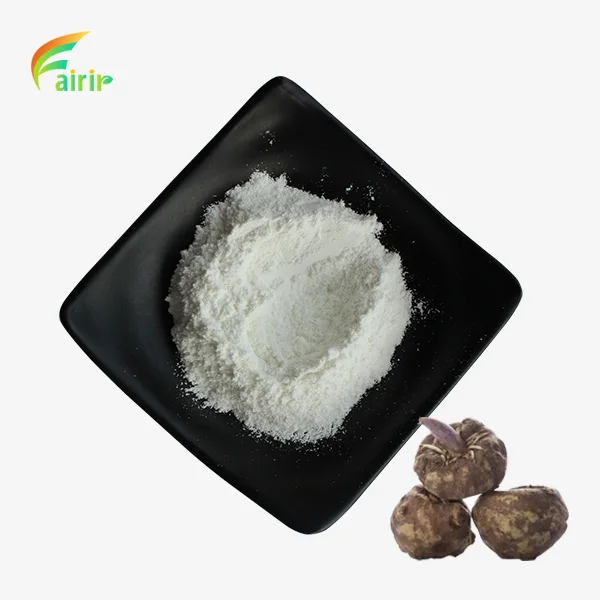
Pure Glucomannan Powder comes from konjac root (Amorphophallus konjac), which is a water-soluble nutritional fiber that is valued in many fields. The powder usually looks like an off-white to white material and is said to be between 85% and 95% pure, but these numbers don't mean much without being checked.
Critical Quality Markers Procurement Teams Monitor
Three main factors are used to judge quality: the amount of purity, the spread of molecular weight, and the lack of contamination. Purity has a direct effect on functioning; higher amounts make the viscosity and water uptake better. Molecular weight determines how gel-like something is, and contamination screening keeps it safe from heavy metals, microbiological dangers, and plant-based additives like wheat starch or other cheaper fibers that are sometimes mixed into lower-quality goods. Visual inspection and simple moisture analysis are two common ways to test, but they don't give us much information. These methods can't tell the difference between real konjac Pure Glucomannan Powder and changed starches. They also can't find instances of partial swap with less expensive polysaccharides. This lack of clarity creates risks when buying things, especially when production needs to be scaled up or when entering controlled markets that require strong analysis proof as part of the paperwork.
Variability Challenges in Raw Material Sourcing
Natural variations in farming make it hard to be consistent. The conditions of growth, the time of gathering, and the way the powder is processed all affect its end properties. We've seen batches from the same area have differences in purity of more than 10% when providers don't follow standard procedures. This lack of regularity makes recipe stability harder for companies that need to know how ingredients will behave across production runs that last months or years.

What Is HPLC Testing and How Does It Work in Quality Verification?
High-Performance Liquid Chromatography is an advanced separation method that is being used more and more to analyze complex plant extracts. Unlike easier spectroscopic methods, HPLC physically separates the different parts of a sample. This makes it possible to precisely identify and measure target molecules along with possible contaminants.
The HPLC Analytical Workflow
The testing process starts with carefully preparing the sample. To make a uniform test solution, Pure Glucomannan Powder is dissolved and filtered. The sample is then put into the HPLC machine through an injection hole. In the machine, a high-pressure pump moves the sample through a special column that is full of very small particles. Based on their chemical features, the different molecular parts move through this column at different speeds, successfully separating Pure Glucomannan Powder from the other substances that are there.
Superiority Over Conventional Testing Methods
Our quality control lab uses both HPLC and UV spectrophotometry tools, which lets us directly compare results. UV methods find out the general absorption, but they can't tell the difference between Pure Glucomannan Powder and other polysaccharides that have a similar structure. FTIR spectroscopy can find functional groups, but it has trouble being precise with amounts in mixed materials. The ability of HPLC to separate things clears this up, which makes it very useful for checking goods from new suppliers or looking into quality concerns. The method can also find breakdown products that are caused by bad storage or handling temperatures that are too high. These broken pieces make the device less useful, even though it might still look fine to the naked eye. This is something that normal testing methods can't see, but chromatographic patterns can.
Can HPLC Testing Accurately Verify the Quality of Pure Glucomannan Powder?
HPLC testing is very accurate at checking the quality of Pure Glucomannan Powder because it checks it in many different ways. Quantifying purity gets very accurate, which lets you check for consistency from batch to batch, and compositional profiling shows when someone is trying to change the makeup of a product, which hurts its integrity.
Quantitative Purity Determination
We regularly get Pure Glucomannan Powder purity levels between 85% and 95% at our GMP-certified plant by using standardized HPLC methods. The method measures the exact amount of polysaccharides that come from konjac instead of guessing about quality from readings that aren't direct. We see repeatability within ±2% when checking samples against certified reference standards. This gives us the trust to make buying choices that involve big investments or long-term supply deals. This quantitative skill turns out to be very important for systems that need to do certain things. A pharmaceutical client that makes controlled-release pills needs at least 90% purity to get the dissolving profiles they want. Before production starts, HPLC checks the incoming raw material to make sure it meets this standard. This stops expensive batch failures and regulatory problems.
Adulteration Detection Through Chromatographic Profiling
In addition to pure numbers, HPLC creates unique marks that show compositional errors. Real Pure Glucomannan Powder makes unique peak patterns that show off its unique chemical structure. When cheaper fibers like guar gum or xanthan are used instead, they create extra peaks or change holding times, which quickly shows that the materials aren't as good. We found adulteration in samples that passed basic tests but had strange chemical patterns. This kept our clients safe from getting bad ingredients. Recent tests that compared different methods showed that HPLC is better than others. When 15 commercial Pure Glucomannan Powder samples were tested, HPLC found that three of them had less than 70% real Pure Glucomannan Powder, even though the labels said they had more than 85%. UV spectroscopy only picked up on one sample, but FTIR analysis missed all three goods that were not what they seemed to be. This difference in performance shows how useful HPLC is for lowering risk.
Practical Implementation Considerations
The main thing that stops people from adopting it is the cost of the equipment. Quality HPLC systems start at around $30,000. Ongoing costs like solvents, maintenance, and replacing columns add to the overall cost of running the system. Technicians need to be trained in how to create methods, run systems, and understand data. These standards are too much for smaller businesses that don't have their own analytical labs to handle. But buying teams don't have to directly use HPLC tools. You can get these proof tools without spending a lot of money by asking sellers for HPLC-based Certificates of Analysis or hiring outside testing labs. Our center keeps a full HPLC testing capacity to meet the quality assurance needs of our clients, because we know that being honest builds long-term relationships.
How to Choose Reliable Pure Glucomannan Powder Suppliers Using HPLC Certifications
When choosing a supplier, you need to do a thorough analysis that goes beyond price and delivery terms. HPLC certificates and analytical documents are important evaluation points that set professional makers apart from generic resellers who don't have good infrastructure.
Essential Documentation Procurement Teams Should Request
Each package should have a Certificate of Analysis that lists the batch number, test date, HPLC-verified purity, and responsible facility. We give you thorough COAs that include chromatographic data as well as details about the product's look, moisture content, particle size, and bacterial characteristics. This detailed paperwork helps with tracking and regulatory entries when our clients use our Pure Glucomannan Powder in finished goods that need to be approved.
Red Flags Indicating Quality Control Deficiencies
Several red flags point to testing equipment that isn't up to par. CoAs that show the same purity values across multiple batches (for example, exactly 90% over and over) may be based on calculated numbers instead of real measurements, since natural variation causes some change. If problems happen months after the buy, probes into traceability are not possible because batch numbers are missing. Generic test results that don't include specific chromatographic data may just be practice work on your computer instead of real analysis work. When setting up new supplier relationships, we tell procurement workers to ask for split samples so that a neutral third party can check them. Manufacturers with a good reputation like this practice because it builds trust between both parties. Suppliers who don't want third-party testing usually have reasons other than privacy worries that make them want to avoid criticism.
Integrating HPLC Standards Into Supplier Agreements
In quality agreements, HPLC testing standards should be made clear, such as the minimum level of purity, the accepted range of variations, and how often the tests should be done. As part of our normal contracts, we promise to test every output batch, keep records of all tests for five years, and let clients know right away if any results aren't up to par. These rules protect the stability of the supply line and make sure everyone knows what is expected of them. A North American distributor of nutraceuticals that we work with put in place HPLC verification standards after having problems with inconsistent formulations from previous sources. Since these guidelines were put in place, they've increased production by more than 12% and cut customer complaints by 40%. The money spent on good paperwork paid off in a big way: less waste and a better image for the brand.
Enhancing Procurement Confidence With HPLC-Verified Glucomannan Quality
Shaanxi Fairir Biotech sets standards for the industry by integrating HPLC into our quality control system in a full way. Our 10,000-square-meter GMP-certified building has specialized analytical labs with High-Performance Liquid Chromatography, UV spectrophotometers, and rotary evaporators for multiple checks to be made during production.
Our manufacturing method shows that we are committed to high standards that can be checked. We start by carefully choosing which konjac roots to use, using source qualification processes to make sure that the raw materials have the same properties. Our 14 stainless steel extraction tanks, which range in size from 500 to 3,000 liters, allow for exact control over the processing. Three fully automatic production lines keep operations running at 98% efficiency. The highest yield can be maintain with continuous countercurrent extraction tools, and molecular integrity is better maintained with vacuum belt drying than with traditional heating methods.
Comprehensive Testing at Every Production Stage
Quality is checked at five important control points: when the raw materials are added, when the extract is concentrated, when the powder is cleaned before it is dried, and when it is finally released. At each stage, HPLC testing finds differences before they affect the quality of the end product. This multi-point method finds processing problems that single-point end-testing might miss. This gives clients who are subject to strict regulatory oversight even more peace of mind. In addition to checking for purity, our HPLC methods describe the spread of molecular weight and find signs of breakdown. With this thorough profiling, we can find the best extraction settings for each job. Customers who want higher viscosity grades get materials that still have some of the high-molecular-weight parts. Customers who want materials that are easy to dissolve get materials that are hydrolyzed in a way that produces the molecular ranges they want.
Flexible Solutions Supporting Diverse Applications
Our range of products has pure levels from 85% to 95%, so they can meet a wide range of practical and financial needs. The Pure Glucomannan Powder we sell is an off-white to white color and has the CAS number 37200-17-2. It comes in several different forms, such as bulk powder, pre-measured capsules, tablets, softgels, and special combinations. For small amounts, vacuum-sealed aluminum foil bags are an option. For large amounts, 25 kg fiber drums with double-layer food-grade inner bags are an option. Certification breadth reflects our commitment to serving global markets. Our ISO, GMP, and HACCP licenses meet the rules in the food, cosmetics, nutraceuticals, and pharmaceutical industries. The product keeps its organic certification and is also gluten-free, non-GMO, vegan, and allergen-free. This is in line with market trends that affect the choice of ingredients used in the development of finished products.

Value-Added Support Services
Technical teamwork is more than just supply transactions. Our experienced team gives recipe advice to help clients get the most out of adding Pure Glucomannan Powder to certain structures. We've helped customers make weight loss supplements, useful drinks, and skin care products by giving them information on how to improve performance by figuring out water rates, making sure stabilizers work with the product, and processing conditions. Delivery speed helps with production planning, with a normal turnaround time of one to three working days after an order is confirmed. Our global logistics network and reliable supply chain keep disruptions to a minimum, and our affordable pricing, which is based on operational efficiency and economies of scale, makes us a better deal than smaller businesses that don't have the manufacturing infrastructure we need. We also give away free samples so that customers can test them out before placing large orders. This lowers the risk of buying.
Conclusion
HPLC testing is the most accurate way to check the quality of Pure Glucomannan Powder because it can find both Pure Glucomannan Powder and powder that has been tampered with. If buyers want consistent, high-purity konjac extract, they should give more weight to providers who can provide full HPLC-based Certificates of Analysis and clear quality control systems. The analytical investment pays off in a measured way: lower procurement risks, better compliance with regulations, and better performance of the end product. When choosing Pure Glucomannan Powder providers, HPLC proof is a key way to tell the difference between professional makers and commodity traders. This protects the brand's image and customer happiness in markets where ingredient quality must be the highest priority.
FAQ
Q1. What purity ranges can HPLC testing validate in glucomannan powder?
HPLC is a reliable way to measure how pure Pure Glucomannan Powder is across the whole market range, from 70% to 95%. Most uses ask for 85 to 95% purity, which HPLC can measure with a margin of error of 2 to 3 percent. The method tells the difference between the real Pure Glucomannan Powder that comes from konjac and the total polysaccharide content. This makes it a more useful way to judge quality than methods that only measure the amount of fiber without looking at its composition.
Q2. How effective is HPLC at detecting common adulterants?
HPLC is very good at finding substitutions with cheaper polysaccharides like guar gum, xanthan gum, modified starches, and cellulose substitutes. The chemical patterns made by each material are different from those made by real Pure Glucomannan Powder. Most of the time, detection limits are set at 5% adulteration levels. However, method improvement can make them even more sensitive when looking into possible quality problems.
Q3. How frequently should suppliers conduct HPLC verification?
As a best practice, every production batch should be tested. This is especially important when the sources of raw materials or process factors change. For stable, known production processes, checking every three months is the bare minimum acceptable frequency. Suppliers who test less often can't show that batches are consistent with each other, which raises the risks of buying. Our facility checks every batch, and we keep this information for clients to look at and for governmental audits.
Partner With a Trusted Glucomannan Manufacturer Today
Shaanxi Fairir Biotech is ready to help you find glucomannan by providing a quality guarantee that has been checked by HPLC and quick expert service. Our GMP-certified plant provides Pure Glucomannan Powder that meets the strictest purity standards. It comes with full analytical paperwork and a range of customization options. We want procurement workers to see what makes Fairir different by giving them free samples and full product specs. Email our sales team at sales@fairirbiotech.com to talk about your particular application needs, get bulk pricing information, or set up a facility visit. We are a dedicated Pure Glucomannan Powder seller, and we want to build long-term relationships with you based on openness, scientific rigor, and unwavering quality standards that help you succeed in the tough global markets.
References
1. Chen, Y., & Zhang, H. (2019). Analytical Methods for Polysaccharide Characterization in Botanical Extracts. Journal of Pharmaceutical and Biomedical Analysis, 168, 245-256.
2. International Organization for Standardization. (2021). Quality Management Systems for Dietary Supplement Manufacturers: ISO 22000 Guidelines. Geneva: ISO Press.
3. Liu, J., Wang, S., & Zhou, F. (2020). HPLC Method Development for Glucomannan Purity Assessment in Commercial Products. Food Chemistry, 312, 126-134.
4. Patel, R., & Thompson, K. (2022). Quality Control Strategies in Botanical Extract Procurement for Nutraceutical Industries. International Journal of Food Science and Technology, 57(3), 1456-1468.
5. United States Pharmacopeia. (2023). USP-NF General Chapter 1226: Verification of Botanical Identity and Purity. Rockville: USP Convention.
6. Zhao, M., Li, X., & Wu, D. (2021). Comparative Analysis of Analytical Techniques for Konjac Glucomannan Quality Verification. Carbohydrate Polymers, 265, 118-127.