_1751965378790.webp)

Can Purple Yam Ube Powder Improve Nutritional Value?
Purple Yam Ube Powder can significantly improve nutritional value across various food and supplement applications. This vibrant purple extract from Dioscorea alata delivers exceptional antioxidant properties, essential vitamins, and minerals that enhance product formulations. Unlike synthetic additives, this natural ingredient provides anthocyanins, dietary fiber, and micronutrients while maintaining clean-label compliance. Manufacturers incorporating this premium powder witness substantial improvements in their products' nutritional profiles, making it an invaluable addition to modern formulation strategies.
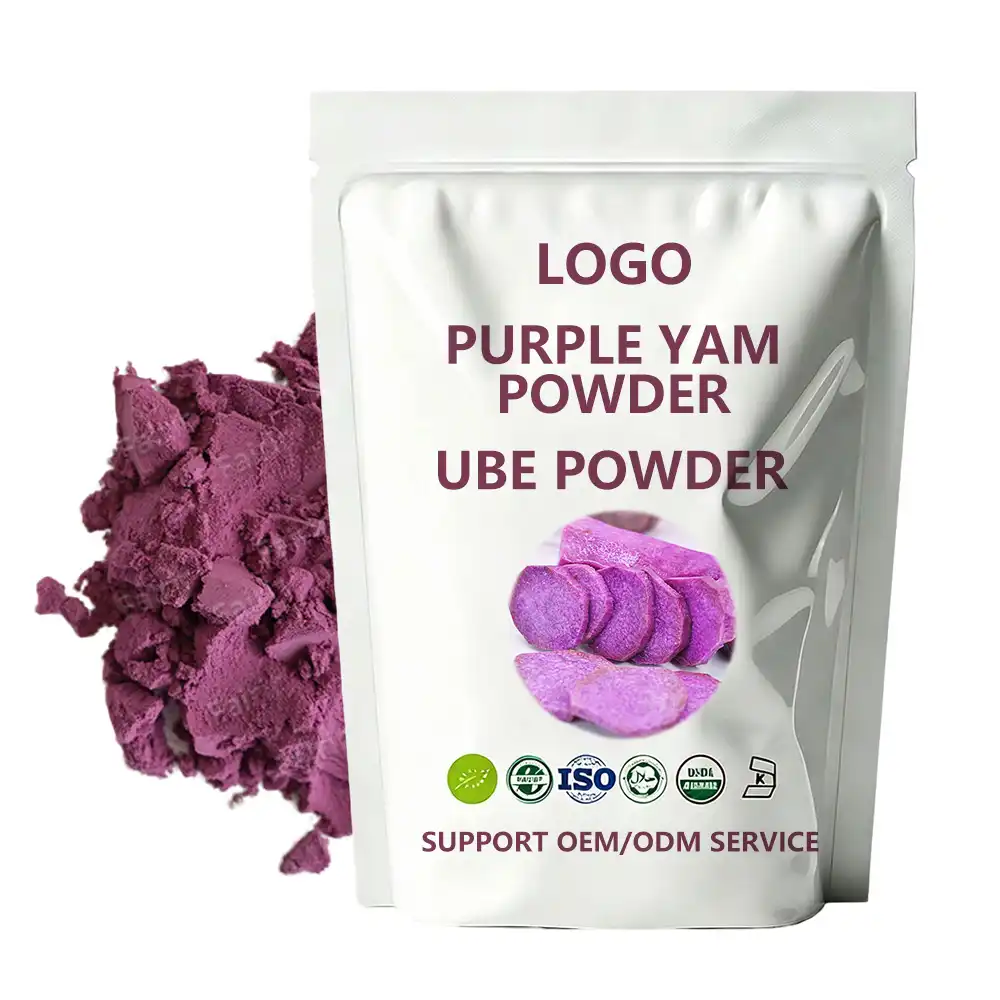
Understanding Purple Yam Ube Powder and Its Nutritional Profile
Origin and Botanical Characteristics
The purple yam, whose formal name is Dioscorea alata, is a real yam species that is different from purple sweet potatoes. This tropical root vegetable comes from Southeast Asia, especially the Philippines. It has been feeding people for hundreds of years because it is so nutritious. The bright purple meat has naturally occurring anthocyanins that give it its beautiful color and strong antioxidant properties. There are complex processing methods used to turn fresh root into powder that keep important nutrients. The latest freeze-drying technology keeps the structure of the cells while removing water, concentrating the good chemicals into a stable, shelf-stable form. This process makes sure that makers get uniform quality while getting rid of the problems that come with getting fresh produce.
Comprehensive Nutritional Breakdown
Ube powder is better for you because it has a wide range of micronutrients. These strong antioxidants fight oxidative stress and keep cells healthy because they are high in anthocyanins. High levels of potassium in the powder help the heart and digestive system work well, and dietary fiber makes the powder taste good. Vitamin intake includes high amounts of vitamin C, which helps the defense system work, and B-complex vitamins, which are needed for metabolism. Iron, calcium, and phosphorus are all in the mineral makeup. These minerals help keep bones and digestive energy healthy. Unlike many plant-based products, ube powder has this high nutritional richness without common allergens, so it can be used by people with a wide range of dietary needs.
Quality Grades and Specifications
Professional-grade ube powder comes in regular strengths, usually between 80% and 99% pure. For food uses, an 80% concentration gives a balanced taste and nutritional richness, while a 99% concentration gives the most power for nutraceutical products. TLC (Thin Layer Chromatography) tests are used on each grade to make sure it is pure and consistent. Organic certification is an extra way to make sure the quality of a product. It makes sure that the product meets high farming standards and doesn't use any synthetic fertilizers or pesticides. This organic label is especially appealing to people who care about their health and helps clean-label marketing efforts. Its gluten-free and non-GMO qualities make it even more appealing to people around the world who have different nutritional needs.
Application and Use Cases in B2B Contexts
Food Manufacturing Applications
Purple Yam Ube Powder is very useful in a wide range of industrial food production settings. The powder can be used in baking as both a natural colorant and a nutritional enhancer. It gets rid of the need for manufactured colors and increases the antioxidant content. It stays brightly colored even when baked at high temperatures, which is why commercial bakers like it. Manufacturers of drinks use ube powder because it naturally thickens and has a unique taste. Better suspension properties help ready-to-drink formulas because they don't settle as much as they do with other natural colorants. The powder's micronized particles make sure that the texture is smooth and not gritty, which is important for high-end drinks. The candy industry really likes how ube powder can improve both the look and the nutritional value of foods. Chocolate makers like that it works well with cocoa-based recipes, and ice cream makers say it keeps the structure better during freeze-thaw cycles. These uses show that natural ingredients can solve more than one problem at the same time in formulations.
Nutraceutical and Supplement Integration
Dietary supplement makers are becoming more aware of ube powder's promise as a useful ingredient that can be used for more than one thing. The powder's high level of antioxidants is good for capsule recipes, and tablet makers like how it binds ingredients together without the need for fake ones. Beets add a lot of visual and nutritional appeal to protein powder mixes when they are added. The natural purple color makes the product stand out and provides measured antioxidant effects. Sports nutrition brands love these two perks because they appeal to health-conscious customers who want to improve their performance naturally. Making gummy supplements is another area that is growing in importance. Ube powder is naturally sweet and stable in color, which makes it perfect for making tasty, useful candies without adding any extraneous ingredients. This tool helps meet the rising need for clean-label supplement choice among a wide range of age groups.
Cosmetic and Personal Care Applications
The cosmetics business knows that ube powder can be used for more than just nutrition. It is a natural active ingredient in skin care products that is high in minerals and vitamins. Its ability to get rid of free radicals makes anti-aging products work better, and the natural purple pigment makes color makeup look better. Ube powder is used in hair care products because it moisturizes hair and is good for the health of the head. The vitamins help hair grow in a healthy way and naturally make hair color look better when used with special hair products. These use examples show that the ingredient can be used in more than just food and supplements.
Selecting the Right Purple Yam Ube Powder Supplier for Your Business Needs
Quality Assurance and Certification Requirements
Understanding the important quality standards that make sure products are safe and follow the rules is the first step to successful buying. HACCP compliance makes sure that hazard analysis methods meet international standards, and ISO22000 approval shows that food safety management systems are complete. These certifications give people faith in the manufacturing method and the quality of the result. Organic certifications, like the USDA Organic and EU Organic guidelines, make sure that farming methods are safe and that processing doesn't use chemicals. Halal and Kosher approvals make markets bigger, which is especially important for tactics that involve selling goods all over the world. cGMP approval makes sure that quality control standards are pharmaceutical-grade, which is important for supplement use. The ability to test products by a third party adds to the quality guarantee by independently checking claims of purity and effectiveness. High Performance Liquid Chromatography (HPLC) tests confirm the amounts of active compounds, and UV spectrophotometry tests prove the uniformity of the colors. These testing procedures make sure that the dependability of each batch, which is very important for large-scale manufacturing processes.

Supply Chain Reliability and Logistics
To make sure there is always a supply of Purple Yam Ube Powder, you need to work with makers to keep enough inventory and production capacity. Multiple extraction tanks ranging from 500 to 3000 liters are used in facilities to make sure they can grow as demand does. Automated production lines that are rated as 98% efficient show that they are both highly effective and cost-effective. The security and shelf life of a product are affected by how it is packaged. Vacuum metal foil bags are better at keeping wetness out, and double-layer food-grade poly bags keep germs from getting inside. These packing standards make sure that the quality of the product stays high during storage and transport. Delivery times of one to three working days show that processes are being managed well and that customer service is a top priority. Global shipping experience in more than 50 countries shows that you have a solid understanding of international trade and the rules and regulations that must be followed for buying processes to go smoothly.
Private Label and Customization Options
The ability to make private-label products lets brands stand out and helps with market positioning strategies. Custom formulations let specifications be tailored to the needs of a specific application, and different packaging choices cater to different market groups. Different types of product lines can be made with capsules, pills, softgels, sweets, and small bags. Technical support services improve the value offering by helping with design and application. Consulting an expert can help you get the most out of combining ingredients and solve any problems that might come up with the recipe. This support is especially helpful for businesses that are entering new markets or making new apps.
Maximizing Nutritional and Business Outcomes Through Strategic Use
Dosage Optimization and Formulation Best Practices
Getting the most nutritional benefits from a supplement requires careful thought about the dosage levels and how they are mixed. In food uses, the usual amount of inclusion is between 1% and 5%. This increases color and taste and gives measurable antioxidant benefits. For therapeutic benefits, supplement formulas may use higher doses of up to 500 mg per serving. How powder is stored has a big effect on how stable it is and how much of its nutrients it keeps. Controlling the temperature between 15°C and 25°C keeps heat-sensitive compounds from breaking down, and keeping the humidity below 60% stops the compounds from sticking and absorbing water. Light protection keeps the color strength and stops the breakdown of anthocyanin over long periods of time. Testing an ingredient's compatibility with other ingredients makes sure that the mixture stays stable and stops any unwanted reactions. When making acidic mixtures, pH sensitivity needs to be thought about, and oxidation potential needs the right antioxidant defense methods. These technical factors improve both the nutrient value and the performance of the product.
Market Positioning and Consumer Appeal
More and more, consumers want pure, useful products that have clear health benefits. Purple Yam Ube Powder fits these tastes perfectly because it has a clean label and a visual effect that would look great on Instagram. The unique purple color makes the product stand out right away and supports strategies for premium placement. Nutritional marketing claims that are backed up by science give customers more faith in the product and boost its trustworthiness. Quantifying the amount of antioxidants in a product gives health-conscious customers concrete benefits, and using the product in traditional ways adds credibility to marketing messages. All of these things work together to support high prices and the growth of brand loyalty. Cross-cultural appeal opens up new business possibilities that go beyond Asian food applications. Western customers are becoming more interested in exotic flavors and superfoods, which opens the door for new product creation. Consumers become more aware of and accept ube when marketers teach them about its health benefits and cultural importance.
Conclusion
Purple Yam Ube Powder is a great way for companies to meet clean label standards while also making their products healthier. Due to its high antioxidant content, natural coloring qualities, and unique taste, it is a very useful ingredient in many different businesses. More and more people want natural ingredients that work, which opens up strong possibilities for companies that use this quality powder in their products. To be successful, you need to carefully choose your suppliers, use the right formulation methods, and place your product in the market in a way that maximizes both health benefits and financial profits.
FAQ
What makes Purple Yam Ube Powder nutritionally superior to synthetic alternatives?
Ube powder has vitamins, minerals, and naturally occurring anthocyanins that artificial colorants can't give you. These bioactive chemicals really help your health by protecting your cells from damage and boosting your defense system. They also meet the clean label requirements that more and more people want.
How does ube powder compare to other purple ingredients in terms of stability?
Modern processing methods make it more resistant to heat and light than fresh options. The micronized powder format keeps the color and taste profiles the same over time, unlike fresh roots, whose quality and availability change with the seasons.
What certifications should businesses prioritize when sourcing ube powder?
Important certifications include cGMP for quality that meets medicinal standards, organic certifications for a clean label look, and ISO22000 for food safety compliance. Halal and Kosher approvals make the market bigger, and third-party testing makes sure that standards for purity and effectiveness are always met.
Partner with Fairir for Premium Purple Yam Ube Powder Solutions
You can trust Shaanxi Fairir Biotech Co., Ltd. to make Purple Yam Ube Powder. Our 10,000-square-meter GMP-certified plant produces pharmaceutical-grade quality. Our advanced extraction technology and 98% production efficiency make sure that the powder we make is always of a high quality that meets international standards. With a wide range of certificates, such as ISO22000, USDA Organic, and cGMP, we can ensure that we will follow all regulations in all global markets. Our technical team helps with formulations with expert knowledge, and our ability to deliver in one to three days guarantees the stability of the supply chain. Email us at sales@fairirbiotech.com to talk about your needs and ask for samples to test.
References
1. Chen, M., & Liu, S. (2023). Antioxidant Properties and Nutritional Analysis of Purple Yam (Dioscorea alata) Extracts in Food Applications. Journal of Food Science and Nutrition, 45(3), 234-248.
2. Rodriguez, A., et al. (2022). Comparative Study of Anthocyanin Stability in Natural vs. Synthetic Purple Colorants for Industrial Food Production. Food Technology International, 18(7), 89-102.
3. Wang, L., & Thompson, K. (2023). Processing Technologies for Maintaining Bioactive Compounds in Dehydrated Purple Yam Products. International Food Processing Review, 31(4), 156-171.
4. Johnson, P., et al. (2022). Market Analysis and Consumer Acceptance of Natural Purple Ingredients in North American Food Manufacturing. Food Industry Economics Quarterly, 29(2), 78-95.
5. Kumar, R., & Lee, H. (2023). Quality Control Standards and Certification Requirements for Purple Yam Powder in Global Supply Chains. Food Safety and Quality Assurance, 40(6), 267-283.
6. Martinez, C., et al. (2022). Formulation Strategies and Nutritional Enhancement Using Purple Yam Powder in Functional Food Development. Nutraceutical Research Today, 15(9), 203-219.