_1751965378790.webp)

How Does Apple Fiber Powder Stabilize Blood Sugar?
Apple Fiber Powder mainly keeps blood sugar stable because it has a lot of soluble fiber, especially pectin, which, in the digestive system, makes a thick gel. This gel slows the release of glucose into the bloodstream, which keeps blood sugar levels from rising quickly after a meal. The insoluble fiber helps to control the glycemic reaction by slowing down the emptying of the stomach and making insulin work better. This brownish-yellow powder made from apple pomace can help keep your glucose metabolism in balance when you eat it regularly. This makes it a more and more valuable ingredient in functional foods and dietary supplements that focus on metabolic health.
Understanding Blood Sugar Stabilization and Apple Fiber Powder
To successfully control blood sugar, we need to know how the parts of our food affect our metabolic processes. Controlling blood sugar is a complicated process that involves eating carbs, making insulin, and cells taking in glucose. When we eat, especially foods that are high in simple carbohydrates, our blood sugar levels rise quickly. This makes insulin come out, which helps cells take in glucose for energy or storage.
What Makes Apple Fiber Powder Unique for Glycemic Control
Using advanced processing technology to get the soluble and insoluble fibers from carefully chosen fresh apples, this useful ingredient has the right amount of both types. Thirty to forty percent of the fiber content is made up of the soluble fraction, which is mostly pectin. The insoluble fraction is made up of cellulose and hemicellulose. This dual-fiber profile provides a complete way to handle glucose that can't be done with a single-fiber source. When the pectin material comes into contact with water in the digestive system, it forms a gel-like matrix. This physical barrier really slows down the enzymes that break down complex carbs and the intake of glucose through the walls of the intestines. Clinical findings show that this process can lower glucose spikes after meals by 15 to 25 percent compared to meals that don't have extra fiber.
How Blood Sugar Regulation Works Physiologically
When food fiber gets to the small intestine, it stops stomach enzymes like amylase from doing their job. Amylase breaks down starches into simple sugars. Because soluble fiber makes the fluid in the intestines thicker, there is more water on the surface, which makes it harder for glucose to move. Because the absorption is delayed, glucose enters the system slowly instead of all at once. This means that pancreatic beta cells don't have to make as much insulin. Insoluble fiber helps by making you feel full and lowering your overall food intake. This indirectly helps with better glycemic control by helping you control your weight. Research shows that people who eat enough fiber keep a healthier weight, which is highly linked to better insulin sensitivity and a lower chance of developing type 2 diabetes.
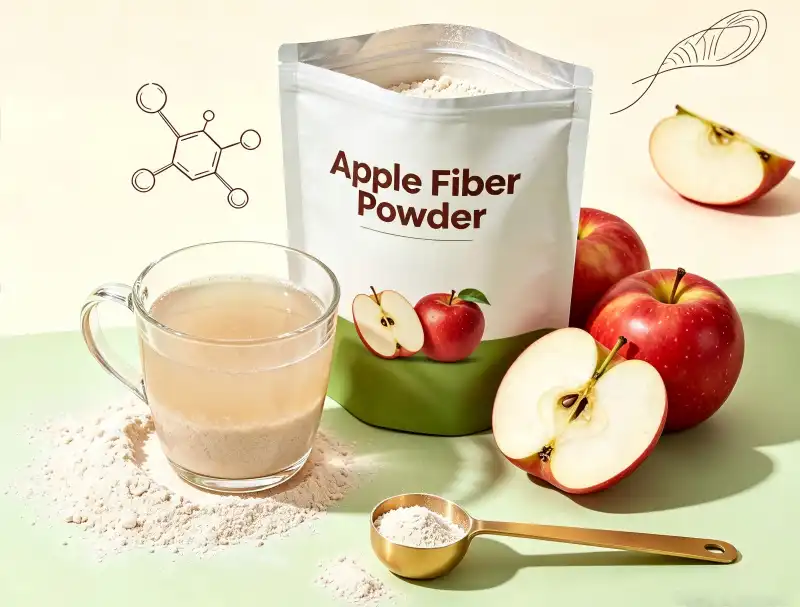
The Benefits of Apple Fiber Powder for Blood Sugar and Overall Health
Scientific evidence backs up the many health benefits of eating fiber from fruits and vegetables every day. Researchers who have looked at dietary fiber intake have found that it is negatively linked to metabolic syndrome signs such as fasting glucose levels, HbA1c percentages, and insulin resistance indices.
Evidence-Based Glycemic Control
In studies published in nutritional science journals, people who ate 10-15 grams of fiber from apples every day had statistically significant drops in their fasting blood glucose levels over the course of 12 weeks. The effect seems to depend on the amount, with higher doses leading to bigger changes in glycemic markers. However, after 20 grams per day, the effect starts to fade. The full phytochemical makeup of this ingredient is what sets it apart from synthetic fiber additions. In addition to fiber, the powder still has polyphenolic substances like quercetin and chlorogenic acid that help the body's breakdown of glucose. These beneficial chemicals help cells take in glucose in ways that aren't dependent on insulin signaling. They do this by supporting the metabolism in other ways.
Supporting Weight Management and Metabolic Health
The link between fiber intake and weight control has more benefits for blood sugar. Pectin can make the stomach swell and release satisfaction hormones like GLP-1, which means that when people eat enough fiber, they automatically lower the number of calories they eat. This calorie reduction, which in controlled studies amounts to an average of 100 to 150 calories per day, helps people lose weight slowly, which makes insulin work much better. Controlling glucose levels is only one part of metabolic health. Regular fiber intake has a good effect on lipid levels, lowering LDL cholesterol and triglycerides and improving heart health. Heart disease and diabetes often happen together, so ingredients that can help with both are very useful for making health-focused products.
Digestive Wellness and Safety Considerations
Apple Fiber Powder's prebiotic features feed good bacteria in the gut, especially Bifidobacterium and Lactobacillus species. These bacteria break down fiber into short-chain fatty acids like butyrate. These acids give colonocytes energy and reduce inflammation all over the body. New study suggests that fiber's benefits go beyond one physiological route and are linked to a healthy gut microbiota makeup and better glucose control. When it comes to safety, good Apple Fiber Powder is naturally gluten-free, doesn't cause allergies, and is good for a variety of diets, even vegan and vegetarian ones. The daily recommended amount is between 10 and 25 grams, but people should slowly increase their diet to give their bodies time to change and avoid bloating or gas during the first few days.
Comparing Apple Fiber Powder With Other Fiber Sources for Blood Sugar Management
When purchasing, workers are looking at fiber ingredients; it's helpful to know how the benefits of different plant sources compare. There are many kinds of fiber, but their clinical effectiveness and functional qualities change a lot depending on the amount of soluble to insoluble fiber, the particle size, and the phytochemicals that are present.
Apple Fiber Versus Psyllium Husk
About 70% of psyllium husk is made up of soluble fiber, which gives it a unique density that lowers cholesterol and slows down the uptake of glucose. But because it has a strong laxative effect and can cause stomach pain at medicinal amounts, it can't be used in all product forms. Apple Fiber Powder's balanced fiber profile makes it easier on the digestive system while still providing meaningful glycemic benefits. This makes it better for food uses where taste and customer tolerance are important.Apple Fiber Powder is also good for smoothies and drinks because it changes the texture. Psyllium's mucilaginous texture can make the mouth feel bad, but finely ground Apple Fiber Powder spreads out easily and doesn't change the texture much, especially when the specs are met, and the particle size is controlled.
Apple Fiber Versus Isolated Pectin
Pure apple pectin has a lot of soluble fiber, but it doesn't have all the nutrients that whole fruit fiber does. The insoluble fiber part helps with feeling full, keeping your digestive system regular, and reaching your total fiber diet goals. From a cost-benefit point of view, whole Apple Fiber Powder has similar effects on blood sugar levels but costs less than other ingredients. This makes it a good choice for price-conscious products aimed at the mass market. When choosing between organic and standard sources, quality marks become very important. Organic Apple Fiber Powder costs more, but it meets the rising desire for organic products from consumers. Certifications like USDA Organic, EcoCert, and EU Organic prove that production methods are free of synthetic chemicals and genetic change. This is in line with strategies for "clean label" marketing that appeal to people who care about their health.
Functional Benefits Across Applications
Based on how they work technologically, different fiber sources are best for different types of products. Chicory root fiber is good for you and doesn't add much stickiness, while oat fiber is great for baked things because it doesn't change the taste and helps with structure. Apple Fiber Powder is in the middle because it has a medium viscosity, works well with a lot of flavors, and can be used in a lot of different vitamin pills, tablets, functional drinks, protein bars, and meal replacement products.Target buyer groups also have an effect on choice. Apple Fiber Powder has been shown to help with blood sugar, and people know apples as good, familiar foods. This helps products that are sold to help with blood sugar. When compared to less well-known botanical sources that need a lot of teaching messaging, this naturally positive connection makes marketing stories more convincing and builds customer trust.
Procurement Insights: How to Source Quality Apple Fiber Powder for B2B Needs
To get a reliable source of ingredients, you need to carefully evaluate suppliers based on a number of quality factors. Professional sellers are different from commodity providers, who don't have the infrastructure to support long-term partnerships because they have different manufacturing standards, analytical tools, and supply chain visibility.
Critical Supplier Selection Criteria
When it comes to pharmaceutical and nutraceutical uses, GMP certification is the standard. Third-party checks of sanitation routines, batch traceability systems, and written quality control methods should be used by manufacturing sites to show that they are in compliance. Certifications like ISO22000, FSSC22000, and HACCP give you more peace of mind about food safety management systems. The ability to do analytical tests has a direct effect on the uniformity of the product. Suppliers who have HPLC, UV spectrophotometry, and other high-tech tools can check that the fiber content matches the standards, find any possible contaminants, and send full Certificates of Analysis with every package. As part of the testing, microbe counts, heavy metal screening, pesticide residue analysis, and making sure that the fiber makeup meets the stated standards for 60% or 98% purity grades should all be done.

Traceability and Supply Chain Considerations
Full tracking from apple orchards to processing and packaging lets you quickly address quality issues and helps you follow the rules in markets that have strict paperwork needs. Suppliers who keep thorough batch records, which include sourcing documents and handling factors, show that they are committed to openness, which lowers the risk of procurement. Logistics skills have a big impact on the total cost of ownership. Suppliers who offer a range of packing choices, from small study numbers to 25 kg fiber drums with food-grade inner bags and vacuum-sealed aluminum foil protection, can handle orders of all sizes. Processing speed that allows shipping times of 1 to 3 working days cuts down on stocking costs and supports just-in-time manufacturing methods.
Pricing Dynamics and Bulk Purchasing Advantages
Apple Fiber Powder prices depend on a lot of things, like whether it is organically certified, how pure it needs to be, how much is ordered, and when it is available in the season. Most of the time, conventional grades with 60% purity cost 30–40% less than 98% pharmaceutical-grade materials. Materials that are certified organic cost 15–25% more. When you sign a bulk purchasing deal that guarantees an annual volume promise, you can often get 10-15% lower prices than when you buy on the spot market. Building long-term ties with dependable makers protects against supply problems and price changes. Suppliers with a lot of extraction capacity, such as three fully automatic production lines that can handle 98% of the work, multiple stainless steel tanks that can hold 500 to 3000 liters of extraction, and rising demand, can meet it all without any problems during peak seasons.
Practical Guide: Using Apple Fiber Powder to Stabilize Blood Sugar
Formulators working on blood sugar support goods need clear instructions on how much to use, how to give the product, and how to follow the rules so that finished products meet safety and effectiveness standards.
Recommended Dosage for Glycemic Support
Based on clinical research, the best way to affect blood sugar levels is to take between 5 and 15 grams of the supplement each day, spread out over several meals. Lower doses (5-8 grams) are good for upkeep and general wellness positioning. Higher doses (12–15 grams) may be used for therapeutic purposes in prediabetic groups with the help of a healthcare worker. Timing in relation to food has a big effect on how well something works. Fiber works best at lowering blood sugar when eaten 15 to 30 minutes before carb-heavy meals. This is because fiber forms a thick gel structure before glucose is absorbed. This timing issue should be taken into account in product usage directions and customer education tools that come with finished goods.
Integration Into Various Product Formats
Dosing restrictions need to be carefully thought through for capsule and pill forms. Standard pill sizes can only hold 500 to 750 mg of powder, so appropriate amounts must be reached by taking more than one capsule. Tablets can reduce doses more, but they might change the rate at which they dissolve, so dissolving testing is needed to make sure they are bioavailable. Powder formats for making drinks give users the most dose options and are the easiest to use. Its mild apple flavor and brownish-yellow color make it easy to mix into fruit smoothies, protein shakes, and other functional drinks. Fine milling to get even particle distribution stops settling and makes sure that the product experience is the same from serving to serving.Apple Fiber Powder's balanced processing properties make it useful in functional foods like protein bars, breakfast cereals, and baked goods. It can handle normal baking temperatures, helps keep moisture in, which extends the shelf life, and offers clean-label fiber fortification without adding any artificial ingredients.
Quality Assurance and Regulatory Compliance
Tests on the finished product should use approved analytical methods to back up claims about fiber content. Usually, enzymatic-gravimetric techniques set by AOAC International are used. Studies of stability at high temperatures (40°C/75% RH) show how long something can be stored and help set dates for when it goes bad. Regulatory compliance varies by market, but in general, promises about structure-function that help with blood sugar need to be backed up. In the US, FDA rules allow approved health claims for fiber and lowering the risk of heart disease, but they limit claims for treating diseases without pharmaceutical approval. In the same way, EFSA rules in European markets make a distinction between health claims backed by science and therapeutic claims that need medical product authorization.
Conclusion
The way Apple Fiber Powder keeps blood sugar stable is through soluble fiber making gut viscosity, which limits glucose absorption while encouraging good metabolic reactions. Because it has a balanced nutritional profile, is safe, and can be used in a lot of different products, it is a great ingredient for companies that want to meet the growing demand for natural blood sugar support products. Partnering with certified providers that offer analytical rigor, supply chain reliability, and technical knowledge to support product development from idea to launch is key to successful procurement. As more studies prove fiber's role in digestive health, getting in on the ground floor early gives you an edge in the functional food and dietary supplement markets, which are growing very quickly.
FAQ
How much apple fiber should be consumed daily for blood sugar benefits?
The recommended daily amount is between 10 and 15 grams, spread out over several pieces that are eaten before meals that contain carbohydrates. Starting with smaller amounts, like 5 grams, and slowly increasing them lets your digestive system get used to the fiber, which reduces the brief gas or bloating that can happen when you eat a lot more fiber.
What's the difference between apple pectin and apple fiber powder?
Apple pectin is a single extract of soluble fiber that is used to make jam. Apple Fiber Powder, on the other hand, keeps both soluble and insoluble fibers, as well as phytochemicals that are still in the fruit. The whole fiber structure has more health benefits than just pectin's special uses. It helps keep digestion regular and makes you feel full.
Partner With Fairir for Premium Apple Fiber Powder Supply
Shaanxi Fairir Biotech Co., Ltd. is a specialized company that makes Apple Fiber Powder for the medicinal, nutraceutical, and functional food businesses around the world. Their production is GMP-certified and meets international quality standards. Our 10,000-square-meter building has modern continuous countercurrent extraction systems, vacuum belt drying equipment, and a wide range of analytical instruments, such as HPLC and UV spectrophotometry, to make sure that every batch meets the same standards. We offer Apple Fiber Powder in grades of 60% purity and 98% purity. It is made from high-quality apple pomace and is removed using technology that protects bioactive chemicals while giving great solubility and stability for a wide range of products. Multiple certifications, such as USDA Organic, Kosher, Halal, ISO22000, FSSC22000, and cGMP compliance, make it easier to get into markets around the world that have rules about what can be sold. Minimum order sizes are flexible enough to handle projects ranging from small-scale studies to large-scale business production. Delivery is usually finished within 1 to 3 working days. Our experienced R&D team does more than just supply raw materials. They also help with formulation, create unique specs, and offer private label services that are tailored to your product development goals. Contact our purchasing agents at sales@fairirbiotech.com to get free samples, talk about your specific needs, and find out how working with a dependable Apple Fiber Powder supplier can help you come up with new products faster while protecting your brand's reputation through consistent quality.
References
1. Anderson JW, Baird P, Davis RH, et al. Health benefits of dietary fiber. Nutrition Reviews. 2009;67(4):188-205.
2. Kendall CWC, Esfahani A, Jenkins DJA. The link between dietary fibre and human health. Food Hydrocolloids. 2010;24(1):42-48.
3. Weickert MO, Pfeiffer AFH. Metabolic effects of dietary fiber consumption and prevention of diabetes. Journal of Nutrition. 2008;138(3):439-442.
4. Lattimer JM, Haub MD. Effects of dietary fiber and its components on metabolic health. Nutrients. 2010;2(12):1266-1289.
5. Slavin JL. Dietary fiber and body weight regulation. Nutrition Reviews. 2005;63(2):43-49.
6. Brownlee IA. The physiological roles of dietary fibre. Food Hydrocolloids. 2011;25(2):238-250.