How Does Fermentation Affect Coenzyme Q10 Powder Quality?
Fermentation completely changes the quality of Coenzyme Q10 Powder by turning it into bio-identical ubiquinone through bacterial processes that are more pure and consistent than chemical production. This biotechnology method uses carefully chosen bacterial strains, mostly Rhodobacter sphaeroides and Agrobacterium tumefaciens, to make all-trans isomer structures that are similar to the ones found naturally in human cells. The controlled fermentation environment gets rid of a lot of chemical contaminants and reaches concentration levels of up to 98% purity. This makes it the best way to make pharmaceutical-grade supplements, nutraceutical formulations, and advanced cosmetic uses where safety and bioavailability are very important.
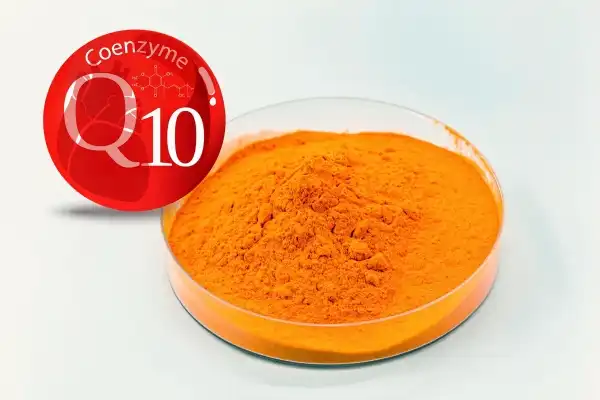
Understanding Coenzyme Q10 Powder and Its Quality Parameters
In many fields, from pharmaceutical products to useful makeup, Coenzyme Q10 Powder is now a must-have ingredient. Working with purchasing managers from vitamin and nutrition companies taught us that quality factors can make or break how well a product works. The molecule is mostly found as ubiquinone in its reduced form, and it is an important part of how mitochondria make energy. When B2B buyers look at raw materials, they look at a few key characteristics that tell them if a batch meets their formulation needs.
Critical Quality Metrics for Industrial Applications
This level of accuracy is important because even small changes can affect how accurately the dose is delivered when tablets are compressed or softgels are enclosed. Bioavailability is a measure of how well the body takes and uses a nutrient. Finer, more regular crystals break down more easily in lipid carriers like soybean oil or medium-chain triglycerides. The particle size distribution has a direct effect on this property. Companies that make softgels for nutraceuticals pay close attention to this feature because it affects sedimentation during high-speed packaging processes if it doesn't dissolve well.
The antioxidant's usefulness is determined by how strong it is. The substance gets rid of reactive oxygen species, which keeps cell structures from getting damaged by oxidative stress. Cosmetic companies that put it in anti-aging serums and creams trust this quality to make the skin look healthier. Standardized radical scavenging assays are used in testing techniques to measure this ability and make sure that results are the same from batch to batch.
Regulatory Compliance and Certification Standards
International buyers look for GMP-certified facilities that follow the United States Pharmacopeia (USP) and European Pharmacopoeia (EP) monographs, and these certificates show controlled contamination, good records and approved test methods. The table collects the core specification parameters that experienced buyers set.
|
Parameter |
Typical requirement |
Method |
What to check |
|
Assay |
98.0%-101.0% on the anhydrous basis (USP/EP monograph) |
HPLC |
Value and reference standard on every COA |
|
Isomers and related substances |
All-trans form; monograph limits for related substances including the 2Z isomer; some premium specifications state cis-isomer below 0.5% |
HPLC capable of separating isomers |
Check the current monograph and what the supplier actually reports |
|
Lead |
0.5 ppm or less (typical buyer specification) |
ICP-MS |
Confirm against your market requirements |
|
Arsenic |
1 ppm or less |
ICP-MS |
Same as above |
|
Mercury |
0.1 ppm or less |
ICP-MS |
Same as above |
|
Total plate count |
Below 1,000 cfu/g |
Microbiological testing |
Per batch |
|
Pathogens |
E. coli, Salmonella and Staphylococcus aureus absent |
Microbiological testing |
Reported as not detected |
The Fermentation Process in Coenzyme Q10 Powder Production
Chemical synthesis or extraction from animal organs were the main means of production in the past, but both have major problems. Chemical methods made geometric isomer mixtures with inactive cis-forms, and materials derived from animals sparked worries about uniformity, traceability, and moral issues. This field was changed forever when fermentation technology came along and provided a biological solution that methodically dealt with these problems. The process starts with choosing the right strains, which are microorganisms that can make Coenzyme Q10 Powder naturally through their metabolic routes.
Microbial Strain Engineering and Cultivation
Due to its strong quinone biosynthesis route, Rhodobacter sphaeroides is the most important commercial workhorse. Scientists have improved these bacterial types by selective breeding and genetic marker improvement to get the highest yield without changing the all-trans stereochemical configuration that is needed for biological activity. Large fermentation tanks, ranging from 500 to 3000 liters, are used for cultivation, and the natural conditions are constantly checked. Controlling the temperature usually keeps things between 28°C and 32°C, and controlling the pH usually keeps things between 6.8 and 7.2. These exact conditions make sure that the enzymes work at their best in the biosynthetic route, which changes acetyl-CoA and isopentenyl pyrophosphate into the quinone structure. Nutrient-based food plans use complex carbon sources, like glucose or glycerol, along with nitrogen sources and minor minerals. The fermentation process lasts for 4 to 7 days, during which time the number of bacteria grows very quickly, and ubiquinone levels inside cells rise to 3 to 5 grams per liter of culture.
Downstream Processing and Purification
Once the fermentation process is over, the biomass goes through cell breakdown by mechanical homogenization or chemical lysis to release the lipophilic compound from the cell walls. Then, food-grade liquids like ethanol or supercritical CO2 are used by continuous countercurrent extraction tools to break down only the target molecule, leaving behind cell debris and impurities that can dissolve in water. The double-effect concentration equipment lowers the amount of liquid by evaporation under controlled pressure. This keeps the heat-sensitive quinone structure from breaking down. During this step, temperatures stay below 50°C to protect the structure of the molecules. Crystallization methods are then used to separate the pure extract from any impurities that are still present. To get crystals that are pure enough for medicinal use, they are washed many times with cold solvents. Using vacuum belt drying equipment gets rid of the last of the liquid, leaving behind a fine orange-yellow powder that is ready to be micronized. Ultra-micro pulverizers break down particles to the right size for different uses. Usually, they need to be between 10 and 50 microns for softgel solutions or below the micron range for water-dispersible products that use cyclodextrin inclusion complexes.
How Fermentation Enhances CoQ10 Powder Quality and Bioavailability
The benefits of fermentation-derived materials go far beyond how easy they are to make. These advantages directly lead to better product performance, which can be measured and proven by R&D labs and recipe teams.
Stereochemical Purity and Biological Identity
Fermentation only makes the all-trans isomer configuration, which is the same as the form that is naturally made in human mitochondria. Quantitative tests of clinical intake show this difference. Coenzyme Q10 Powders made from fermentation that are mixed in oil carriers have 30% to 40% higher plasma concentration levels than chemically produced versions that are given in the same amounts. Because of this improved bioavailability, makers can reach goal blood levels with fewer ingredients, which lowers the cost of preparation while keeping the effectiveness. DPPH radical scavenging tests show that the compound's antioxidant capacity is typically higher for fermentation products. This is because they don't have any leftovers or chemical residues from the manufacturing process that could mess up the electron transfer reactions that are important for antioxidant mechanisms.
Residue Profile and Clean Label Compliance
Chemical synthesis routes use many organic solvents, catalysts, and chemicals that leave behind small amounts even after being cleaned up. Using gas chromatography to look at manufactured batches can often find hexane amounts close to 200 to 290 ppm, along with other Class 2 solvents that need to be listed on ingredient labels. This load is greatly reduced by fermentation. Generally recognized as Safe solvents, such as ethanol, are used in the extraction process. Residual amounts are usually below 50 ppm, which is well below legal limits and cannot be found very often. This clean profile backs up organic certification routes and clean label marketing claims, which are becoming more and more important to health-conscious customers and high-end brands. Pharmaceutical businesses that are making extra medicines to treat mitochondrial disorders or myopathy caused by statins especially need fermentation sources. The biological identity and low contaminant load meet the strict safety standards for long-term therapeutic use, where even small amounts of impurities could cause bad responses in patients who are already vulnerable.
Environmental Sustainability and Supply Chain Advantages
Fermentation is a closed-loop system that uses green materials like sugars from farms and makes waste streams that break down naturally. This is very different from chemical synthesis, which needs starting materials that come from fuel and makes dangerous trash that needs special disposal rules. Another strategic benefit is that production can be scaled up or down. Manufacturers can quickly change batch sizes by changing how the fermentation vessels are used. This gives them supply freedom that chemical synthesis plants, which have set infrastructure, find hard to match. This flexibility helps purchasing teams keep track of their stock well and adjust to changes in the market demand without having to wait for longer lead times.
Comparing Fermentation-Based CoQ10 Powder to Other Forms
Different delivery forms suit different applications, and understanding them helps buyers match purchases to formulation goals and target markets.
Powder Versus Encapsulated Formats
Raw Coenzyme Q10 Powder gives the most formulation flexibility, and each format brings different technical considerations. The table summarises them.
|
Format |
Typical use |
Technical considerations |
|
Raw powder in lipid carriers (softgels) |
30-300 mg per capsule |
Viscosity is controlled by oil choice and temperature; uniform particles prevent settling and dose variation |
|
Tablets |
Compressed dosage forms |
Hard to compress and sensitive to pressure; usually blended with microcrystalline cellulose and binders; dissolves less quickly than softgels |
|
Cosmetic emulsions |
Creams and serums |
Mixed into the oil phase; must dissolve fully below 50°C to avoid thermal degradation |
|
Water-dispersible grades |
Energy drinks, functional water, sachets |
Microencapsulated with cyclodextrin, gum arabic or nano-emulsion technology so that acidic beverages stay clear without oil rings or sediment |
Coenzyme Q10 Powder Bulk: Wholesale Pricing and Cost of Ownership
Coenzyme Q10 powder bulk prices depend on grade, form, documentation and order size, and buyers should treat any single quoted price with caution until the specification behind it is clear. Prices for standard 98% ubiquinone powder in bulk quantities are far lower than prices for ubiquinol, specialised delivery formats or small research lots, and quotations can differ by region and by the documents included. Always request a current written quotation and compare it against the grade you need. Volume agreements covering several hundred kilograms or more, and multi-year supply contracts with a supplier such as Shaanxi Fairir Biotech, can lower unit cost and secure production priority when the market is tight and spot prices rise suddenly.
|
Price driver |
Effect on quotations |
|
Form |
Ubiquinone powder is the baseline; ubiquinol, water-dispersible and other specialised formats cost more |
|
Purity and documentation |
Pharmacopeial-grade documentation, batch-specific COAs and third-party testing add cost |
|
Order size |
Sample and research lots cost most per kilogram; large volume and multi-year agreements cost least |
|
Region and logistics |
Freight, duties and storage change the total landed cost |
The price of raw material is only one part of the total cost of ownership. Lower reject rates, consistent batches and fast technical support lower hidden costs, and any dose reduction from a better delivery system should be shown in your own testing, not assumed from the production route.
How to Evaluate and Choose High-Quality Fermentation-Based CoQ10 Powder Suppliers
One of the most important choices in setting up an effective supply chain is choosing a supplier. The risks are especially high because the ingredient is very sensitive to changes in production, and poor quality has very bad results.
Technical Capabilities and Infrastructure Assessment
The supplier's manufacturing ability tells you if they can regularly meet your volume needs. Facilities with several extraction tanks—ideally 10 to 15 vessels with capacities between 500 and 3000 liters each—show that they have the tools to handle big operations without any problems. Automated production lines that require little to no human input lower the risk of contamination and make it easier to repeat batches. The supplier's strict quality control can be seen in the analytical tools collection. Look for HPLC systems that can separate isomers, UV spectrophotometers that can check the concentration, rotating evaporators that can prepare samples, and ICP-MS machines that can test for heavy metals. Regular calibration should be done on these tools, and written records of their upkeep should be kept and ready for inspection. Metrics for extraction productivity give objective measures of success. Operations that get 95% to 98% of the wood they use for fermentation back show that they know how to optimize the process and are technically skilled. Lower outputs are often a sign of less-than-ideal extraction conditions, limited tools, or not enough process development. These are warning signs that may point to inconsistent Coenzyme Q10 Powder quality.
Regulatory Documentation and Certification Verification
As a minimum, you need GMP approval from a known authority. Ask for copies of the most recent certificates and inspection reports, and make sure that the scope clearly includes making plant extracts and fermenting foods. Some facilities have licenses for different types of products, but don't show that they have the right production skills. Organic approval is appealing to markets that value natural ingredients and caring for the earth. Check to see if the certifiers are accredited by programs that are known in the markets you want to reach (USDA Organic for the US, EU Organic for Europe, etc.). Make sure that the materials and helpers used in fermentation meet organic standards. Any problems in the supply chain can make promises about the finished product false. Reports from independent labs that were not made by the seller add more believability than Certificates of Analysis made by the supplier. Reputable makers are happy to give you proof of batch testing from ISO 17025-certified labs that includes tests for purity, microbial safety, and contaminant screening. Not wanting to share this material suggests that there may be quality problems that need to be looked into.
Commercial Flexibility and Partnership Approach
Your business possibilities grow when you offer OEM and private label services. Suppliers who give help with custom formulation, creation of unique blends, and white-label packages are more like strategic partners than just ingredient sellers. When launching new product lines or going into new market areas, this teamwork is especially helpful. Minimum order amounts and payment terms have a big effect on managing cash flow and stockpiles. Large manufacturers may have minimum orders of 100 kilograms, but established providers can usually handle smaller orders at first to get to know you, and then you can make bigger promises as the relationship grows. Flexible payment terms, like net 30 or 60 days instead of cash on delivery, make it easier on the bank during growth periods. Problem-solving success is directly linked to how quickly communication is. Check to see how easy it is to get technical help from providers, what languages they speak, and what time zones they cover. Reaching experienced staff who can answer questions about formulation or troubleshoot stability problems keeps production from being held up, which costs a lot of money, and builds relationships between people who work together.

Conclusion
Fermentation technology has greatly improved the standards for making ubiquinone, producing pharmaceutical-grade Coenzyme Q10 Powder that is better than manufactured replacements in many ways. The biotechnological technique makes sure that the stereochemicals are pure, increases bioavailability, lowers chemical leftovers, and supports long-term production methods that keep up with changing market needs. When reviewing suppliers and negotiating contracts, these detailed differences are helpful for people who work in B2B buying. Putting money into materials that come from fermentation pays off in the form of better formulation performance, regulatory compliance, and customer trust, all of which lead to a competitive place in the market. Your company will have long-term success in the fast-paced nutritional ingredients market if you choose partners who have advanced production facilities, strict quality systems, and business freedom.
FAQ
Q1: What purity levels should I expect from fermentation-based Coenzyme Q10 Powder?
Pharmaceutical-grade fermentation material usually tests at 98.0% to 101.0% on the anhydrous basis by HPLC, with all-trans isomer control. USP and EP monographs limit related substances including the 2Z isomer, and some premium commercial specifications state cis-isomer below 0.5%, so check the current monograph and the supplier's actual results.
Q2: How does fermentation-derived powder compare to synthetic versions in supplement absorption?
Absorption depends mainly on the formulation, including carrier lipids and solubilisation, not on whether the powder was made by fermentation or synthesis. The advantage of fermentation is all-trans purity and a cleaner residual solvent profile, and a fixed 30% to 40% bioavailability improvement is not supported by a controlled head-to-head human trial.
Q3: Can fermentation-based material support organic product certification?
Not automatically. Organic use of CoQ10 depends on USDA National Organic Program rules, including the National List and certifier approval, and some brands report that organic guidelines do not currently cover CoQ10. Verify any "organic CoQ10" claim with the certifier and the USDA Organic Integrity Database before relying on it.
Q4: What minimum order quantities do coenzyme q10 powder bulk suppliers typically require?
Most established manufacturers set minimums between 25 and 100 kilograms, and qualification samples of 1 to 5 kilograms are often available. Orders of more than 500 kilograms can earn better pricing and earlier production scheduling.
Q5: How do I choose a coenzyme powder supplier for CoQ10 powder?
Choose a coenzyme powder supplier that is GMP-certified, can document its production route and isomer control, provides independent test reports and per-batch residual solvent data, and offers transparent quotations. Request a sample and COA for CoQ10 powder, and verify results in your own laboratory before a large order.
Partner with Fairir for Premium Fermentation-Based Coenzyme Q10 Powder
Shaanxi Fairir Biotech Co., Ltd. is ready to help you with your buying needs. They can provide you with GMP-certified Coenzyme Q10 Powder that is made using modern biotechnology processes and fermentation. Our 10,000-square-meter building has 14 stainless steel extraction tanks and 2 fully automatic production lines that are 98% efficient. It also has HPLC, UV spectrophotometry, and a wide range of testing instruments that guarantee quality that is good enough for medicinal use. As a provider with a lot of experience working with cosmetic brands, nutraceutical companies, and pharmaceutical companies around the world, we offer steady quality, low bulk prices, and quick technical support. Our team can help you make unique formulations, offer private label services, and make sure that the amount of product you order fits your production needs. Contact our purchasing agents at sales@fairirbiotech.com to talk about your specific needs, ask for technical documentation, and find out how our fermentation-based ubiquinone can help you improve your product line by making it more bioavailable and in line with regulations, which will help your brand stand out in crowded markets.
References
1. Crane, F. L. (2007). "Discovery of ubiquinone (coenzyme Q) and an overview of function." Mitochondrion, 7 Suppl, S2-S7.
2. López-Lluch, G., Del Pozo-Cruz, J., Sánchez-Cuesta, A., Cortés-Rodríguez, A. B., & Navas, P. (2019). "Bioavailability of coenzyme Q10 supplements depends on carrier lipids and solubilization." Nutrition, 57, 133-140.
3. Pravst, I., Žmitek, K., & Žmitek, J. (2010). "Coenzyme Q10 contents in foods and fortification strategies." Critical Reviews in Food Science and Nutrition, 50(4), 269-280.
4. Sarter, B. (2002). "Coenzyme Q10 and cardiovascular disease: a review." Journal of Cardiovascular Nursing, 16(4), 9-20.
5. Weber, C., Bysted, A., & Hølmer, G. (1997). "Intestinal absorption of coenzyme Q10 administered in a meal or as capsules to healthy subjects." Nutrition Research, 17(6), 941-945.
6. Žmitek, K., Pogačnik, T., Mervic, L., Žmitek, J., & Pravst, I. (2017). "The effect of dietary intake of coenzyme Q10 on skin parameters and condition: Results of a randomised, placebo-controlled, double-blind study." BioFactors, 43(1), 132-140.