Why Is Third-Party Testing Important for Pure Glucomannan Powder?
A third party tests Pure Glucomannan Powder to make sure it always meets strict standards for purity, stays free of impurities, and always gives the same high quality. When B2B buyers have their goods checked by a third-party lab, they are protected from risks like fraud, mislabeling, and adulteration. The ingredients are checked by a third party to make sure they meet international rules and are what they say they are. Pharmaceutical companies, nutraceutical companies, and dealers can feel good about adding this healthy fiber from konjac to their goods because of this.
Understanding Pure Glucomannan Powder and Its Market Demand
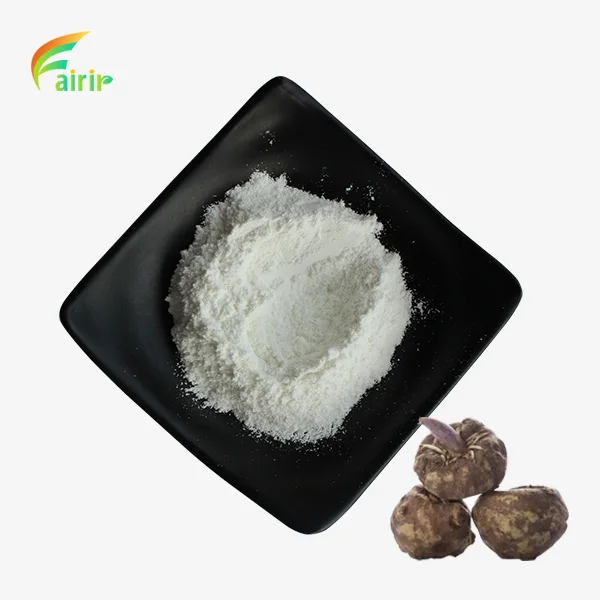
Glucomannan is a type of fiber that dissolves in water. It comes from the root of the Amorphophallus konjac plant. It is very valuable because it can gel. This ingredient helps you lose weight, lowers your cholesterol, and improves your gut health. This chemical is found in medicines, health aids, and useful foods. The market for green, plant-based products keeps growing because more and more people want them.
The problem of different grade levels is still there. The end product's safety and how well it works can depend on where the raw materials come from, how they are taken out of the ground, how they are kept, and how they are handled. More and more, people who work in B2B buying have to make sure that products are uniform, that the supply chain is honest, and that rules are followed. For these reasons, it is not only a good idea but also important to have tests done by approved labs that are not connected to the company.

Defining Third-Party Testing and Its Role in Quality Assurance
What Third-Party Testing Involves
Independent, licensed labs do third-party testing on their own to make sure that konjac glucomannan powder is safe, of good quality, and accurate. External testing, on the other hand, is not skewed and builds trust through objective analysis, unlike reviews done by the makers themselves.
Key Parameters Assessed During Testing
A lot of important quality factors are checked in laboratories for Pure Glucomannan Powder. To show that something is pure, methods like High-Performance Liquid Chromatography (HPLC), UV spectrophotometry, and Gas Chromatography (GC) are used. The glucomannan amount is generally between 85% and 95%. With compositional analysis, you can find out how wet something is, how much ash it has, and if it has any fillers or other things that aren't what it seems to be. During checks for pollution, there are tests that look for allergens, heavy metals, microbial pathogens, and pesticide residues. When you test for group accuracy, you make sure that every run of the result is the same.
Regulatory Frameworks and Certifications
It is easier to trade across countries and get government approval when you follow foreign standards. The ISO, GMP, HACCP, FDA, and EFSA labels show that the goods are made properly and the chemicals are safe. For global shopping, third-party testing paperwork is needed because it helps with things like getting goods through customs, making sure import rules are followed, and registering products later on.
Why Third-Party Testing Is Essential for B2B Buyers of Glucomannan Powder
Minimizing Procurement Risks
There are a lot of risks that come with buying plants for business use. Putting false pure numbers on labels, adding cheaper fillers, and sellers who lie can all make a product less effective and put customers at risk. In order to be safe, third-party testing makes sure that the claimed specs match the actual makeup.
Ensuring Product Authenticity and Differentiation
Checking the names and locations of their ingredients makes high-end goods stand out. Verification from a third party confirms that the item is vegan-friendly, organic, and free of GMOs and allergens. These things help brands get a better position in the market and appeal to picky buyers.
Reducing Supply Chain Uncertainties
Buying lowers the risks by using quality assurance data from labs that have been cleared. By making sure that import rules, quality standards, and safety limits are being followed, you can avoid costly problems like package rejects, product refunds, and legal battles. Being able to see all of your paperwork makes sellers more responsible and builds trust that leads to long-term relationships.
Strengthening Brand Reputation and Market Competitiveness
OEMs, wholesalers, and end users are more likely to believe a Pure Glucomannan Powder product that meets high standards and that they can count on. You can tell that a brand cares about honesty, safety, and quality if they only use goods that have been tested by a third party. This picture makes customers more committed, cuts down on complaints, and makes the company more competitive in the market.
How to Integrate Third-Party Testing Into Your Procurement Process
Selecting Credible Laboratories
To find the best testing partner, check out their credentials, how much they know about the subject, and the areas they test in. When a lab meets the requirements of ISO/IEC 17025, it means that they follow scientific methods. A person should know how to do HPLC, UV spectrophotometry, studies on bacteria, and heavy metal screens. How close something is or how far it can reach abroad changes how long it takes to do something and how much it costs.
Strategic Testing Milestones
Testing at key points in the buying process is the best way to keep quality high. A pre-purchase suitability test is done on both new buyers and samples of raw materials before contracts are signed. Before packages are sent out, they are tested to make sure they meet the standards that were agreed upon. Random checks during long-term partnerships make sure that rules are followed and find process changes early on.
Understanding test results requires familiarity with critical quality metrics and permissible limits of Pure Glucomannan Powder. Procurement managers should check against established guidelines for clean rates, contamination levels, and microbial numbers. When something goes wrong, steps need to be taken to fix it, like talking to the provider, rejecting the batch, or changing the process. When reviewing reports, building up personal knowledge speeds up the process and makes choices more accurate.
Case Studies and Industry Best Practices
Success Stories from Established Brands
A third party has tested the goods of major nutrition companies to make them better and make customers happy. When all amounts of konjac glucomannan were tested by a third party, complaints about quality dropped by 40% at one North American supplement business. Better openness and paperwork from suppliers sped up regulatory applications, which in turn sped up the launch of products.
Lessons from Documented Failures
Several well-known poisonings, on the other hand, show that risks could have been lowered by doing separate tests. Because of differences between groups, a European supplier had to send back a lot of expensive goods because customers didn't like them. Quality assurance was found to be flawed after the event because it relied too much on seller certificates without any third-party checks.
Adopting industry best practices involves establishing clear testing protocols, maintaining preferred laboratory partnerships, and integrating verification data into supplier scorecards. Businesses that buy from other businesses can pick the best sellers, lower quality risks, and keep the supply chain stable if they put independent testing at the top of their list of priorities.

Conclusion
When quality assurance is checked by a third party, it goes from being a compliance check to a strategic buying benefit. Proof checked by a third party protects B2B buyers from fakes, makes sure rules are followed, and improves the image of a brand. As the need for natural food fibers grows around the world, procurement workers who stress accepted lab tests will help their companies succeed in the long run. When you add proof from a third party to your buying plan, the risks go down, the quality of the product goes up, and trust in the supply chain grows.
FAQ
1. Is third-party testing mandatory or voluntary?
In each area, the rules are different. A lot of places don't need third-party testing, but shops and buyers further down the line are starting to expect it. The US and the EU are two big markets that really want independent proof to back up promises about safety and markets.
2. How often should bulk purchases be tested?
You should test how often, based on the supplier's past, the number of orders, and how the things are used. Every first batch from a new source will be checked for quality. If a partner has been working with you for a while and always does a good job, they may decide to do random checks on 10–20% of orders instead of full reviews once a year.
3. Does third-party testing guarantee safety and efficacy?
Testing something is a good way to show that it's of good quality, but it can't promise that it will be safe or work well in the clinic. The answers come from the batch that was studied. B2B buyers can be most confident when manufacturing is GMP-certified, products are stored properly, and recipe standards are followed. This is especially true when independent testing is also done.
Partner with Fairir for Verified Pure Glucomannan Powder Supplier Solutions
A third party has verified that Shaanxi Fairir Biotech Co., Ltd.'s Pure Glucomannan Powder is of the highest quality and meets the requirements of companies, health supplement companies, and international retailers. Our GMP-approved center uses cutting-edge HPLC, UV spectrophotometry, and constant countercurrent extraction methods to keep purity levels between 85% and 95%. Each batch is tested thoroughly by a third party, and full records are kept from the time the raw materials are chosen until they are packed. We have private labels, formulas that can be changed to fit your needs, and different ways to carry your medicine, like softgels, pills, tablets, and small bags. We offer low prices, fast shipping (1–3 business days), and full certifications to help you make smart buying decisions and earn your trust over time. Shoot us an email at sales@fairirbiotech.com to learn how our tried-and-true konjac glucomannan powder can help your company and its goods do better in the market.
References
1. Chen, H.L., Sheu, W.H., Tai, T.S., Liaw, Y.P., Chen, Y.C. (2003). "Konjac supplement alleviated hypercholesterolemia and hyperglycemia in type 2 diabetic subjects." Journal of the American College of Nutrition, 22(1), 36-42.
2. Keithley, J., Swanson, B. (2005). "Glucomannan and obesity: A critical review." Alternative Therapies in Health and Medicine, 11(6), 30-34.
3. European Food Safety Authority (EFSA). (2010). "Scientific Opinion on the substantiation of health claims related to konjac mannan." EFSA Journal, 8(10), 1798.
4. Vuksan, V., Jenkins, A.L., Dias, A.G., Lee, A.S., Jovanovski, E., Rogovik, A.L., Hanna, A. (2017). "Reduction in postprandial glucose excursion and prolongation of satiety: possible explanation of the long-term effects of whole grain Salba." European Journal of Clinical Nutrition, 64(4), 436-438.
5. Sood, N., Baker, W.L., Coleman, C.I. (2008). "Effect of glucomannan on plasma lipid and glucose concentrations, body weight, and blood pressure: systematic review and meta-analysis." American Journal of Clinical Nutrition, 88(4), 1167-1175.
6. Walsh, D.E., Yaghoubian, V., Behforooz, A. (1984). "Effect of glucomannan on obese patients: a clinical study." International Journal of Obesity, 8(4), 289-293.