_1751965378790.webp)

How Does Hydrolyzed Pearl Powder Support Skin Barrier Care?
Through providing bioavailable peptides, amino acids, and trace minerals that support the skin surface, hydrolyzed pearl powder is able to provide support for the maintenance of the skin barrier. When compared to the conventional method of micronizing pearl, the hydrolysis process splits the conchiolin protein into water-soluble particles that are able to permeate the skin more effectively. When these bioactive components are present, they support collagen synthesis, control the retention of moisture, and reduce inflammatory signals that degrade the integrity of the barrier. It has been demonstrated via research that certain amino acids, including glycine, alanine, and aspartic acid, are associated with the process of intercellular matrix repair. The performance of this ingredient is measured and supported by scientific research, making it an ideal choice for B2B formulators who are looking to create barrier-repair serums, barrier-strengthening creams, or moisturizing sheet masks.


Acquiring Knowledge about Hydrolyzed Pearl Powder and Its Function in Skin Barrier CareWhat Makes This Ingredient Structurally Unique?
Conchiolin is a structural protein that is similar to keratin and naturally found in pearl nacre. Enzymes or acid breakdown are responsible for the breakdown of the peptide linkages that are present in conchiolin. This results in the formation of an element that is entirely soluble in water and is composed of low-molecular-weight peptides and free amino acids. Because it allows the Hydrolyzed Pearl Powder to interact effectively with the skin surface without the gritty sedimentation that occurs when formulators use conventional powdered pearl powder, which has a solubility rate that is lower than 3%, this molecular profile is of utmost significance.

How It Addresses Core Skin Barrier Challenges
The skin barrier provides protection against TEWL (transepidermal water loss), the invasion of microorganisms, and oxidative stress from the environment in a number of different ways. As the integrity of the barrier is compromised, water tends to evaporate rapidly, which leads to an increase in skin stress responses. Pearl-derived hydrolysate contains bioactive peptides that prevent this from occurring. They do this by enhancing the network of natural moisturizing factor (NMF) and initiating the fibroblast signaling pathways that are supporting extracellular matrix function Glycine and aspartic acid are two of the amino acids that are found in conchiolin in the greatest abundance. Collagen Types I and III, which are the primary structural proteins that play a role in maintaining the flexibility and strength of the skin, are also constructed from these components.


Benefits and Practical Applications in Skincare Formulations
This ingredient can be used in formulations more than simply in biology. It is ionically stable, fully water soluble and pH neutral, compatible with most cosmetic emulsification systems from oil-in-water emulsions to anhydrous serums. It blends in without compromising the thickness or clarity, which is ideal for high-end clear serums and essences.
B2B product developers value these main functional advantages:
- Stimulates collagen synthesis: Pearl degradation produces bioactive peptides that stimulate TGF-β pathways in dermal fibroblasts, which can aid aging or barrier-deficient skin to produce more procollagen and restore its suppleness.
- Antioxidant action: Zinc, copper, manganese and other trace elements are part of superoxide dismutase (SOD), an essential antioxidant enzyme that is naturally occurring in the body. The chelated forms of these in pearl hydrolysate are soluble and aid cells combat oxidative damage induced by UV radiation.
- Anti-inflammatory regulation: Specific dipeptide and tripeptide fractions modulate cytokine production, resulting in reduction of redness and water loss via skin in sensitive skin models. This validates product claims for people with sensitive and reactive skin.
- Helps improve uneven skin tone: Pearl-derived peptides'ability to suppress tyrosinase means they can be a viable option as a beneficial co-active ingredient with vitamin C or niacinamide in treatments that attempt to lighten and level out skin tone.
These properties make Hydrolyzed Pearl Powder a useful ingredient, found in many different types of cosmetic products. It may be used in barrier repair serums, age-defying creams, brightening masks, moisturizing toners and even scalp care. The versatility of usage means that R&D teams looking at ingredient portfolios can be less reliant on a number of single-function actives, which makes formulation processes easier.

Comparing Hydrolyzed Pearl Powder with Other Popular IngredientsHydrolyzed Pearl vs. Micronized Pearl Powder
It's not just looks. It's chemical. Micronized pearl still contains calcium carbonate and is not dissolved in the mixture and hence has limited skin absorption potential. Hydrolyzed Pearl Powder transforms the protein matrix and calcium fraction into soluble and available forms. It retains the calcium as peptide-calcium chelates (typically more than 13%), which are more easily absorbed by the body than inorganic calcium carbonate.
Hydrolyzed Pearl vs Hydrolyzed Collagen
Both substances include peptides that support collagen networks. Pearl-derived hydrolysate supplies tyrosinase-related activity support, antioxidant minerals, and NMF components for barrier reinforcement, which cannot be provided by hydrolyzed collagen alone. For OEM customers looking to differentiate their barrier repair SKUs in the US market, this multi-purpose profile provides stronger ingredient stories at same or reduced cost-per-actives levels.
Natural pearl hydrolysate has regulatory and marketing advantages, especially for clean beauty and non-GMO-positioned product lines, which are increasing priority categories in North American retail, but synthetic analogs are more easily manufactured.
Procurement Insights: How to Source Quality Pearl Hydrolysate for Your Products
Procurement teams should consider not just the pricing but also the production qualifications when assessing Hydrolyzed Pearl Powder providers. GMP-certified manufacturing ensures the uniformity of each batch, safeguarding the integrity of the formulations and guaranteeing compliance with the requirements of the EU and FDA for cosmetics.
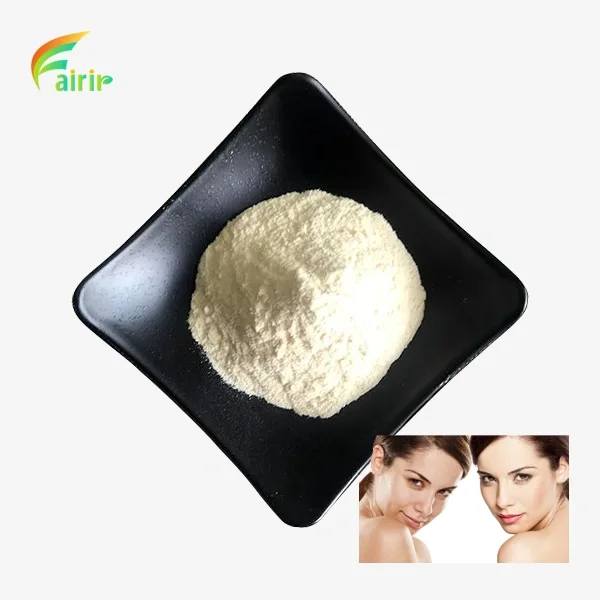
Shaanxi Fairir Biotech Co., Ltd. is a GMP certified company with a 10,000 square meter facility that houses 14 stainless steel extraction tanks ranging from 500 liters to 3,000 liters, three fully automatic production lines and analytical instruments such as one HPLC, UV spectrophotometer and rotary evaporator that can extract up to 98% of the material. 99% Hydrolyzed Pearl Powder is available as a white powder available as white powder. Tested by HPLC, UV and GC. It is packed in vacuum aluminum foil bags or 25 kilogram fiber drums with double layer food grade poly coverings. Typical delivery time is 1–3 business days depending on order requirements.
Product certifications include Non-GMO, Gluten-Free, Allergen-Free, Paraben-Free, No Colors, BSE/TSE Free, satisfying important compliance criteria for entrance to US and European markets. We support private label, OEM in capsule, tablet, softgel, gummy and small-bag forms. Free samples may be offered to eligible B2B buyers doing formulation experiments.


Guaranteeing Product Safety and Customer Confidence
Quality control begins with the raw ingredients. To be a true pearl hydrolysate it must include a certain amino acid profile. For example, significant quantities of aspartic acid and glycine are indicative of a genuine conchiolin source. When you acquire something, you may protect yourself from adulteration by asking your source for a validated amino acid profile.
When you make anything you should consider heat stability. Pearl hydrolysate is suitable for regular emulsification and pasteurization process of beverages, although bioactive peptides can be degraded by high temperature (>80°C) for a long period. It is most effective if applied below 45° during the cooling process. The fragrance is another indication of genuineness. Grade quality should be without odor or have a little marine odor. Incomplete hydrolysis or inadequate purification are indicated by the presence of ammonia or a strong fishy smell.
Third-party testing documents and supplier certificate of analysis (COA) lend transparency that creates trust in the brand with both retail partners and regulatory organizations. In this sense, original Hydrolyzed Pearl Powder is the best in terms of safety.
Conclusion
Hydrolyzed Pearl Powder is not a fashionable ingredient; rather, it is a bioactive substance that has a plausible mechanism of action in skin barrier care. It also has a complex structure and a wide variety of activities. The delivery of soluble amino acids, bioavailable minerals, and barrier-reinforcing peptides all at the same time helps to retain moisture, promotes collagen, helps defend against environmental stress, and brightens the skin. All of these benefits are achieved with a single ingredient. For procurement personnel, research and development teams, and original equipment manufacturers (OEM) product manufacturers in the cosmetics, nutraceuticals, and pharmaceutical industries, this is a formulation investment that offers a high return and is supported by scientific evidence.

FAQDoes the powder made from hydrolyzed pearls work well with all kinds of skin?
Indeed. It is effective for oily skin, dry skin, mixed skin, and sensitive skin due to the presence of peptides in the product. Due to the fact that it lowers inflammation, it is particularly effective on skin that is either vulnerable or has a layer that is not functioning according to its intended purpose. Pearl powder that has been hydrolyzed is hence extremely flexible.
What are its similarities and differences with other collagen-boosting actives?
The hydrolysate that is generated from pearls, on the other hand, executes many functions simultaneously. In addition to delivering antioxidant elements, it also stimulates the creation of collagen and inhibits the activity of tyrosinase. By utilizing hydrolyzed collagen or synthetic peptides on their own, the formulation is more effective than using either of those substances.
What kinds of certificates should purchasers of bulk items check?
The GMP certification, the non-GMO status, the presence of documentation that the product is free of BSE and TSE, the findings of the HPLC/UV test, and a validated amino acid profile should be given the highest attention. These aid with legal applications in the marketplaces of the United States and the European Union, and they ensure that the manufacturing is honest.
What is the appropriate concentration for usage in products that are applied topically?
The concentration of brightening and barrier-repairing products that are left on the skin typically ranges from 0.5 percent to 3 percent. When it comes to treatment serums, higher ranges are the most effective, whereas lower ranges are the most effective for daily moisturizers and toners.
Is this ingredient vegan-certified?
Unfortunately, pearl hydrolysate comes from mollusks, which means it is not vegan. However, if it comes from fishing operations that are environmentally responsible, then it is responsibly sourced.
Partner with Fairir — Your Trusted Hydrolyzed Pearl Powder Supplier
Shaanxi Fairir Biotech Co., Ltd. supplies premium-grade Hydrolyzed Pearl Powder to cosmetic brands, nutraceutical manufacturers, and pharmaceutical companies across North America. Our GMP-certified facility, 98% extraction efficiency, and full OEM/private label capabilities make us a dependable long-term manufacturing partner. Competitive bulk pricing, 1–3 day delivery, and free samples are available now. Reach our technical team directly at sales@fairirbiotech.com to request specifications and pricing today.


References
1. Meng, Q., et al. "Bioactive Peptides from Pearl Hydrolysate and Their Role in Collagen Synthesis." Journal of Cosmetic Dermatology, 2021.
2. Zhao, L., et al. "Solubility and Bioavailability Comparison of Hydrolyzed vs. Micronized Pearl Powder." International Journal of Biological Macromolecules, 2020.
3. Hayashi, T. "Conchiolin Peptides and TGF-β Activation in Dermal Fibroblast Models." Skin Pharmacology and Physiology, 2019.
4. Shim, J. Y., et al. "Trace Mineral Chelates in Pearl-Derived Hydrolysates and SOD Cofactor Activity." Biological Trace Element Research, 2022.
5. Chen, W., & Liu, R. "Comparative Efficacy of Pearl Hydrolysate and Hydrolyzed Collagen in Skin Barrier Models." Journal of Dermatological Science, 2021.
6. Shaanxi Fairir Biotech Co., Ltd. Product Specification Sheet: Hydrolyzed Pearl Powder 99%. Fairir Biotech, 2024.