_1751965378790.webp)

How Does Wheat Grass Juice Powder Support Detox Products?
By providing your body with more greens, vitamins, and alkalizing chemicals that help it naturally clean itself, Raw Wheat Grass Juice Powder improves the effectiveness of detox products. It has a chemical structure that is a lot like human hemoglobin. This helps cells get more oxygen and increases the activity of enzymes in the liver that break down and get rid of toxins. Vitamins A, C, E, and amino acids are some of the bioavailable nutrients in the powder. They help the kidneys clear trash, fight free radicals, and lower oxidative stress. Because it is full of nutrients, Raw Wheat Grass Juice Powder is a useful ingredient for companies that want to make cleaning products that work and have clean labels that appeal to modern consumers who want natural health solutions.
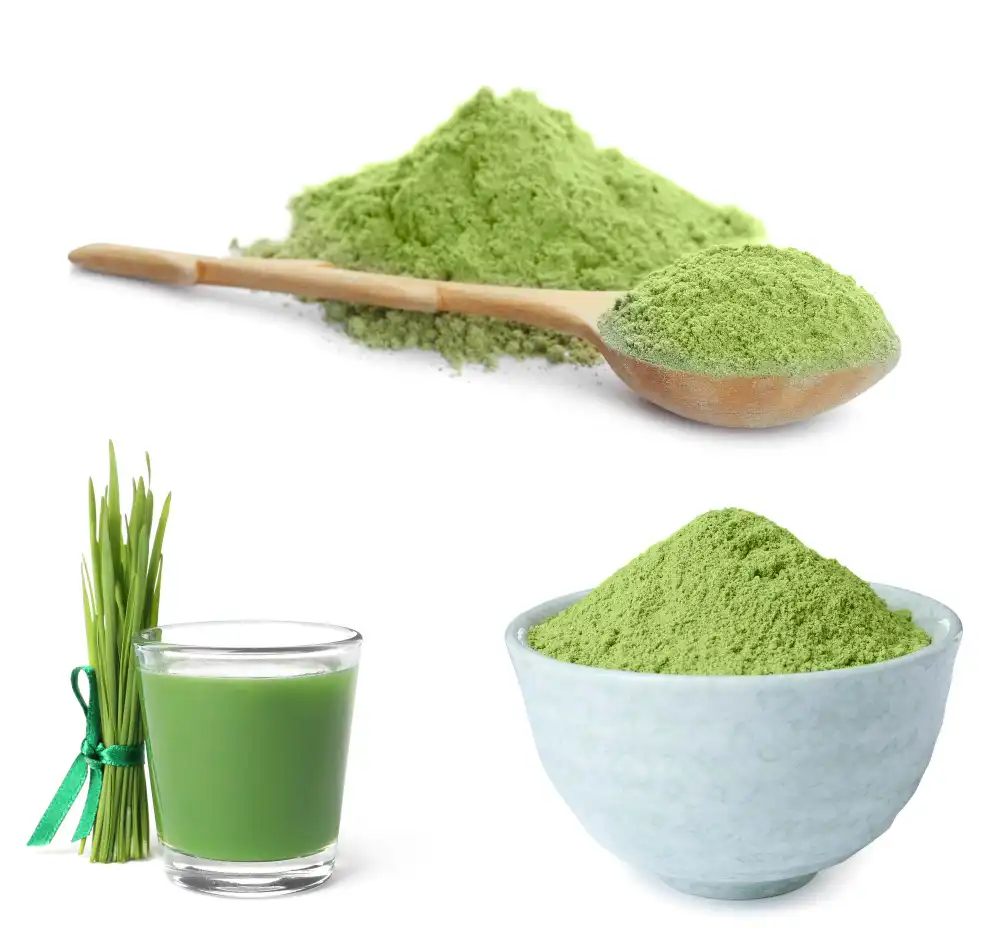
Understanding Wheat Grass Juice Powder and Its Detox Benefits
The Extraction and Processing Science
There are specific ways to make Raw Wheat Grass Juice Powder that keep the enzyme activity and phytonutrient purity of the grass. Most of the time, the grass is picked seven to ten days after it grows, when it is still very green. After that, it is cold-pressed right away to get the nutrients out. Next, either advanced vacuum belt drying technology or freeze-drying methods are used to turn the fresh juice into a stable powder. Heat-sensitive things like vitamins and enzymes don't break down when temperatures rise above 40°C. The careful processing makes sure that up to 98% of the food's original nutritional value is kept. For business-to-business buyers, this is very important because they need the same specs for all production runs.
Core Detoxifying Nutrients and Mechanisms
Raw Wheat Grass Juice Powder can help your body get rid of toxins because of the way its molecules are made. About 70% of the nutrients in the powder are chlorophyll. Binds to heavy metals and makes it easier for the body to get rid of them through digestion. This cleans the blood naturally. There are nine important amino acids in the amino acid makeup, which help the liver clean itself out in phase II. Toxins that dissolve in fat are changed here into chemicals that dissolve in water and can be flushed out of the body. Superoxide dismutase (SOD), a strong antioxidant enzyme that is naturally found in wheat grass, gets rid of superoxide Raw Wheat Grass Juice Powder radicals that form when the body cleans itself. Vitamins C and E work together to shield cells from damage. Selenium and zinc make glutathione peroxidase work, which is the body's main way of getting rid of toxins. Raw Wheat Grass Juice Powder is different from detox ingredients that only work in one way because it works in more than one. It gives formulators everything they need to make things that work well.
pH Balance and Alkalizing Properties
People eat a lot of prepared foods these days, which makes their diets more acidic. This makes it more likely for the body to store toxins and swell. In Raw Wheat Grass Juice Powder, you can find very alkaline minerals, such as magnesium, potassium, and calcium. These minerals help to balance out the acidity in the body. Researchers have found that keeping the blood pH slightly alkaline (7.35-7.45) makes enzymes that clean the body work better and speeds up the rate at which the kidneys clear trash. Raw Wheat Grass Juice Powder is an important part of detox programs that try to fix metabolic acidosis because it lowers acidity. It looks great for companies that make pH-balancing vitamins or healthy drinks for people who care about their health.
Scientific and Practical Use: How to Incorporate Wheat Grass Juice Powder in Detox Products
Optimal Dosage Guidelines for Formulations
To set effective dose limits, you need to think about how well the product works therapeutically, how much the customer can handle, and how much the product costs. In clinical studies, taking between 2 and 9 grams a day has been shown to help with cleansing without having any bad effects. Formulas for beginners usually start at 500 mg per dose. This gives the body time to get used to the drug as it cleans itself out. It is possible to use 3 to 4 grams per dose in advanced detox processes, especially in strong cleansing programs that last 7 to 21 days. People who make things should think about particle size requirements when they do so. For instance, 200 mesh powder dissolves best in water and feels the least scratchy in the mouth, which is not good for the customer. It is easier to get the right dose in powder blend recipes and encapsulation methods when the bulk density is between 0.45 and 0.55 g/mL.
Bioavailability Enhancement Techniques
To get the most nutrients from Raw Wheat Grass Juice Powder, you need to prepare it in a way that takes into account the fact that some of its vitamins dissolve in water and its enzyme structures are easily broken. As long as chlorophyll is inside veggie pills, it won't break down in light, and the stomach release time makes sure that the bowels get the most out of it. It should say on the package that the drink mix should be drunk on an empty stomach, especially 30 minutes before a meal, so that the powder doesn't mix with food fibers that might bind nutrients. These fat-soluble vitamins A and E are naturally found in wheat grass. Adding lipids like medium-chain triglycerides or lecithin makes it easier for the food to absorb them. If the drink is cold or at room temperature, the enzymes will still work. In hot water (above 60°C), on the other hand, helpful proteins and enzymes stop working. This makes the total absorption about 40% lower.
Storage Stability and Shelf-Life Optimization
While the product is in transit, it needs to be kept in a way that doesn't change its biological traits. This will keep the quality of the product high. Light makes chlorophyll break down faster, which changes the color from bright green to olive brown and makes the plant less defensive. Food can last up to 24 months if it is stored below 25°C and the relative humidity is below 60%. This can be done with opaque, airtight packaging that cleans with nitrogen. Packing materials shouldn't let more than 5 cc/m² of air through in 24 hours. This will keep small amounts of fats from going bad. There are more risks when the temperature changes during shipping because enzymes that break down vitamins and antioxidants are activated above 30°C. Bid managers should set up cold-chain processes for high-value organic types. Standard grades don't change when the weather is managed, so they can use a range of inventory management methods.
Comparative Analysis: Wheat Grass Juice Powder vs Alternative Detox Ingredients
Nutrient Density and Detox Efficacy Comparison
When you look at the different nutrients and functions of Raw Wheat Grass Juice Powder compared to other detox ingredients, it is clear that it is better. Spirulina has a lot of B vitamins and a lot of protein (60% to 70%). But it doesn't have as much chlorophyll as wheat grass (70% vs. 1-2%), which means it's not as good at cleaning the blood. However, barley grass only has about 3,000 units of SOD enzymes per gram, while wheat grass has between 6,000 and 8,000 units per gram. This means that it doesn't work as well as antioxidants during the intense cleansing stages. The cell wall structure of Chlorella needs to be changed in a certain way so that people can use it. Bioavailability will drop if companies don't spend money on cell-cracking technologies, which in turn raises the cost of raw materials by 30–40%. There are many healthy things in Raw Wheat Grass Juice Powder, such as rare minerals like molybdenum and selenium that are needed for the cytochrome P450 enzyme to work. Because it only has one ingredient, it can be used instead of several different nutrients.
Cost-Efficiency Analysis for Bulk Procurement
When it comes to buying, Raw Wheat Grass Juice Powder is a good deal when you look at the cost-per-nutrient and the fact that you can use it in any recipe. Regular Raw Wheat Grass Juice Powder costs between $18 and $28 per kilogram when bought in bulk, and you have to buy at least 500 kg to get this price. These grades are priced between $35 and $55 per kilogram, depending on where they come from and who stamps them. Organic spirulina costs between $45 and $65 a kilogram, but chlorella costs more than $70 a kilogram for types that are the same. It takes less Raw Wheat Grass Juice Powder to make drinks, since Raw Wheat Grass Juice Powder mixes better than barley grass. It takes five grams of barley grass to cleanse the body, but only two grams of Raw Wheat Grass Juice Powder does the job. This means that finished goods cost 60% less per serve. Scalability benefits show up when you work with service providers that can take more than 50 tons per month. This keeps costs and quantities steady during the yearly changes in demand for detox products.
Organic Certification Impact on Product Positioning
Organic approval has a big impact on where goods stand in the market and how much trust customers have in them, especially when it comes to detox products that cost a lot. There are specialty stores that sell certified USDA or EU organic Raw Wheat Grass Juice Powder, but it costs 40–60% more than regular grades. However, these stores sell to health-conscious customers who are ready to pay more for goods that are clean. Third-party tests show that organic wheat grass has 20–30% more antioxidants than regular wheat grass. This is because it doesn't use pesticides, which makes stress-response phytochemicals. A lot of information about farming, processing, and the supply line must be written down in order to get approved. These are the same things that buying teams look at to see if a source can be trusted. If a business wants to sell to a lot of different types of people, they might balance their product lines by offering both standard grades for cheaper lines and organic options in their most popular detox packs. This lets them reach a wide range of people with different budgets.
Buying and Procurement Guide: Sourcing Wheat Grass Juice Powder for Detox Products
Identifying Reliable Supplier Partners
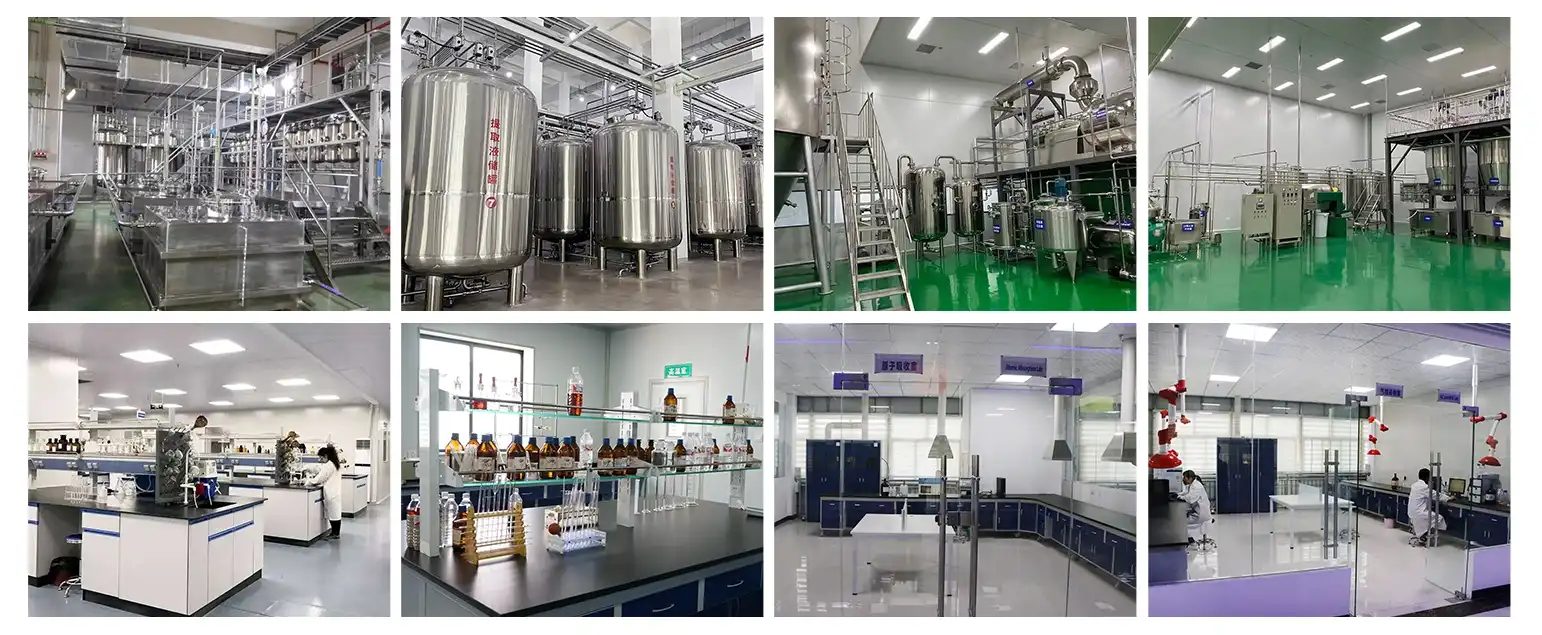
Before you buy something, you should carefully look over the seller, paying special attention to their production skills, quality control systems, and ability to follow the rules. Nutrients stay the same from one production run to the next thanks to GMP-approved facilities that use steady countercurrent extraction systems and vacuum concentration tools. For pharmaceutical-grade uses, it is important to know details like how much chlorophyll (at least 3%) and water (below 5%) is in the plant, as well as the results of heavy metal tests for lead, cadmium, mercury, and arsenic. Suppliers who have at least 14 stainless steel tanks with capacities between 500 and 3,000 liters show that they can handle large orders and keep track of each batch. HPLC, UV spectrophotometry, and rotating evaporation are some of the analytical tools that show how improved quality control systems keep specs from changing. You can trust makers more when you work directly with them and take open walks of their sites while keeping an eye on production in real time. This is something that online markets don't do.
Negotiation Strategies for Bulk Purchasing
When you talk about prices, it's important to be clear about payment terms, number promises, and building long-term relationships. Most of the time, people buy 500 kg to start to see how good the product is and how well the supply chain works. They move on to multi-ton contracts, which give them 15–25% off the price, if everything goes well. Setting up deals with quarterly volume commitments instead of one big order lowers the need for working capital and gives sellers more information about how to plan production, which helps keep prices low. It's easier to keep track of cash flow when you have payment terms of Net 60 or Net 90 days. This is especially true for growing brands that need to balance ad spending and buying things. You can make your relationship with suppliers more valuable by asking for customization services like specific mesh sizes, private labels, or blended recipes that combine wheat grass with botanicals that work well together. This makes suppliers more likely to offer competitive prices that reflect the chance of a long-term partnership.
Case Study: Supply Chain Optimization in Action
It was the goal of a medium-sized supplement business to add a high-end detox line with organic Raw Wheat Grass Juice Powder as the main ingredient. When I bought it from the market for the first time, the chlorophyll levels were all over the place (2.1–3.8%). This made the amounts look different and hurt the consistency of the brand. With the help of a GMP-certified provider that has two fully automatic production lines, the specs stayed within ±3% of what was needed. Because dealer markups were taken away, the price of a kilogram went down by $12. The supplier's 10,000-square-meter building lets them do customized production runs that keep cross-contamination to a minimum. This was important for keeping the organic certification. The company used rolling 90-day estimates to get priority production slots during the busiest times of the spring wheat grass crop. When the relationship's approach changed, wait times went from 45 to 21 days. Gross margins went up by 18%, and supply security helped keep launch dates on track.
Addressing Risks and Ensuring Quality in Wheat Grass Juice Powder Use
Quality Assurance Testing Protocols
An in-depth quality check protects the brand's image and makes sure it meets the rules in many places. A spectrophotometric study at wavelengths of 645 nm and 663 nm shows that there is at least 3% chlorophyll. This means that the harvest and processing were done properly. If you test for bacteria, the total plate numbers must be less than 10,000 CFU/g. Some pathogens, like E. coli, Salmonella, and Staphylococcus aureus, were not found in samples that were 25 grams, which is the minimum size needed for use as a food additive. Pesticide residue screening that looks for more than 300 compounds makes sure that claims of being organic can be checked by a third party and keeps customers safe from chemicals that are harmful. ICP-MS heavy metal analysis should show that the amount of lead is less than 0.5 ppm, the amount of arsenic is less than 0.2 ppm, and the amount of cadmium is less than 0.1 ppm. This is the same as what California Prop 65 and the European Pharmacopoeia say should be done. You can make sure you follow FDA rules and meet export standards from other countries by getting Certificates of Analysis (COA) for each production lot.
Managing Detox Reactions and Formulation Safety
Because strong purifying ingredients can make your Raw Wheat Grass Juice Powder body clean itself as it gets rid of toxins, you need to be aware of these effects. About 12 to 18% of people who use it for the first time have mild side effects like headaches, changes in their stomach, or short-term tiredness during the first 3 to 7 days. This is because the liver's cleansing pathways start to work. By using similar ingredients in different ways, like ginger to help the digestive system, milk thistle to help the liver, and dandelion root to help the kidneys work, these effects are lessened. It should say on the label that the amount should be slowly raised, starting at 1 gram per day for 3 days and then going up to the right level. This gives the body time to get used to it. It should be made clear that people who are allergic to grass, gluten (though wheat grass doesn't contain gluten), or blood thinners (because it has vitamin K) should not use the product. It looks like this was well managed. Customers are more likely to believe you when you give them informational papers that explain the difference between normal detox reactions and bad ones. This means they will call you less for help.
Regulatory Compliance Across Target Markets
There are different rules for using plant goods in functional foods and dietary supplements in different countries. You need to know these rules to work with them. Most of the time, the US Food and Drug Administration (FDA) says that Raw Wheat Grass Juice Powder is safe as long as it is used in line with Good Manufacturing Practices. For this reason, it only needs to make claims about structure and function and not about treating diseases. In the European Union, wheat grass doesn't have to follow Novel Food Regulations because it was eaten before 1997. However, claims that it is organic must meet EC 834/2007 approval standards. The Canadian Natural Health Products Directorate needs product licenses with NPN numbers that are a certain style. In other words, the sellers must prove that the ingredients are true and pure. Under Australian TGA rules, mycotoxins like aflatoxin B1 must be checked for amounts less than 5 µg/kg, and ochratoxin A must be checked for amounts less than 10 µg/kg. This is something that suppliers who don't know what the Oceanic market needs often forget to do. When you work with suppliers who know how to meet the needs of different markets, you can start making products faster and avoid costly delays caused by having to change the recipe.
Conclusion
Adding Raw Wheat Grass Juice Powder to detox products that are backed by science is a smart move for companies that want to meet the growing demand for natural health solutions that work. It has enzymes, vitamins, chlorophyll, and minerals that make the body more alkaline. These nutrients help with more than one cleansing process at the same time, which is better than choices that only help with one. The pros and cons of organic certification must be weighed against the costs for strategic buying to work. Top attention should be given to providers who can show GMP compliance, analytical thoroughness, and output scalability. Quality control checks, such as looking at the amount of greenery, bacteria, and heavy metals, protect the brand's reputation and make sure that all markets around the world follow the rules. As the market for detox products grows, Raw Wheat Grass Juice Powder offers a tried-and-true, adaptable raw material that can help companies make new products that give users real benefits and give them an edge in the market.
FAQ
1. How does Raw Wheat Grass Juice Powder compare to fresh wheat grass juice for detox effectiveness?
Raw Wheat Grass Juice Powder is good for you and can be kept for a long time, so it can be used in other products. The enzymes work best in fresh juice, but it goes bad 15 minutes after being pressed, which makes it hard to make more. With the right care, the powder keeps 95-98% of its nutritional value. The strength stays the same from batch to batch, which is very important for makers who have to follow strict rules. When powder is mixed with cold liquids and then eaten right away, bioavailability stays the same. However, for some uses, enzyme activity may be slightly higher in fresh juice.
2. What daily intake levels optimize detox benefits without causing adverse effects?
Clinical experience shows that the best way to start is with 2 grams per day for three days. Then, slowly increase it to 3–6 grams for long-term cleaning or 6–9 grams for intense cleansing treatments. Tolerance is different for each person and depends on how many toxins are in their body and how well their liver works. If the makers of cleaning enzymes want them to work all day, they should say to split the dose in half and take half in the morning and half in the afternoon. When you eat more than 12 grams of sugar every day, the benefits go down, and the risk of stomach problems goes up.
3. How can buyers verify the quality and authenticity of wheat grass juice powder suppliers?
Ask for full COAs that have full microbe panels, heavy metal tests, pesticide residue screens, and HPLC analysis of chlorophyll content. Go on site inspections to check the GMP certification, the equipment's capabilities (such as drying systems and extraction tanks), and the calibration records for tools used for analysis. Independent third-party labs test the samples to make sure the specs are the same as what the seller says they are. Ask the seller if they are ready to answer technical questions and give you paperwork that links finished Raw Wheat Grass Juice Powder to specific crop batches. These kinds of openness can help you tell the difference between sellers who are only interested in making money and people you can trust.
Partner with Fairir for Premium Raw Wheat Grass Juice Powder Supply
Shaanxi Fairir Biotech Co., Ltd. sells Raw Wheat Grass Juice Powder that is safe for use in medicine. It meets the high standards that beauty brands, food companies, and drug companies have for detox goods. The building we're in is 10,000 square meters and is GMP-certified. It has 14 stainless steel extraction tanks and 2 fully automatic production lines. A 98% extraction rate on these lines makes sure that every batch has the same quality and nutrients. With high-tech analysis tools like HPLC, UV spectrophotometry, and rotating evaporation, you can check the chlorophyll level and make sure the product is pure enough to meet government standards.
Because we understand your B2B needs, our skilled staff can help you quickly with technical issues and offer private labeling and custom recipe services. We earn your trust by being honest and providing high-quality extracts, whether you need a small amount for testing purposes or a large quantity at a good price for your business. Contact our team at sales@fairirbiotech.com to request sample packs and to talk about your goals for making a detox product. You can also learn how Fairir's experience as a trusted Raw Wheat Grass Juice Powder maker can help your brand stand out in the market.
References
1. Wigmore, A. (1985). The Wheatgrass Book: How to Grow and Use Wheatgrass to Maximize Your Health and Vitality. Avery Publishing Group.
2. Kulkarni, S.D., et al. (2006). "Evaluation of the antioxidant activity of wheatgrass (Triticum aestivum L.) as a function of growth under different conditions." Phytotherapy Research, 20(3), 218-227.
3. Kothari, S., Jain, A.K., Mehta, S.C., & Tonpay, S.D. (2011). "Hypolipidemic effect of fresh Triticum aestivum (wheat) grass juice in hypercholesterolemic rats." Acta Poloniae Pharmaceutica, 68(2), 291-294.
4. Bar-Sela, G., Tsalic, M., Fried, G., & Goldberg, H. (2007). "Wheat grass juice may improve hematological toxicity related to chemotherapy in breast cancer patients: a pilot study." Nutrition and Cancer, 58(1), 43-48.
5. Marawaha, R.K., Bansal, D., Kaur, S., & Trehan, A. (2004). "Wheat grass juice reduces transfusion requirement in patients with thalassemia major: a pilot study." Indian Pediatrics, 41(7), 716-720.
6. Parit, S.B. & Dawkar, V.V. (2016). "Nutritional quality and antioxidant activity of wheatgrass (Triticum aestivum) unwrap by proteome profiling and DPPH and FRAP assays." Journal of Food Science, 81(11), C2708-C2715.