_1751965378790.webp)

How Is Ube Powder Applied in Modern Confectionery Manufacturing?
Ube Powder has become an important ingredient in modern candy making because it can be used in many different ways and looks good. This colorful powder comes from the purple yam (Dioscorea alata) and has a naturally purple color and a slightly sweet and nutty taste. It is used in many steps of the production process, from making the dough and batter to adding fillings, frostings, and sauces. This makes the goods stand out in competitive markets. It is easier to use than fresh ube or paste formulations, and it stays the same color over time. Its clean-label appeal makes it an important ingredient for brands that want to appeal to health-conscious customers who want natural options to artificial flavorings and colors.
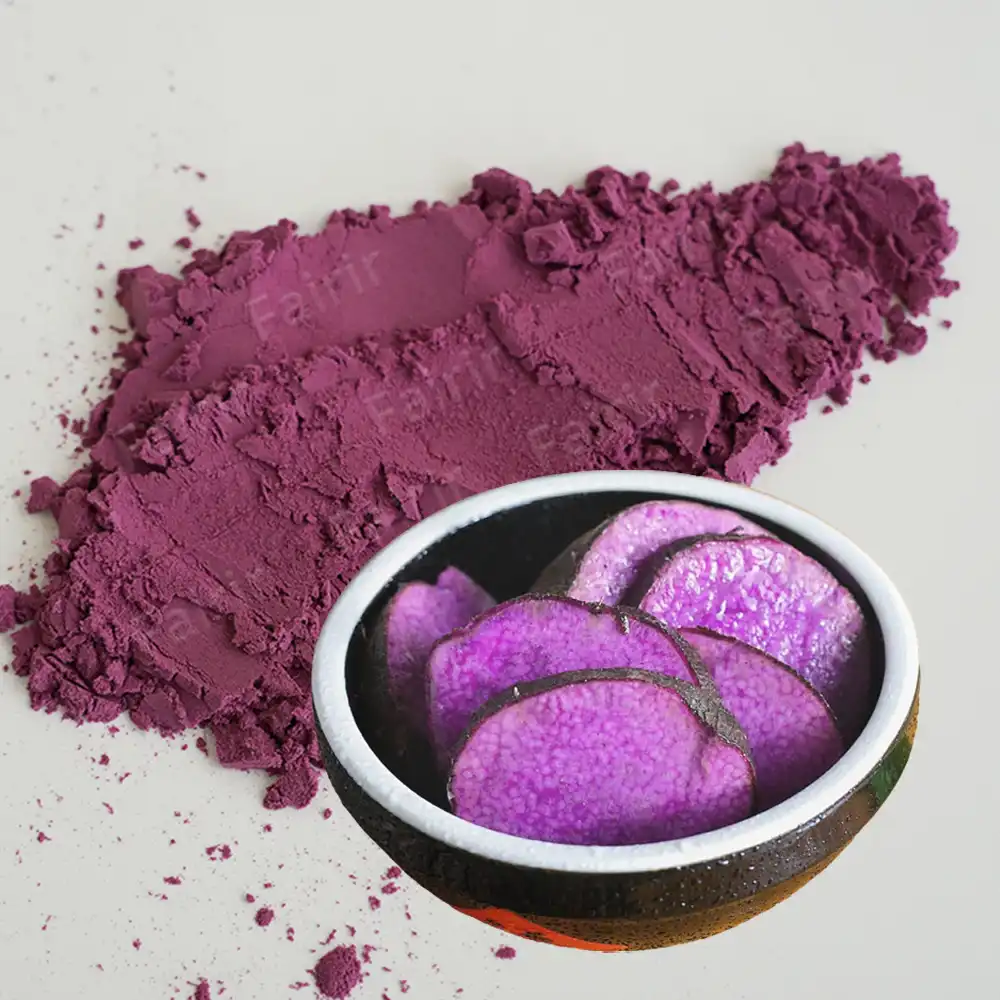
Understanding Ube Powder in Confectionery Manufacturing
Production Methods and Quality Distinctions
To make good Ube Powder, you have to carefully choose the raw materials, then wash, peel, slice, and dry them using advanced methods. Spray drying and freeze-drying are the two main ways that industrial output is done. Spray drying is cost-effective and can be scaled up, so it can be used for large-scale manufacturing. It takes more money to do freeze-drying, but it keeps more volatile taste molecules and nutrient components. During strict quality control processes, HPLC and UV spectrophotometry are used to check the moisture content, particle size distribution, and bacteria load, among other quality factors.
A lot of what consumers think and how the market is positioned is affected by organic classification. Certified organic varieties cost more, but makers are making clean-label goods like them. Processing methods change both the strength of the taste and the stability of the color. Manufacturers need to check with their suppliers to see if the way they make things fits with the needs of their applications and the standards of their target market.
Storage Requirements and Shelf Life Management
How this plant ingredient is stored has a direct effect on how long it works. The best conditions are cool, dry places where the temperature stays below 25°C, and the relative humidity stays below 60%. Both color pigments and taste molecules break down faster when they are exposed to light, heat, and water. Putting food in closed cases with desiccants can make it last longer on the shelf, which can be anywhere from 18 to 24 months in the right conditions.
To keep quality from going down, manufacturing sites need to use first-in, first-out inventory rotation methods. Consistency in production results is ensured by checking stored batches on a regular basis. Recording the conditions of keeping helps meet the tracking needs that are being pushed for by regulations and quality control standards in the food, medicine, and nutraceutical industries.
Nutritional Profile and Functional Benefits
In addition to its visual effects, this ingredient has important health benefits. Its purple color comes from strong antioxidants called anthocyanins. Anthocyanins also have health-promoting qualities that appeal to people who care about their well-being. Fiber, vitamins C and A, potassium, and iron are all naturally found in food. Its gluten-free status eases worries about allergens, which means it could be used in more product lines.
Another useful benefit is that it improves the texture. When added to cooked goods, the powder helps keep the wetness in, which keeps the food fresh longer. Its mild taste goes well with other ingredients instead of overpowering them, which gives formulators more freedom to be creative. All of these things make it a good choice for new products because they help companies set their products apart and meet customers' growing demands for natural, useful ingredients that come from clear sources.
Application Methods of Ube Powder in Modern Confectionery
Incorporation into Baked Goods and Manufacturing Efficiencies
There are a few useful ways that bakeries and candy makers can use Ube Powder. When making dough, the powder is used instead of some of the flour—usually between 5 and 15 percent by weight, based on how much color and flavor you want. Because the powder absorbs water differently from wheat flour, the hydration rates need to be changed slightly for this replacement. Manufacturers say that mixing the powder with dry ingredients ahead of time makes sure that the colors are spread out evenly and stops the powder from sticking during the mixing process.
Compared to paste formulas, powdered options last longer on the shelf and are easier to keep track of. Paste goods need to be kept cool and can only be used for a short time, which makes handling more difficult in high-volume production settings. Extracts have a stronger taste, but they don't have the same visual or physical effects as powders. When powder is used in manufacturing, preparation time is cut down, machinery cleanup time is cut down, and results are uniform from batch to batch.
The ingredient's flexibility is shown by its use in frosting and filling. Adding the powder to buttercream, cream cheese frostings, or custard sauces makes layers in cakes and desserts that look beautiful. The powder dissolves easily in liquids, but makers should slowly add water to it to keep it from lumping and make sure the end product has a smooth consistency.
Diverse Product Applications Beyond Baking
This plant-based food can be used in a lot of different ways, not just baked goods. Manufacturers of ice cream add it straight to base mixes before churning, which gives the finished product a unique color and taste. The powder stays stable through freezing and melting, which makes it perfect for use in frozen desserts where other natural colorants might break down or separate.
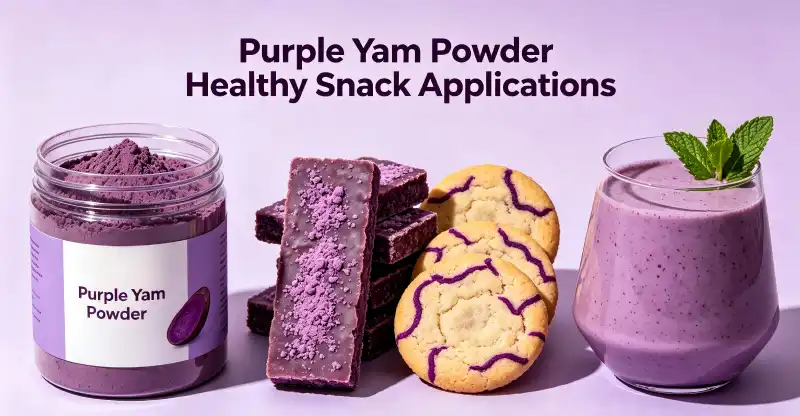
Chocolate candies are another area that is growing in use. Craft chocolatiers mix the powder into white chocolate ganaches to make truffles and bonbons that are purple. Its natural sweetness goes well with the cocoa butter, so you don't need to add any extra sugar. The use of purple yams in drinks has grown a lot. Now, companies are making lattes, shakes, and even alcoholic drinks with this element.
New snack products have jumped on this trend with both feet. Companies that make cookies, crackers, and molded snacks with a purple yam taste are trying to attract customers who like trying new flavors. A well-known American candy company just released a limited-edition line of purple yam macarons, which sold out in just a few weeks. This shows that people really like goods that use this ingredient.
Quality Control and Production Consistency Challenges
To keep the spread of flavors and colors regular at a large scale, there are technical problems that need to be solved in a planned way. Different sources of raw materials can cause color changes between batches, which can affect how consistent the product is. Manufacturers deal with this by inspecting arriving materials very carefully, which includes colorimetric analysis using standard measurement methods.
Production problems are often caused by mixing or hydrating methods that aren't good enough. Some of the best ways to do things are to mix dry ingredients for longer periods of time, add liquid ingredients in stages, and keep the temperature stable while the food is being processed. Some makers use inline color tracking systems that give feedback in real time, so changes can be made right away to keep up with specifications.
Standardization procedures made by R&D teams and quality assurance groups working together are very important. Results can be repeated when steps like mixing orders, temperatures, holding times, and ingredient amounts are written down and followed. Calibration of analysis tools like HPLC systems, UV spectrophotometers, and rotary evaporators is necessary to make sure that measurements are correct. With these quality control measures, companies can always make sure that the candy they sell is of the highest quality and meets both government standards and customer expectations.
Procurement Considerations for Ube Powder in the B2B Market
Organic Versus Conventional Sourcing Impact
When procurement pros have to choose between organic and conventional buying choices, they have to make strategic decisions. Due to the higher costs of licensing, lower crop yields, and special handling needs, organic versions usually cost 30% to 50% more. This difference in price affects how the product is positioned and which target market is chosen. Premium brands that cater to health-conscious consumers can often explain the higher cost of their ingredients by improving how people feel about the brand and getting people to be ready to pay higher retail prices.
Conventional buying saves money, which is good for mass-market goods where price competition decides market share. When you buy from reputable makers, quality standards stay high in both areas. In the end, the choice will rest on the values of the business, the types of people who are likely to buy it, and how competitive the company is in certain market groups.
Criteria for Identifying Trusted Manufacturers
To choose trusted providers, you need to look at them from a lot of different angles. GMP approval is a basic condition that ensures quality standards are met throughout the production process. Manufacturers should make sure that their providers keep their certifications up to date and have regular checks by a third party. A production capacity estimate helps make sure that providers can increase their output to meet rising demand without lowering the quality of their products or delaying deliveries.
Analytical skills set better makers apart. Facilities that have HPLC, UV spectrophotometry, and other testing tools show that they are dedicated to quality control. Providers should give full certificates of analysis that show microbial tests, heavy metal screening, chemical residue analysis, and meeting specifications. Communication response and technical help skills are very important during the formulation, creation, and fixing stages.
Supply Chain Logistics and Continuity Planning
Supply chain issues have a big effect on the stability of operations. Manufacturers should look at provider wait times, which can be anywhere from two to six weeks based on the number of orders and the places where the goods are going. When cost-cutting is more important than speed, sea freight is the best way to ship big amounts. Air freight is best for urgent orders or smaller amounts that need to be delivered quickly.
Controlling the temperature during shipping keeps the quality from getting worse. This item doesn't need to be frozen, but keeping it away from high temperatures for a long time keeps the color and taste stable. Some sellers offer cold chain services for high-end goods, but it costs more to ship these items. Having ties with several qualified suppliers lowers the chance that your supply will be cut off because of problems with output, natural disasters, or political issues in certain areas. Strategic inventory management that weighs the costs of keeping items in stock against the risk of running out of stock keeps production lines running smoothly and in sync with demand.
Comparison of Ube Powder with Alternative Ingredients
Distinct Properties and Manufacturing Implications
Knowing the differences between Ube Powder, taro powder, and different types of extract helps you choose the best ingredients. Ube Powder has a stronger color and stays stable longer on the shelf than pastes, which need to be kept cold and only last for a short time. Extracts have a strong taste, but they don't have the same visual or tactile effects as powders.
Taro powder, which is sometimes mistaken for ube alternatives, has a lighter purple color and a taste that is more earthy and less sweet. If a company wants to make realistic flavor profiles, they should use real ube-derived goods instead of fake ones. Testing the stability of flavors under different processing conditions, such as baking temperatures, pH levels, and freezing cycles, shows that different options work differently.
Cost-effectiveness studies need to look at how often something is used and what other functions it serves besides just taste. Powders may seem more expensive per kilogram than some other options, but their total cost of ownership is often cheaper because they are used less often and don't require as much work to prepare. Standardized powder ingredients are good for large-scale processes because they are consistent and easy to handle.
Consumer Trends Influencing Ingredient Choices
More and more, people want pure and natural ingredients over fake ones. This is changing how the confectionery industry buys ingredients. Market study shows that 68% of people in the U.S. actively look for goods that have natural chemicals that they can recognize. Because of this trend, companies are turning to plant powders and extracts that back up claims of clean labels.
Labeling and following the rules are different in each foreign market. In many places, there are fewer rules about natural colorants that come from plants than about manufactured ones. Products sold in European Union countries look better to customers when they use natural colorants instead of fake ones. This affects the choice of ingredients for companies that want to sell their goods.
People who are looking for new flavor experiences are interested in marketing strategies that highlight the ingredient's foreign roots and health benefits. When purple-colored goods are shared on social media, they create natural advertising opportunities because visually appealing items get more engagement. Because of these things, producers are more likely to choose ingredients that are in line with their company ideals, which often focus on health, sustainability, and authenticity.
Future Trends and Innovations in Ube Powder Applications
Processing Technology Advancements
New advances in the technologies used for extraction and drying promise better shelf stability and the protection of nutrients. Microencapsulation methods keep sensitive anthocyanin compounds from breaking down due to oxygen. This makes the color last longer in tough situations like baking at high temperatures or using acidic ingredients. These new technologies make it possible for companies to make goods that weren't possible before because of technical issues.
Ultrafine milling technologies make particles that disperse better, which gets rid of gritty properties in smooth uses like chocolate ganaches and drink mixes. Processing changes that make nutritional components more bioavailable open up new ways to market functional candies with verified health claims, as long as regulators agree.
Plant-Based and Health-Oriented Product Innovation
Trends in plant-based foods and useful foods come together to make a great environment for new flavor ideas. Manufacturers make vegan candies with this organic ingredient and other plant-based ingredients to appeal to the growing number of people who want to treat themselves without using animals. People who are watching their calorie intake but don't want to give up flavor will like reduced-sugar recipes that use the natural sweetness of Ube Powder.
Adding the powder to protein-rich snack bars shows how traditional products can be changed to fit modern nutritional needs. For example, the ingredient can be used in ready-to-drink smoothies and wellness drinks, which take it out of the standard candy market and into the health and wellness market.
Global Market Expansion and Strategic Opportunities
Regional trends of demand show that there is a lot of room for growth. Asian-inspired tastes are well-received by consumers in North America, as shown by the fact that purple yam goods are growing at double-digit rates every year. European markets are becoming more interested, but consumers still need to be educated to the same degree as with well-known, unusual products.
When manufacturers engage in improving the supply chain and educating customers, they set themselves up in a way that makes it easier for the market to grow. Strategic relationships between companies that supply ingredients and companies that make finished goods speed up the time it takes to make new products and get into new markets. The ingredient can be used in a wide range of products, from high-end artisanal sweets to mass-market snacks. This supports a variety of business models and growth strategies in the fast-paced global candy industry.
Conclusion
In conclusion, these bright plant ingredients are used in modern candy making, which is both an improvement in the way things look and how they work. Its natural coloring qualities, nutritional profile, and ability to be processed in a variety of ways meet changing customer tastes while giving manufacturers chances to stand out from the competition. For execution to go well, suppliers must be carefully chosen, quality control methods must be strong, and the technology must be carefully integrated into product formulations. As processing technologies improve and consumer knowledge rises, the ingredient's part in new candy designs is likely to grow. This will open up creative options for companies that want to make natural, health-focused products that meet the needs of today's consumers.
FAQ
1. Is Ube Powder Suitable for Gluten-Free Product Formulations?
Because Ube Powder doesn't contain gluten naturally, it can be used in gluten-free sweets. Manufacturers have to make sure that sellers follow strict rules to keep products from getting contaminated while they are being processed and packed. Certification paperwork that proves a product is gluten-free helps businesses follow the rules and builds trust with customers.
2. What Storage Protocols Best Preserve Product Quality?
For the best keeping, the temperature should be below 25°C and the humidity should be below 60%. Desiccants in sealed packages stop wetness from absorbing. Manufacturers should use product movement systems and do quality checks on a regular basis to make sure that specifications are met throughout the ingredient's shelf life.
3. How Does Powder Compare to Extract in Baking Applications?
Powder forms have a visual effect thanks to their bright colors, and they also add a subtle taste and texture. Extracts give foods a strong taste without adding color or other useful qualities. Your choice will rely on the needs of the product. Powder has more benefits for most candy users who want to stand out in terms of both taste and appearance.
Partner with Fairir for Premium Ube Powder Supply Solutions
We at Shaanxi Fairir Biotech Co., Ltd. know how important it is to use reliable, high-quality plant ingredients when making sweets. Our 10,000-square-meter building is GMP-certified and has cutting-edge tools for extraction and processing, such as continuous countercurrent extraction systems, double-effect concentration units, and vacuum belt drying technology. We can meet tight production plans because we have 14 stainless steel extraction tanks with capacities between 500 and 3,000 liters and three fully automatic production lines that can reach up to 98% efficiency.
To make sure that every batch meets our strict standards, our quality assurance procedures use HPLC, UV spectrophotometry, and full laboratory testing. Our expert team is here to help you with any part of the buying process, whether you need organic certification, special formulations, or private labeling services.
We invite pharmaceutical companies, nutraceutical companies, cosmetic brands, food processors, wholesalers, and research and development institutions to learn more about how we can make Ube Powder and how our affordable price is set up to encourage long-term relationships. Email our sales team at sales@fairirbiotech.com to get samples, talk about your special needs, or find out how Fairir can become your reliable source for high-quality plant extracts that help you come up with new products and make money in the market.
References
1. Cruz, R.G., & Vieira, M.C. (2021). "Natural Colorants in Food Applications: Stability and Processing Considerations." Journal of Food Science and Technology, 58(4), 1245-1258.
2. Johnson, P.R., Martinez, L.A., & Thompson, K.D. (2022). "Purple Yam (Dioscorea alata): Nutritional Composition, Bioactive Compounds, and Food Industry Applications." Critical Reviews in Food Science and Nutrition, 62(11), 3078-3095.
3. Wong, S.H., & Chen, Y.L. (2020). "Anthocyanin Stability in Bakery Products: Effects of Processing Conditions and Storage." Food Chemistry, 315, 126289.
4. Anderson, T.M., Roberts, J.K., & Williams, D.S. (2023). "Clean Label Trends in Confectionery Manufacturing: Consumer Preferences and Industry Responses." International Journal of Food Industries, 9(2), 145-162.
5. Patel, N.V., & Kumar, S.R. (2021). "Spray Drying Versus Freeze Drying of Plant Extracts: Comparative Analysis of Quality Parameters and Cost Efficiency." Drying Technology, 39(7), 892-906.
6. Garcia, M.E., Liu, X.F., & Nakamura, H. (2022). "Emerging Applications of Tropical Root Vegetables in Western Confectionery Markets: Market Analysis and Consumer Acceptance Studies." Food Research International, 156, 111178.