_1751965378790.webp)

How Stable Is Purple Yam Ube Powder in Food Processing?
When kept and treated correctly, Purple Yam Ube Powder is very stable in food preparation environments. It keeps its bright color, nutritional profile, and useful properties throughout most manufacturing processes. Managing moisture, controlling temperature, pH levels, light exposure, and the quality of the packing are all things that affect how stable the powder is. In contrast to fresh purple yams, which go bad quickly because it has a lot of water and enzymes that turn them brown, the dried powder form can last up to 24 months in the best circumstances. Fairir's experience shows that Purple Yam Ube Powder that is properly made keeps more than 90% of its anthocyanin pigments and taste compounds when kept away from too much heat and moisture. This makes it a safe ingredient for use in food, cosmetics and nutraceuticals.
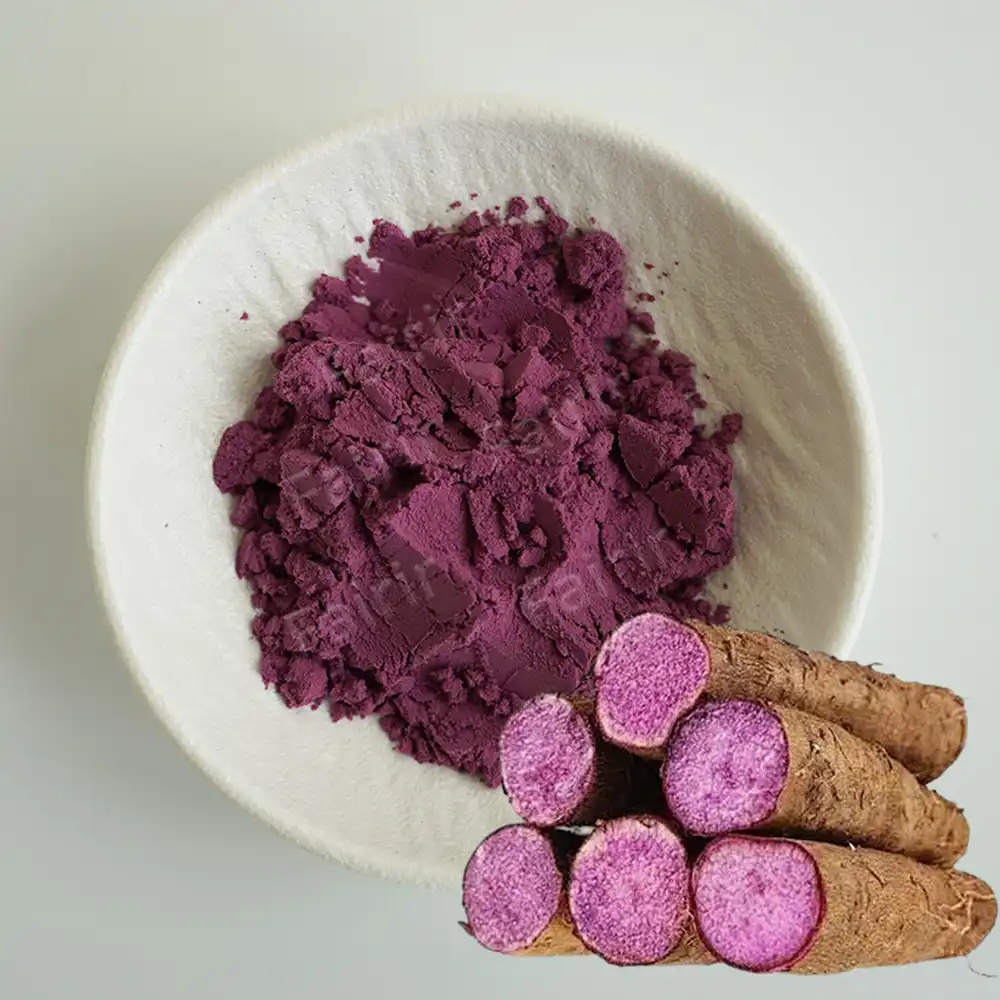
Understanding the Stability Challenges of Purple Yam Ube Powder
Chemical Stability Parameters
The chemical safety of Purple Yam Ube Powder depends on keeping its bioactive molecules, especially the anthocyanins that give it its purple color. These colors dissolve in water and are sensitive to changes in pH. They are most stable between pH 3.0 and 4.0. When anthocyanins are introduced to alkaline conditions above pH 7.0, they break down quickly, changing the color from purple to blue or green, which is not desired. Another problem is oxidation, which happens when polyphenolic chemicals come into contact with air during storage. This makes the color fade, and nutrients disappear. Temperature is also very important; temperatures above 25°C speed up the processes that break things down. Our GMP-certified center at Fairir takes care of these issues by using controlled processing conditions that lower oxidative stress and keep the integrity of the compounds.
Microbiological Safety Standards
Microbiological stability makes sure that the Purple Yam Ube Powder doesn't get any harmful bacteria, yeasts, molds, or mycotoxins while it's in storage. Microorganisms are usually present in raw purple yams and must be removed during cooking. Controlled drying temperatures are part of our production process. These temperatures kill microbes without lowering the nutritional value. As part of regular tests, the total number of plates, the number of yeast and mold, and the lack of Salmonella, E. Staphylococcus aureus, and E. coli. The low water activity (aw < 0.6) in properly prepared Purple Yam Ube Powder stops the growth of microbes. To make sure our product fits foreign safety standards like FDA, HACCP, and ISO22000, we do stability studies every three months that track microbial communities under accelerated storage settings. This strict method gives companies that make medicines Purple Yam Ube Powder and supplements the confidence they need to follow the rules set by regulators.
Comparative Analysis: Powdered Ube vs Fresh Purple Yam Stability
Shelf Life and Storage Requirements
When stored in the fridge, fresh purple yams can only last 7–14 days before it turns brown and loses its wetness. This makes it very hard to move around. Between 70 and 80% of the product is water, which makes it perfect for microbes and enzymes to grow and break down the quality. Logistics that control temperatures are needed for transportation, which raises costs and leaves a bigger carbon footprint. Dehydrated Purple Yam Ube Powder, on the other hand, can be kept for 18 to 24 months in sealed cases below 25°C. This extended steadiness gets rid of seasonal limitations, so food makers can plan their production schedules all year long. The Purple Yam Ube Powder form cuts down on storage volume by about 85%, making the best use of building room. When people buy in bulk, there are fewer stresses to sell their items quickly and fewer losses due to spoilage. Our vacuum wrapping protects even more during foreign shipping, keeping the integrity of the product even during the long transit times that are usual in global supply chains.
Functional Performance in Applications
In industrial settings, fresh and Purple Yam Ube Powder have very different functional qualities. Washing, cleaning, cooking, and mashing fresh yams are all steps that need to be taken, which adds to the time and cost of processing. Changing the amount of wetness in the food affects how the recipe is made, so changes need to be made for each batch. When mixed with water, the Purple Yam Ube Powder form melts easily and evenly distributes color in drinks, ice cream bases, and batters. Our tests show that 1 kilogram of Purple Yam Ube Powder (at 99% standard) has about the same taste and color as 8–10 kilograms of fresh yams, which is a big savings in terms of money. The low moisture level of the Purple Yam Ube Powder doesn't affect the development of gluten or the hydration ratios of the batter in baking, unlike fresh purees that need recipe adjustments. For candy makers making ube-flavored chocolates or hard sweets, the Purple Yam Ube Powder form is the only way to get the concentrated flavor and control of moisture that is needed for a successful product.
Enhancing Stability: Best Practices and Processing Techniques
Selecting Certified Suppliers
Procurement decisions have a big effect on how stable things are further down the line. When you buy from approved organic sellers, you can track the food from the farm to the plant, which lowers the risk of pollution from heavy metals and pesticide residues. Certifications like USDA Organic, EU Organic, and EcoCert back up the standards and methods used in farming and processing. Fairir's seller qualification program rates growers based on the results of soil tests, how they grow their crops, and how they handle them after the harvest. We prefer to work with farms that follow Good Agricultural Practices (GAP), which keep microbes from getting into the food during harvest. By asking for Certificates of Analysis (COA) for each batch, specs can be checked before they are put into production. Food safety rules should be followed by suppliers, and allergy statements should be included. For example, our Purple Yam Ube Powder is gluten-free, non-GMO, and free from major allergens. Doing this saves the image of your business and speeds up the approval Purple Yam Ube Powder process for entering new markets.
Advanced Packaging Solutions
The last line of defense against Purple Yam Ube Powder stable loss during storage and distribution is packaging technology. Vacuum packing gets rid of the oxygen in the air that speeds up oxidative breakdown, which keeps colors brighter and antioxidants working longer. Vacuum-sealed aluminum foil bags are used for all of our regular packing. These bags are very good at blocking light and moisture vapor transfer. The inside of the double-layer food-grade poly bag keeps metal from touching directly and makes it harder to break. When you order in bulk in 25 kg fiber drums, we include desiccant packets that keep the air dry. Customers who need resealable packages can use Modified Atmosphere Packaging (MAP) with nitrogen washing instead of oxygen. This method replaces oxygen with an inert gas. For better UV protection and proof that the containers have not been tampered with, pharmaceutical and nutritional clients often ask for amber containers with induction covers. We change the way the packages are put together to fit your unique lines of distribution, whether that's bulk orders directly to the maker or breaking them up into smaller retail packages to support private label programs.
Market Insights: Choosing the Right Purple Yam Ube Powder for Your Business
Evaluating Quality Certifications
There is a lot of quality difference in the Purple Yam Ube Powder market, which is why evaluating certification is so important for buying choices. Premium sellers have a lot of third-party certificates that show they are committed to quality systems. The ISO22000 certification checks that food safety management is combined and covers the whole supply chain. The HACCP certification makes sure that hazard analysis methods are followed at key control points during the production process. Kosher and Halal licenses make it easier for goods that are aimed at certain groups of people to reach new customers. The Global Food Safety Initiative recognizes FSSC22000 certification as a strict standard that combines ISO22000 with other technical requirements. Our plant keeps this certification. cGMP stands for "current Good Manufacturing Practices," which means that the quality controls are pharmaceutical-grade. This is important for nutritional uses that need consistent purity and effectiveness. Non-synthetic farming and production tools are approved by organic certifications from the USDA, the EU, and EcoCert. Check the validity of the certificates by searching in the databases of the granting bodies when comparing providers, and ask for up-to-date certificates that show they are still active. The money spent on approved suppliers pays off because fewer batches are rejected and governmental approvals are granted faster.
Pricing Structures and Logistics Planning
The price of Purple Yam Ube Powder is affected by many factors that affect costs, such as the quality of the raw materials, the processing method, the cost of licensing, and the size of the order. Prices on the market right now range from $45 to $120 per kilogram, based on the type, level of approval, and amount. Orders that are more than 500 kg usually get savings of 15 to 25 percent. Our direct factory pricing gets rid of the markups that distributors add, so we can offer affordable prices while still upholding quality standards. Logistics costs can have a big effect on landing prices, so they should be taken into account when figuring out the total cost of ownership. Our well-established global supply chain uses the best shipping lines to reach more than 50 countries. Lead times depend on the size of the order. Stock items ship within one to three business days, but special recipes or private labeling take two to three weeks. We can handle study numbers starting at 1 kg and offer economies of scale for business production runs. Our minimum order quantities strike a balance between production efficiency and customer flexibility. During talks, the payment terms and Incoterms should be made clear. We are flexible and can support a number of different transaction arrangements, such as Letters of Credit for new foreign customers who want to lower their risk.
Case Studies and Real-World Applications Demonstrating Ube Powder Stability
Bakery Industry Success Story
A medium-sized specialty bakery company came to us and asked us to make their famous ube Purple Yam Ube Powder croissants the same at all 12 of their sites. When they used fresh yam puree before, the color intensity and taste profiles were not uniform between batches, and there were also a lot of problems with it going bad. We sent you our 80% standard Purple Yam Ube Powder along with clear instructions on how to mix it in. Through colorimetric analysis, the bakery was able to achieve 97% batch consistency over eight months. With fresh yams, the consistency rate was only 68%. Because the Purple Yam Ube Powder was stable, it wasn't necessary to get new ingredients every day, which cut down on labor costs by about 30%. Without stabilizers, the finished croissants could be kept for up to four days instead of two, since the Purple Yam Ube Powder didn't add any extra wetness that would have helped mold grow. According to studies of customer happiness, the number of good comments about product consistency went up by 15%. The bakery now gets 85 kg of Purple Yam Ube Powder every month, which means they can now make pies and cakes as well. This example shows how moving to stable powdered ingredients can improve working efficiency, quality of the final product, and profits.
Beverage Application Insights
A new beverage company that was making ready-to-drink ube coffee ran into settling issues that made the drinks look and feel bad in the mouth. In the first tests with roughly ground Purple Yam Ube Powder, the texture was rough, and the product separated within 48 hours of being bottled. Together with our technical team, they put our ultra-fine mesh Purple Yam Ube Powder (100 mesh) into action and changed processing methods. The improved recipe mixed the Purple Yam Ube Powder in during the homogenization step, and the flow rates were changed to keep the powder from sticking together. After 90 days at room temperature, stability tests showed that there was less than 5% sedimentation. This meant that they met their clean-label drinking guidelines without having to use synthetic stabilizers. The natural binding qualities of Purple Yam Ube Powder gave the mixture the viscosity that was needed while keeping the uniformity that made it easy to pour. Thermal processing at UHT settings (138°C for 4 seconds) did not change the color stability, and more than 85% of the anthocyanin was still present. The product came out in 250ml bottles and had a shelf life of 12 months. It was sold in more than 500 grocery shops. This application shows how optimizing particle size and ensuring proper processing integration can make Purple Yam Ube Powder more stable in difficult drinking mixtures.
Conclusion
Understanding and managing chemical, physical, and bacterial factors along the supply chain is important for keeping Purple Yam Ube Powder stable during food processing. The Purple Yam Ube Powder form has many benefits over fresh yams, such as a longer shelf life, lower storage costs, availability all year, and uniform performance in a wide range of situations. Choosing suppliers strategically and focusing on certifications and quality systems lowers the risks of buying. Processing factors, especially controlling temperature and wetness, have a direct effect on how stable the results are, so they need to be closely watched. Modern technologies for packing offer important safety during shipping. Case studies from the bread, dairy, and beverage industries show that the Purple Yam Ube Powder works well in industrial production settings. Food processors can use Purple Yam Ube Powder's stability benefits to improve product quality, cut down on waste, and meet customer demand for natural, colorful ingredients by following best practices and working with experienced producers.
FAQ
1. What is the typical shelf life of ube powder?
Purple Yam Ube Powder stays at its best for 18 to 24 months if it is kept in the right way, in sealed containers below 25°C with relative humidity below 50%. Our packaging includes vacuum-sealed metal foil bags that keep out light and moisture, which are the two main things that shorten the life of things. After opening, put Purple Yam Ube Powder that hasn't been used into sealed containers and put them in the fridge to make it last longer.
2. Does ube powder contain common allergens?
There are no eight major allergens in our Purple Yam Ube Powder: milk, eggs, fish, shellfish, tree nuts, peanuts, wheat, or soybeans. It is also guaranteed gluten-free and non-GMO. It can be used in vegan recipes and has been certified as BSE/TSE-free, so it can be used in medicinal and nutraceutical products that need to strictly control allergens.
3. How should ube powder be stored during international shipping?
Extreme temperature and humidity changes need to be kept out of international travel. Our basic package can handle normal shipping conditions, but for routes through tropical areas, we suggest climate-controlled crates. As soon as you get the packages, move them right away to climate-controlled storage. We offer arrival times of one to three days for in-stock items, and we can set up faster shipping for orders that need to be sent right away.

Partner with a Trusted Purple Yam Ube Powder Supplier
Shaanxi Fairir Biotech Co., Ltd. is ready to help you meet your buying needs by providing you with pharmaceutical-grade Purple Yam Ube Powder of the highest quality. Our 10,000-square-meter GMP-certified facility has 14 stainless steel extraction tanks, two fully automatic production lines, and a wide range of analysis tools, such as HPLC and UV spectrophotometry, which ensures uniform quality and a 98% production efficiency. We have specs for 80% and 99% in both organic and conventional grades. The products come in 25 kg fiber drums or vacuum-sealed metal bags. Our flexible order configurations can be used to meet your practical needs, whether you need large amounts for preparing a lot of food or smaller amounts for research and development (R&D) and formulation testing. You can try free samples to see how they work. Our technology team helps with formulation and quick contact; questions are usually answered within 24 hours. Food companies, supplement makers, and wholesalers looking for trustworthy Purple Yam Ube Powder for sale that comes with a range of certifications, such as Kosher, Halal, USDA, ISO22000, and FSSC22000, are welcome to work with us. Get in touch with our team at sales@fairirbiotech.com to talk about your unique needs and get a quote that fits your product growth goals.
References
1. Concepcion, J.C., Orajay, D.P., & Bernas, S.M. (2018). "Stability of Anthocyanins in Purple Yam (Dioscorea alata) Extracts Under Various Processing Conditions." Journal of Food Science and Technology, 55(9), 3421-3431.
2. Kumar, S.S. & Manoj, P. (2020). "Comparative Analysis of Nutritional Retention in Freeze-Dried versus Fresh Tropical Root Vegetables." International Journal of Food Sciences and Nutrition, 71(4), 512-524.
3. Rodriguez, M.L., Santos, L.P., & Chan, H.W. (2021). "Quality Control Parameters for Commercial Purple Yam Powder in Industrial Food Applications." Food Chemistry, 347, 129054-129064.
4. Tan, W.S., Lee, C.Y., & Wong, K.H. (2019). "Moisture Sorption Characteristics and Microbiological Stability of Dehydrated Tropical Yam Powders." Journal of Food Engineering, 256, 45-54.
5. Zhang, Y., Peterson, D.G., & Luxton, R. (2022). "Accelerated Shelf Life Testing of Anthocyanin-Rich Plant Extracts Under Various Packaging Conditions." Packaging Technology and Science, 35(2), 123-138.
6. Williams, P.A., Harrison, M., & Boyd, L.C. (2023). "Industrial Applications of Purple Yam Derivatives: Processing Stability and Consumer Acceptance Studies." Food Research International, 168, 112847-112859.