Hydrolyzed Pearl Powder Applications in Serums, Masks, and Creams
Hydrolyzed Pearl Powder has quietly become one of the most sought-after bio-active ingredients for premium skin care formulation. During this enzymatic hydrolysis the conchiolin protein is degraded into free amino acids and short peptides. This water-soluble derivative is far more absorbable at a cellular level than regular crushed pearl. Hydrolyzed Pearl Powder offers quantifiable functional benefits in each of these three forms, including high-performance brightening serums, barrier-repair masks, and long-lasting anti-aging creams, making it a compelling ingredient for cosmetic brands, nutraceutical developers, and R&D labs seeking scalable, verified raw materials.
Hydrolyzed Pearl Powder: Properties and Benefits Explained
What Sets It Apart from Regular Pearl Ingredients
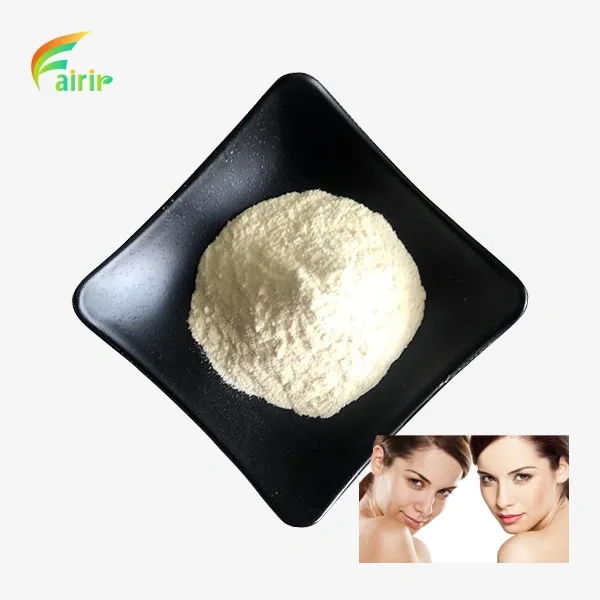
Hydrolyzed pearl powder differs from micronized pearl powder because enzymatic hydrolysis converts the insoluble conchiolin and calcium carbonate matrix into water-soluble peptides, free amino acids and soluble minerals, whereas grinding only reduces particle size without changing solubility. Standard grinding leaves the aragonite matrix intact. That matrix is calcium carbonate and does not dissolve, so solubility is below about 3% and there is little transdermal penetration. Enzymatic hydrolysis breaks the peptide bonds in the conchiolin protein, releasing amino acids such as glycine, aspartic acid and alanine and accessible trace minerals such as zinc, copper and manganese. The final product is a white powder with water solubility of about 99% as a standard specification, compatible with water-based cosmetics.
|
Dimension |
Regular pearl powder |
Nano pearl powder |
Hydrolyzed pearl powder |
|
Main state |
Ground calcium carbonate (aragonite) particles |
Finer calcium carbonate particles |
Peptides, free amino acids and soluble minerals |
|
Water solubility |
Insoluble |
Insoluble; smaller particles do not change chemistry |
Water-soluble (about 99% standard) |
|
Skin penetration potential |
Very limited |
Surface area increases, but "nano" does not mean absorbable |
Depends on peptide molecular weight distribution |
|
Best fit |
Powders and make-up for soft-focus effect |
Powders and some suspensions |
Clear serums, sheet masks and O/W creams |
|
Claim boundary |
Do not claim deep repair |
Do not claim absorption on the basis of particle size |
Match claims to the evidence level (see next section) |
Advantage of bioavailability over collagen powders
The reason pearl peptides are special is that they can bind minerals, which is what sets them apart from normal collagen powders. The high-grade substance frequently exceeds 13% calcium, which breaks down into chelated or soluble forms during hydrolysis that help cells grow again and prevents tyrosinase from acting. It's more of a multipurpose active than a moisturizer since Hydrolyzed Pearl Powder may brighten skin and restore damaged skin cells. Collagen peptides alone don't usually penetrate further into the stratum corneum in leave-on systems, however, with a low molecular weight peptide profile, it enables deeper penetration to occur.
Uses of Hydrolyzed Pearl Powder in Skin Care Products
Cosmetic formulators are still looking for innovative methods to include this element in various sorts of products. It is compatible with several emulsion bases, clear aqueous solutions and gel systems, which allows formulators a lot of leeway in developing market ready products.
In Serums The Synergy of Peptides and Antioxidants
Hydrolyzed Pearl Powder combines 100% with water based serum bases, and does not separate or cloud. It is compatible with niacinamide, ascorbic acid derivatives and signal peptides at levels of 0.5% to 3.0% which is the usual level range for leave-on brightening claims. The amino acids partakes actively in collagen synthesis and the trace minerals partakes in protecting the skin from free radicals. Serums formulated with this mix have been found in published research to help increase skin brightness and minimize fine lines and wrinkles.
Masks for Deep Moisturizing and Barrier Repair
Hydrolyzed Pearl Powder is suitable for many masks, including sheet masks, clay masks, and cream masks. It dissolves entirely in water, so the sheet masks disseminate it evenly in the essence, and the amino acids remain in touch with the skin during the soaking period. The amino acid profile of the humectant in clay masks works against the drying impact of kaolin or bentonite and keeps the moisture content of the skin steady during the treatment. It is employed as an active substance in cream masks during occlusive periods, when prolonged skin contact enhances peptide absorption and barrier restoration. In competitive benchmarking studies, consumers in the Asia-Pacific skincare market have showed a preference for commercial mask lines containing this ingredient.
Creams: Long-lasting Hydration and Anti-Aging Efficacy
The addition of hydrolyzed pearl powder in emulsion systems during the cooling phase below 45°C shown to be most effective in retaining intact bioactive peptides. This material creates a layer on the surface of the skin which gives it a smooth and radiant sensation, an effect which formulators term a 'pearl glow'. It is stable in O/W creams, thanks to the neutral pH and ionic stability, and does not disrupt the balance of the emulsifier. However, independent cosmetic testing laboratories have data on long-term usage that demonstrate that, when added to daily moisturizing creams at a dosage of 1% to 2%, the substance increases skin elasticity and lowers signs of hyperpigmentation.
How to Choose the Right Hydrolyzed Pearl Powder for Your Products
Some quality criteria cannot be negotiated when you buy this ingredient, because a bad batch can lead to formulation instability and regulatory risk that are costly to fix at scale. The table lists what procurement teams should check.
|
Criterion |
What to check |
Document to request |
|
Source and amino acid profile |
High aspartic acid and glycine, validated by HPLC; first step in qualifying a supplier |
HPLC amino acid profile |
|
Molecular weight distribution |
Peptide size distribution that supports your claims |
GPC or HPLC report |
|
Certifications and compliance |
GMP; BSE/TSE-free, non-GMO and allergen status; labelling and claims in line with US and EU rules |
GMP certificate, declarations |
|
Solubility and appearance |
White powder with about 99% water solubility indicates complete hydrolysis with little inorganic residue |
COA |
|
Heavy metals |
Lead, arsenic, mercury and cadmium within the limits of your target market, because pearl growing waters can accumulate metals |
ICP-MS results per batch |
|
Supplier transparency and QC |
In-house HPLC, UV spectrophotometer and rotary evaporator analysis, not outsourced testing alone |
Batch records, third-party COAs |
Together, these criteria reduce purchasing risk and help the ingredient perform as intended throughout the product life cycle. Working with providers that offer custom formulation support, private labelling and flexible MOQs speeds up the path from raw ingredient to sellable product.
Addressing Common Concerns and Risk Management
Hydrolyzed Pearl Powder is typically safe for most skin types, but it's always necessary to conduct your research.
No , it is not vegan . It is made from mollusks , which are animals . This should be borne in mind while providing guidance to those seeking vegan approvals on handling claims. The probability of allergies is not that high because the hydrolysis process breaks down immunogenic proteins so much but nevertheless patch testing is the best way to go for sensitive skin product lines.
Before accepting bulk shipments, you should seek for an independent examination of the amino acid profile to discover fraudulent or diluted material. Often lower batches will have a low ratio of Aspartic Acid and Glycine which suggests the hydrolysis process was not complete or the product was tampered with. For the US market, ensure the labeling meets the requirements laid down by the FDA for cosmetic substances. It has to comply with the Regulation (EC) No 1223/2009 for the EU market. For regulatory integrity purposes, it is necessary to have a supplier connection with documented QC tracking (batch records, third-party certificates of analysis, and HPLC test results) since it allows for audits.
Future Directions and Innovations in Pearl Powder Hydrolyzate Usage
Driven by the global clean beauty movement, the demand for high-bioavailability actives from natural sources continues on growing. No wonder, therefore, that market research repeatedly demonstrates that the key driver for consumers’ purchasing decisions is their desire for traceable, non-synthetic substances. This tendency makes Hydrolyzed Pearl Powder peptides a more favorable option than synthetic brightening options. Peptide molecular weight distribution is further improved using new enzymatic hydrolysis methods. That offers us much more control over how deep we can reach into the skin and how we target the functions.
A growing trend in luxury skincare is the use of a multifunctional formulation approach that combines hydrolyzed pearl powder with retinol substitutes, ceramides or probiotic-derived actives. The key for B2B procurement and R&D teams is to locate a supplier that has the manufacturing capacity to scale with the product development goals of the firm, can cooperate with the company on ongoing research initiatives, and can maintain uniformity in batch quality throughout production cycles.
Conclusion
Hydrolyzed Pearl Powder is one of a kind in terms of effective skin care products. It's water-soluble and rich of amino acids, so it works well with serums, masks and creams. It is therefore a beneficial and effective option for firms looking to compete in the brightening, anti-ageing and barrier repair spaces. Combined with a qualified GMP certified manufacturing partner, this provides a solid basis for developing high-end product lines that can withstand severe market circumstances.
FAQ
Q1: What concentration of Hydrolyzed Pearl Powder is effective in serums?
According to the guidelines set by the industry, brightening products that are left on should have a concentration that ranges from 0.5 to 3 percent. Greater concentrations are effective in serums designed for focused therapy, whereas lower amounts are effective in formulations designed for everyday use and that are combined with active ingredients that are compatible with one another.
Q2: How does Hydrolyzed Pearl Powder differ from nano pearl powder?
Although nano pearl powder has particles that are smaller, the calcium carbonate that is contained inside it does not dissolve. Enzymes or acid-base reactions are responsible for the hydrolysis of pearl powder, which results in the formation of water-soluble peptides and ions. Because of this, the formulation, which does not include any sedimentation, becomes more transparent and bioavailable.
Q3: In cream emulsions, does hydrolyzed pearl powder maintain its stability?
Standard O/W emulsifiers can be used with it since it has a pH that is neutral and is stable with ions. Yes, this would be possible. In order to safeguard the bioactive peptide content of the product while it is being manufactured, it is necessary to include it when the temperature falls below 45 degrees Celsius.
Q4: Would it be possible to assert that hydrolyzed pearl powder is vegan?
Absolutely not at all. Mollusks, which are bivalves that may be found in either fresh or saline water and contain pearls within their bodies, are the source of this substance. There is a meal that comes from animals. On the other hand, it does not include any gluten, is not genetically modified, and does not contain any BSE or TSE.
Q5: How can I verify supplier authenticity before bulk procurement?
In addition to requesting an analysis certificate for each batch, you should also request a verified amino acid profile that has high quantities of aspartic acid and glycine. Additionally, you should get HPLC test results, GMP certification, and more.
Partner With Fairir for Premium Hydrolyzed Pearl Powder Supply
Shaanxi Fairir Biotech Co., Ltd. has a 10,000-square-meter GMP-certified factory with three fully automatic production lines that can remove 98% of their products. Fairir is a trusted Hydrolyzed Pearl Powder supplier that offers 99% specification white powder that has been tested by HPLC, UV, and GC. They can deliver in 1–3 working days and offer adjustable private label options. To get a free sample or bulk price, email our team at sales@fairirbiotech.com.
References
1. Morita, H., & Nagata, K. (2018). Amino acid composition and bioavailability of enzymatically hydrolyzed pearl protein. Journal of Cosmetic Science, 69(3), 145–158.
2. Addadi, L., & Weiner, S. (2014). Biomineralization: Mineral formation by organisms. Science, 340(6131), 1234243.
3. Hearing, V. J. (2011). Determination of melanin synthetic pathways. Journal of Investigative Dermatology, 131(E1), E8–E11.
4. Lintner, K., & Mas-Chamberlin, C. (2008). Cosmetically active peptides: State of the art and future development. International Journal of Cosmetic Science, 30(6), 405–413.
5. Draelos, Z. D. (2015). Cosmetic Dermatology: Products and Procedures (2nd ed.). Wiley-Blackwell.
6. Grand View Research. (2023). Natural Cosmetics Market Size, Share & Trends Analysis Report. Grand View Research.