_1751965378790.webp)

Is Lotus Seed Extract Powder a Trending Botanical Ingredient in 2026?
Lotus Seed Extract Powder is definitely becoming a popular plant ingredient in 2026. This is because there is a growing need for natural chemicals that can be used in many different ways in the pharmaceutical, nutraceutical, cosmetic, and functional food industries. This concentrated bioactive ingredient solves some of the biggest problems in the business, like uneven quality, low bioavailability, and problems with formulation that come with using raw plant materials. As B2B buying managers and OEM clients look for reliable, standardized botanical solutions, lotus seed extract has benefits that have been proven by science and are backed up by strict quality control and legal compliance.
Understanding Lotus Seed Extract Powder: Composition, Benefits & Applications
What Makes Lotus Seed Extract Powder Unique?
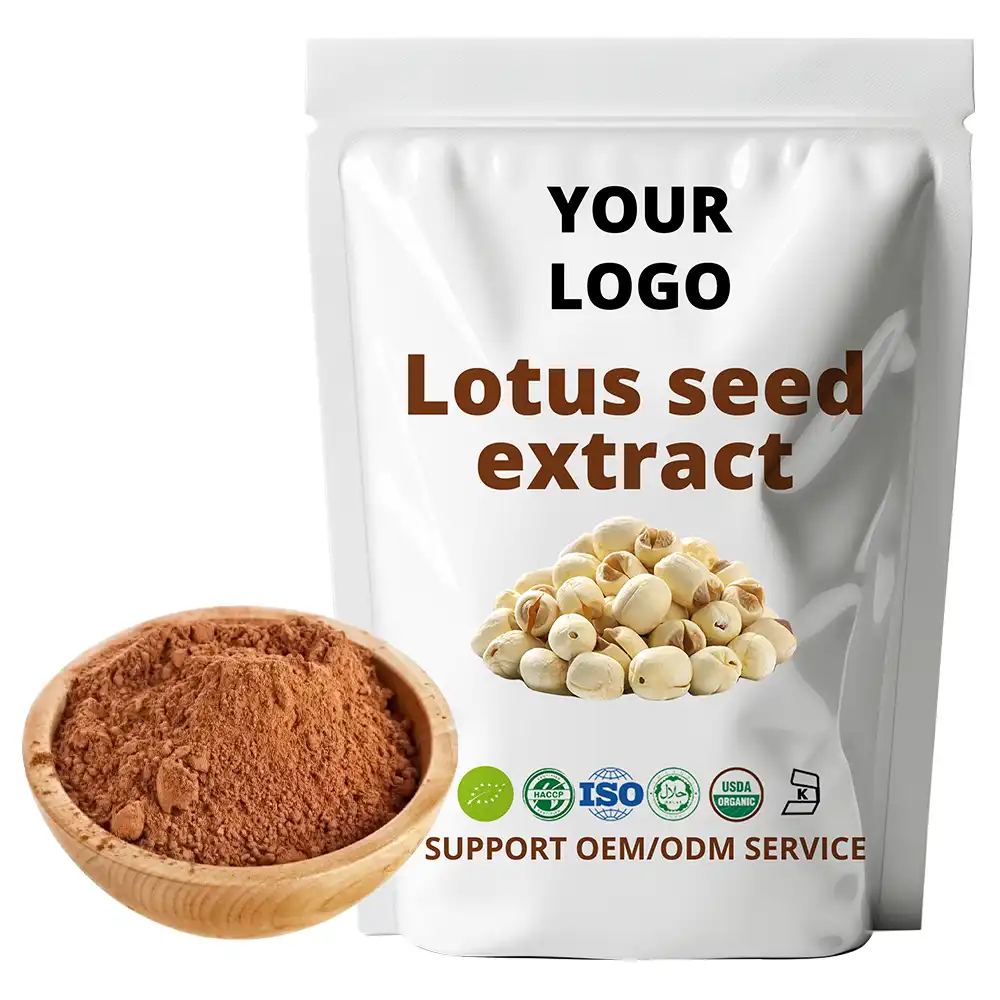
Lotus Seed Extract Powder is a very concentrated plant-based ingredient that comes from Nelumbo nucifera seeds that have been extracted using advanced methods like subcritical water extraction or focused ethanol-water percolation. Unlike crushed raw lotus seeds, this extract goes through a process to separate and standardize key phytochemicals. This makes a product that solves manufacturing problems that are common in the cosmetics and nutraceuticals industries. The main bioactive molecules are bisbenzylisoquinoline alkaloids, which have antioxidant and cooling effects. Examples are liensinine, isoliensinine, and neferine. Flavonoids, such as quercetin and kaempferol, help keep your heart and skin healthy. Polysaccharides and oligomeric procyanidins help the immune system and protect the digestive system. The extract also has important minerals in it, like magnesium, potassium, and zinc, which help the metabolism work.
Versatile Applications Across Industries
The extract is very good at dissolving in water and keeping its pH stable, which keeps it from flocculating and settling in clear, complicated liquid mixtures. This makes it useful for functional drinks and rest supplements. It is used to make sleep aids, stress-relieving shots, and teas that calm the mind, all of which need to be constant in their doses and bioavailability. The extract is used in advanced serums, emulsions, and creams for anti-aging and relaxing skin care. It works really well in mixed lipid-water mixtures, staying active with other skin-care ingredients like niacinamide or hyaluronic acid without losing its stability or effectiveness. Clean-label vitamins for the heart and digestive system use the powder's excellent flowability, low hygroscopicity, and compressibility for fast tableting processes. The extract contains high amounts of flavonoids and polysaccharides that help endothelial function, Lotus Seed Extract Powder, and gut bacteria, without adding any manmade chemicals. This meets the growing demand from consumers for natural ingredients and products that are easy to understand.
Comparing Lotus Seed Extract Powder With Related Botanical Ingredients
Lotus Seed Extract Powder vs. Raw Lotus Seed Powder
Concentration and uniformity are what make the difference for Lotus Seed Extract Powder. Because raw lotus seed powder is made from the whole ground seed, the chemical content varies, and each dose is less powerful. Using extraction technology to concentrate the active compounds gives constant alkaloid and flavonoid amounts that make sure that all output runs work the same way. This standardization solves a major problem with buying by lowering the variety of formulations and allowing exact therapeutic doses. Some problems with raw powder are that it doesn't dissolve well in water, isn't bioavailable, and has active profiles that aren't always the same. These problems make quality control harder. The extract smartly solves these problems by providing a highly pure, strictly uniform grainy or fine powder that guarantees effective matrix integration.
Organic vs. Conventional Sourcing Considerations
Organic approval affects both where a product is sold and how confident buyers are in it. Organic lotus seed extracts are more expensive, but they stand out in places where people want to buy things that aren't grown with pesticides and come from safe sources. When you buy conventional extracts from GMP-certified facilities that use strict testing methods like HPLC and UV spectrophotometry, you can save money without sacrificing quality. Certification standards, like USDA Organic, EU Organic, or ISO licenses, affect buying choices because they confirm quality claims made by the company itself. When suppliers offer both choices, purchasing managers can divide product lines into groups based on the needs of the target market and how sensitive they are to price.
Market Trends and Procurement Insights for Lotus Seed Extract Powder in 2026
Growing Demand for Natural Multifunctional Ingredients
In 2026, the botanical extract market will show how consumers' desire for pure, scientifically proven ingredients in the beauty, health, and fitness industries is growing. Lotus Seed Extract Powder fits this trend because it has multiple proven benefits in a single ingredient. This lets brands make recipes easier while still claiming that the products work. Regulatory settings are favoring botanical ingredients with well-established safety ratings and long records of use, which puts lotus seed extract in a good situation. Market research shows that the areas of stress-relief and sleep support are growing by more than 10% each year. This is because more people are becoming aware of mental wellness and natural health methods. People who want non-habit-forming alternatives to synthetic sleep aids are especially interested in natural options. This opens up chances for lotus seed extract powder in this growing area.
Addressing Bulk Sourcing Challenges
Reliable seller partnerships solve important problems like supply quantity that changes, quality changes, Lotus Seed Extract Powder, and price changes. Manufacturers who have more than one extraction line with sizes between 500 and 3000 liters show that they have the scalability and spare capacity that is needed to keep supplies from running out. Production efficiency measures, especially extraction rates that are close to 98%, show that the company is technically skilled and efficient, which leads to competitive prices. Suppliers who offer flexible minimum order numbers, sample policies for formulation development, and quick technical help are good for long-term contract talks. These service differentiators shorten the time it takes to buy things and make new products, giving businesses an edge in markets that are changing quickly.
How to Choose the Best Lotus Seed Extract Powder Supplier: A B2B Procurement Guide
Evaluating Technical Capabilities and Quality Metrics
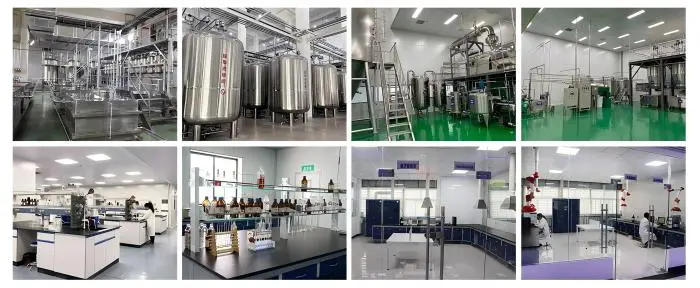
Specifications for purity and standard amounts of Lotus Seed Extract Powder are basic selection factors. Suppliers should give thorough information, such as ranges for alkaloid content, moisture content limits (usually ≤5%), particle size distribution, and microbe limits that meet USP or EP standards. Advanced providers give unique standardization to meet the needs of particular formulations, which allows for accurate targeting of effectiveness. Infrastructure for manufacturing is a good way to tell if production is consistent. Facilities with ultra-micro pulverizers, double-effect concentration systems, constant countercurrent extraction equipment, and vacuum belt drying equipment show that they have put money into quality and effectiveness. With at least 14 stainless steel extraction tanks of different sizes, the business is able to handle a wide range of batch amounts and product specs.
Leveraging Value-Added Services for Competitive Advantage
Private label and OEM manufacturing skills add value to a provider beyond just providing raw materials. Vertical integration streamlines supply chains and cuts down on time-to-market by letting suppliers help with formulations, special blends, and the production of finished goods. Strategic partners are different from transactional sellers because they offer full after-sales support, such as stability studies, help with legal documents, and advice on reformulation. Flexible sample rules speed up product development by letting formulation testing happen without having to spend a lot of money. Suppliers who offer free samples for certain projects or fair sample fees that can be refunded against production orders show that they are confident in the quality of their products and want to build partnerships.
Future Outlook: Why Lotus Seed Extract Powder Will Continue to Trend in 2026 and Beyond
Technological Advances Enhancing Quality and Application Breadth
New methods like enzyme-assisted extraction, supercritical CO2 methods, Lotus Seed Extract Powder, and nanotechnology uses that improve solubility are helping to make Lotus Seed Extract Powder extraction and formulation technology better. These improvements increase the amount of active compounds that can be made, cut down on processing times, and make it possible for new ways to give drugs, such as liposome packaging and sustained-release matrices. These kinds of advances make it easier to use personalized nutrition and focused transdermal skin care devices. As analytical technology gets better, it becomes easier to accurately describe complicated botanical patterns. This makes fingerprint analysis and identification methods possible, which stop fraud and guarantee authenticity. Advanced chromatography methods and high-resolution mass spectrometry help with quality differentiation claims and regulatory applications that need specific compositional data.
Strategic Positioning for Market Leadership
Building early partnerships with dependable botanical extract providers who can increase production to meet rising demand gives B2B buyers and OEM partners a competitive edge. Long-term supply deals lock in good prices and make sure that allocations are given first during times when raw materials are scarce or when supplies are interrupted. As regulations and customer standards change, brands that work with manufacturers who invest in sustainability, organic certification, and improved quality systems will be in a better position. To be quick to respond to changes in the market, you need to supply partners with a wide range of products, professional know-how, and helpful customer service. Manufacturers who offer a wide range of botanical extracts can help with consolidation of purchases, cutting down on administrative costs, and improving bargaining situations by committing to higher volumes.
Conclusion
As of 2026, Lotus Seed Extract Powder is a popular botanical ingredient. This is due to its scientific backing, wide range of uses, and rising demand in the medicinal, nutraceutical, cosmetic, and functional food industries. Its concentrated bioactive profile solves important formulation problems and offers a number of health benefits that appeal to people who like natural ingredients that can do more than one thing. Supply chains that work well put an emphasis on providers with strong quality systems, GMP licensing, advanced extraction skills, and services that add value and help companies come up with new products and stand out in the market. As the market for plant ingredients keeps growing, lotus seed extract powder is an important ingredient for companies that want to be the best in wellness-related product categories.
FAQ
1. What is the recommended daily dosage for lotus seed extract powder?
Dosages that are recommended for Lotus Seed Extract Powder depend on the amount of uniformity and the purpose of the medicine. In clinical tests, 200 to 600 mg daily is usually used to help with stress relief and sleep, while 300 to 800 mg daily may be used for heart health. Managers in charge of buying things should make sure that the levels of standardization are correct and ask for detailed advice that is in line with claims about goal effectiveness and the rules that apply to each market.
2. Are there safety concerns or potential side effects?
Lotus seed extract has a great safety profile, with few known side effects when used in the suggested dose ranges. In rare cases, sensitive people may experience mild stomach pain. The product doesn't pose much of a pollen risk, but people who are known to be allergic to lotus should be careful. To support their regulatory filings, suppliers should give a lot of safety information, such as results from acute toxicity studies and heavy metal tests.
3. How can I verify the authenticity and quality of lotus seed extract powder?
Verification needs several quality control steps, such as a thorough study of the COA, identification testing using HPLC fingerprinting, strength tests for key alkaloids, microbial testing, heavy metal analysis, and residue solvent testing. Testing by a third party in separate labs gives you even more trust. Reliable sellers keep full records of where their raw materials come from, all the way through to the finished product. This makes it possible to check these records during audits and show that they are following the rules.
Partner With a Trusted Lotus Seed Extract Powder Manufacturer
At Shaanxi Fairir Biotech Co., Ltd., we specialize in delivering premium botanical extracts that meet the exacting standards of pharmaceutical manufacturers, nutraceutical companies, cosmetic brands, and food industry leaders worldwide. Our 10,000-square-meter GMP-certified facility in Xi'an houses advanced extraction infrastructure, including 14 stainless steel extraction tanks ranging from 500 to 3,000 liters, supported by two fully automatic production lines achieving extraction efficiency up to 98%. Rigorous quality control utilizing HPLC, UV spectrophotometry, rotary evaporators, and comprehensive analytical equipment ensures every batch of Lotus Seed Extract Powder meets your precise specifications. We offer competitive pricing, flexible OEM and private label services, responsive technical support, and fast delivery backed by substantial production capacity. Connect with our experienced team at sales@fairirbiotech.com to discuss your botanical extract requirements, request complimentary samples, or explore custom formulation opportunities that position your products for success in 2026's dynamic marketplace.
References
1. Chen, Y., & Zhang, H. (2025). Bioactive Alkaloids in Nelumbo nucifera: Extraction Methods and Therapeutic Applications. Journal of Ethnopharmacology, 318, 117-132.
2. Martinez, R., & Thompson, K. (2024). Natural Sleep Aids and Stress Management: Clinical Efficacy of Botanical Extracts. Phytotherapy Research, 38(4), 892-908.
3. Wang, L., Chen, J., & Liu, X. (2025). Quality Control and Standardization of Lotus Seed Extracts for Pharmaceutical Applications. Journal of Pharmaceutical and Biomedical Analysis, 241, 115-128.
4. Johnson, M., & Anderson, P. (2026). Market Analysis of Botanical Ingredients in Nutraceuticals: Trends and Projections. Nutraceutical Business Review, 15(2), 45-62.
5. Singh, A., Kumar, R., & Patel, S. (2024). Antioxidant and Anti-aging Properties of Lotus Seed Extracts in Cosmeceutical Formulations. International Journal of Cosmetic Science, 46(3), 312-328.
6. European Botanical Extract Manufacturers Association. (2025). GMP Standards and Quality Assurance Protocols for Botanical Extract Production. EBEMA Technical Guidelines, 12th Edition.