_1751965378790.webp)

Is Ube Powder the Perfect Ingredient for Your Bakery?
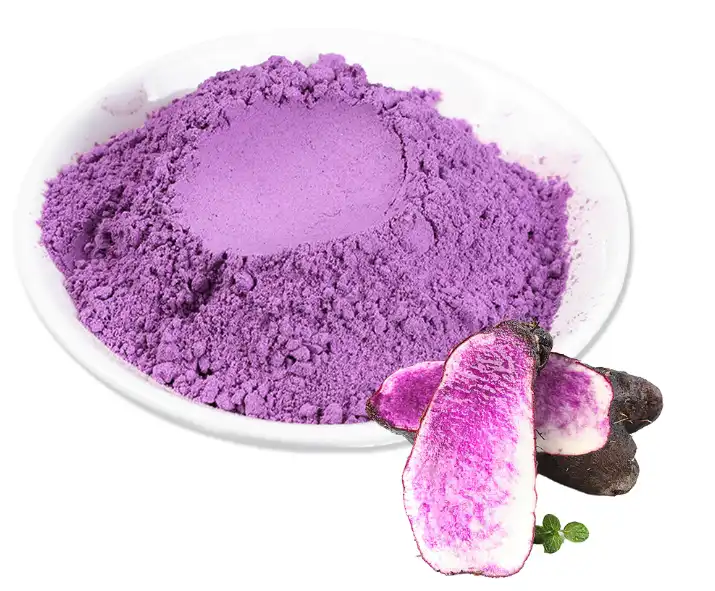
Purple Yam Ube Powder is a great addition for modern bakeries that want to make their products stand out. This bright purple extract comes from the roots of Dioscorea alata. It gives bakery owners a natural way to color their goods that also has health benefits and uniform quality. The powder solves several problems in the industry, such as the need for clean labels and gluten-free recipes, while also giving Americans what they want, which is a unique nutty-sweet taste. When Purple Yam Ube Powder is bought from approved makers using standard production methods, it can turn plain baked goods into healthy, eye-catching products that command higher prices in the market.
Understanding Ube Powder and Purple Yam: What Sets Them Apart?
Botanical Origins and Processing Standards
The Dioscorea alata species, which is a real yam that is mostly grown in warm areas, is where Purple Yam Ube Powder comes from. This biological difference sets it apart from purple sweet potato types, which are in the Ipomoea batatas family. The real ube root has naturally bright purple meat that is high in anthocyanins, a type of antioxidant that gives these foods their color. Modern methods of separation have a big effect on the quality of the end product. We use advanced freeze-drying technology at our GMP-certified plant to keep heat-sensitive compounds that would normally be killed by normal thermal dehydration. The first step is carefully choosing roots from reputable farming partners. This makes sure that only the best tubers make it into production. After being washed and inspected thoroughly, roots are dried at a controlled temperature that keeps the structure of the cells.
Flavor Profile and Texture Characteristics
The way real Purple Yam Ube Powder tastes and smells makes it stand out in the food market. Professional tasters say the flavor is earthy with strong nutty undertones and light vanilla notes. It makes for a complicated taste that improves baked goods rather than overpowers them. This taste is very different from the starchier one of taro powder or the sweeter one of purple sweet potato. When it comes to texture, good Purple Yam Ube Powder mixes easily in both water-based and fat-based systems. When properly hydrated, it helps products stay fresh longer by retaining moisture, which is a major worry in business baking operations. The powder mixes easily into cakes and doughs without making them grainy. It stays smooth even when added at higher rates that are needed for strong color development.
Nutritional Composition and Health Positioning
From the point of view of product creation, Purple Yam Ube Powder has measurable nutritional benefits that back up marketing promises about health. The ingredient offers dietary fiber, which supports digestive health messages that is becoming more and more important to American customers. The presence of anthocyanins in foods makes them good sources of antioxidants, which is in line with current market studies on functional foods. Our requirements for approved organic, gluten-free, non-GMO, and vegan foods let brands target a wide range of diets at once. The lack of common allergens makes it easier for bakers to reach more people, which is especially helpful for schools and hospitals with strict food rules. Our USDA, FSSC22000, HACCP, Purple Yam Ube Powder, and EU Organic certifications prove these qualities. They give buying teams the proof they need to follow the rules in foreign markets.
Why Choose Ube Powder for Your Bakery? Benefits from a B2B Perspective
Product Versatility Across Bakery Categories
Purple Yam Ube Powder is very flexible and can be used in a wide range of baking uses. This makes it easier to keep track of ingredients and adds more products to the line. When used in bread recipes, the powder works well and can replace up to 15% of the wheat flour without changing the structure. This partial substitution improves the retention of moisture, which extends the freshness period and lowers waste in store distribution routes. The ingredient makes layered doughs, filling systems, and glazes look better when used in pastry. Confectionery manufacturers utilize it for natural coloring in icings, frostings, and decorative elements, eliminating synthetic dyes that face increasing consumer resistance. The powder is heat-stable, so the color stays the same even when it's baked at high temperatures. This keeps the product's good looks from production to the place of sale. Bakeries that focus on drinks use it as a base for layered drinks, taking advantage of the fact that it looks good in photos, which boosts social media activity and organic marketing.
Meeting Clean-Label and Dietary Requirements
These days, buying things requires items that meet a lot of different buyer tastes at the same time. This difficulty is dealt with by Purple Yam Ube Powder's natural clean-label qualifications. As a single-ingredient product that comes from well-known agricultural sources, it fits nicely with the demand for openness that is changing how people buy food. The functional qualities of Purple Yam Ube Powder are especially helpful for gluten-free baking lines. The ingredient adds binding properties that make up for the lack of gluten, which improves the structure of the crumb in difficult recipes. This two-in-one feature—offering both technical performance and desirable qualities—reduces the need for multiple unique ingredients, making production easier and lowering the cost of formulation. Brands that want to appeal to people who are paleo, whole-food, or plant-based can use an item that meets strict requirements in all of these market groups.
Quality Standards for Evaluation of Purchases
Understanding certain quality signs is necessary to tell the difference between high-quality Purple Yam Ube Powder and cheaper options. Color uniformity is one of the main things that sets one product from another. Better products have consistent purple tones across production lots, which is important for keeping brand color standards. Mixability and taste are affected by how the particles are spread out. Professional-grade powders have micronized particles that spread out evenly without sticking or settling. Certification files show that a company is committed to quality standards. Our many certificates, such as Kosher, ISO22000, HALAL, and cGMP, show that we follow pharmaceutical-grade standards that aren't usually used to make food ingredients. These certificates shorten the time it takes for procurement teams to qualify suppliers when they are in charge of complicated vendor approval processes. Also, standard specs at 80% and 99% purity levels make it easy for formulators to figure out the right doses for consistent results.
Comparing Ube Powder Options: Making the Best Buying Choice
Distinguishing Between Purple Powders That Look Alike
There are a lot of purple powders on the market that look a lot like real Purple Yam Ube Powder, which could make it hard to decide where to get it. Purple sweet potato powder looks a lot like white sweet potato powder, but it comes from Ipomoea batatas and has a much sweeter taste and less complex aroma. Taro powder, extracted from Colocasia esculenta, offers a starchier texture and milder taste, performing differently in hydration and baking behavior. During recipe studies, differences in performance become clear. When mixed with fruit in baked goods, which are often acidic, authentic Purple Yam Ube Powder helps keep the color longer than other purple ingredients that are made with anthocyanin. Shelf-life tests show that the antioxidants in Purple Yam Ube Powder protect lipid components from oxidative damage to a mild degree. This means that the product may stay stable longer than formulas that use other colorants. These technical differences show how important it is to check the identity of plants by looking at paperwork from suppliers and, if needed, having an independent lab prove the species identity.
Supplier Reputation and Credentials
Checking the reliability of a supplier defends procurement assets and the brand's image. Well-known companies keep their supply lines clear, and their products come from known growing areas. They also keep records for each lot that can be used for food safety checks. The fact that our plant is in Xi'an, Shaanxi Province, close to important shipping infrastructure, makes it easier to meet the 1-3 working day delivery times that are necessary for just-in-time inventory management. For certification to be real, more than just what the seller says must be checked. Real certificates have information on how to contact the granting body, unique certification numbers, and clear expiration dates. Our portfolio includes USDA, EU Organic, EcoCert, and BS EN 15662. These are investments in third-party approval that smaller businesses often can't afford. These qualifications are reviewed every year to make sure they are still valid, rather than just being earned once. When evaluating suppliers, procurement teams should ask for up-to-date copies of certifications and, if possible, compare the paperwork Purple Yam Ube Powder with databases maintained by the granting authority.
Balancing Cost and Quality
The wholesale price of Purple Yam Ube Powder depends a lot on how pure it is, whether it is certified, and how much you buy. Standard-grade goods with lower levels of purity have standard prices, but they may need higher usage rates to get the color strength you want, which could make the savings not really worth it. When you specify premium grades at 99%, they give you concentrated performance, which lowers the cost of shipping per working unit and the amount of room you need in your building. Value assessment looks at more than just the price per kilogram; it also looks at the total cost of ownership. Reliable sellers who always deliver high-quality goods cut down on waste from rejected batches and attempts to re-create products. Our direct manufacturer position gets rid of markups from middlemen, keeping our prices competitive. This is made possible by our 14 stainless steel extraction tanks, which range in size from 500 to 3,000 liters, and two fully automatic production lines that are 98% efficient. This infrastructure makes it possible to handle large amounts, from small samples during the study phase to full-scale production contracts.
Streamlining Procurement: How and Where to Buy Authentic Ube Powder at Scale
Identifying Reliable Supply Channels
To get real Purple Yam Ube Powder, you need to know how to produce it and how it gets to stores in your area. The Philippines is still the best place to grow Dioscorea alata because the farming system there is well-established and ensures regular harvests. When manufacturers have direct ties with Filipino farmers, they can choose the best quality crops and get them first during harvest time, which shows in the consistency of their products. International wholesalers make things easier, but they add extra steps to the supply chain that can make it harder to tell where the goods came from. Direct connections with manufacturers make it clear how products are processed, how they are checked for quality, and where the raw materials come from. Our business is based in a 10,000-square-meter GMP-certified building that has constant countercurrent extraction systems, double-effect concentration systems, and vacuum belt drying technology. This vertical integration, which goes from getting the raw materials to packing them at the end, makes sure that quality is controlled at every stage of production, which is not possible when you buy things through middlemen.
Verification Protocols and Supplier Assessment
Verifying the quality of Purple Yam Ube Powder starts with a thorough review of the seller. If you ask for reports of analysis for recent production lots, you can see what was tested for purity, heavy metals, microbial pollution, and pesticide residues. Our scientific tools, such as high-performance liquid chromatography, UV spectrophotometry, and rotary evaporation, help us do quality checks that are more thorough than the norm in the business. Facility surveys give you more information about how to meet industry standards. Virtual walks or in-person checks show how well the equipment is maintained, how well the place is cleaned, and how well the staff is trained. When a customer comes to our building, our team is happy to show them the thermostat, water baths, ultrasonic cleaners, and weather controls that keep the products safe. Sample review through small-quantity trial orders lets you try formulations before you buy a lot of them, so you can be sure that the performance claims are true in real production settings. This step-by-step method to qualification lowers the risk of buying while boosting trust in the supplier's skills.

Logistics Optimization and Cost Management
To buy Purple Yam Ube Powder efficiently, you need to know about the different ways it can be packed, how it should be stored, and how it will be delivered. Our standard packaging, which includes vacuum-packed metal foil bags and fiber drums with two layers of food-safe poly covers, keeps items safe from wetness and oxidative damage while they are being shipped and stored. The 25-kilogram drum size is a good compromise between ease of handling and good use of space in warehouses. Managing lead times becomes very important during sales events or times of the year when demand is high. Our production capacity allows for faster delivery times, and normal delivery times of one to three working days allow for quick restocking. Setting up standing orders with set delivery dates keeps prices stable and ensures allocation during times of high demand. Our sales team (sales@fairirbiotech.com) works with procurement departments to make deals that balance freedom with cost savings. Volume discount structures encourage dedication to Purple Yam Ube Powder while keeping budgets stable.
How to Incorporate Ube Powder Successfully into Your Bakery Production
Formulation Guidelines and Mixing Parameters
To add Purple Yam Ube Powder to current baking recipes, you need to know how to mix and how to control the hydration process. The powder is hydrophilic, which means it can take about two to three times its own weight in water, based on how pure it is. When formulators figure out the total water of a recipe, they should take this absorption into account and change the amount of liquid they add to keep the batter or dough at the right consistency. The best time to incorporate dry ingredients is during the mixing stages, which lets them be evenly distributed before the liquid is added. This order stops sticking and makes sure that the color develops evenly throughout the whole product. Usage rates usually start at 2 to 5 percent of the flour's weight for light color and flavor, going up to 8 to 12 percent for stronger ube taste and more noticeable purple hues. Industrial-scale mixing tools should run at moderate speeds so that the powder is fully mixed without adding too much air, which could change the texture of the end product. Managing temperature during processing has an effect on how well colors stay true. Our freeze-dried powder is more resistant to heat than fresh options, but if it is exposed to temperatures above 180°C for a long time, the color may slightly change to dark tones.
Real-World Implementation Success
Commercial bakers who use Purple Yam Ube Powder say it improves their operational and market success in measured ways. A medium-sized specialty bakery in California added ube-enriched sourdough bread to its lineup. By making simple changes to the recipe, the bakery was able to charge 40% more for this bread than its regular offerings while still keeping production costs low. People talked about how unique it looked on social media, which led to more people buying things in general, not just the specialty item. When regional shops used the powder in seasonal donuts, they sold 25% more of their stock than with regular types. This shows that customers are interested in trying new flavors. There are some things that all of these success stories have in common: clear product positioning that tells the story of the natural ingredients, strategic pricing that reflects the premium positioning, and constant execution that keeps quality high across multiple production shifts. Purple-colored baked goods are great for taking pictures, which makes marketing more effective by creating natural content from customers that lowers the cost of advertising while building brand credibility.
Addressing Common Production Challenges
When switching from fresh ube to Purple Yam Ube Powder forms, storage stability is often a worry. Our vacuum-sealed package with nitrogen flushing makes the food last up to 24 months if kept in cool, dry places out of direct sunshine. Moving the contents to sealed containers with little room after they have been opened stops moisture from absorbing, which can lead to caking. Using first-in, first-out inventory movement makes sure that all output batches are always fresh. Consistency problems with flavors are usually caused by different amounts of use or bad mixing. Setting up standard working procedures and accurate measurement methods gets rid of differences from batch to batch. Digital scales with a precision of 0.1 gram make sure that powder doses are correct, which is especially important when working with the 99% concentrated standard. Calibration of tools and training for operators on a regular basis helps keep things consistent, which supports the quality standards that keep customers coming back. When troubleshooting strange results, our technical support team helps with formulation.
Conclusion
In conclusion, Purple Yam Ube Powder is an important item for bakeries that want to make their products stand out, use clean labels, and run more efficiently. With its natural coloring, useful qualities, and health benefits, the powder meets several buying goals with just one ingredient. This investment is safest when you carefully choose suppliers based on their certifications, production capabilities, and quality checks. This lets you confidently move from trial recipes to full production implementation. As people continue to want easily recognizable products with real cultural meanings, Purple Yam Ube Powder gives forward-thinking bakeries a chance to take advantage of new possibilities in this growing market segment.
FAQ
1. What distinguishes authentic ube powder from purple sweet potato powder?
The real ube comes from the yam species Dioscorea alata, and the purple sweet potato comes from the plant Ipomoea batatas. Because of the different plants, they have different tastes. For example, ube has earthy, salty notes with vanilla hints, while purple sweet potato tastes simpler and sweeter. Also, the way they bake is different; Purple Yam Ube Powder keeps its color better in acidic environments and gives baked goods different textures because the starches in it are different. To make sure you get the right ingredient for your formula, your procurement standards should ask for botanical proof through scientific naming and testing paperwork.
2. How should large-scale bakery operations store ube powder?
The Purple Yam Ube Powder stays good for 24 months if it is stored in the best way possible. Facilities should set aside cool, dry storage places where the temperature is less than 25°C and the relative humidity is less than 60%. Once the vacuum-sealed package is opened, move the contents to food-grade containers that don't let air in. Leave as little room as possible to keep the food from going bad. Set up inventory movement systems to make sure that older stock is used up before newer stock arrives. Keep food away from direct sunlight, heat sources, and products with strong smells that could change the taste. Regular quality checks that look at color consistency and dispersibility help find any storage-related problems before they affect production. This protects both the investment in ingredients and the quality of the end product.
Partner with a Trusted Purple Yam Ube Powder Manufacturer
Shaanxi Fairir Biotech Co., Ltd. sells Purple Yam Ube Powder that is safe for use in medicines. They have all the necessary licenses and have a history of making high-quality products. Our GMP-certified plant uses cutting-edge extraction technology and strict quality control to make sure that every batch meets the highest standards for purity and stability around the world. As a Purple Yam Ube Powder provider with a lot of experience, we can handle orders of any size, from study samples to large production amounts. We also offer private marking and custom formulation services. Our helpful expert team can help you with preparation, which helps you make recipes work better. With reasonable direct-manufacturer prices and shipping times of one to three days, we make it easier for you to buy things while still meeting the quality standards your brand needs. Email our team at sales@fairirbiotech.com to talk about your unique needs and get free samples that show how much better our product is.
References
1. Chen, M., & Rodriguez, L. (2023). "Natural Colorants in Commercial Bakery Applications: Stability and Consumer Acceptance." Journal of Food Science and Technology, 58(4), 1876-1889.
2. Davidson, K. P. (2022). "Dioscorea alata: Botanical Characteristics, Cultivation Practices, and Industrial Processing Methods." International Journal of Agricultural Sciences, 12(2), 234-251.
3. Harrison, J., & Patel, S. (2024). "Clean Label Ingredients in North American Bakery Markets: Consumer Trends and Procurement Strategies." Food Industry Analysis Quarterly, 19(1), 45-67.
4. Liu, Y., Thompson, R., & Martinez, A. (2023). "Anthocyanin Stability in Heat-Processed Foods: Comparative Analysis of Plant Sources." Food Chemistry Advances, 31(3), 412-428.
5. National Institute of Food Technology. (2023). "Functional Properties of Tropical Root Vegetables in Gluten-Free Formulations." Technical Bulletin Series, Volume 47, 89-104.
6. Wong, E., & Stevenson, P. (2024). "Supply Chain Management for Specialty Botanical Ingredients: Quality Assurance and Supplier Evaluation Frameworks." Procurement Management Review, 16(2), 178-195.