_1751965378790.webp)

Looking for Ube Powder Rich in Anthocyanins? Shop Here
When sourcing high-quality Purple Yam Ube Powder for your production needs, finding a reliable supplier who can deliver consistent anthocyanin-rich extracts is paramount. At Fairir, we specialize in premium ube powder derived from carefully selected Dioscorea alata roots, preserving the vibrant purple pigments and nutritional integrity essential for pharmaceutical, nutraceutical, cosmetic, and food applications. Our GMP-certified facility ensures every batch meets rigorous international standards, providing you with the quality assurance and supply stability your business demands.
Understanding Purple Yam Ube Powder and Its Anthocyanin Content
Botanical Origins and Processing Methods
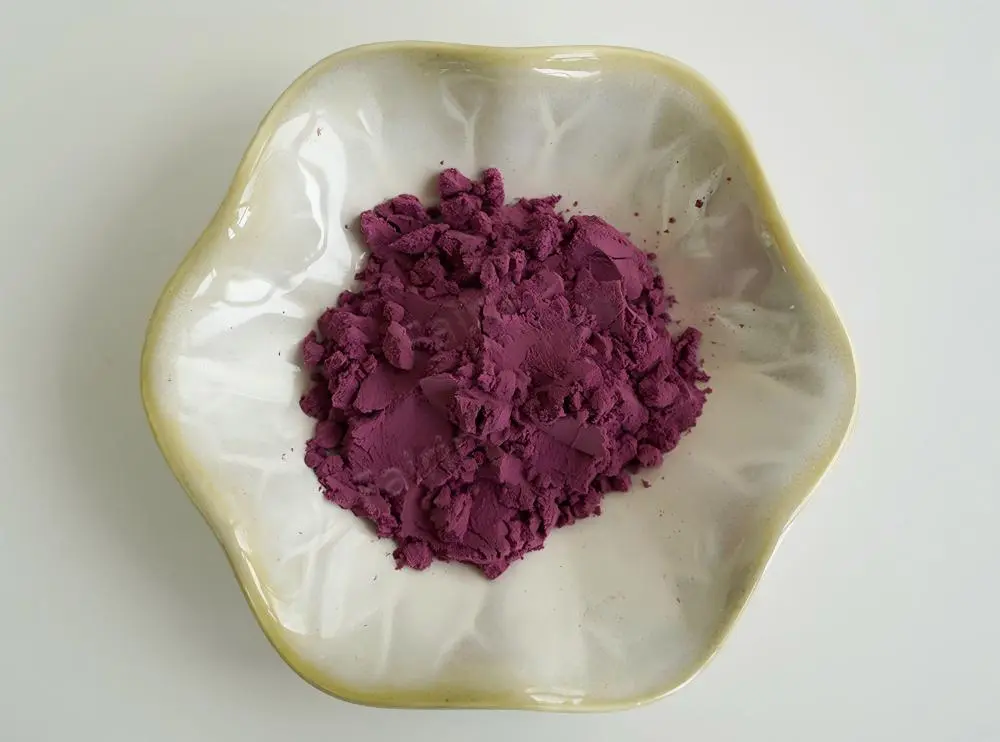
The true yam species Dioscorea alata is used to make Purple Yam Ube Powder. This plant is mostly grown in warm places, like the Philippines, Southeast Asia, and some parts of the Caribbean. The process starts with picking ripe potatoes. The potatoes are then washed and carefully checked for any problems. By using advanced freeze-drying technology, nutrients and color chemicals that are easily broken down by heat are kept. These chemicals and nutrients would normally be lost during thermal processing. Ultra-micro-pulverization is used to make particles that are all the same size, which is between 80 and 200 mesh. It makes sure that the bits mix well in a lot of different recipes. The natural nutty-vanilla taste and bright purple color of ube, which make it different from other purple root crops, are kept because of this careful processing.
Anthocyanin Concentration and Nutritional Profile
Anthocyanins are the main chemicals in ube powder that are good for you. They make up 0.3 to 0.5 percent of the dry weight, but this varies by type of ube and how it was changed. Flavonoids are water-soluble pigments. Their color stability depends on pH. When pH is low, they stay red, but when pH is high, they turn blue-purple. Anthocyanins are not only beautiful, but they also fight free radicals very well. A lot of high-end goods have ORAC levels above 15,000 µmol TE/100g. Some of the nutrients it has are potassium, magnesium, iron, and dietary fiber. It also has small amounts of vitamins B6 and C. Good suppliers give out detailed records of Purple Yam Ube Powder analysis that show the amount of anthocyanin in the product through HPLC testing, that the moisture level is less than 5%, and that the microbiological safety factors meet USP standards.
Distinguishing Ube from Purple Sweet Potato
Even though they look alike, ube and purple sweet potato are not the same plant. They taste and have different amounts of anthocyanins. The ube (Dioscorea alata), which is from the Dioscoreaceae family and tastes more like nuts and vanilla with light flower notes, is closer to the purple sweet potato (Ipomoea batatas) in terms of taste. The ube tastes nuttier and sweeter. The kinds of anthocyanins they have are also different. The chemicals in ube are mostly cyanidin-based, while the chemicals in purple sweet potato are more peonidin-based. These differences have an impact on how stable the color is, how well the tastes work together, and how well the end product does its job. When manufacturers need a strong purple color and a unique flavor, they choose ube powder. On the other hand, when manufacturers need a softer, sweeter flavor, they choose purple sweet potato powder.
Key Considerations When Procuring Anthocyanin-Rich Ube Powder
Quality Standards and Certification Requirements
When a business buys something from another business, the quality check must be thorough and look at more than just how the color looks and how strong it is. Getting organic certification from a trustworthy group like USDA Organic, EU Organic, or EcoCert ensures that farming without chemicals and collecting methods that don't hurt the environment are used. Testing done by a third party shows that there are no fillers, dyes, or cheap alternatives that are used to make the product look better. Labels that list allergens and steps to stop cross-contamination keep makers safe when they work with sensitive people. When it comes to controlling food safety, reliable providers have several certificates, such as ISO22000, HACCP, FSSC22000, and Kosher/Halal, for meeting special dietary needs. Our production plant in Fairir is 10,000 square meters and is GMP-certified. It is full of high-tech analysis tools that show how committed we are to quality. A technique called High Performance Liquid Chromatography is used to exactly measure the amount of anthocyanin present. UV spectrophotometry is used to ensure the purity, and rotating evaporators are used to carefully concentrate the mixes. Each final batch goes through a lot of tests before it is released. It is possible to keep track of everything, from where the raw materials come from to how they are packed at the end.
Supplier Evaluation and Sourcing Reliability
You should look at more than just their certificates to find providers you can trust. How reliable transportation is directly affected by how much can be made. There are 14 stainless steel tanks in our building that range in size from 500 to 3,000 liters and are used for extraction. When demand is high, automatic production lines keep the output steady. How well the separation process works is another important issue. Up to 98% of the time, modern continuous countercurrent extraction systems are able to gather the most active chemicals while making the least amount of waste. Being close to places where ube is grown in real life keeps the raw materials fresh longer and prevents quality loss during shipping. Good companies stand out from average ones because they are quick to respond to communication and know how to help with technical issues. Being able to talk about recipe issues, provide stable testing data, and offer customization options shows that you are truly committed to the relationship. Companies with a lot of experience keep detailed records on how to store their goods in the best way, the right doses for different purposes, and how well they react with different fillers or other ingredients. Knowing things like this is very helpful for making new things and solving issues.
Packaging, Pricing, and Logistics Optimization
The stability of the goods and how easily they can be bought depend a lot on how they are packed. Vacuum-sealed aluminum foil bags are standard for 1–5 kg amounts, and fiber drums with two layers of food-safe plastic covers are standard for shipping 25 kg in bulk. The vacuum packaging keeps air and moisture out, which keeps the anthocyanin stable all the way through the supply chain. Photosensitive colors don't break down while they are being stored or moved because of materials that block light. Prices change depending on how pure the material needs to be for extraction (80% vs. 99%), how many orders are placed, and the type of packaging chosen. Because direct manufacturers don't add markups to their prices, buyers can save 15–30% compared to those who buy through a broker. Setting up long-term supply deals with promises of volume can often get you more savings and give you priority when supplies are low. For stock items, delivery times are one to three business days. For special items, delivery times are two to three weeks. These changes mean that stock needs to be carefully planned, especially for markets in the US and Europe, where it takes 10 to 20 days longer to ship.
Applications and Advantages of Using Anthocyanin-Rich Purple Yam Ube Powder in B2B Products
Versatile Applications Across Multiple Industries
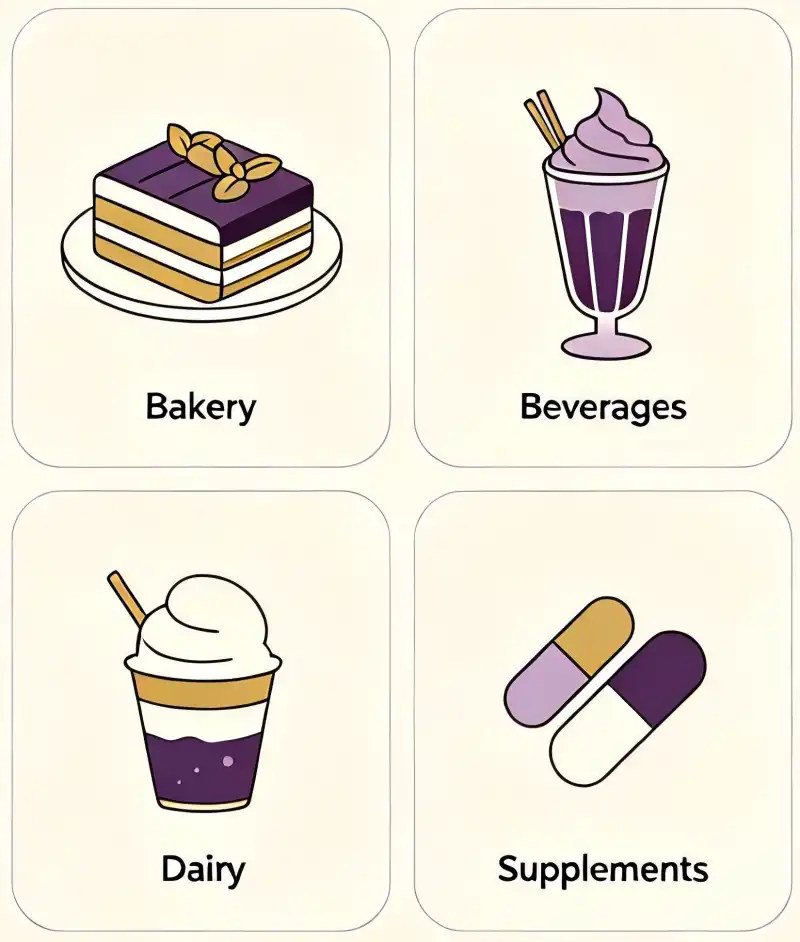
There are a lot of different industries that can use Purple Yam Ube Powder. It's used as a natural colorant in the baking business and as part of the flour in gluten-free recipes. It makes dough stay soft and gives breads, cakes, and cookies a unique purple color. The powder can withstand heat up to 180°C, which means it won't lose much of its color when baked normally. Ready-to-drink coffee, smoothies, bubble teas, and protein shakes all have ube powder added to them. Being thick by nature helps keep the powder in solution and gives drinks a creamy feel without the need for extra stabilizers or gums. Because it works with milk fats, ube powder can be used in dairy to make ice cream, yogurt, and frozen treats that look and taste great. Because the powder can bind water, it keeps ice crystals from forming. This keeps the texture smooth even when supply networks freeze and thaw. Companies that make sweets use ube powder in frostings, chocolate, and ganaches to make pricey items that meet customer needs for natural ingredients and unique tastes.
Clean-Label Benefits and Market Differentiation
More and more people want to buy things that have clear labels and materials that can be found. Companies can use natural colorants like Red No. 40 and Blue No. 1 instead of man-made ones when they use ube powder. People want to buy things that say "clean label" on them. When products have real superfood ingredients that have been shown to have antioxidant benefits, there are a lot more ways to sell them. Putting "anthocyanin-rich" or "made with purple yam superfood" on food labels really hits home with health-conscious people who want more than just raw nutrients.
Documented Performance in Commercial Applications
Case studies from the food industry show that ube powder can be sold in many places, but they don't name any brands. A moderately sized bakery chain began selling donuts and other treats that tasted like ube. They sold 40% more of them than their regular goods in the first six months. Companies that made holiday drinks with ube tastes said that a lot of people bought them again; 65% of people who tried them for the first time bought them again. Businesses that use ube powder as a main ingredient in their anthocyanin products were able to take market share away from artificial ones. People who like nutrition from food more than drugs from other sources found this to be especially true. These results show how important it is to find powder that is of good quality and meets standard requirements. A lot of the time, sellers fail because they give colors that aren't evenly intense, tastes that don't work because of bad handling, or anthocyanin levels that are too low and don't do what they say they will do. These risks are smaller when you work with well-known companies that have strict quality controls. This also helps new goods do well.
Comparing Ube Powder Solutions: Choosing the Best Option for Your Business
Ube Versus Alternative Purple Root Powders
You can choose ingredients that will help your product reach its goals if you know how the chemicals in different purple root vegetables are different. If you compare taro powder to Purple Yam Ube Powder, which comes from the same plant but has higher amounts of anthocyanin (usually between 0.5 and 3%), taro powder tastes smoother and a little sweeter. In other words, taro is better for coloring things gently, since strong purple colors might make the result look bad. It's easy to make tastes with purple carrot powder because it doesn't lose its color when the pH level changes. However, it doesn't have the unique nutty-vanilla notes that come from real ube. Purple sweet potato powder is the food that tastes most like ube because it has the same amount of anthocyanins and healthy sweetness. It doesn't have the complex vanilla and nutty notes of ube, though. Instead, it tastes simpler and sweeter. When it comes to apps that want real Filipino flavors or products that say they are "ube-flavored," the alternatives don't deliver the same flavors. When making a choice, price is another thing that matters. Purple sweet potato powder is a bit less expensive but still works well. Ube powder costs more because it comes from specific growing places and tastes more like the fruit.
Organic Versus Conventional Sourcing Decisions
When deciding between organic and standard farming, you need to think about how much the certification costs, where the product fits in the market, and how important it is to handle risks. Organic ube powder usually costs 20 to 40 percent more than normal ube powder. This is because it takes longer to grow and costs more to keep the certification up to date. It's worth the money to go after high-end customers, shops that sell natural goods, and people who are ready to pay more for FDA-approved organic foods. Getting organic approval makes it much easier to follow the rules. This is especially true for goods that are going to European markets, where there are strict rules about how much pesticide waste can be present. Even if it comes from a known source that uses Good Agricultural Practices, conventional ube powder is still very good. This is especially true when all of the raw materials are carefully tested before they are used. You can save a lot of money by using non-organic sources instead of organic ones. This is especially true if you need to save money, make your own goods, or sell them in a market where organic approval doesn't give you much of an edge. Because there isn't a clear difference in quality, the choice comes down to how the brand is positioned, its target group, and the needs of the store.
Supplier Comparison Framework
When comparing possible services, it's helpful to do so in an organized way using standard criteria. Quality metrics include anthocyanin concentration ranges, particle size distribution, moisture content, microbiological limits, and heavy metal testing results. The range of compliance is shown by portfolios of certifications. Fewer certifications, like ISO22000, HACCP, GMP, organic, Kosher, or Halal, show that the company is only interested in cutting costs, while more certificates show that they are really committed to quality. It is easier to make accurate budget plans and bid fairly when you have clear price information, such as pricing tiers based on specifications and structures for volume discounts. Service responsiveness measures include typical quote turnaround times, sample provision policies, technical support availability, and communication channels. Suppliers offering free trials, rapid response protocols (within 24 to 48 hours), and dedicated account management demonstrate customer-centric operations. Manufacturing capacity indicators such as extraction tank volumes, automated production lines, and annual output capabilities predict delivery reliability during demand surges. Geographic considerations affect lead times—Asian manufacturers offer cost advantages but extended shipping periods, Purple Yam Ube Powder, while distributors maintaining North American warehouses reduce delivery times but add distribution markups.
How to Initiate Procurement and Build Long-Term Supplier Relationships
Developing an Effective Request for Quotations
Successful procurement begins with comprehensive RFQs clearly defining quality expectations, quantity requirements, and evaluation criteria. Tell them how much anthocyanin you want (80%, 99%, or a custom amount), what particle size you need, what kind of approval you need, and how you'd like it packed. Include the expected annual amounts so that providers can base their prices on volume and make sure there is enough space. If you want to see that real standards were met instead of just theoretical ones, ask for specific certificates of analysis from recent production runs. Quality benchmark establishment through sample testing represents a critical pre-commitment step. Request samples matching exact proposed specifications and conduct internal evaluation covering color intensity, flavor profile, solubility characteristics, and stability under intended processing conditions. Third-party laboratory testing verifies supplier claims regarding anthocyanin content, purity, and safety parameters. By spending this much money up front (typically $300 to $800 for a full study), you can avoid expensive quality problems after you buy a lot of Purple Yam Ube Powder in bulk.
Negotiation Strategies and Contract Optimization
Effective negotiation extends beyond price reduction to encompass the total cost of ownership and relationship terms. When you say you'll buy a lot of something over the next 6 to 12 months, sellers will often discount it by 10 to 25 percent. This helps them plan their production. It's easier to manage cash flow when you can choose from different payment terms, like lines of credit, payments made in installments based on output goals, or net-30/60 terms for long-term contracts. Optimizing logistics by combining packages, putting goods in regional stores ahead of time, or making direct-to-facility transfers can lower the cost of shipping each unit. Contract clauses that talk about quality promises, what to do when standards aren't met, and how to settle arguments protect the interests of both parties. It's easier for people to work together for a long time when there are clear lead-time promises, rules for third-party testing disputes, and replacement policies for batches that don't meet specs. Intellectual property rights start to play when someone asks for a special recipe or to be processed privately. This means that non-disclosure and secrecy agreements are needed.
Quality Assurance and Supplier Relationship Management
Establishing ongoing quality assurance through periodic supplier audits and compliance verification safeguards consistent supply quality. The first site checks make sure that the company's manufacturing skills, quality systems, and ways of doing paperwork are in line with what it says it can do and what it is certified to do. Once a year, checks are done to make sure that rules are still being followed and to find any risks before they hurt the quality of the product. Any batch-to-batch testing method, even ones from well-known sources, can find changes in specs and watch out for quality loss due to getting too comfortable. Building transparent, collaborative supplier relationships creates mutual value extending beyond transactional exchanges. Regular communication regarding demand forecasts enables suppliers to optimize raw material procurement and production scheduling, potentially unlocking cost reductions shared between parties. Technical collaboration on formulation challenges, stability improvements, or new application development leverages supplier expertise while strengthening partnership bonds. Recognizing exceptional performance through increased business allocation, case study participation, or testimonials reinforces quality-focused behaviors and supplier engagement.
Conclusion
Finding Purple Yam Ube Powder that is high in anthocyanins means carefully checking quality standards, seller skills, and application needs to make sure the best product performance and market success. What makes real ube different from other purple root powders, how important full licenses are, and how useful it is to know how to make things all have a big impact on the buying process. Fairir is a reliable partner for businesses that want to use high-quality plant products in food, cosmetics, nutraceuticals, and medicines. We are a good choice because our building is GMP-certified, we use modern extraction technology that is 98% effective, and we are committed to providing quick and helpful customer service. We help business buyers lower their buying risks by putting quality, stability, clear communication, and technical support at the top of our list of goals. This way, they can still get the useful benefits and market differentiation that anthocyanin-rich ube powder offers.
FAQ
1. Is Purple Yam Ube Powder naturally gluten-free?
The root of the Dioscorea alata plant is the only source of Purple Yam Ube Powder. It does not come from wheat, barley, rye, or any other grain that contains gluten. But there are risks of cross-contamination in places that work on more than one thing at a time. If a company sells to celiacs or people who are sensitive to gluten, they should make sure that their providers have gluten-free processing lines or clean them very well between production runs. Ask for proof that the gluten amounts are less than 20 parts per million (ppm), which is the global standard for gluten-free claims. In case they need it, make sure that the buildings have legal gluten-free certifications as well.
2. What storage conditions best preserve anthocyanin content?
Anthocyanin stability depends on controlling temperature, light exposure, air contact, and moisture levels. Store ube powder in cool environments (below 20°C), away from direct sunlight, in vacuum-sealed or nitrogen-flushed packaging. At 25°C, 30–40% of the anthocyanin is lost in six months, but only a small amount is lost at 4°C. Anthocyanins break down faster when the temperature is higher. Vacuum metal foil bags are the best way to keep air and water out. Typical shelf life ranges from 12-18 months under proper conditions, though premium suppliers conducting accelerated stability testing can provide precise degradation curves supporting informed inventory management and rotation practices.
Partner with a Trusted Purple Yam Ube Powder Supplier
Fairir stands ready to support your procurement needs with pharmaceutical-grade Purple Yam Ube Powder manufactured in our ISO22000, HACCP, and GMP-certified facility. Our helpful technical team, advanced extraction methods, and thorough quality testing make sure that you always get high-anthocyanin products that are just what you need. You can try free samples, and we offer a variety of packaging choices for both small study orders and large business orders. For stock requirements, we can send quickly within one to three working days. We can help your business with organic certification, custom anthocyanin ratios, and private label choices because our team knows what they're doing, and you can count on them. Contact our buyers right away at sales@fairirbiotech.com to get samples, talk about your specific needs, or set up a visit to our site. Discover why leading pharmaceutical manufacturers, supplement companies, and food innovators trust Fairir as their Purple Yam Ube Powder supplier for consistent quality and exceptional service.
References
1. Wrolstad, R.E., et al. (2018). Anthocyanins in Food: Processing and Stability Considerations. Journal of Food Science and Technology, 55(4), 1289-1302.
2. García-Mendoza, M.P., et al. (2020). Bioactive Compounds and Antioxidant Capacity of Purple Yam (Dioscorea alata) Cultivars. International Journal of Food Science and Nutrition, 71(6), 743-756.
3. Chen, L., & Huang, G. (2019). Extraction Technologies and Quality Control of Natural Pigments from Root Vegetables. Food Chemistry, 285, 412-423.
4. Rodriguez-Saona, L.E., & Wrolstad, R.E. (2017). Natural Colorants for Food and Nutraceutical Applications: Stability and Processing Considerations. CRC Press.
5. Terahara, N., et al. (2021). Anthocyanin Composition and Stability in Tropical Yam Species: Comparative Analysis and Application Potential. Phytochemistry Reviews, 20(3), 567-589.
6. Zhang, Y., & Wang, M. (2020). Quality Assessment and Authentication Methods for Botanical Extracts in B2B Supply Chains. Journal of Agricultural and Food Chemistry, 68(42), 11685-11698.