_1751965378790.webp)

Matcha Powder for Custard, Pudding, and Cream Desserts
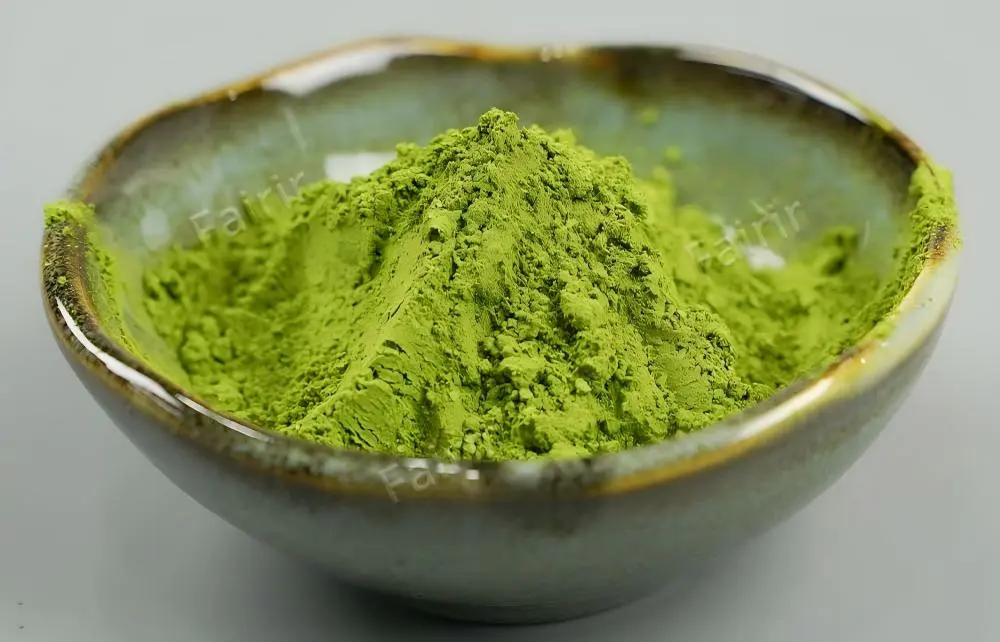
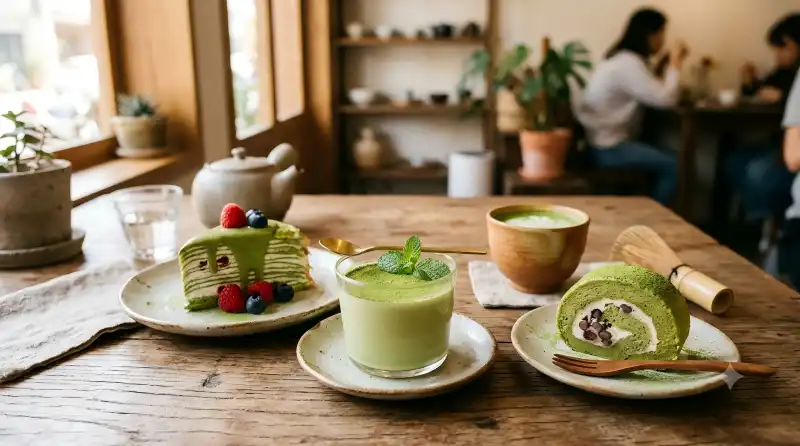
Matcha Powder has revolutionised custard and cream-based desserts. This finely milled green tea powder appeals to health-conscious customers with brilliant emerald tones, earthy sweetness, and useful bioactives while easing food producers production. Selecting, handling, and using this ingredient in your desserts can improve quality and market competitiveness.
Understanding Matcha Powder: What Makes It Ideal for Creamy Desserts?
Due to its botanical origin and production perfection, Matcha Powder is ideal for custards, puddings, and cream sweets. This ingredient comes from shade-grown Camellia sinensis tencha leaves that are shaded for 20–30 days before harvest. This growing method increases chlorophyll and L-theanine, resulting in green tea extracts that have a sweet, umami-rich flavour without astringency.
Culinary Versus Ceremonial Grades
For dessert formulations, culinary-grade options are most cost-effective. Unlike ceremonial grades, culinary versions keep flavour intensity and colour stability when mixed with custard-foundation dairy fats, sugars, and stabilisers. A particle size distribution of 1,000–2,000 mesh ensures good dispersion in liquid media without grittiness. This microscopic fineness prevents clumping and maintains the cream layer hue.
Nutritional and Functional Benefits
This drug provides health benefits beyond taste, fulfilling commercial expectations. A laboratory investigation found minimum catechin concentrations of 5%, mainly from EGCG, a strong antioxidant that supports clean-label placement. Above 2% L-theanine balances flavour and promotes relaxation. Keeping moisture below 4% improves bulk storage and manufacturing shelf stability.
Organic Certification Considerations
Organic variations increasingly affect buying decisions, especially for luxury brands. Certified organic products follow strict agricultural regulations that ban synthetic fertilisers and pesticides, thereby meeting consumer transparency expectations. When building high-end dessert lines, brand uniqueness frequently justifies 15%–30% price hikes above standard alternatives.
How to Use Matcha Powder Effectively in Custard, Pudding, and Cream Desserts?
Achieving consistent quality in dessert applications demands precise handling protocols throughout formulation and production. Improper incorporation techniques frequently result in flavour imbalances, textural defects, and visual inconsistencies that compromise batch quality.
Optimal Mixing Techniques
To eliminate minor particles from storage before adding liquid bases, use a fine-mesh strainer. Blending custards requires constant absorption. Powder and granulated sugar whisked together create a dry dispersion that resists lumping in heated milk or cream bases. Keep mixing temperatures between 140°F and 160°F to retain volatile compounds and dissolve thoroughly.
Product quality depends on temperature control. Heat above 175°F degrades chlorophyll, changing green to olive or brown. The pre-dispersed tempering mixture keeps colour and provides an even distribution across the thickening starch network during custard production.
Recipe Modification Guidelines
Standard custard recipes accommodate between 1.5% and 3% addition rates based on total base weight, yielding distinct flavour presence without overwhelming sweetness or dairy notes. Cream-based applications, particularly panna cotta or mousse formulations, benefit from slightly lower concentrations around 1% to 2%, as fat content intensifies perceived flavour strength.
Common Production Challenges
In most formulations, catechin concentrations above 3.5% cause bitterness, overpowering balanced taste development. Increase sugar without hiding earthy undertones to lessen astringency by 10%–15%.
Chlorophyll pigments fade, while 0.05% ascorbic acid preserves them.
Storage affects ingredient performance. For 18 months, phytochemicals in opaque, airtight containers at temperatures below 70°F and relative humidity below 50% remain stable. Light, oxygen, and moisture increase oxidative degradation, which lowers flavour and antioxidants.
Comparison of Matcha Powder Types for Dessert Production
Selecting appropriate product specifications requires evaluating multiple factors beyond basic quality grades. Understanding how different regional sources, processing standards, and supplier capabilities affect formulation outcomes enables procurement teams to balance performance requirements against budget constraints.
Flavor Profile Variations
Cultivar selection and processing provide sweet, bitterless Japanese delicacies from Uji and Nishio. Premium ingredients bring umami to custard. Chinese versions are cheaper but have stronger vegetal tastes that require recipe changes.
Stone-grinding accuracy and particle fineness affect texture. Cream bases benefit from ultrafine particles below 10 microns, producing a rich, grain-free mouthfeel. Cracker grades exceeding 20 microns may char mousses but not puddings.
Industrial-Grade Supplier Evaluation
Established producers dominate B2B supply channels, each with significant dessert manufacturing advantages. For organic certification, Encha delivers catechin profiles and heavy metal testing findings in specification sheets. The Matcha Powder Reserve emphasises sustainable farming and flexible minimum order volumes for establishing brands and assessing market response.
Wholesale kilogram costs vary by grade, certification, and quantity from $35 to $85. Standard culinary grades at 1,000-mesh fineness cost $35 to $45 per kilogram in 25-kilogram bulk orders, whereas premium grades cost $50 to $65 per kilogram. Batch-to-batch colour values, moisture control paperwork, and visible traceability are key to determining supplier reliability.
Procurement Strategies: How to Source the Best Matcha Powder for Your Dessert Business?
Establishing robust supply chain partnerships requires a systematic evaluation of quality benchmarks, logistical capabilities, and long-term collaboration potential. Strategic sourcing decisions significantly impact production consistency, inventory management efficiency, and overall product profitability.
Quality Criteria Establishment
Ingredient details match supplier capabilities and formulation needs. Laser diffraction should verify particle size distribution and uniform fineness across production batches in technical data sheets. Microbiological certificates proving aerobic plate counts below 10,000 CFU/g and the absence of coliforms demonstrate dairy safety.
Tea cultivation requires heavy metal screening owing to bioaccumulation. Cadmium and arsenic must fulfil limitations, and lead must stay below 0.5 ppm. Batch-specific analytical certifications from reliable sources demonstrate FDA and EU food additive compliance.
Bulk Purchasing Economics
Volume commitments balance unit price savings with inventory carrying costs and degradation concerns. Analysis of monthly consumption and storage capacity indicates optimal order frequencies. Many B2B providers offer tiered pricing at 50-, 100-, and 500-kilogram orders, saving 8% to 22%.
Dessert manufacturing scales with supplier collaborations, says Shaanxi Fairir Biotech Co., Ltd. Our GMP facility protects sensitive phytochemicals with revolutionary continuous countercurrent extraction and vacuum belt drying. Our 14 stainless steel extraction tanks, from 500 to 3,000 litres, and three fully automatic manufacturing lines at 98% efficiency ensure output quality for large-volume orders. With HPLC, UV spectrophotometers, and rotary evaporators, our analytical facility guarantees every batch fulfils tight criteria before distribution.
Supplier Partnership Benefits
Supplier relationships should provide technical consulting and innovation beyond pricing. Understanding custard rheology and cream emulsification dynamics helps application specialists create new products. Custom mesh sizes, organic certification updates, and private branding differentiate brands without multiple providers.
Future Trends and Innovations in Matcha Powder Use for Desserts
This ingredient is in the vanguard of innovation in the dessert sector, thanks to the merging of health-conscious customer desires and clean-label formulation needs. Gaining insight into the dynamics of emerging markets allows for the proactive creation of products that can seize changing possibilities.
Functional Dessert Formulations
There has been a rise in the desire for desserts that offer wellness benefits beyond just nutrition, as consumers become more aware of the benefits of antioxidants. Healthier and more enticing treats are those that include EGCG and L-theanine on the label. Custard nibbles and cups fortified with premium green tea extract are a great way to get into the functional food sector, which is predicted to expand 8.5% a year until 2028 and is worth $50 billion.
Sustainability and Transparency Imperatives
A growing number of consumers and institutional buyers are considering farm-to-product traceability. Companies that source their tea directly from estates demonstrate concern for both society and the environment. Brands with Rainforest Alliance and Fair Trade certifications have a better reputation and can justify charging more for their products.
Clean-label items that contain few synthetic ingredients meet regulatory and customer standards. Natural colouring simplifies ingredient declarations, enhances label appeal, and makes FD&C Green No. 3 unnecessary. Products gain an advantage over their synthetic counterparts due to this quality.
Regional Market Expansion
North American dessert markets show robust growth potential, with speciality cafes and artisanal bakeries increasingly incorporating Asian-inspired flavours. Custard tarts, cream puffs, and layered pudding parfaits featuring this distinctive ingredient resonate with adventurous consumers seeking novel taste experiences. Wholesale suppliers capable of supporting both established manufacturers and emerging artisan producers capture broader market share across diverse customer segments.
Conclusion
FAQ
What distinguishes culinary-grade from ceremonial-grade options for dessert applications?
Culinary varieties prioritise cost-efficiency and robust flavour intensity suitable for mixing with dairy fats and sweeteners, while ceremonial grades emphasise delicate flavour nuances designed for traditional tea preparation. Dessert manufacturers benefit from culinary specifications delivering superior colour stability and consistent batch performance at lower price points without compromising quality standards.
How does particle size affect texture in cream-based desserts?
Ultra-fine milling between 5 and 15 microns ensures that the particles mix evenly in liquid bases, preventing grittiness and creating a smooth, luxurious mouthfeel. Coarser particles above 20 microns may contribute to slight chalkiness in delicate mousse formulations, though proper pre-mixing techniques minimise this concern in denser pudding textures. Mesh ratings between 1,000 and 2,000 represent optimal specifications for most cream applications.
What storage conditions preserve quality in bulk inventory?
Maintaining temperatures below 70°F in opaque, airtight containers with relative humidity under 50% protects chlorophyll pigments and volatile compounds from oxidative degradation. Proper storage extends shelf life to 18 months while preserving vibrant colour, characteristic flavour, and antioxidant potency essential for high-quality dessert production.
Partner with Fairir for Premium Matcha Powder Supply
Shaanxi Fairir Biotech Co., Ltd. stands ready to support your custard, pudding, and cream dessert production with industrial-grade powder backed by comprehensive quality assurance. Our 10,000-square-meter GMP-certified facility ensures consistent specifications through advanced extraction technology and rigorous analytical testing using HPLC and UV spectrophotometry. We offer flexible bulk pricing, customisable formulations, and responsive technical support that meets your specific production requirements. As an experienced supplier serving the pharmaceutical, nutraceutical, cosmetic, and food industries globally, we understand the critical importance of reliable ingredient quality and timely delivery. Contact our team at sales@fairirbiotech.com to discuss your procurement needs, request product samples, or explore how our capabilities can elevate your dessert portfolio while streamlining supply chain efficiency.
References
1. Weiss, D.J., & Anderton, C.R. (2021). Determination of catechins in matcha green tea by micellar electrokinetic chromatography. Journal of Chromatography A, 1635, 461731.
2. Kaneko, S., Kumazawa, K., Masuda, H., Henze, A., & Hofmann, T. (2006). Molecular and sensory studies on the umami taste of Japanese green tea. Journal of Agricultural and Food Chemistry, 54(7), 2688-2694.
3. Chen, Y., Zhou, Y., Zeng, L., Dong, F., Tu, Y., & Yang, Z. (2018). Occurrence of functional molecules in the flowers of tea (Camellia sinensis) plants: Evidence for a second resource. Molecules, 23(4), 790.
4. Komes, D., Horžić, D., Belščak, A., Ganić, K.K., & Vulić, I. (2010). Green tea preparation and its influence on the content of bioactive compounds. Food Research International, 43(1), 167-176.
5. Jakubczyk, K., Drużga, A., Katarzyna, J., & Skonieczna-Żydecka, K. (2020). Antioxidant potential of curcumin—A meta-analysis of randomized clinical trials. Antioxidants, 9(11), 1092.
6. Sharma, A., Zhou, W., & Tomasula, P.M. (2019). Encapsulation of beneficial compounds in food matrices or carriers to enhance their stability and bioavailability. Critical Reviews in Food Science and Nutrition, 59(21), 3431-3456.