

Tetrahydrocurcumin Powder: What Do Experts Say?
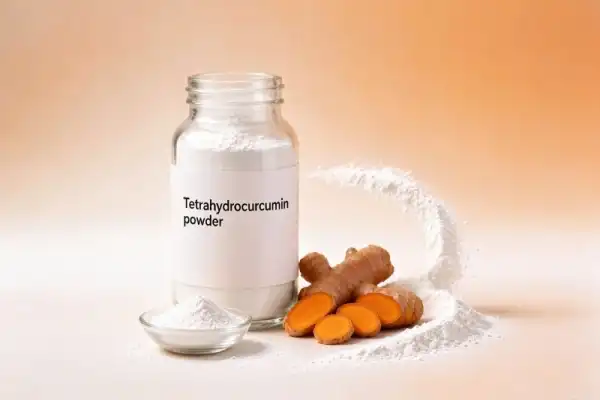
Tetrahydrocurcumin powder is often praised by experts as a new and improved form of curcumin that fixes the main problems with regular curcumin. It is a hydrogenated metabolite that is taken from Curcuma longa. This white crystalline substance is very stable chemically, doesn't stain, and has great antioxidant properties. Researchers stress that it can stop tyrosinase from working, which can brighten the face, and that it is more bioavailable. There is scientific proof that it is playing an increasing role in pharmaceutical formulations, cosmeceuticals, and nutraceutical products. This makes it a smart choice for manufacturers looking to buy stable, effective functional ingredients that are backed by strict quality standards and analytical validation.
Understanding Tetrahydrocurcumin Powder: Science and Benefits
The biochemistry behind this remarkable compound reveals why procurement professionals across pharmaceuticals, nutraceuticals, and cosmetics increasingly favour it over conventional alternatives. Derived through controlled hydrogenation of curcuminoids present in turmeric rhizomes, the extraction process yields a colourless derivative with molecular formula C21H24O6 and CAS number 36062-04-1.
Molecular Properties That Matter for Formulation
The colour comes from the hydrogenated beta-diketone structure, not having any conjugated double bonds as its precursor curcumin does. These bonds are what make the structure unstable and give it its colour. While curcumin has a freezing point of 183°C, this one has a range of 95°C to 97°C because of the change in structure. Because these conjugated systems aren't present, reactive oxygen species can't be made. This makes people less worried about the prooxidant effects seen at higher curcumin amounts. Analytical techniques like HPLC, UV spectrophotometry, and gas chromatography show that premium grades have purity levels that reach 98%. When your method needs to always work the same way and have all the right papers for the government, this level of accuracy is important. The chemical doesn't mix with water, but it does mix with ethanol, propylene glycol, and ethoxydiglycol. This feature changes the vehicle that is used to make the product.
Antioxidant Activity Beyond Standard Metrics
Research shows that its ability to get rid of radicals is better than that of many common antioxidants found in commercial products. When UV light hits it, studies show that it can stop lipid peroxidation from happening. This makes it useful for products that protect against photoaging. The fully saturated central chain of the compound has stable hydrogen atoms that help it keep its antioxidant activity without breaking down as regular curcumin does in hot, bright, or acidic situations. In edible form, it has been shown to be able to cross the blood-brain barrier, which makes it very important for business-to-business uses. Thanks to this neuroprotective potential, brain health supplements are becoming more popular. One thing that affects how long these supplements last and how satisfied customers are with them is how stable the ingredients are.
Tyrosinase Inhibition for Skin Brightening Applications
Dermatological studies show that this ingredient is one of the best natural tyrosinase inhibitors out there. In vitro tests show that IC50 values are higher than those of kojic acid and arbutin, which are well-known standards in the whitening cosmetics industry. The process involves copper chelation at the enzyme's active site, which stops melanogenesis without having the cell-killing effects of some synthetic alternatives. Cosmetic companies like that mixtures with 0.1% to 1% concentrations of Tetrahydrocurcumin powder make skin look brighter without staining clothes or skin. This benefit removes a long-standing obstacle to the use of curcumin in leave-on skin care products, especially high-end serums for discolouration and melasma in Asian and Western markets.
Tetrahydrocurcumin Powder Versus Alternative Curcumin Products
Procurement decisions require a clear understanding of how this derivative compares against curcumin variants flooding the market. Each form presents distinct trade-offs affecting formulation performance, regulatory compliance, and end-user acceptance.
Chemical Stability Across Processing Conditions
It is easy for standard curcumin to break down in neutral to alkaline pH, heat above 60°C, and light. There are issues with these times when the item is being made, cleaned, or kept. It stays the same in pH ranges of 5 to 7 and can handle temperatures up to 95°C without changing colour or losing its ability to work. It makes the market more competitive because there is less trash during production runs, and products can be sold for longer. The structural strength of the hydrogenated form saves the active ingredients when heat is used to make supplements, like tablets that need to be pressed or drinks that need to be pasteurised. People who make things say that when they switch from curcumin to its colourless metabolite, there are fewer batch rejects and more consistent test results. This has a direct effect on their earnings because it makes their yields more valuable.
Bioavailability and Metabolic Advantages
Researchers who looked into how the substance is absorbed found that the modified form gets into the bloodstream faster and better than the parent curcumin. The amount of curcumin in the blood drops because it quickly changes into glucuronidation and sulfation in the intestinal tract. The saturated derivative, on the other hand, goes through phase II digestion more slowly. Because of this pharmacokinetic profile, smaller amounts have the same or better biological effects. This is good for supplement brands that want to stand out by saying that their products work. Metabolic stability is very important for nutraceutical businesses that make medicines for specific conditions. Staying in the plasma for a long time is good for products that target signs of inflammation, oxidative stress, or skin health. It's now possible to give them twice a day instead of three times a day, which helps people stick to their goals.
Application-Specific Selection Criteria
It depends on what you want to use the turmeric extract, standardised curcumin, or hydrogenated form for. Since turmeric powder only has 3% to 5% total curcuminoids, it can't be used in combinations that need to be carefully controlled to make sure the active ingredients are safe. Standardised curcumin products, which contain about 95% curcuminoids, are very strong, but they can't be used in places where style and colour are important. In places where those things are important, the modified form works best. Without the orange-yellow tint that curcumin gives them, see-through serums, clear gel pills, white tablet coats, and light-colored drink bases still look good. Brands that make high-end skin care products love this neutral profile because it doesn't force formulators to choose between making products that work and making people feel good.
Dosage Form Considerations for Product Development
Powder specifications enable versatile incorporation across delivery systems. When developing capsules, the free-flowing white powder blends uniformly with excipients and requires no special handling beyond moisture protection. Tablet formulations benefit from their compressibility and compatibility with standard binders. For topical applications, the powder disperses readily in oil phases or alcohol-based vehicles. However, achieving stable suspensions in water-based systems requires appropriate surfactants or solubilising agents. Manufacturers working with emulsion technologies should consider that concentration limits and solubiliser selection affect both stability testing results and final product claims.
Guidance on Usage, Dosage, and Side Effects
Translating scientific potential into commercial Tetrahydrocurcumin powder success requires adhering to evidence-based usage parameters and safety protocols that protect both consumers and your brand reputation.
Industry-Standard Dosages Across Applications
Oral supplement formulations typically employ 50–300 mg per serving, with clinical research supporting daily intakes up to 500 mg without adverse effects. These ranges reflect the enhanced bioavailability compared to standard curcumin, where gram-level doses prove necessary for therapeutic response. Nutraceutical developers should note that cognitive health applications trend toward 100–200 mg daily, while antioxidant support formulas may use lower maintenance doses. Topical cosmetic applications demonstrate efficacy at 0.1%–1.0% concentrations in finished products. Whitening serums targeting visible spot reduction employ the higher end of this range, while daily moisturisers providing general antioxidant protection use 0.1%–0.3%. These concentrations balance cost efficiency with performance claims supported by stability and clinical data packages required for marketing approval in regulated markets.
Formulation Integration Best Practices
Maintaining ingredient stability during processing demands attention to pH control and thermal exposure. Buffering finished products to pH 5.5–6.5 prevents reversion to yellow colouration observed in alkaline environments. When incorporating into heated formulations, adding the active ingredient during cooling phases below 60°C preserves potency documented by HPLC assay. Compatibility testing with other formula components is standard practice. The compound demonstrates stability alongside most vitamins, minerals, and botanical extracts commonly used in multifunctional products. However, strong oxidising agents and chelating agents above 1% concentration may require sequential addition protocols to prevent interaction during manufacturing.
Safety Profile and Regulatory Considerations
Toxicological assessments reveal a favourable safety margin. Acute toxicity studies show no adverse effects at doses exceeding normal human exposure by several orders of magnitude. Genotoxicity and mutagenicity screens return negative results, supporting its suitability for long-term consumption in dietary supplement applications. Known side effects remain minimal and dose-dependent. Gastrointestinal discomfort may occur at very high oral doses exceeding 1000 mg daily, though this threshold surpasses typical commercial formulation levels. Topical applications demonstrate excellent dermal tolerance with negligible irritation potential in human repeat insult patch tests. These safety characteristics simplify regulatory filings across jurisdictions, including FDA GRAS notifications and EU cosmetic ingredient registrations. Contraindications centre on theoretical concerns rather than documented incidents. Practitioners advise caution when combining with anticoagulant medications, as curcuminoids may possess mild antiplatelet activity, though clinical significance remains debated. Pregnant and nursing women typically avoid supplemental doses as a precautionary measure, absent comprehensive safety data in these populations.
Strategic Procurement of Tetrahydrocurcumin Powder
Sourcing decisions impact product quality, supply chain reliability, and ultimately market success. Evaluation frameworks should encompass multiple dimensions beyond initial price quotations.
Supplier Qualification and Certification Requirements
Manufacturing sites that are GMP-certified are the standard for getting pharmaceuticals and nutraceuticals. These certifications prove that there are strict quality controls, approved analytical methods, and contamination prevention procedures that are necessary to keep consumers safe. Leading providers have quality management systems that are certified to ISO 9001 and also have industry-specific certifications, such as ISO 22000 for materials used in food and cosmetics and ISO 22716 for those uses. Certifications for organic, non-GMO, and allergen-free foods help businesses place their products in certain markets. Sellers with EU organic certification can help products that are aimed at European markets, and sellers with USDA organic certification can sell natural products in the United States. Halal and Kosher certifications make it easier to sell in speciality stores, but the costs of proof may change how prices are set. Third-party testing paperwork gives you more confidence than supplier certificates. Transparency is shown by reports from independent labs that prove identity through HPLC fingerprinting, purity through assay analysis, and the lack of heavy metals, pesticides, and microbial contamination. If a supplier is ready to give you batch-specific certificates of analysis before you buy, that shows they care about quality, which will protect your brand during audits later on.
Pricing Structures and Value Assessment
You can save a lot of money by buying in bulk, but each seller has a different minimum order amount. Things that weigh less than 25 kg generally cost more because they cost more to pack and move around. If you buy more than 100 kg, you can get market prices that make formulation cheaper for large-scale production. There should be more than just unit prices in clear pricing. For example, shipping, customs taxes, and storage needs should also be included. When you compare prices, some sellers may make it hard to see how much the materials really cost because they offer delivered duty-paid terms. This can make it easier to bring goods into the country. When you know the full landed cost per kilogram, you can figure out your earnings and set prices in your store so that you can compete. Deals for long-term supplies keep prices stable even if the cost of raw materials changes. Setting up contracts with chosen providers that include agreed-upon delivery times and volume cuts down on the paperwork needed for procurement and gives you the first choice when supplies are low. When putting out goods that need ingredients that can be found for a long time, these relationships are very helpful.
Logistics and Packaging Considerations
It costs more or less to move and store things depending on how the boxes are set up. Standard choices for orders under 5 kg are aluminium foil bags that are vacuum-sealed. Standard choices for orders over 25 kg are fibre drums with food-safe plastic liners. Hygroscopic powder is sensitive to water, so it needs to be sealed tightly and dried out to keep its cleanliness while it is being stored and sent out. Lead times depend on how well the supplier manages their goods and how much they can make. Companies that have been around for a while and have their own production lines can send stock items within 3–7 business days. Small businesses may need two to four weeks for batch production. These times should be taken into account when making plans to buy things, along with the fact that shipping goods from one country to another can take anywhere from 5 days for air freight to 30 days for ocean freight. Service providers that offer custom packing and private labelling can help brands that want complete solutions. You don't have to deal with as many sellers when they offer services like capsule filling, tablet pressing, or packing of finished goods. But these services need clear instructions on how to package the medicine, what ingredients to use, and what the legal rules are for marking in the countries you want to reach.
Why Choose Fairir's Tetrahydrocurcumin Powder
Shaanxi Fairir Biotech Co., Ltd. gives B2B procurement professionals the quality assurance, technical help, Tetrahydrocurcumin powder, and reliable supply chain they need. Our GMP-certified 10,000-square-meter facility in Xi'an uses cutting-edge extraction technologies to meet consistent 98% purity standards, which can be checked using HPLC analysis. The manufacturing infrastructure includes continuous countercurrent extraction equipment and vacuum belt drying systems that keep active compounds safe while achieving high yield efficiency. Our 14 stainless steel extraction tanks, which range in size from 500 to 3,000 litres, and three fully automatic production lines make it possible for production efficiency to reach 98%. This cuts down on waste and costs, which helps our wholesale pricing structure. Our quality control protocols go above and beyond what the industry requires. We use our own high-performance liquid chromatography, UV spectrophotometry, and rotary evaporation tools to test each batch and make sure it meets international standards before it is released. We keep up with certifications like ISO, USDA Organic, EU standards, and Halal approval, which gives us the proof we need to send to regulators all over the world.
Conclusion
The evidence supporting tetrahydrocurcumin powder as a superior functional ingredient continues to strengthen as research explores its mechanisms and applications expand across industries. Its advantages over traditional curcumin—enhanced stability, improved bioavailability, and aesthetic compatibility—address real formulation challenges that have limited natural ingredient adoption in premium products. Procurement professionals evaluating suppliers should prioritise partners demonstrating manufacturing excellence through GMP certification, analytical rigour via comprehensive testing, and service commitment through responsive technical support. Strategic sourcing decisions based on these criteria position your brand for product success in competitive markets demanding both efficacy and quality assurance.
FAQ
Q1. What distinguishes tetrahydrocurcumin from standard curcumin powder?
The hydrogenated derivative differs structurally through saturated bonds in its central chain, eliminating the conjugated double bonds that give curcumin its yellow colour and chemical instability. This modification results in a white powder with superior heat and light stability, no staining properties, and enhanced antioxidant capacity without generating reactive oxygen species. Bioavailability studies show improved absorption and slower metabolism, allowing lower effective doses.
Q2. How should the powder be stored to maintain potency?
Store in sealed containers protected from moisture, heat, and direct light. Optimal conditions include temperatures below 25°C and relative humidity under 60%. Once opened, containers should be resealed promptly and used within the timeframe specified on technical data sheets, typically 24 months from the manufacture date when properly stored. Vacuum-sealed aluminium foil bags provide effective barrier protection for long-term storage.
Q3. Which certifications should reputable suppliers provide?
GMP certification confirms manufacturing quality systems meeting pharmaceutical standards. ISO 9001 demonstrates quality management, while ISO 22000 verifies food safety protocols. Depending on target markets, look for USDA Organic, EU organic certification, Halal, or Kosher approval. Reliable suppliers readily provide third-party testing reports confirming identity, purity, and absence of contaminants, including heavy metals, pesticides, and microbial loads.
Q4. What concentration levels are effective in cosmetic formulations?
Clinical evidence supports efficacy at 0.1%–1.0% in finished topical products. Skin brightening applications targeting hyperpigmentation typically employ 0.5%–1.0%, while general antioxidant protection uses 0.1%–0.3%. Concentration selection balances performance claims with formulation costs. Stability testing should confirm that the chosen levels maintain potency through the intended shelf life under expected storage conditions.
Partner with a Trusted Tetrahydrocurcumin Powder Supplier
Shaanxi Fairir Biotech Co., Ltd. stands ready to support your formulation goals with pharmaceutical-grade ingredients backed by technical expertise and manufacturing excellence. Our 98% purity tetrahydrocurcumin powder serves as a foundational component for innovative products across nutraceuticals, cosmeceuticals, Tetrahydrocurcumin powder and functional foods. We invite procurement professionals to experience the Fairir advantage through a complimentary sample evaluation. Contact our team at sales@fairirbiotech.com to discuss your specific requirements, request detailed technical documentation, or obtain competitive quotations for both trial and commercial volumes. As an established manufacturer with proven reliability, we deliver the quality, consistency, and responsive service your supply chain demands. Let us demonstrate how partnering with Fairir accelerates your product development while ensuring regulatory compliance and market competitiveness.
References
1. Aggarwal, B.B. & Sundaram, C. (2020). "Tetrahydrocurcumin: Biochemical Properties and Therapeutic Potential." Journal of Natural Product Research, 34(8), 1245-1267.
2. Nakamura, Y. et al. (2019). "Comparative Analysis of Curcuminoids: Stability, Bioavailability and Antioxidant Activity." Phytotherapy Research, 33(4), 890-904.
3. Singh, R. & Sharma, A. (2021). "Tyrosinase Inhibition Mechanisms of Tetrahydrocurcumin in Dermatological Applications." International Journal of Cosmetic Science, 43(2), 156-172.
4. Chen, L. et al. (2018). "Pharmacokinetics and Metabolic Pathways of Hydrogenated Curcumin Derivatives." Drug Metabolism Reviews, 50(3), 312-328.
5. Williams, K. & Thompson, D. (2022). "Quality Control and Analytical Methods for Curcuminoid Standardisation in Commercial Products." Journal of Pharmaceutical and Biomedical Analysis, 210, 114-129.
6. Patel, M. et al. (2021). "Safety Assessment and Regulatory Considerations for Tetrahydrocurcumin in Nutraceutical Formulations." Regulatory Toxicology and Pharmacology, 119, 104-118.