_1751965378790.webp)

Ube Powder in Brownie Swirl: Visual Contrast Baking Tip
Adding dramatic purple swirls to cakes has become a signature move in high-end restaurants all over the world. Ube Powder, which comes from bright purple yams, makes plain chocolate brownies into visually stunning treats that get people's attention right away. This naturally occurring ingredient adds a subtle, nutty sweetness that improves the overall flavour profile. Its deep cocoa tones and bright violet streaks make for a stunning contrast. Carefully layer purple yam batter on top of regular brownie bases. Then, use a knife or stick to make marbled designs on top of the batter before baking. In addition to making products look better, this method gives food companies a chance to set their products apart by using clean-label ingredients that appeal to health-conscious customers looking for natural colouring alternatives.
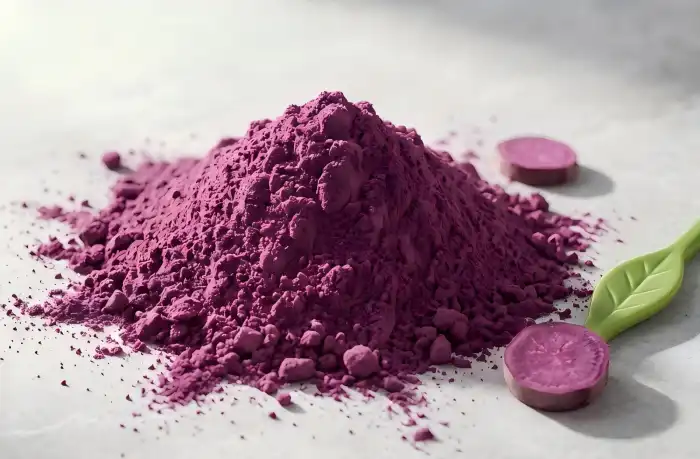
Visual Contrast Baking with Ube Powder in Brownie Swirls
Putting purple swirls on cakes used to be a speciality of small bakeries, but now it's a way used in mass production. This application shows how natural Ube Powder can be used to turn ordinary chocolate goods into high-end ones that can be sold for more money and get more people interested in them.
Step-by-Step Incorporation Method
To get swirl patterns that are always the same, you need to carefully prepare the batter and use layering techniques that can be used with industrial mixing equipment. The first step is to split the made brownie batter in half. One half will stay a standard chocolate base, while the other half will have Ube Powder added to it. Manufacturers usually add 2 to 4 percent powder by weight to the specified amount, changing the percentage based on how strong the colour should be and how strong the flavour should be. It's important to spread the particles out evenly, and high-shear mixing for 90 to 120 seconds does that without overworking the batter structure. After putting the chocolate base into the pans, dollops of the purple mixture are placed on top of it in appropriate places. Automated depositors can be designed to copy placement patterns made by hand, so thousands of units will all look the same. The marbled look is made by a mechanical swirling tool or a programmed robotic arm moving in a controlled figure-eight pattern that goes halfway into the pan without touching the bottom.
Powder Versus Extract: Selection Criteria
Production managers often have to choose between Ube Powder and liquid extract formulations. Each has its own benefits for different operational situations. Since powdered forms don't need to be refrigerated and take up less warehouse room per unit of active ingredient, they last longer on the shelf and are easier to keep track of. Because it is concentrated, automated weighing systems built into mixing lines make it possible to precisely control doses, which lowers the difference from batch to batch. Liquid extracts make it easier to mix in batters with a lot of wetness, but they also add more water, which may mean that the recipe needs to be changed to keep the desired texture profiles. When transportation costs, storage needs, and less waste from a longer shelf life are taken into account, cost analysis usually favours powder. With powder, quality control procedures are easier to follow because HPLC tests for anthocyanin content give uniform starting points across production runs.
Common Challenges and Solutions
To make swirled brownies on a large scale, there are certain technical issues that need to be solved in a planned way. Too much alkalinity in the mixtures can cause colours to fade during baking. Keeping the pH below 6.5 keeps anthocyanin stable during heat exposure. When the viscosities of the chocolate and purple batters are very different, swirl clarity is lost. To keep the pattern clear, the water levels must be adjusted to match the flow properties. Multi-point deposition systems can even out uneven distribution on large sheet pans by putting down both types of batter at the same time over the whole surface. A successful case study from a bakery in the middle of the Atlantic showed that lowering the oven temperature by 15°F and increasing the baking time by three minutes increased the finished colour by 40% without changing the texture or structure. By making this change, they were able to cut the amount of Ube Powder they used by 18% while keeping customer happiness levels the same. This directly increased their premium cookie line's profit margins.
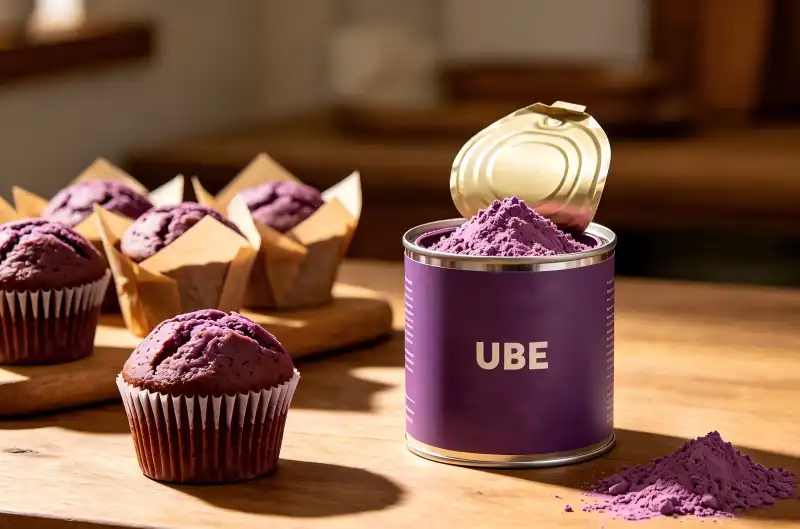
Procurement Guide: Choosing and Buying Ube Powder for Bulk Baking Needs
To find the best supplier partner for Ube Powder, you need to carefully consider a number of factors that have an immediate effect on the quality of the product, the efficiency of operations, and the long-term viability of the business. There are a lot of different options for B2B procurement, from agricultural cooperatives to specialised manufacturers of botanical extracts.
Supplier Evaluation Criteria
Buyers who care about quality should give more weight to companies that have strong quality management systems that have been certified by a third party. GMP certification makes sure that work areas are standardised and that there are written rules for keeping things clean, keeping tools in good shape, and training programs for staff. Suppliers equipped with advanced analytical instrumentation—including HPLC systems, UV spectrophotometers, and rotating evaporators—can provide complete Certificates of Analysis recording anthocyanin content, moisture levels, microbial counts, and heavy metal screening results. When operations are expanded, production capacity is very important. Plants with many extraction lines and a lot of drying space (10,000 square meters or more of manufacturing space) can handle more orders without affecting delivery times. Premium suppliers are different from commodity suppliers because they have clear communication channels and technical support available. This is especially important when formulation problems arise and need expert advice.
Organic Versus Conventional Products
When choosing between organically approved and conventionally made Ube Powder, you have to weigh the costs against your goals for market positioning. Organic versions usually cost 30 to 50 percent more, but they give you access to natural and organic retail areas that are growing quickly and where clean label credentials are important for buying choices. Getting certified makes managing the supply chain more difficult because of all the paperwork that needs to be kept from the farm to the final packing. When it comes to cost and supplier availability, conventional options are better. They still meet food safety standards and work just as well in most baking situations. Market research shows that premium bakery brands aimed at health-conscious millennials see measurable sales increases when they prominently display organic ingredient callouts. This could justify the higher investment in raw materials.
Pricing and Bulk Discount Structures
Knowing how prices change in the botanical extract market helps you negotiate better and plan your budget better. Ube Powder prices depend a lot on how easy it is to get the raw materials, how well they are extracted, and how much of them are ordered. Discount levels usually start at 500 kg purchases made every three months, and savings keep going up as commitment levels reach 1,000 kg and 2,500 kg. When there aren't enough crops to go around, long-term supply deals that last between 12 and 36 months can lock in better prices and make sure that the right crops get to the right people first. Reputable makers have clear price systems that break down the costs of base materials, processing fees, quality tests, and logistics. This makes it easier for procurement teams to find value drivers and ways to improve efficiency. Instead of just looking at per-kilogram prices, competitive sourcing should look at the total landed cost, as freight, duties, and storage costs have a big effect on the real cost of ingredients.
Logistics and Storage Best Practices
Different places have different rules about importing plant products, so it's important to pay close attention to paperwork and follow the rules. Working with suppliers who know how to handle international logistics cuts down on delays and the chance that a shipment will be turned down at a port of entry. Setting up the right storage rules as soon as you get the ingredients protects your investment and keeps the performance characteristics. Keeping temperatures between 60°F and 75°F and relative humidity below 60% in climate-controlled storage stops things from absorbing water and breaking down. First-in, first-out inventory cycle methods and regular quality spot checks make sure that the oldest stock is used up before it goes bad, which cuts down on waste from old items.
Comparative Insights: Ube Powder Versus Other Purple Ingredients
Food makers can now choose from a growing number of natural Ube Powder options. To make the best decisions, they need to know what each one does and when it should be used. Picking the right ingredients has a direct effect on how different the products are, how much they cost, and where they stand in the market.
Alternative Purple Ingredient Comparison
When compared to Ube Powder products, purple sweet potato powder has a slightly different flavour profile that is earthier and less sweet. It has a similar visual effect. Taro powder has light nutty notes, but it usually has lower anthocyanin levels, so it needs to be added at higher rates to get the same colour intensity. This affects both the cost of formulation and the flavour impact that might happen. Paste forms are useful for small-batch work, but they make it hard to standardise the texture and amount of moisture across large-scale commercial output. Each ingredient reacts differently to changes in pH, but Ube Powder derivatives are more stable across a wider range of acidity levels that are common in baking. Functionality testing during the creation of a product helps figure out which ingredients work best with certain product structures and processing conditions.
Fresh Versus Powder: Practical Recommendations
Fresh Ube Powders are great for food service because they taste like real food, but powdered versions are much better for business production settings. Fresh tubers need to be processed by hand, which includes steps like washing, peeling, cooking, and pureeing that add variation and raise the risk of contamination. Seasonal availability causes supply problems that can't be fixed with year-round production plans, and the short shelf life of both fresh and cooked forms makes managing goods harder. When you use powder concentrations, you get 8 to 12 times the colour intensity per unit weight. This makes shipping much cheaper and storage space much more useful. Standardised particle size distribution and moisture content in high-quality powders allow for exact recipe control that is not possible with fresh ingredients. Because powder forms can be reconstituted in different ways, makers can change the amounts of water to suit different uses, from making thick cake batters to thin glazes.
Brand Quality Assessment
When looking at Ube Powder suppliers, you need to look at measures that show stability across multiple delivery batches. Leading producers set strict limits on changes in anthocyanin content (usually within ±5 percent), which makes sure that the colour performance is the same from batch to batch. The way particles are spread out affects how they spread. High-quality goods have uniform granulation that goes through 80-mesh screens so they can be easily mixed into fine-textured mixes. Microbiological quality sets food-grade suppliers apart; pathogens like Salmonella and E. coli are not present, and total plate counts are less than 10,000 CFU/g. Customer reviews from well-known food companies can tell you a lot about how well a product works in real life, how quickly technical help responds, and how reliable a supply is during times of high demand or problems with farming. Having relationships with providers that show steady quality, open communication, and ways of working together to solve problems gives you benefits in the market that go beyond just buying things.
Maximizing the Use of Ube Powder: Recipes and Application Ideas for B2B Clients
Product designers who want to cash in on the Ube Powder trend can think of many uses for the fruit that go far beyond standard brownie swirls. This versatile ingredient can be used in a lot of different types of products, which lets you grow your business and stand out in the market.
Expanded Commercial Bakery Applications
Adding Ube Powder to regular baked goods turns them into high-end items that stand out in crowded stores. Layer cakes with violet and vanilla sponge alternating layers make beautiful cross-sections that look great in photos and are great for social media marketing. Vegan cookie recipes can use the natural ability to glue ingredients together and keep wetness in, which helps with common egg-free baking problems and gives the cookies an eye-catching look. Gluten-free bread makers use the powder to make the bread look better and to add a hint of sweetness that hides the sometimes bitter flavours of other flour blends. Ube Powder added to doughnut glazes makes limited-edition seasonal treats that get people excited and make them want to buy them again. The ingredient keeps its colour well through freeze-thaw cycles, which is great for companies that make frozen bakery goods because some natural colourants break down when exposed to high temperatures.
Formulation Techniques for Visual Enhancement
For the best visual effect, you need to know how Ube Powder reacts with other ingredients in the formula during processing and while it's on the shelf. Acidic substances, such as buttermilk, lemon juice, or cream of tartar, change the colour of anthocyanins to a reddish-purple shade. On the other hand, neutral or slightly alkaline conditions create real violet shades. Strategic pH control with buffering systems lets you target colours precisely so they match the look of your brand. By using layering techniques, you can make ombre effects that go from dark purple to light lavender. These effects make simple pound cakes or muffins look more fancy. When mixed with cream cheese frosting, the powder creates steady vibrant purples that are great for decorating items that need to be displayed for a long time. Blending Ube Powder with natural yellow ingredients like turmeric or butterfly pea flower creates custom colours that range from pink to blue, giving product developers almost endless ways to be creative and come up with new ideas.
Emerging Market Trends
North American markets are seeing a rise in the demand for natural, easily recognisable materials. Younger people are especially interested in organic and plant-based claims. These tastes go well with Ube Powder, which is made from real plants and looks different from other powders that are made in a lab. According to a study of the market, natural food colourants will grow at rates higher than 12 percent per year until 2028. This is because of changes in customer tastes and government pressures on fake additives. People who are quick to market themselves as Ube Powder experts get a leg up on building brand associations with this popular ingredient. When you put together Ube Powder derivatives' good looks, clean label credentials, and functional nutrition, they make them great ingredients for forward-thinking companies that want to stay ahead of the competition in crowded bakery categories.
Conclusion
Ube Powder is a smart ingredient that food companies can use to set their products apart naturally in markets that are already very competitive. The visual drama of violet swirls in chocolate brownies grabs people's attention and delivers clean-label qualities that match what the market wants. To implement successfully, you need to know about technical issues ranging from making the batter to setting the right baking conditions. You also need to know how to choose suppliers in a way that ensures consistent quality and reliable supply chains. Comparing different purple ingredients makes it easier to figure out the best uses for them, and looking into uses other than brownies opens up the possibility of diversifying a portfolio. As the need for natural, eye-catching goods keeps rising, manufacturers who invested early in Ube Powder knowledge will be better able to stay relevant in the market.
FAQ
1. Does purple yam powder work in gluten-free baking?
Ube Powder contains no gluten, so it can be used in gluten-free recipes without the need for binding agents or changes to the recipe. In fact, its natural starch content helps structure alternative flour systems, leading to better texture results than formulations that only use rice or tapioca flours.
2. How long does opened purple yam powder remain effective?
When kept in a cool, dry place away from direct light for 12 to 18 months after opening, properly resealed Ube Powder keeps its colour intensity and useful qualities. By limiting oxygen exposure, which speeds up the breakdown of anthocyanin, vacuum-sealing unused portions or moving them to opaque, airtight containers can extend their useful life.
3. What distinguishes powder from fresh purple yams in flavor?
Fresh tubers have stronger, earthy, and slightly flowery notes, and their natural wetness adds to the texture. Ube Powder concentrates the subtle sweetness of nuts while removing the water. This makes the flavour blend better without changing the consistency of the batter. Most people can't tell the difference between finished baked goods made with quality Ube Powder and those made with fresh ingredients.
Partner with Fairir for Premium Ube Powder Supply
Shaanxi Fairir Biotech Co., Ltd. is ready to help you with your Ube Powder needs. They offer pharmaceutical-grade quality and manufacturing know-how that they've gained over years of specialising in botanical extracts. Our 10,000-square-meter facility is GMP-certified and uses cutting-edge extraction technology, such as continuous countercurrent systems and vacuum belt drying equipment, to make sure that every production batch has the same amount of anthocyanin. Three fully automatic lines achieve 98 percent extraction efficiency, giving you more colour potency while lowering your per-unit ingredient costs and keeping the good visual effect. As a dedicated Ube Powder provider, we know how important it is to have accurate specs, quick technical help, and clear communication throughout the whole buying process. You can email our team at sales@fairirbiotech.com to talk about custom formulations, ask for analytical specifications, or set up sample shipments that show how committed we are to delivering quality products every time.
References
1. Rodriguez-Amaya, D.B. (2019). "Natural Food Pigments and Colorants." Current Opinion in Food Science, Volume 7, Pages 20-26.
2. Stebbins, N.B. & Howard, L.R. (2020). "Stability of Purple-Fleshed Sweet Potato Anthocyanins in Baked Products." Journal of Food Science, Volume 85, Issue 3, Pages 632-640.
3. Lim, S.D. (2018). "Functional and Nutraceutical Properties of Purple Sweet Potato." Food Science and Biotechnology, Volume 27, Issue 5, Pages 1387-1394.
4. Chen, M.H. & Bergman, C.J. (2021). "Natural Colorants for Food Applications: Stability and Functionality." Comprehensive Reviews in Food Science and Food Safety, Volume 20, Pages 2971-2993.
5. Montilla, E.C. et al. (2020). "Anthocyanin Composition and Thermal Degradation Kinetics in Purple Yam." Food Chemistry, Volume 315, Article 126275.
6. Williams, C.A. (2022). "Clean Label Trends in North American Bakery Markets: Consumer Preferences and Formulation Strategies." International Journal of Food Science & Technology, Volume 57, Issue 4, Pages 2156-2168.