_1751965378790.webp)

What Are the Standard Tests for Pure Glucomannan Powder?
Finding reliable testing methods for konjac glucomannan powder is the only way to make sure the quality stays the same and avoid legal trouble. Standard tests for Pure Glucomannan Powder include glucomannan content determination using High-Performance Liquid Chromatography (usually 85–95%), moisture analysis to make sure it stays stable in storage, ash content measurement to check for mineral residues, viscosity testing to check how well it works, and full microbiological screening along with heavy metal and pesticide residue analysis to make sure the product is safe for consumers. They can check what sources say, fix problems with batches, and get materials that meet strict international standards for use in medicine, food, and supplements if they know about these tests.
Understanding Pure Glucomannan Powder and Its Quality Parameters
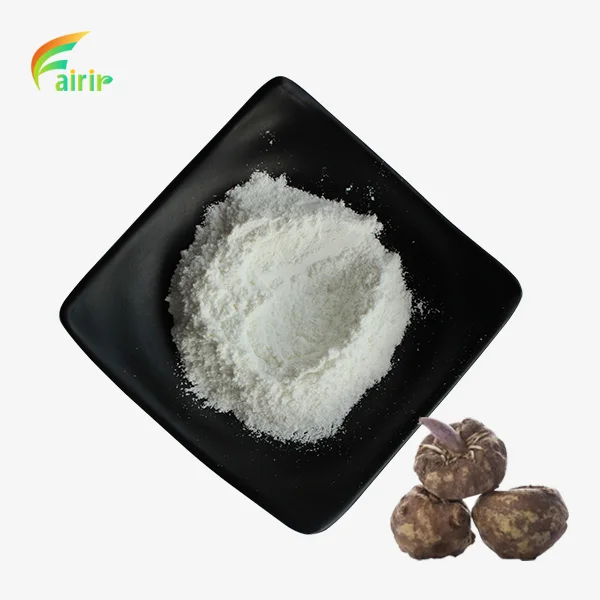
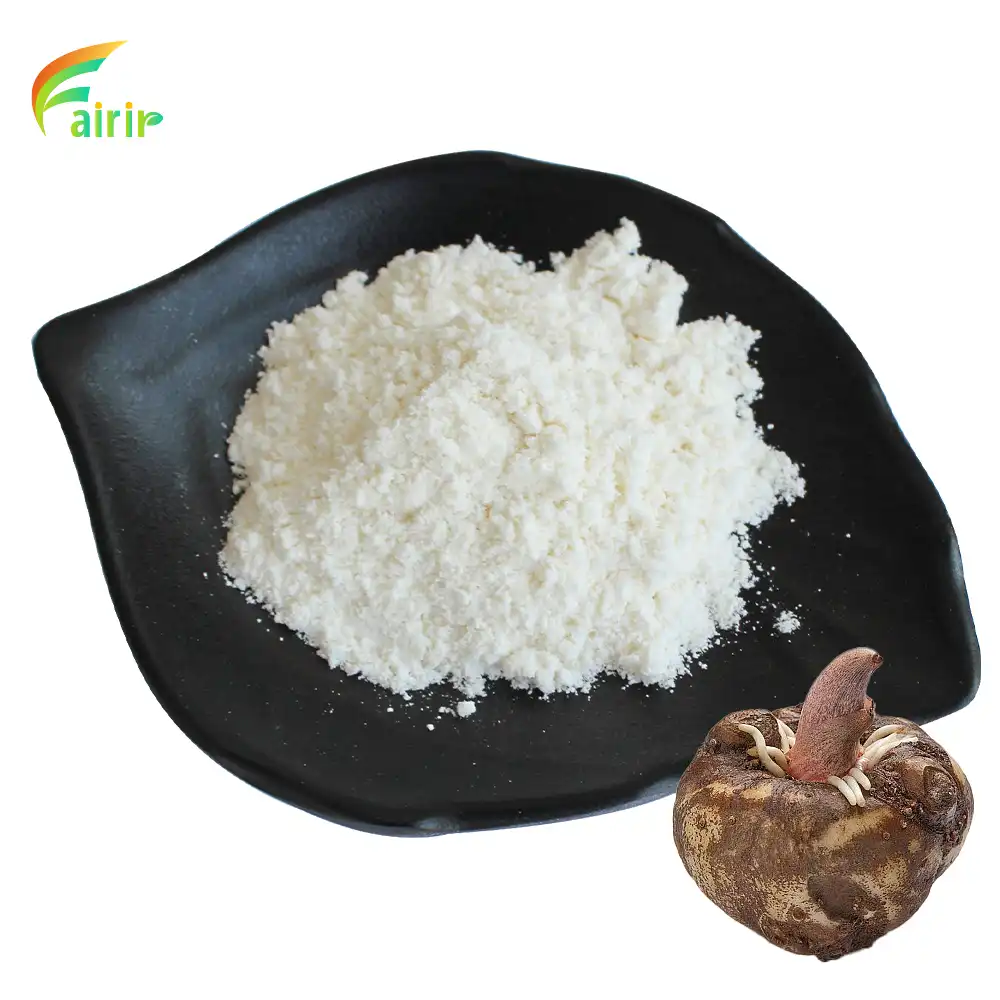
Pure Glucomannan Powder is a food fiber made from the roots of the konjac plant. People like it because it is chemically clear, has a low molecular weight, and can soak up water. Pure glucomannan separates the carbohydrate part to about 85% to 95%, which can be found using enzymatic-gravimetric methods or chromatographic analysis. This is different from raw konjac flour, which has proteins and starches. There aren't many impurities left in the powder because it's off-white to white in color. This is important for pharmaceutical and nutritional uses because color regularity affects how people see the product and how stable the mixture is.
It's not just the amount of glucomannan that makes something good. Viscosity profiles are changed by how molecular weight is spread. This, in turn, changes the structure of gel capsules, useful drinks, and products that you put on your skin. The solubility of a substance tells you how easily it can be mixed with water, while the shelf life and stability of bacteria are affected by the amount of wetness that is left over. If the value is lower, it means that the ash content has been cleaned more, and if it is higher, it means that minerals from the land or the tools used to handle the ash have been left behind. The material is good for many industrial uses because it has these traits. It can be used for drug delivery matrices that need to have precise swelling rates or for food emulsifiers that need to have neutral taste and smell profiles.
When you stick to standard quality guidelines, you can avoid problems like hidden contaminants, changes between batches, and pollution from the environment in Pure Glucomannan Powder. The European Pharmacopoeia's monographs, the Codex Alimentarius standards, and the FDA's dietary supplement rules are just a few examples of international regulatory systems that set base standards for quality, safety, and labeling accuracy. People who work in buying need to make sure that sellers regularly check their goods against these standards. Only this way can you be sure that materials meet both legal requirements and real-world performance standards in every market around the world.
Core Standard Tests for Pure Glucomannan Powder
Assay Determination and Identity Confirmation
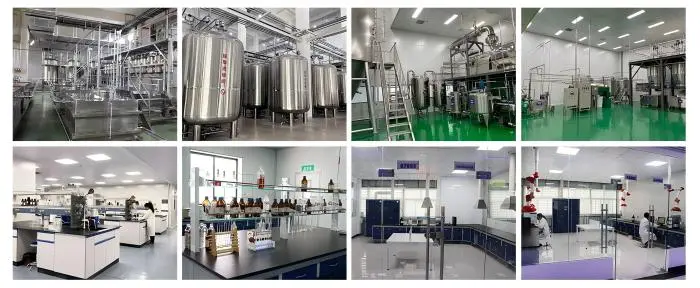
High-Performance Liquid Chromatography is still the best way to find out how much glucomannan is in something. This is because it can use column chromatography to separate the polysaccharide from other substances and UV spectrophotometry or the refractive index to find it. Our HPLC systems at Shaanxi Fairir Biotech make sure that every batch meets the purity standards of 85% to 95%. This ensures that every batch has the power that was promised. An alternative method called Fourier-Transform Infrared Spectroscopy confirms the unique absorption bands of β-1,4-linked mannose and glucose units. This gives a level of identifying proof similar to a fingerprint and can find substitutions or dilution with cheaper polysaccharides like starch or cellulose.
Moisture and Ash Content Analysis
There are two ways to find out how much water is still there: Karl Fischer titration and loss-on-drying. Microbes shouldn't be able to grow and stick together during storage, so the acceptable range is usually less than 10%. For ash content tests, high temperatures are used to measure the amount of inorganic leftovers that show how well the material was handled. If the value is more than 3%, it could mean that the water wasn't cleaned all the way or was contaminated with minerals from the ground. Our vacuum aluminum foil packing and fiber drum storage systems keep the goods' moisture integrity during the one to three business days it takes to ship them. This means that the goods stay stable from the time they are made until they get to your dock.
Dietary Fiber Content and Viscosity Measurement
To find out how much total dietary fiber there is, enzymatic-gravimetric methods that follow AOAC International standards are used. This proves that the functional fraction is what makes health promises. When you test a material's viscosity with a Brookfield rotating viscometer, you can see how well it holds water and makes gels, which is important for uses that need certain physical properties. More than 20,000 mPa·s is usually found in a 1% water solution of good glucomannan. This means that the molecules are strong and the final product swells better.
Microbiological and Contaminant Screening
To make sure that standards for medicine and food safety are being met, full germ testing counts yeast and mold and looks for pathogens like Salmonella, E. coli, and Staphylococcus aureus. Aspartate Ammonium Cadmium Mass Spectrometry is a test that looks for heavy metals like arsenic, lead, cadmium, and mercury. The limits used are the same as those set by ICH Q3D and California Proposition 65. Herbicide pollution from gardening is found by using Gas Chromatography-Mass Spectrometry to look for pesticide traces. This makes sure that promises that a product is organic or doesn't contain GMOs are backed up by lab data that can be checked.
Each lot of output is checked by our quality control system before it is sent out, and these testing methods work great with it. It is always the same to work here because we have two fully automatic production lines and fourteen stainless steel extraction tanks. Our continuous countercurrent extraction equipment raises the yield without lowering the quality. Konjac is used to make a healthy fiber that meets the high standards of food scientists, supplement makers, and drug companies all over the world.
Comparative Testing: Differentiating Pure Glucomannan Powder from Alternatives
It's easier to choose the right product for a job when you know how Pure Glucomannan Powder compares to other substances that do the same thing. This is made from konjac flour, which has between 40 and 60% glucomannan in it, along with starches, proteins, and lipids. This means it can be used in food applications that don't need a lot of processing, but it can't be used as an ingredient in medicine or to accurately measure the dose of a vitamin. When you purify glucomannan powder, these useless substances are taken out. This means that you get more focused benefits from smaller amounts.
It can hold more water than other fibers, like psyllium husk or inulin, because it is soluble. It can turn up to 50 times its own weight in water into very thick gels. This makes it different in controlled-release drug delivery systems and weight-loss plans that focus on making you feel full. The structure of cellulose products is like that of polysaccharides produced from konjac, but they don't have the same density profile or prebiotic potential. This makes them less useful for making new functional foods.
There are new quality problems that come up when you compare powders to pills, tablets, or sweets. For the glucomannan to stay regular and not clump when it is enclosed, the particle size distribution must be considered. Tablets, on the other hand, need fillers that work with the polysaccharide's ability to soak up water. We offer private label services, small bag packing, and unique specs that match your product vision, so our solutions are flexible enough to work with all of these different types. There is no difference between the 2% glucomannan we use in drinks and the 95% quality we use in clinical studies. Our expert team works together to find the best recipe factors for stability, bioavailability, and user experience.
Procurement-Specific Quality Considerations and Certifications
The first step in screening providers is to make sure that approval was given. Quality management systems like ISO 9001 show that a company cares about process control. GMP approval, on the other hand, shows that the company follows the strict rules for making medicines, which are needed for supplement ingredients. Food safety risks are dealt with by HACCP rules, and organic certifications show that the food you buy doesn't have any agrochemicals in it. At Shaanxi Fairir Biotech, our 10,000-square-meter GMP-certified building has all of these built in. Some of the high-tech tools it has are spinning evaporators, ultrasonic cleaners, and UV spectrophotometers, which let us see right away how good the products are.
How often batch testing is done affects how stable the supply will be in the long run. Some of the best manufacturers check each batch to make sure it is authentic and pure. Heavy metal and bacteria tests are also done every three months or as needed by law. How stable a product is is affected by the rules for packing it. As an example, metal foil bags that are vacuum-sealed keep oxygen and water out, and fiber drums with double-layer food-grade poly bag liners can hold big items without damaging the material. Our shipping time is only 1 to 3 business days because we handle orders quickly and have a reliable global transportation network. This lowers the quality risks that come with storage.
You need to be clear about what you want in order to find a good mix between price and quality. Cheaper Pure Glucomannan Powder might not be as good, have pieces that aren't all the same size, or not be screened for contamination as thoroughly. This can make it harder to make and leave regulators open to abuse. To keep your brand's image and avoid the costs of switching providers, make sure that the contracts you sign include quality guarantees like minimum purity levels, maximum microbial limits, and clear documentation of tracking. Our low prices come from being able to remove materials efficiently (up to 98%) and make a lot of them. Because of these things, we can take advantage of economies of scale that are good for long-term relationships without lowering the quality of our research or our adherence to rules.
How to Use Test Results to Make Informed Procurement Decisions
You need to look at more than just the pure numbers on Certificates of Analysis in order to fully understand them. Make sure the methods used are in line with USP, EP, and JP standards for pharmaceuticals and that all of the factors meet your own internal acceptance criteria. Check the testing date to make sure the product is still fresh. Testing panels that aren't full, labs that aren't recognized, or readings that are close to the edges of what is expected are all red flags. This could mean that the batches aren't always the same or that the service provider is spending too little on Pure Glucomannan Powder production quality.
It works better when quality standards are changed based on how the product will be used. For pharmaceutical ingredients, we need stricter limits on heavy metals and endotoxin tests. For food-grade uses, microbiological safety and allergy warnings are more important. For nutritional pills, making the particle size smaller so that it flows better during encapsulation is helpful. But for beverage recipes, the ingredients need to have qualities that let them spread out quickly. It's possible to make specific changes during production by talking to providers about these details. For example, the drying settings can be changed, different milling methods can be used, or more filtration steps can be added.
Getting along with partners and building trust is more than just doing business. Ask sellers to keep samples for independent testing and work with them on shared innovation projects that use their R&D skills. You can also check out the factory to see how things are made. Our skilled support team can help with product creation, application, and formulation. They are now working together as a business partner instead of just selling things. In a busy market, this way makes things more open, speeds up debugging, and lets you change ingredients that make your products stand out.
Conclusion
To find good Pure Glucomannan Powder, you need to pay close attention to lab tests, follow the rules, and make sure you can trust the seller you pick. These standard tests—HPLC testing, moisture and ash analysis, viscosity measurement, microbe screening, and contaminant profiling—cover all the bases to see if a material is healthy and useful. If people who work in the food, skincare, nutraceuticals, and pharmaceutical industries learn these best practices and use them in their buying processes, they can lower supply chain risks, make sure rules are followed, and meet customer expectations. In a global market that is becoming more quality-conscious, spending money on thorough testing has a direct effect on how the brand is seen, how quickly things run, and the long-term success of the business.
FAQ
1. How often should glucomannan powder be tested to maintain consistent quality?
How often you test is based on the rules and how much money you make. Reputable manufacturers check each batch to make sure it is the right one and that it is pure. They also do microbial screening on each lot or at regular intervals (monthly or yearly). It's still a good idea to check every year, even if the same sources are used for all the raw materials. Heavy metal and chemical residue tests may not need to be done as often. People who want to buy something should get a Certificate of Analysis that is specific to their batch and agree to testing methods that are in line with their risk tolerance and the market rules.
2. Do testing standards vary across different regions and markets?
There are different rules for testing in different places, but they all follow the same general rules. Food Additives sold in the US must follow USP papers and FDA rules. In the EU, they have to follow the rules set by the European Pharmacopoeia. In Asian areas, they have to follow the Japanese Pharmacopoeia or the rules of that country. In these methods, the limits for toxins, microbiological standards, and rules for identifying are not the same. When a supplier works with markets around the world, they need to make sure they follow the rules in a lot of places. For this to happen, they need high-quality testing groups and strong quality processes.
3. Are there rapid or handheld testing tools for on-site inspections?
For HPLC, ICP-MS, and other high-tech methods, you need special lab equipment. For initial screening, however, small tools can be used. Handheld FTIR spectrometers let you prove who you are, and ATP bioluminescence tests find surface microbe contamination during facility checks. Moisture meters give you a quick reading of how much water is present. It's not meant to replace official lab research; these tools are meant to add to it. They are used to check the quality of what is being received or by a seller. Buying teams should use quick tests as their first line of defense. If the results don't match what they thought would happen, they should start a more in-depth investigation.
Partner with Fairir for Certified Pure Glucomannan Powder Supply
Shaanxi Fairir Biotech is ready to help you find glucomannan because they are a star in their field and are GMP-certified. They also have cutting-edge research tools and are dedicated to being open and honest. HPLC, UV, and GC tests have shown that our Pure Glucomannan Powder is 85–95% pure. A lot of safety tests have also been done on it to make sure it is safe to use in food, medicine, and supplements. We can give you customizable specs, private label services, and quick response times because we are a producer with a lot of experience. This is possible thanks to our big production centers and global transportation network.
Contact our team at sales@fairirbiotech.com to get free samples, discuss bulk order pricing, or explore collaborative formulation projects. With competitive rates, responsive technical support, and a proven track record across diverse industries, we provide the quality assurance and supply reliability that your procurement strategy demands. Discover how our advanced extraction methods, rigorous testing protocols, and customer-centric approach can elevate your product portfolio and strengthen your competitive position in the global marketplace.
References
1. Chen, H.L., Cheng, H.C., Wu, W.T., Liu, Y.J., & Liu, S.Y. (2008). Supplementation of konjac glucomannan into a low-fiber Chinese diet promoted bowel movement and improved colonic ecology in constipated adults: A placebo-controlled, diet-controlled trial. Journal of the American College of Nutrition, 27(1), 102-108.
2. Keithley, J. & Swanson, B. (2005). Glucomannan and obesity: A critical review. Alternative Therapies in Health and Medicine, 11(6), 30-34.
3. United States Pharmacopeial Convention. (2020). Dietary Supplements Compendium: Glucomannan. USP-NF 2020, Rockville, MD.
4. Behera, S.S. & Ray, R.C. (2016). Konjac glucomannan, a promising polysaccharide of Amorphophallus konjac K. Koch in health care. International Journal of Biological Macromolecules, 92, 942-956.
5. European Food Safety Authority. (2010). Scientific Opinion on the substantiation of health claims related to konjac mannan and maintenance of normal blood cholesterol concentrations. EFSA Journal, 8(10), 1798.
6. Nishinari, K., Williams, P.A., & Phillips, G.O. (1992). Review of the physico-chemical characteristics and properties of konjac mannan. Food Hydrocolloids, 6(2), 199-222.