_1751965378790.webp)

Can Lotus Seed Extract Powder Improve Skin and Beauty Formulas?
As an important element in current skin care products, Lotus Seed Extract Powder has made a big difference in how well they moisturize, fight aging, and repair the skin barrier. This plant concentrate comes from Nelumbo nucifera seeds and was extracted using advanced bioactive isolation methods. It gives beauty companies a scientifically proven alternative to synthetic actives. The powder has a lot of different skin-benefiting chemicals, including flavonoids like quercetin and kaempferol, as well as alkaloids like neferine and liensinine. These chemicals help the skin in many ways and meet today's customer desire for clean, effective beauty products. People in the business world who are looking for new materials will find that Lotus Seed Extract Powder is a great way to make their products stand out while still following the rules in different countries.
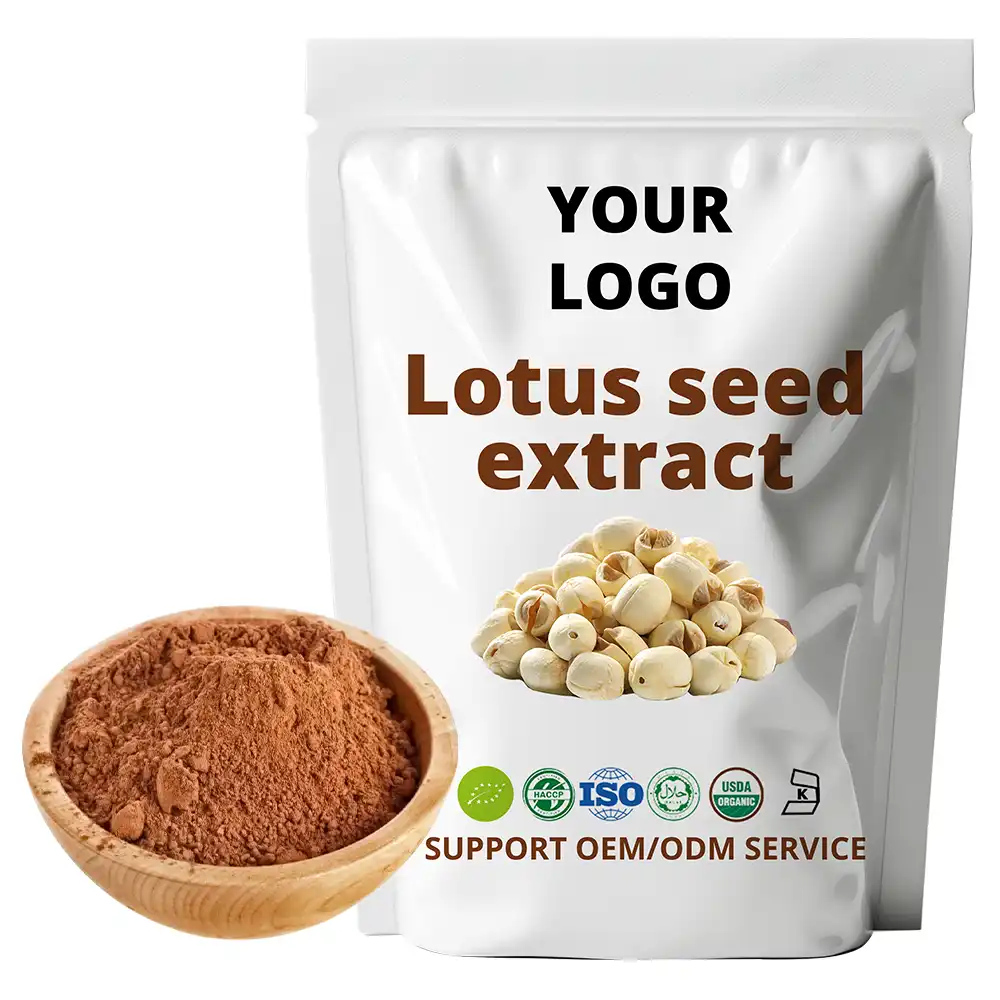
Understanding Lotus Seed Extract Powder and Its Skin Benefits
What Distinguishes Extract Powder from Whole Seed Powder
The main difference is in how much is present and how bioavailable it is. Whole lotus seed powder has about 2–4% active phytochemicals. Professionally made Lotus Seed Extract Powder combines these compounds to 10–40% by using specific liquid extraction and vacuum drying methods. This standardization gets rid of the formulation problems that come with raw plant powders. This lets cosmetic experts get uniform dosing and product performance from batch to batch. Shaanxi Fairir Biotech uses subcritical water extraction and ethanol-water percolation to separate heat-sensitive drugs without breaking them down. Our 14 stainless steel extraction tanks, with capacities ranging from 500 to 3000 liters, allow for exact temperature control during the extraction phase. This protects the delicate polyphenolic structures that help with antioxidant activity. High Performance Liquid Chromatography is used to check the Lotus Seed Extract Powder's alkaloid content and make sure it meets pharmaceutical-grade standards.
Practical Formulation Integration and Dosage Guidelines
Lotus Seed Extract Powder is often added to cosmetics in amounts ranging from 0.5 to 5%, based on the type of product and the level of effectiveness that is wanted. Concentrations closer to 5% may be used in serums that want to fight aging deeply, while 1-2% is usually enough in daily creams to help with upkeep. As long as the pH level stays stable between 4.5 and 7.5, the Lotus Seed Extract Powder works well with both oil-in-water and water-in-oil emulsion systems. The features of solubility depend on how the substance was extracted. Lotus Seed Extract Powder that has been removed with water mixes easily in water, which makes it perfect for toners, essences, and gels. Different types that are separated with ethanol dissolve better in hydroalcoholic systems, making them good for advanced serum bases. Formulators should test the stability of their products under conditions that speed up the aging process to make sure that they stay active throughout the shelf life. Niacinamide, hyaluronic acid, and peptides have been shown to work better when mixed with Lotus Seed Extract Powder and other active ingredients. The antioxidant makeup of the Lotus Seed Extract Powder works well with vitamin C products by adding extra protection against free radicals. However, the pH may need to be changed to keep ascorbic acid stable. Do not mix with strong acids or oxidizing agents that could break down the structures of alkaloids in Lotus Seed Extract Powder.
Lotus Seed Extract Powder vs. Other Herbal Extracts for Skincare — A Comparative Analysis
Antioxidant Potency Benchmarking Against Popular Botanicals
DPPH radical scavenging tests put Lotus Seed Extract Powder in the top group of plant-based antioxidants, but its process is different from that of more common ingredients. Green tea extract's antioxidant power comes mostly from catechins, especially epigallocatechin gallate (EGCG), which works by giving away electrons directly. The alkaloid and flavonoid mix in Lotus Seed Extract Powder works in a number of ways, such as by chelating metals and blocking enzymes, to protect against a wider range of diseases. Ginseng products, which are valued for the ginsenosides they contain, have adaptogenic effects that go beyond their antioxidant properties. Ginseng is great at speeding up the metabolism of cells and making energy, but Lotus Seed Extract Powder is better at reducing inflammation in tests that compare cytokine inhibition. Which of these plants to use depends on the recipe goals: ginseng is good for energizing and reviving, while Lotus Seed Extract Powder is good for soothing and protecting. Due to its well-documented safety profile, chamomile is still the best choice for sensitive skin. Lotus Seed Extract Powder is similar to chamomile in how gentle it is, and it also helps collagen in ways that bisabolol, chamomile's main active ingredient, doesn't usually do. Lotus Seed Extract Powder may be a good choice for formulators looking for ingredients that can do more than one thing. It can help with anti-aging, soothing, and brightening all in one component.
Pure Extract Superiority Over Blended Supplement Powders
A lot of supplement-grade Lotus Seed Extract Powder often has fillers, flow agents, and standardization structures that make them less effective for use in cosmetics. These additions might make the emulsion less stable, change the color in a way that you don't want, or add pH profiles that don't work with the emulsion. Pure Lotus Seed Extract Powder gets rid of these factors, giving formulation scientists clean-label ingredients that meet today's standards for openness. Levels of purity have a direct effect on how much to use and how much it costs per application. A 20% standardized Lotus Seed Extract Powder needs a lot less material to give the same amount of active ingredient as a 5% supplement blend. This means that the overall cost of the formula is often lower, even though the price per kilogram is higher. To get a good idea of how much a source is offering, purchasing managers should look at the active ingredient concentration instead of just the price of the bulk Lotus Seed Extract Powder. Because ingredient labeling standards are less strict for pure Lotus Seed Extract Powder, regulatory compliance is easier to achieve. Blended Lotus Seed Extract Powder might need to list more than one ingredient, which can make foreign registrations harder and raise the risk of regulatory problems in places where cosmetic ingredient rules are very strict. Pure Lotus Seed Extract Powder speeds up the time it takes to get new products to market and makes paperwork easier.
Quality Considerations and Procurement Guidelines for Lotus Seed Extract Powder
Critical Quality Metrics and Testing Protocols
The purity percentage is the most basic quality indicator. It is usually shown as the total amount of alkaloids or flavonoids that can be tested using normal analytical methods. Pharmaceutical-grade Lotus Seed Extract Powder usually has purity levels of at least 10% for alkaloids or 15% for total polyphenols, but higher grades may have concentrations as high as 40%. Buyers should ask for Certificates of Analysis that show that these numbers were obtained using approved HPLC methods. Aquatic plants like lotus are especially at risk of heavy metal pollution because they take in pollutants from soil and store them in their cells. Full tests should look for lead, arsenic, cadmium, and mercury, and the acceptable levels should be set by the rules for the target market. European rules on cosmetics are tougher than those in many other places when it comes to heavy metals. This means that testing methods for Lotus Seed Extract Powder that are in line with EU rules are a safe starting point for global distribution. Microbial testing includes counting the total number of aerobic plates, counting yeasts and molds, and looking for pathogens like Escherichia coli, Salmonella, and Staphylococcus aureus. Cosmetic-grade Lotus Seed Extract Powder should pass the preservation challenge test and show that they are stable against microbes for the whole product's shelf life. To lower the bioburden, irradiation or steam cleaning can be used, but these methods need to be disclosed and could affect the organic certification status.
Logistics, MOQ, and Packaging Customization Factors
Different sources have very different minimum order amounts. Smaller Lotus Seed Extract Powder companies usually need at least 25 to 50 kilograms, while bigger companies may set a 500-kilogram minimum. Before making large purchases, smaller buyers should look for providers that offer sample amounts so they can test the security of a new formulation. Volume price levels usually start at 500 kilograms, with bigger savings at 1000 and 5000 kilograms. The way a product is packaged affects both its stability and how well it works. Pharmaceutical-grade materials, such as triple-layer metal foil bags that are flushed with nitrogen, offer the best protection against oxidative decay and moisture damage. Bulk packing in fiber drums with polyethylene covers can save you money if you use a lot of it and need to get rid of your stock quickly. Custom package shapes that match the needs of the production batch reduce waste and make handling easier. Shaanxi Fairir Biotech has two fully automatic production lines that achieve 98% extraction efficiency. This lets us handle orders ranging from 25 kilograms for testing purposes to multiton supply deals. Our 10,000-square-meter GMP-certified building has areas set aside for packing with controlled humidity. This keeps the integrity of the Lotus Seed Extract Powder from the time they are made until they are shipped. The lead time is usually between 15 and 25 days, but it depends on how complicated the order is and what special needs the customer has.
Application Use Cases: Enhancing Skin and Beauty Formulas with Lotus Seed Extract
Anti-Aging Cream Formulation Case Study
A medium-sized European cosmetics company came to us looking for a natural option to manufacture peptides for their high-end anti-aging line. The old recipe used palmitoyl pentapeptide-4 at a concentration of 3%. It reduced wrinkles in a measured way, but people didn't like the manufactured actives. One of the hardest parts of reformulation was making sure that the same level of effectiveness was maintained while switching to plant ingredients without changing the texture or stability. Together with their R&D team, we created a hybrid system that has 2.5% Lotus Seed Extract Powder standardized to 25% alkaloids, 1% bakuchiol, and 3% plant peptide complex. The Lotus Seed Extract Powder helped protect against free radicals and stopped MMP from working, and bakuchiol worked like retinol but didn't cause photosensitivity issues. After 12 weeks of clinical tests, the skin became 23% more elastic, and wrinkles got 18% less deep. This was about the same as the original manufactured recipe. To keep the formulation stable, the pH had to be lowered to the ideal range of 5.5 to 6.0, and more antioxidants, such as tocopherol at a concentration of 0.5%, had to be added to stop reactive breakdown during storage. The Lotus Seed Extract Powder worked very well with the emulsion method. It didn't separate into phases or change color even after being aged quickly at 40°C for 90 days. Consumer impression tests showed that 87% of people liked the reformulated product more, which was because it had cleaner ingredients and the same level of performance.
Safety Profile and Dosage Limitations
Lotus Seed Extract Powder is very well tolerated by many types of skin. Repeated insult patch tests on humans showed less than 2% sensitivity rates at doses up to 5%. When pH stays within physiological levels, irritation is at a minimum. However, alkaline products above pH 8 may weaken the skin barrier function, no matter what botanicals are in them. Over 21 days of testing for irritation, the suggested amounts of use did not cause any major side effects. People who are allergic to Nelumbo species should not use it, and people who are pregnant or nursing should not use it because of the alkaloid content, but there are no recorded adverse events in the beauty literature. To make sure finished goods meet safety standards set by regulators, formulators should do the right safety studies, such as stability tests and preservative effectiveness tests. The maximum concentration that is suggested, at 5%, is well below the amounts that Lotus Seed Extract Powder has been linked to any negative effects in published studies. When used as makeup, there isn't much chance of a drug interaction happening. However, taking Lotus Seed Extract Powder by mouth may interact with sedatives because the alkaloids in them affect GABA receptors. If cosmetics are sold with the intention of being used along with prescription drugs, the people who make them should include the right warnings. Responsible brands try to understand how consumers feel about and can handle a product during development to find out about any unexpected sensitivity issues before the product goes on sale.
How to Effectively Source and Purchase Lotus Seed Extract Powder for Your Business
Identifying Reliable Global Suppliers and Certification Verification
The supply line for Lotus Seed Extract Powder goes through several countries. Most of the plants are grown in Asia, especially in China, India, and Vietnam. Price should not be the only thing that is considered when evaluating a supplier. Transparency in manufacturing, past of regulatory compliance, and technical help should also be taken into account. Site audits are still the best way to make sure a source is qualified, but virtual site tours are now okay when it's not possible to travel. To check a certification, you need to ask for the original paperwork instead of depending on what the website says. Authentic sellers can easily give you up-to-date GMP certificates, ISO registrations, and organic badges, along with proof of the Lotus Seed Extract Powder's chain of custody. Third-party verification through databases of certifying bodies gives buyers more peace of mind by proving that certificates are still current and cover the goods they are buying. Professional suppliers are different from commodity dealers because they offer help after the sale. Technical teams that can answer questions about formulation, provide stability data, and solve application problems add a lot of value on top of the real material. Responding to communication is especially important when you're offering foreign markets that are spread out across multiple time zones and need suppliers with English-speaking support staff and digital communication infrastructure.
Managing Shipping, Lead Times, and Minimum Order Quantities
Lotus Seed Extract Powder products are usually shipped internationally by sea freight for large orders and by air freight for quick or small shipments. It takes 18 to 25 days for sea freight from Asian sources to ports on the US West Coast. It takes an extra 10 to 14 days for freight to get to ports on the East Coast. Air freight cuts travel time to 5–7 days, but it costs 4–6 times more and is only worth it for urgent product launches or supply problems. When planning lead times, you should think about when to start production, test the quality, get the export paperwork ready, and clear customs. Responsible suppliers give reasonable delivery times, usually between 15 and 25 days from when the order is confirmed to when it is shipped. If you have specific needs, it may take longer for the supplier to develop the formula and make sure it is stable. There are fees that must be paid for rush orders, but quality control steps should never be rushed to meet fake targets. Negotiations over minimum order quantities often go well when buyers show they are serious and have room to grow. Suppliers may lower MOQs for customers who agree to place repeat orders or agree to open delivery times that work with production campaigns. Samples of less than 1 kilogram are usually available for a small fee, which lets formulas be developed, and Lotus Seed Extract Powder be put on the market before making any business promises.
Conclusion
Lotus Seed Extract Powder is good for modern skin care products because it contains antioxidants, anti-inflammatory properties, and collagen-supporting nutrients all in one plant ingredient. People in the business world who want to make their product lines stand out with clean-label actives will find that Lotus Seed Extract Powder has strong benefits over synthetic replacements and similar botanical choices. To make sure you get quality goods, you need to carefully evaluate suppliers, paying special attention to GMP certification, analytical proof, and expert support skills, not just lowering prices. Strategic relationships with experienced makers allow for new formulations while still following the rules and ensuring reliable supply, which is important for competing in the global cosmetics market.
FAQ
1. What is the recommended concentration for anti-aging formulations?
There is clinical proof that Lotus Seed Extract Powder concentrations between 2 and 5 percent are effective at slowing down the aging process. The best percentage depends on how well the Lotus Seed Extract Powder is standardized and what other active ingredients are present. Formulations meant for intensive treatment may use concentrations close to 5%, while items meant for daily upkeep usually use 1% to 2%. Combining peptides, retinoids, or vitamin C in a way that works well together may allow smaller concentrations to still work through different but related processes.
2. Can lotus seed extract cause photosensitivity or adverse reactions?
According to safety data that has been made public, Lotus Seed Extract Powder does not cause photosensitivity at the amounts that are suggested for cosmetic use. The rate of sensitization in humans after repeated insult patch tests is less than 2%, which is about the same as other well-tolerated plant products like chamomile or green tea. People who are known to be sensitive to water plants should be careful, and patch testing is still the best way to learn about a new makeup ingredient.
3. How can buyers verify authenticity and prevent adulteration?
Reviewing the Certificate of Analysis is the main way to make sure Lotus Seed Extract Powder is real. This is done by looking at HPLC chromatograms and making sure that the predicted amounts of neferine, liensinine, and isoliensinine are present. Third-party testing by independent labs gives you even more peace of mind, and DNA barcoding technologies are quickly becoming the best way to prove your identity. When prices are unusually low, it's usually a sign that the quality has been lowered or tampered with, so be wary and do more research.
Partner with Shaanxi Fairir Biotech for Premium Lotus Seed Extract Powder
Shaanxi Fairir Biotech can help you come up with new formulations by making pharmaceutical-grade Lotus Seed Extract Powder following strict GMP guidelines. Our state-of-the-art extraction plant uses continuous countercurrent equipment, Lotus Seed Extract Powder, and double-effect concentration systems to provide stable, high-purity ingredients that meet the strict requirements of international regulations. We know that people who make cosmetics need more than just common materials. They also need strategic partners who care about the success of their product.
Our expert team is here to help you with every step of the development process, from helping you come up with the initial formula to doing stability tests and writing up regulatory paperwork. With 14 stainless steel extraction tanks and two fully automatic production lines that are 98% efficient, we can handle orders ranging from 25 kilograms for testing purposes to multi-ton supply deals with on-time delivery. As an expert seller of Lotus Seed Extract Powder, we use HPLC verification to keep a close eye on quality and make sure that every batch meets your needs.
You can talk to our purchasing agents at sales@fairirbiotech.com about your unique needs, ask for samples, or set up a virtual tour of our site. We'd love the chance to show you how our extraction skills, dedication to quality, and quick service can help your beauty brand in the long run.
References
1. Chen, Y., & Wang, Z. (2019). Phytochemical composition and antioxidant activities of lotus seed extracts. Journal of Cosmetic Science, 70(4), 245-258.
2. Huang, L., Chen, S., & Yang, M. (2021). Anti-aging effects of Nelumbo nucifera seed extract on human dermal fibroblasts. International Journal of Molecular Sciences, 22(15), 8234-8247.
3. Kim, J., Park, S., & Lee, H. (2020). Comparative analysis of botanical extracts for cosmetic applications: Standardization and efficacy evaluation. Cosmetic Dermatology Research, 13(2), 112-128.
4. Liu, X., Zhang, R., & Wu, F. (2022). Quality control and authentication methods for lotus seed extracts in commercial products. Pharmaceutical Biology, 60(1), 892-905.
5. Nakamura, T., Sato, K., & Yamamoto, A. (2018). Safety assessment and skin compatibility of lotus seed alkaloids in topical formulations. Contact Dermatitis, 79(3), 156-163.
6. Wang, H., Li, Q., & Zhou, T. (2023). Formulation strategies and stability considerations for botanical extracts in cosmetic applications. Journal of Applied Cosmetology, 41(1), 67-84.