Centella Asiatica Extract Powder in Cosmetic Manufacturing Guide
As an important part of modern cosmetics, Centella Asiatica Extract Powder provides scientists with a scientifically proven way to fix skin barriers, fight aging, and care for sensitive skin. This high-quality plant concentrate has normal amounts of Asiaticoside, Madecassoside, Asiatic Acid, and Madecassic Acid. These are the main triterpenes that stimulate collagen synthesis and reduce water loss through the skin. Cosmetic companies are looking for this extract more and more because it helps them solve important formulation problems like getting consistent results from batch to batch, providing bioavailable actives that work well, and meeting customers' desire for clean, plant-based ingredients. Finding out where to get this strong extract, how to make it, and how to add it to your products can make your brand stand out in places where competition is high.
Understanding Centella Asiatica Extract Powder: Properties and Benefits
Botanical Background and Extraction Methods
Centella Asiatica, also called Gotu Kola or Tiger Grass, grows in warm, wetland areas all over Asia. For hundreds of years, it has been used in traditional healing. Bioactive chemicals are most concentrated in the plant's leaves and stems. To keep the purity of heat-sensitive triterpenes, modern extraction uses controlled methods like supercritical CO2 technology and ethanol extraction. Continuous countercurrent extraction equipment and double-effect concentration systems are used in high-quality factories to get the most out of their materials while keeping the chemicals stable. Triterpene amounts are usually between 10% and 95% after the extraction process, based on what the cosmetic is being used for. Advanced makers use HPLC analysis to check the exact amounts of Asiaticoside and Madecassoside, which makes sure that the results are the same from batch to batch.
Key Active Constituents and Their Mechanisms
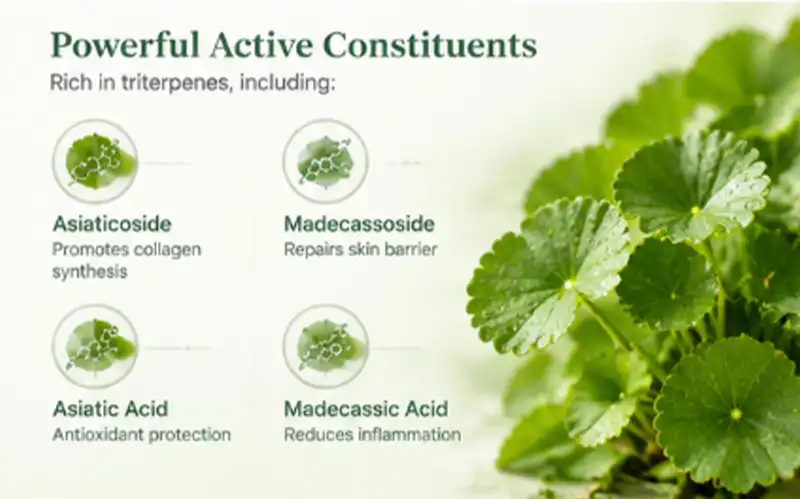
This plant product is beneficial because it has a special mix of triterpenes. Asiaticoside and Madecassoside work together to boost the production of fibroblasts, which in turn boosts the production of collagen types I and III in the skin matrix. Asiatic Acid is a strong antioxidant that works by getting rid of free radicals and lowering signs of oxidative stress in keratinocytes. Madecassic Acid helps reduce inflammation by changing the processes that make cytokines. Clinical studies have shown that these chemicals can help wounds heal faster, stop scars from forming, and make the skin's natural protection work stronger. Because of this, the extract is very useful for making goods that help damaged skin, healing from surgery, and long-term inflammatory conditions like eczema and rosacea.
Clinical Evidence Supporting Cosmetic Applications
A new dermatological study has confirmed a number of perks that companies can use. A study released in the Journal of Cosmetic Dermatology in 2021 showed that over twelve weeks, preparations with 0.5% triterpenes from this extract cut transepidermal water loss by 32%. After eight weeks of regular use, another clinical study showed big improvements in flexibility scores and wrinkle depth. Because the extract can change the production of MMP-1, it works especially well in photoaging prevention products. These results, which are based on evidence, give formulators trust when they put goods on the market for anti-aging, barrier repair, and sensitive skin.
Formulation Insights for Cosmetic Manufacturing
Optimal Concentration Ranges for Different Product Types
Paying close attention to concentration levels is important for getting beneficial effects while keeping the product stable. The following rules are the best practices in the business, which were found through a lot of recipe testing:
- Serums and intensive treatments work best with 2% to 5% powder extract standardized to 80–95% total triterpenes that is standardized to 80–95% triterpenes. This gives the skin concentrated actives that heal damage. These higher amounts work well with leave-on formulas made for old or damaged skin, where the main goal is to quickly restore the barrier.
- Daily moisturizers and face creams usually have an extract content of 0.5 to 2%. This is because it balances effectiveness with long-term tolerability for a wider range of consumers. This range consistently soothes and protects without overpowering other ingredients in complicated mixtures.
- Sheet masks and overnight treatments: amounts of 1% to 3% can be used. The longer the touch time, the better the penetration and bioavailability. Putting on a mask creates an occlusive environment that helps the extract heal wounds better.
These concentration factors help product makers make the most cost-effective products that still work as promised. This is an important thing for brands that want to balance quality with competitive pricing.
Stability Considerations and Formulation Compatibility
The extract is very stable in systems that are properly put together, but there are some things that should be kept in mind. The triterpene molecules stay active at pH levels between 5.0 and 7.0, which means they can be mixed with most makeup bases. However, temperatures above 60°C during production can lower the amount of Asiaticoside by as much as 15%. If possible, the extract should be added during the cooling part after the emulsification. The powder form is more stable on the shelf than liquid extracts; it has been shown to retain 95% of its triterpene content after 24 months of keeping at room temperature. When the extract is mixed with antioxidants like vitamin E or ferulic acid, they work together to protect against oxidative damage. The material is safe for use in cosmetics and mixes easily into oil-in-water emulsions, dry formulas, and gel systems. It doesn't separate or change color.
Powder versus Liquid Extract Forms
Production managers often think about whether powder or liquid extract is better for their manufacturing needs. There are clear benefits to using powder extract for making a lot of cosmetics. The concentrated form takes up less room in storage and is more resistant to microbes without the need for preservatives. Thanks to gravimetric measurement, manufacturers can exactly control dosing, which lowers batch differences. There isn't much stirring needed to get the powder to dissolve in both water and alcohol. On the other hand, liquid extracts can be mixed right away, but they add extra water that needs to be taken into account when figuring out how hydrated the whole mixture is. The powder form usually has three to five times the content of triterpenes found in standardized liquid extracts, which means that smaller amounts work just as well. This concentration advantage means that shipping costs are lower and product management is easier for procurement teams that are in charge of global supply lines.
Sourcing and Procurement of Centella Asiatica Extract Powder
Global Sourcing Landscape and Regional Quality Variations
The plant raw materials mostly come from areas where they are grown in India, China, Madagascar, and Southeast Asian countries like Vietnam and Thailand. The phytochemical profile of the finished extract is affected by differences in temperature, soil chemistry, and harvest time that happen in different areas. Material from India usually has higher amounts of Asiaticosides, while material grown in China has more even ranges of triterpenes. People who work in procurement should know that the availability of organic certification varies by area. For example, European organic standards are easier to get from Chinese sources because there is already a system in place for auditing them. Standard requirements usually have lead times of 4 to 6 weeks, while custom triterpene ratios can take 8 to 10 weeks, which includes analytical proof. By building ties with manufacturers who keep raw material stock on hand, you can avoid the seasonal changes in supply that can throw off your production plan.
Essential Certifications and Quality Standards
Responsible buying choices are based on following the rules set by regulators. GMP approval makes sure that factories follow the rules for making medicines, which include keeping the surroundings safe, making sure the machines work properly, and making sure workers are trained to do their jobs. ISO 22716 talks about the specifics of making cosmetics. It talks about things like keeping products from getting contaminated and methods for keeping track of them. Organic approvals from the USDA, the EU, or similar groups make sure that farming and processing do not use pesticides. Suppliers who care about quality also provide a lot of paperwork, like Certificates of Analysis showing HPLC-verified triterpene content, heavy metal testing results showing compliance with limits for lead, arsenic, cadmium, and mercury, microbial testing showing absence of pathogens and acceptable total plate counts, and stability studies showing shelf life under specified storage conditions. This set of paperwork makes it easy for cosmetics companies to meet the needs of retailers and answer government questions.
Supplier Evaluation Criteria and Red Flags
To find a trustworthy partner for Centella Asiatica Extract Powder, you need to do more than just compare prices. Production capacity indicators show if a seller can grow with your business. Look for sites that have more than one extraction line and can process more than 500 kg of raw material every day. Analytical skills are very important. Suppliers who have their own HPLC, UV spectrophotometry, and rotary evaporation tools show they care about quality control instead of sending important tests. Responding to technical questions shows that the company knows what it's doing and cares about its customers. Ask for sample paperwork so that you can compare COA data from three different batches to see if there is stability across production lots. Pricing that is much lower than the market average often means that the quality has been lowered or the material has been tampered with. Reputable makers can be told apart from brokers who don't have direct supply chain information by how open they are about their sourcing practices, such as their willingness to talk about where their raw materials come from and how they were grown.
Making the Right Decision: Choosing Centella Asiatica Extract Powder for Your Brand
Critical Selection Parameters for Procurement
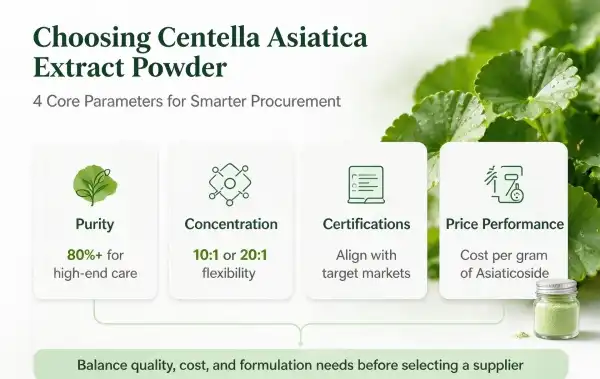
There are four main factors that help you choose the best ingredients that fit your brand's image and your budget. The level of purity determines how well an extract will work. Extracts that are standardized to 80% or higher total triterpenes work well for high-end skin care lines, while 40–60% standardization works well for mid-range formulas. Concentration affects how flexible a recipe can be. Powder extracts with 10:1 or 20:1 concentration ratios give formulators the most freedom to be creative. Certifications must be aligned with the markets you want to reach. For example, US brands that want to sell their products in the EU need organic certifications that are accepted by both governing areas. The price-to-performance ratio compares the cost of triterpene content provided per dollar to its value. Figuring out the cost per gram of actual Asiaticoside shows the real value offered, which goes beyond the headline price.
Organic versus Conventional Material Considerations
The choice between organic and standard goes beyond marketing appeal; it also affects the properties of the product and the way the supply chain works. Organic materials cost 30–50% more than regular materials, but they allow for a clean beauty image that North American and European customers are increasingly wanting. The organic certification process limits the types of solvents that can be used for extraction. Usually, ethanol or water-based methods are needed, which may result in slightly lower triterpene amounts than traditional methods that use a wider range of solvents. There is still a smaller supply of organic materials because fewer approved farms are producing on a large scale. For brands that want to reach a large audience, regular materials may be fine for them because they are affordable and help them compete in the retail market. On the other hand, organic approval can boost the quality of people's perceptions of premium and specialty brands.
Application Success Stories from Leading Brands
Cosmetic companies from around the world have shown that adding this extract to a wide range of products is a good business idea. A Korean skin care brand released a barrier repair serum with 3% triterpene-standardized extract that became a fan favorite and now makes over $50 million a year by targeting sensitive skin and people who have recently had surgery. A European natural cosmetics brand changed the recipe of its star moisturizer to include 1.5% organic extract. This made customers 40% happier with how well it reduced redness and kept their skin moist. These success stories show that the extract can be used in a variety of formulations and at different price points. They also show that when it is properly added, it gives customers real benefits that lead to brand loyalty and repeat purchases.
Risks, Challenges, and Best Practices in Using Centella Asiatica Extract Powder
Potential Safety Concerns and Regulatory Compliance
Even though Centella Asiatica Extract Powder is usually thought to be safe for topical use, careful formulation means being aware of possible issues. Rarely, allergic reactions have been seen in people who are sensitive to plants in the Apiaceae family. Using patch testing during the creation of a product helps find out if it might irritate certain skin types before it goes on sale. Across the world, different regulatory systems set different limits on concentrations that are allowed and labeling that is needed. The European Cosmetics Regulation doesn't put any limits on the ingredient as long as it's used in line with good production practices. The FDA controls it as a skincare ingredient, so it has to meet general safety standards, but doesn't have to get approval before it goes on sale. Chinese NMPA registration needs more and more thorough safety checks for foreign products that contain plant extracts. These checks include photo-toxicity studies and insult patch tests that are done 28 days in a row. Keeping up-to-date on regulatory information makes sure that formulas stay legal in all target markets, which saves money on costly re-formulations or registration delays.
Common Manufacturing Challenges and Solutions
When production is scaled up, technology problems arise that need to be dealt with ahead of time. Changes in the powder's color from batch to batch, from light yellow to greenish-brown, are caused by changes in the chlorophyll content and have nothing to do with how strong the triterpenes are. Using color standard limits instead of exact matching stops batches from being rejected for no reason and keeps things working the same way every time. Due to the extract's hydrophobic triterpene content, powder dispersion problems can happen in cold-process products. Putting the powder into propylene glycol or glycerin first and then adding it to the water phase makes sure that it is spread out evenly in the batch. Formulation instability can happen when the extract is mixed with some preservatives or when the pH level is very high or very low. By doing rapid stability testing during the formulation development stage, problems can be found before they become commercially produced.
Quality Assurance Protocols and Supplier Management
To keep quality uniform throughout the supply chain, more systematic monitoring is needed after the initial qualification of suppliers. Using checking procedures for arriving materials that check their visual features, solubility profiles, and Certificate of Analysis alignment can help keep packages from being tampered with. Third-party testing of retained samples every three months makes sure that standards are still being followed. This finds quality drift before it affects finished goods. Supplier audits that happen once a year or every other year check the state of the facility, the records of when the equipment was calibrated, and the training records of the staff. This gives trust in the manufacturing controls. By finding other qualified providers, you can keep the supply going even when the main sources have problems with quality or capacity. These proactive quality management practices protect the brand's image and help the company defend against government actions or customer complaints.
Conclusion
Centella Asiatica Extract Powder is a widely proven and scientifically proven ingredient that can be used in a variety of makeup formulations to help with everything from barrier repair to anti-aging. To integrate well, you need to pay attention to the things this guide talks about, like the quality of sources, formulation improvement, and legal compliance. The ingredient can be used in a lot of different types of products, and there is strong clinical proof to back up claims that it works. This makes it a valuable ingredient for brands that want to attract wellness-conscious customers who want clean, effective solutions. Cosmetic companies can make unique goods that meet changing market needs while keeping their profit margins high by making purchasing choices that balance quality certifications, supplier dependability, and cost-effectiveness.
FAQ
Q1: What concentration of Centella Asiatica Extract Powder should be used in anti-aging serums?
The best anti-aging serums have a 2-5% Centella Asiatica Extract Powder that is standardized to have 80–95% total triterpenes. Studies on skin have shown that this concentration range stimulates collagen and reduces wrinkles in a clinically important way, and it stays stable in most serum formulas.
Q2: Can stability data and Certificate of Analysis be provided with shipments?
Reliable suppliers provide a lot of paperwork, like Certificates of Analysis that prove the triterpene content through HPLC testing, stability reports that show the product will last 24 months if stored properly, and cosmetic safety paperwork that helps them follow the rules in the US, EU, and Asia-Pacific regions, among others.
Q3: What are the key active compounds in cosmetic-grade extract?
The extract has four main triterpene compounds. Madecassoside and Asiaticoside help to soothe and fix the skin's barrier, while Asiatic Acid and Madecassic Acid work as antioxidants and stimulate collagen production. Standardizing these chemicals with high-quality cosmetic-grade material makes sure that they work the same way in all production runs.
Q3: How does powder form compare to liquid extract for manufacturing?
Powder extract has a higher content and usually has three to five times more triterpenes than liquid types. This means that less of it needs to be used, and it costs less to ship. The powder is better at keeping microbes away, has a longer shelf life, and is easier to keep track of, so it is chosen for large-scale makeup manufacturing operations.
Partner with a Trusted Centella Asiatica Extract Powder Manufacturer
Pharmaceutical-grade plant extracts are made by Shaanxi Fairir Biotech Co., Ltd., which is GMP-certified and has strict quality control methods in place. Our 10,000-square-meter building has 14 stainless steel extraction tanks with capacities between 500 and 3,000 liters. It also has three fully automatic production lines that make extraction 98% efficient. We have a wide range of testing tools, such as HPLC, UV spectrophotometry, and rotary evaporation equipment, to make sure that every batch meets your exact requirements and comes with full paperwork. Our Centella Asiatica Extract Powder comes in a range of standardization levels, from 10% to 95% triterpenes. It can also be certified as organic and is pure enough to be used in high-end skincare products. Our experienced team offers quick technical support, cheap pricing, and dependable shipping schedules, whether you need bulk supplies for well-known brands or unique formulations for brand-new products. Email our purchasing agents at sales@fairirbiotech.com to get samples, stability reports, and price quotes that are specific to your production needs.
References
1. Gohil, K. J., Patel, J. A., & Gajjar, A. K. (2010). Pharmacological Review on Centella asiatica: A Potential Herbal Cure-all. Indian Journal of Pharmaceutical Sciences, 72(5), 546-556.
2. Bylka, W., Znajdek-Awiżeń, P., Studzińska-Sroka, E., & Brzezińska, M. (2013). Centella asiatica in Cosmetology. Postepy Dermatologii i Alergologii, 30(1), 46-49.
3. Hashim, P., Sidek, H., Helan, M. H., Sabery, A., Palanisamy, U. D., & Ilham, M. (2011). Triterpene Composition and Bioactivities of Centella asiatica. Molecules, 16(2), 1310-1322.
4. Sinha, R., Biswas, D., Singh, B., & Kumar, P. (2017). Centella asiatica: A Review on its Phytochemistry, Pharmacological Properties and Traditional Uses. Pharmacognosy Reviews, 11(21), 87-98.
5. Lee, J., Jung, E., Kim, Y., Park, J., Park, J., Hong, S., Kim, J., Hyun, C., Kim, Y. S., & Park, D. (2006). Asiaticoside Induces Human Collagen I Synthesis through TGFβ Receptor I Kinase Independent Smad Signaling. Planta Médica, 72(4), 324-328.
6. Ratz-Łyko, A., Arct, J., & Pytkowska, K. (2016). Moisturizing and Anti-inflammatory Properties of Cosmetic Formulations Containing Centella asiatica Extract. Indian Journal of Pharmaceutical Sciences, 78(1), 27-33.