How Does Matcha Powder Perform in Ice Cream Formulations?
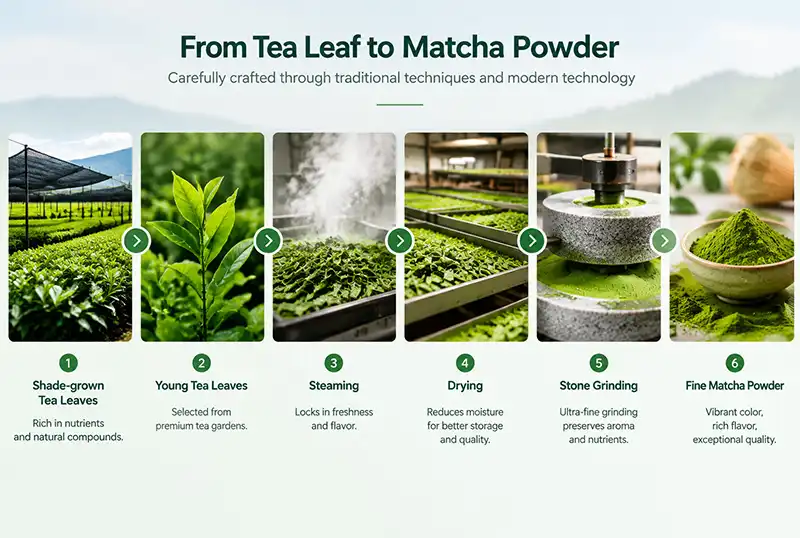
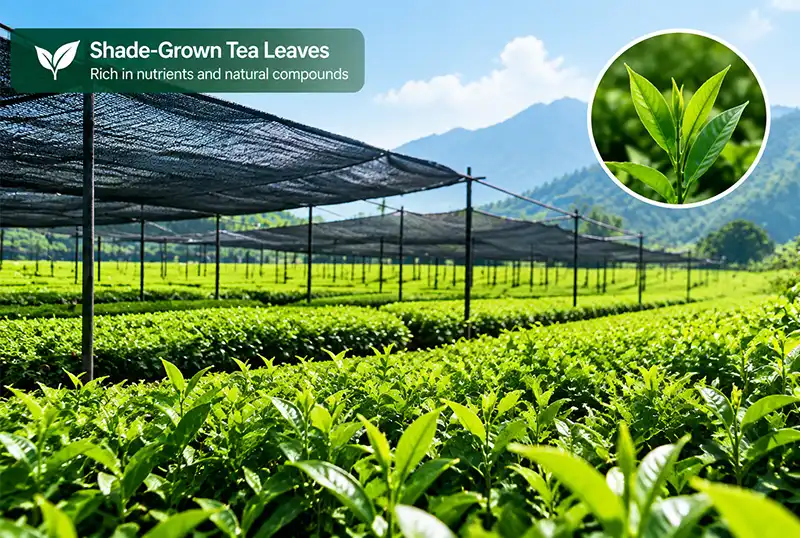
Matcha powder is an ideal ingredient for use in ice cream compositions, imparting a rich green color, complex umami taste and useful antioxidant value. It is extracted from shade-grown Camellia sinensis leaves and is processed at low temperatures . It has a remarkable uniformity in its dispersion into It offers excellent dispersion properties within dairy-based ice cream matrices Proper processing helps preserve key tea compounds, including catechins such as EGCG Choosing culinary-grade matcha powder and handling it with care ensures color and flavor consistency from batch to batch, two of the most important metrics for frozen dessert makers aiming for the premium market.
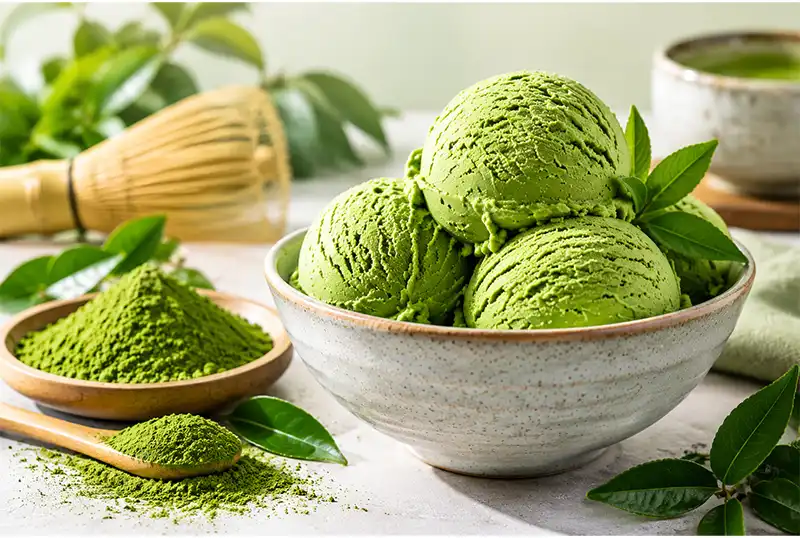
Understanding Matcha Powder and Its Role in Ice Cream
The Sensory Chemistry Behind Matcha Powder
Matcha powder offers a complex range of flavors and aromas.L-theanine contributes to its characteristic umami flavor profile, the catechins a mild sharpness, and the chlorophyll a lasting vegetal sweetness. These things have a direct relationship with the butterfat, sugar and dairy proteins in ice cream. Fat components can coat matcha particles, reducing perceived bitterness and enhancing the creamy texture expected in premium frozen desserts.This interaction can reduce perceived bitterness and enhance the creamy texture expected in premium frozen desserts.
In a 2021 study published in Food Chemistry , the chlorophyll level of shade-grown matcha was directly related with the bright green hue that remained persistent after being frozen.
Ceremonial vs. Culinary Grade: What Does It Mean for Ice Cream?
Ceremonial Grade Matcha Powder is harvested in early spring and typically has a higher amino acid profile and a smoother flavor characteristic resulting in a richer umami and delicate sweetness.Later harvests are often used to provide a stronger, astringent flavor in culinary-grade Matcha Powder that can provide a more pronounced tea flavor in formulations with higher levels of fat and sugar. These changes in composition may be evaluated and repeated. HPLC chromatography data is shown . For large-scale ice cream production, culinary grade Matcha Powder is often the best balance between cost and performance without sacrificing taste or appearance.
Critical Quality Parameters for Procuring Matcha Powder for Ice Cream Production
Particle Size, Color Intensity, and Flavor Purity
When buying Matcha Powder for frozen desserts, B2B procurement teams need to evaluate the product against three non-negotiable technical standards:
-
A particle size below 10 microns helps create a smoother texture and reduces the risk of a gritty mouthfeel in premium frozen desserts. Ultra-fine milling through low-temperature stone grinding techniques improves dispersion in cold dairy matrices while helping preserve volatile aroma compounds. in cold dairy medium while securing the volatile aromatic compounds.
-
Spectrophotometry monitors the brightness (or intensity) of color and hence ensures that the appearance is consistent from batch to batch. Chlorophyll can degrade under improper storage conditions. and suppliers should ensure that the product is packaged with UV-protective materials and handled in a cold chain. Color is the first thing customers notice about a product while they are purchasing.
-
Organoleptic and HPLC study confirm flavor purity Research shows that the flavor is pure, with no off-notes from oxidation or mixing with lower grade tea ingredients. If the procurement staff fails to do this customers may remark that the meal is excessively bitter or flat and stale.
These criteria aren't optional—they're mandatory for premium ice cream brands. When suppliers give comprehensive analytical reports that include all of these elements they considerably reduce the risk for consumers who buy a lot.
Grade Selection and Supplier Certification
A trustworthy Matcha Powder supplier must have organic certification, GMP compliance, and quality systems that are in line with ISO standards. For large-scale uses, non-organic choices are still a good deal as long as heavy metal screening through ICP-MS testing is done correctly and up to date. The Journal of Agricultural and Food Chemistry (2020) says that the type of soil in areas where Matcha Powder is grown directly affects how much heavy metal ends up in the powder.
Formulation Challenges and Optimization Strategies
Add Matcha Powder to ice cream and you have 3 common technological challenges that every product developer faces at some time.
The photo-oxidation of chlorophyll is accelerated by light and freeze-thaw cycles, changing the vibrant green color to olive or brown. Producers can minimize this utilizing nitrogen flushed packaging, UV light blocking containers and ascorbic acid moderation to keep the pH above 6.0.
Another concern is that the taste could be changed in processing. The subtle aroma compounds in Matcha Powder can be removed using steam pasteurization and homogenization. The use of a dry carrier like maltodextrin, blended with Matcha Powder prior to its addition to the dairy mix, forms a protective matrix, which aroma retention.
The third challenge is the problem of lumping. Matcha Powder is naturally hygroscopic. High-shear in-line mixers and pre-hydration techniques can eliminate agglomeration to provide the smooth, lump-free base texture required for high-end ice cream.
A Japanese functional treat brand case study showed that guar gum stabilizers added to encapsulated Matcha Powder increased the greenness of their ice-cream bars for around 30% longer during a 12-month shelf-life.
Procurement Considerations and Market Insights
Harvest time, organic certification, processing grade and location affect the price of Bulk Matcha Powder. Chinese origin culinary grade Matcha Powder is cheaper and works just as well in most instances of food creation while Japanese Matcha Powder is Japanese matcha powder is often positioned at a higher price point due to its well-established terroir image.
Procurement managers constructing long-term supply chains should engage directly with GMP-certified manufacturers, rather than through middlemen. In a competitive frozen dessert business, direct connections provide the ability to customize specifications, shorten lead times and establish volume discount structures that protect profits.
Subscription plans by volume and blanket purchase orders from verified suppliers of Matcha Powder mitigate supply risks and keep manufacturing continuing even with seasonal supply adjustments. The Global Tea Report 2023 predicts a 7.4% CAGR growth in demand for Matcha Powder in food manufacturing through 2028. This is due to increasing use in the frozen dessert and functional beverage applications globally.
Future Trends and Innovations in Matcha Powder Applications for Frozen Desserts
Consumers are increasingly seeking innovative frozen desserts, including plant-based and naturally positioned products.Matcha Powder is bang in the heart of these trends since it looks nice, tastes well, and has natural caffeine, EGCG vitamins, and L-theanine.
Micro-encapsulated Matcha Powder forms are becoming increasingly popular with manufacturers that wish to prolong the freshness of their products and reduce their susceptibility to oxidation. They may be used to protect bioactive molecules during processing and freezing, without affecting the way flavors are released during consumption Instant-blend Matcha Powders are designed to disperse rapidly in cold. They’re also making it easier to manufacture a lot of ice cream by reducing mixing time and equipment fouling.
More consumers prefer to use Matcha Powder as a natural flavor and coloring agent instead of artificial ones driven by the growing popularity of plant-based and dairy-free ice cream formulations.Food Technology Magazine (2022) reported that over 34% of new frozen desserts introduced in North America had natural plant ingredients and Matcha Powder was in the top five.
Recently, researchers have been exploring for new methods to use Matcha Powder and seeing how it works best with other ingredients such as yuzu, black sesame, or adaptogens. This is allowing the product to stand out, which is vital to maintain premium pricing in a market that is becoming more and more competitive.
Conclusion
There is a quantifiable functional, sensory, and nutritional value that may be added to ice cream recipes by using matcha powder, provided that it is appropriately formulated and processed. In commercial production, the success of Matcha Powder ice cream depends on factors such as the selection of the right matcha grade, particle size, color stability, and the supplier’s quality control system. Matcha Powder is becoming one of the most promising plant-based ingredients for innovative frozen desserts available on the market. Manufacturers that invest in reliable sourcing partnerships, optimized formulation processes, and forward-looking R&D strategies can benefit from the unique advantages of Matcha Powder.
FAQ
What is the optimal concentration of Matcha Powder in ice cream?
On average, culinary-grade Matcha Powder accounts for approximately 1.5% to 3.0% of the total ice cream mixture weight. The amount used depends on the desired flavor intensity. To maintain flavor balance, the sweetness level may need to be adjusted when higher amounts of Matcha Powder are added.
Does the process of freezing matcha powder reduce the amount of antioxidants it contains?
The freezing process does not significantly break down EGCG on its own. The more significant danger is presented by the prolonged exposure to oxygen that occurs throughout the mixing and storage processes. It is more effective to maintain the integrity of catechins by using nitrogen-flushed packaging and industrial settings that are sealed than it is to just manage the temperature.
How do I prevent matcha powder from clumping during large-scale mixing?
Clumping can be minimized through high-shear mixing and by pre-blending Matcha Powder with a dry carrier such as maltodextrin or erythritol before incorporation into the ice cream mixture. Hygroscopic clumping can also be reduced by controlling humidity levels in the production environment.
Is organic Matcha Powder essential for ice cream manufacturing?
Obtaining organic certification can be beneficial when companies make organic claims on product labels. nevertheless, it is not absolutely essential for all applications. International food safety criteria are satisfied by non-organic cooking matcha powder that has been tested for heavy metals and chemical residues and has been confirmed to be safe. This type of Matcha Powder is suitable for most international markets.
What certifications should a reliable matcha powder supplier hold?
GMP certification, ISO 22000, and FSSC 22000 certification are fundamental indicators of quality. All bulk shipments should be accompanied by traceability documentation, independent third-party laboratory testing reports, and transparent supply chain records.
Partner With Fairir for Premium Matcha Powder Supply
Fairir runs a GMP-certified 10,000 m² factory in Xi'an, Shaanxi, that has three fully automatic production lines and an extraction efficiency of 98%. As a reliable Matcha Powder supplier, we help food companies by providing HPLC-verified specs, custom formulation services, and steady bulk supply. Get in touch with our technical team to talk about how you want to make your ice cream. Contact Us at sales@fairirbiotech.com to request a sample.
References
1. Kita, A., & Bąkowska-Barczak, A. (2021). Chlorophyll stability in shade-grown green tea extracts under frozen storage conditions. Food Chemistry, 340, 127903.
2. Zheng, G., & Morita, A. (2020). Heavy metal accumulation in Camellia sinensis: Soil composition and cultivation practices. Journal of Agricultural and Food Chemistry, 68(12), 3654–3662.
3. Nakamura, T., & Hayashi, K. (2022). Encapsulation strategies for chlorophyll preservation in frozen confectionery applications. LWT – Food Science and Technology, 154, 112789.
4. Grand View Research. (2023). Global Matcha Market Report: Trends, Growth, and Forecast 2023–2028.
5. Mintel. (2022). New product development in North American frozen desserts: Natural botanical ingredient trends. Food Technology Magazine.
6. Vuong, Q. V., & Bowyer, M. C. (2011). L-Theanine: Properties, synthesis, and isolation from tea. Journal of the Science of Food and Agriculture, 91(11), 1931–1939.