_1751965378790.webp)

Matcha Powder for Energy Drinks: Is It a Better Alternative?
Matcha Powder is quickly becoming the most popular useful ingredient for energy drinks. This is because it has a better and more balanced mix of stimulants than regular energy drinks, which tend to have a lot of sugar and fake caffeine. Camellia sinensis leaves that are grown in the shade and then carefully stone-milled are used to make this bright green powder. Due to its special blend of naturally occurring caffeine and L-theanine, it gives you energy that lasts without making you crash. For makers, adding high-quality Matcha Powder to energy drinks is the best way to stay ahead of the natural energy trend, as more people choose organic and clean-label drinks.
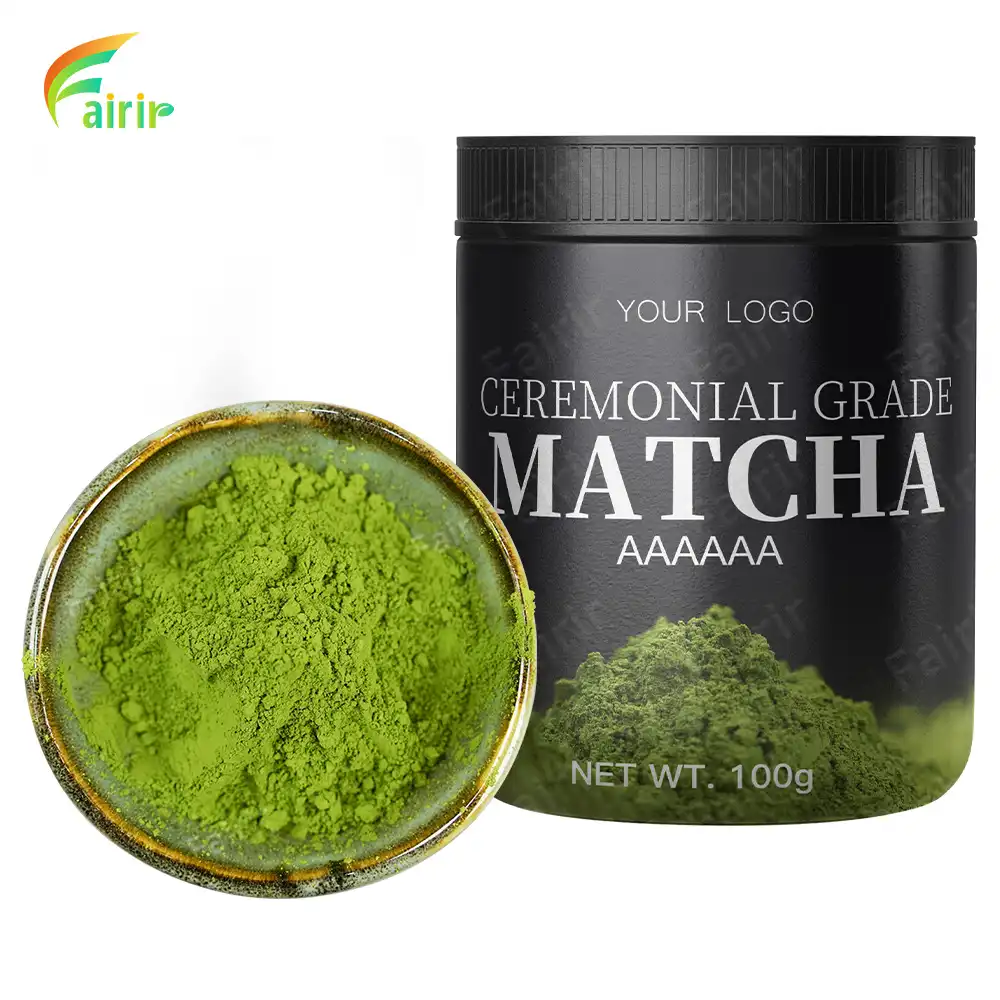
Understanding Matcha Powder and Its Energizing Properties
What Makes Matcha Powder Unique?
While green tea powder is made in the same way, Matcha Powder is made in a very different way. In the twenty to thirty days before harvest, hormones cause tea plants to make too much chlorophyll and amino acids, especially L-theanine. This stress is done on purpose to make a powder that is full of good chemicals that normal green tea can't match. We drink the whole leaf of Matcha Powder, not just a mix of leaves. So, our bodies can take in more nutrients and get a full picture of the phytochemicals that are there. Some nutrients and volatile fragrance compounds that would break down in industrial processes don't go bad when granite stone is milled at low temperatures. This way of careful production makes sure that each batch has the same color, taste, and ability to do its job. This is important if you're making energy drinks for business that need to be consistent from batch to batch.
Nutritional Profile and Caffeine Content
About 70 milligrams of caffeine are found in a serving of premium Matcha Powder. This is about the same amount of caffeine as coffee (95 mg) or regular green tea (30 mg). But it has a very different energizing effect because it has L-theanine in it, an amino acid that changes how caffeine is absorbed and makes you alert and calm instead of jittery from too much stimulation. This kind of relationship is often called "calm energy" because it gives you energy without the stress that comes with coffee or other energy drinks.
Matcha Powder has a lot of vitamins as well as energy. When the batch is good, the catechin content can reach 5% or more. The catechin that has been studied the most is epigallocatechin gallate (EGCG). It helps keep cells healthy and the metabolism going. It can be used for more than just getting the body going. The amount of chlorophyll and the healthiness of the antioxidants are shown by the color green.
Health Benefits for Energy and Focus Enhancement
The L-theanine and caffeine in Matcha Powder have been shown in many clinical tests to have a unique effect on the brain. Alpha brain wave activity goes up when you take L-theanine. This is linked to feeling calm and alert while focusing better. People who use stimulants like coffee have better brain power, faster reaction times, and attention spans that last for hours.
When it comes to making energy drinks with clean labels, organic Matcha Powders are better. Products that have been checked by the USDA or JAS standards claim not to have any synthetic pesticides or herbicides in them. This makes people less worried about drug leftovers, which is good news. People care a lot about how pure and clear the ingredients are in the food, drink, and nutrition businesses, where this acceptance makes your product stand out in the market.
Comparing Matcha Powder to Traditional Energy Drink Ingredients
Composition of Conventional Energy Drinks
There is a lot of chemical-based caffeine in standard energy drinks, which isn't found in real plants. There is a lot of sugar in these mixes—up to 54 grams per can—and fake ingredients like taurine, colors, and chemicals. Each dose has between 80 and 300 milligrams of caffeine. While this mix gives you energy quickly, it also hurts your metabolism by increasing blood sugar and insulin resistance over time. It also causes the well-known "energy crash" when the high wears off.
These health issues are known to a lot more people now than they were before. Research into the market shows that 67% of people who drink energy drinks are looking for green alternatives. Several countries' governments have also started to pay close attention to how much artificial caffeine is in drinks and need warning signs. Because people follow these rules and habits, it's easy to change recipes quickly to include plant-based foods like Matcha Powder.
Functional Differences: Matcha vs. Coffee and Synthetic Stimulants
This energy lasts for four to six hours. Coffee, on the other hand, gives you a quick boost but then makes you feel tired after two hours. L-theanine can change how caffeine is broken down, which is why it lasts longer. It slows down absorption and stops the quick changes in blood levels that make you feel jittery and tired. This amino acid helps keep the energy slope fixed, but coffee doesn't have it, which many users find annoying.
When you compare Matcha Powder to energy drinks with added caffeine, it has more nutrients that are good for you and fewer that just wake you up. It's good for your heart, gets rid of toxins in your body, and helps your brain make neurotransmitters because it has high levels of amino acids. These many benefits are in line with the move toward functional drinks, where people expect the ingredients to do more for their health than just give them energy.
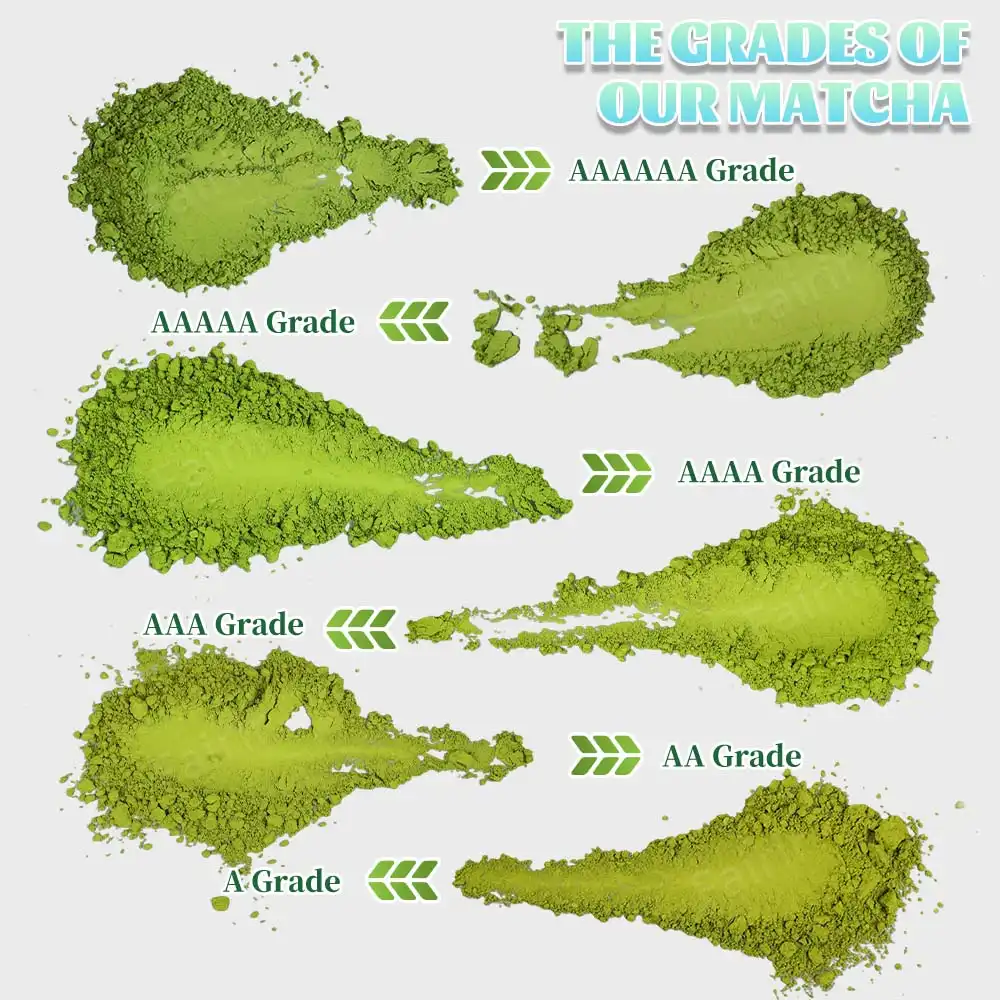
Ceremonial vs. Culinary Grade: Selecting Appropriate Matcha for Beverage Formulation
The grade you choose has a big impact on both how well you prepare and how much it costs. If you want to make a lot of drinks, ceremonial-grade Matcha Powder, which is made from the tiniest leaves and costs a lot, might not be the best deal. It also has the nicest taste and brightest color. Because it's not too sweet and not too sour, it works well in ready-to-drink drinks where Matcha Powder is the main flavor.
The leaves for culinary-grade matcha powder are a little more developed, so it has a better flavor and more bioactivity for a lower price. This makes it great for making blended energy drinks. It's best to pair the stronger vegetable notes with citrus, ginger, mint, or tropical fruit bases to tone down any sharpness and keep the caffeine and catechin levels level. Product makers should taste and smell different grades to find the best balance of organoleptic traits, bioactive density, and cost for the people they want to sell their products to.
Procurement Considerations for Matcha Powder in Energy Drink Production
Selecting Reliable Suppliers and Quality Indicators
When looking for Matcha Powder for business production, companies must choose suppliers who can regularly show that they can control quality and follow the law. A good company will give you a full certificate of analysis (COA) for each batch that shows how much caffeine, catechins, moisture (below 4%), particle size distribution (1,000 to 2,000 mesh), and microbe tests were done. These rules make sure that the material is safe for food and does what it's supposed to do.
Another important thing to think about when getting something is organic support. By getting a USDA, EU, or JAS approval, you can be sure that no synthetic fertilizers or pesticides were used on the crops. This meets the clean-label requirements that more and more health-conscious beverage brands and nutrition companies want. Suppliers who keep these documents show that they care about quality and keep track of everything in the supply chain.
Bulk Purchasing Strategies and Cost Optimization
When you make energy drinks, buying in bulk changes the unit economy in a big way. Most suppliers use tiered pricing, which means that orders over 100 kilograms save a lot of money and can cut the cost per kilogram by 20 to 30 percent. Setting up long-term supply deals keeps prices even more stable and makes sure that everyone gets their fair share during times of high demand, when spot market prices can change a lot.
Check out the total cost of landing, which includes shipping, customs fees, and the space needed to store the goods. Some companies offer extra services that can make production go more easily. For example, they can mill the particles to your specific size, mix them with herbs that go well with the product, or offer private labeling. You might have to pay more for these services up front, but they save you money in the long run because you don't have to handle and check the quality of the goods yourself as much.
Quality Assurance Testing and Storage Protocols
Producers should still check the quality of the goods as soon as they get them, even if the sellers give them a COA. As part of basic testing, you can check to see if the food is bright green, see how big the particles are with a sieve, and find out how much moisture is in the food using a thermostat, water bath, or an automatic moisture tester. Catechin profiles are confirmed by more in-depth testing with HPLC tools. This makes sure that the material lives up to what the seller says it can do.
How you store Matcha Powder directly impacts how long it lasts and how well it works every time. Matcha Powder needs to be kept away from light, heat, air, and water so that it doesn't oxidize and lose its flavor. Things will stay fresh for 12 to 18 months if you keep them in sealed, dark cases in a temperature-controlled (below 20°C) space. It is possible to use vacuum-sealed packaging or nitrogen flushing to make this time longer. This is very important for places that need to keep ingredients on hand during production processes.
Formulating and Marketing Energy Drinks with Matcha Powder
Dosage Recommendations for Optimal Functionality
Each dose of an energy drink that works has about 1.5 to 3 grams of Matcha Powder in it. This gives you 50 to 100 mg of caffeine and large amounts of L-theanine and catechins, which are good for you. Lower doses (1–1.5 grams) work well for drinks that are meant to give you energy slowly or that are good for you. Higher doses (2.5–3 grams) work well with energy drinks that are high in caffeine. People have to decide how well the drinks work and how good they taste before they can make them. This is because how strong the tastes are and how bitter they may seem depend on how much Matcha Powder is in the drink.
The size of the particles in a drink changes how well they mix and how they feel in the mouth. For ready-to-drink forms, ultra-fine milling (2,000 mesh or more) is important because it makes the skin smooth and the solution more stable. For mixed drinks that are drunk right away, grades that are a little harder might be enough. Before the mix goes on sale, it is tested at different pH levels, temperatures, and holding times to make sure it is safe.
Flavor Pairing and Recipe Innovation
Matcha Powder has a natural, slightly sweet taste that goes well with many other flavors. This lets you be creative to stand out in the crowded beverage market. Lemon, yuzu, and lime all work together to make Matcha Powder taste greener and add more vitamin C to it. Fruits from the tropics, like passion fruit, pineapple, and mango, hide any sharpness and keep the label clean. Mixed with ginger and mint, make a tasty and healthy drink that is good for your energy and gut.
When adaptogens are mixed with Matcha Powder, they create brand-new thoughts. Ashwagandha, rhodiola, and lion's mane mushrooms can be mixed to make mixtures that lower stress, make brain function, and boost long-term performance. People who buy nutraceuticals and care about their health strongly agree with these claims. These combinations put the goods in the market for high-end healthy drinks, where they can get more money and charge more.
Regulatory Compliance and Labeling Requirements
FDA rules say that energy drinks with Matcha Powder must have proper information on their labels about how much caffeine they have. There should be scientific proof behind products that say they can help with energy, focus, or antioxidant activity. You need real USDA Organic certification papers that can be traced back to the places where the ingredients came from to say that something is organically certified.
International markets have their own set of rules. When sold in the European Union, energy drinks must have certain warning signs and can only have 150 mg of caffeine per dose. There are similar rules in Canada, where signs must be written in two languages and caffeine amounts are limited. If a company wants to sell its goods in more than one place, it needs to come up with recipes and ways to pack them that can meet all the rules and still make money in each place.
Evaluating Market Potential and Future Trends in Matcha Energy Drinks
Current Market Demand and Growth Forecasts
The market for natural energy drinks has grown by more than 12% every year for the past five years, and this growth is expected to keep going until 2030. Goods made with Matcha Powder generally cost 40–60% more than regular energy drinks in this area. This is because people think they are healthy and have better ingredients. Grocers and importers come to this high-end spot to find one-of-a-kind items with higher profit margins that meet customer demand for useful, clean-label options.
Looking at the customer base, it's clear that millennials and Gen Z are most likely to accept. These groups care more about health effects, substance openness, and sustainability than they do about simple excitement. The market is a good place for new Matcha Powder energy drinks because these groups of people are willing to pay more for goods that are in line with their values. Businesses that sell to these groups, whether it's in stores, restaurants, or health fairs at work, are always looking for new ways to make Matcha Powder that meet their needs.
Innovation Opportunities and Customization Solutions
You can get certain effects when you mix Matcha Powder with plants that go well with it. Adding electrolytes to Matcha Powder makes it more appealing to the sports nutrition and water markets. Adding B-vitamin complexes to Matcha Powder makes it more likely that it will help the metabolism. When you add probiotics or prebiotic grains to regular energy drinks, they become all-around exercise drinks that help with many health issues at once.
Business-to-business customers who are making their own recipes or private-label goods will find the customization choices very useful. Brands can try out new ideas in the market without spending a lot of money thanks to co-manufacturing services from providers, small-batch production, and custom powder sizes. This flexibility is great for new brands, local wholesalers, and R&D centers that want to try out new uses before committing to full-scale production.
Strategic Supplier Partnerships and Supply Chain Management
It's safer to buy farm goods when you know skilled people who make Matcha Powder and build ties with them. Companies that have GMP-approved plants with many extraction lines and tanks that hold 500 to 3000 liters of oil show that they can keep up with rising customer demand without lowering quality. These skills become very important as brands try to reach more people and need to make sure they have enough room when things get busy.
Stable prices aren't the only strategic benefit of having long-term ties with providers. People who work together can make their own standards, get first access to goods when they run out, and get professional help with recipe issues. Providers with HPLC, UV spectrophotometry, and spinning evaporators can quickly test and confirm quality. This speeds up product development and shortens the time it takes for new recipes to hit the market.
Conclusion
That being said, Matcha Powder is a great substitute for artificial chemicals in energy drinks because it provides long-lasting energy, improved brain function, and powerful antioxidants in a clean-label format that customers adore. Balanced caffeine release, L-theanine synergy, and a full phytochemical makeup are some of the benefits. They meet the need for efficiency and the market trend toward natural, health-promoting drinks. It's important to pick the right grade, make sure the seller is qualified, make the recipe better, and follow all the rules for marketing to work. As people's tastes shift toward clear, useful ingredients, Matcha Powder-based energy drinks are entering a growing market area. To compete, they need to be well-formulated and have reliable sourcing partnerships.
FAQ
I want to make energy drinks with Matcha Powder. How much caffeine should they have?
50 to 100 mg of caffeine can be found in 1.5 to 3 grams of good Matcha Powder. These things give you more energy without making you too alert. These drinks are between strong energy drinks and light functional drinks. The right amount will depend on your market position and the people you want to reach.
How does the price of making Matcha Powder compare to the price of making caffeine?
Premium Matcha Powder generally costs more per kilogram than artificial caffeine, but it has more benefits than artificial caffeine. It has natural color, caffeine, and a business advantage. People are willing to pay more for natural products, so the total value often makes up for the higher cost of the ingredients by making more money and positioning the business better.
How should the Matcha Powder be kept so that it stays good while it's being made?
Keep sealed boxes in dark, cool (below 20°C), and dry places to keep the taste true, the colors bright, and the antioxidant activity strong. It takes longer for functional chemicals to break down in air, light, heat, or water. If you store it right, it will last for 12 to 18 months, and each batch will work the same way throughout the production process.
Partner with Fairir for Premium Matcha Powder Supply
In our GMP-certified 10,000-square-meter plant, Shaanxi Fairir Biotech Co., Ltd. makes pharmaceutical-grade Matcha Powder that can help you improve your energy drink. There are 14 stainless steel tanks, three fully automatic production lines that are 98% efficient, and many analysis tools, like HPLC and UV spectrophotometers, in our high-tech extraction infrastructure. These tools make sure that every batch meets your exact needs. We mostly work with drug companies, nutrition companies, food and drink makers, and wholesalers who need quality products at low prices and fast help from experts. We can help you with everything, from setting up the meeting to delivering the Matcha Powder in bulk, whether you need it for mass production, a special recipe, or private marking. Contact our buyers at sales@fairirbiotech.com to talk about your Matcha Powder requirements and learn why top companies choose Fairir as their first choice for Matcha Powder in new energy drink recipes.
References
1. Kochman, J., Jakubczyk, K., Antoniewicz, J., Mruk, H., & Janda, K. (2021). Health Benefits and Chemical Composition of Matcha Green Tea: A Review. Molecules, 26(1), 85.
2. Dietz, C., & Dekker, M. (2017). Effect of Green Tea Phytochemicals on Mood and Cognition. Current Pharmaceutical Design, 23(19), 2876-2905.
3. Rothenberg, D. O., & Zhang, L. (2019). Mechanisms Underlying the Anti-Depressive Effects of Regular Tea Consumption. Nutrients, 11(6), 1361.
4. Everett, J. M., & Gunathilake, K. D. P. P. (2020). A Review on the Phytochemical Analysis and Functional Properties of Matcha Tea. Journal of Food Processing and Preservation, 44(8), e14551.
5. Unno, K., Nakamura, Y., & Yamamoto, H. (2018). Stress-Reducing Function of Matcha Green Tea in Animal Experiments and Clinical Trials. Nutrients, 10(10), 1468.
6. Grand View Research. (2022). Energy Drinks Market Size, Share & Trends Analysis Report by Product, by Distribution Channel, by Region, and Segment Forecasts, 2023-2030. Market Research Report, GVR-1-68038-975-3.