_1751965378790.webp)

Where Can You Use Ube Powder in Commercial Food Applications?
Ube Powder, which is made from the unique purple yam that grows in Southeast Asia, has become a key ingredient in industrial food production. This bright, nutrient-dense powder has a strong natural color, a mildly sweet taste, and health benefits that meet the needs of clean labels. More and more, commercial food makers, ingredient sellers, and R&D teams are using this plant extract to make their product lines stand out and meet customer standards for authenticity and good looks. If you know how to use purple yam powder carefully, you can gain competitive benefits in formulation flexibility, cost management, and market positioning. This is true for both large-scale bakeries and beverage formulation labs.
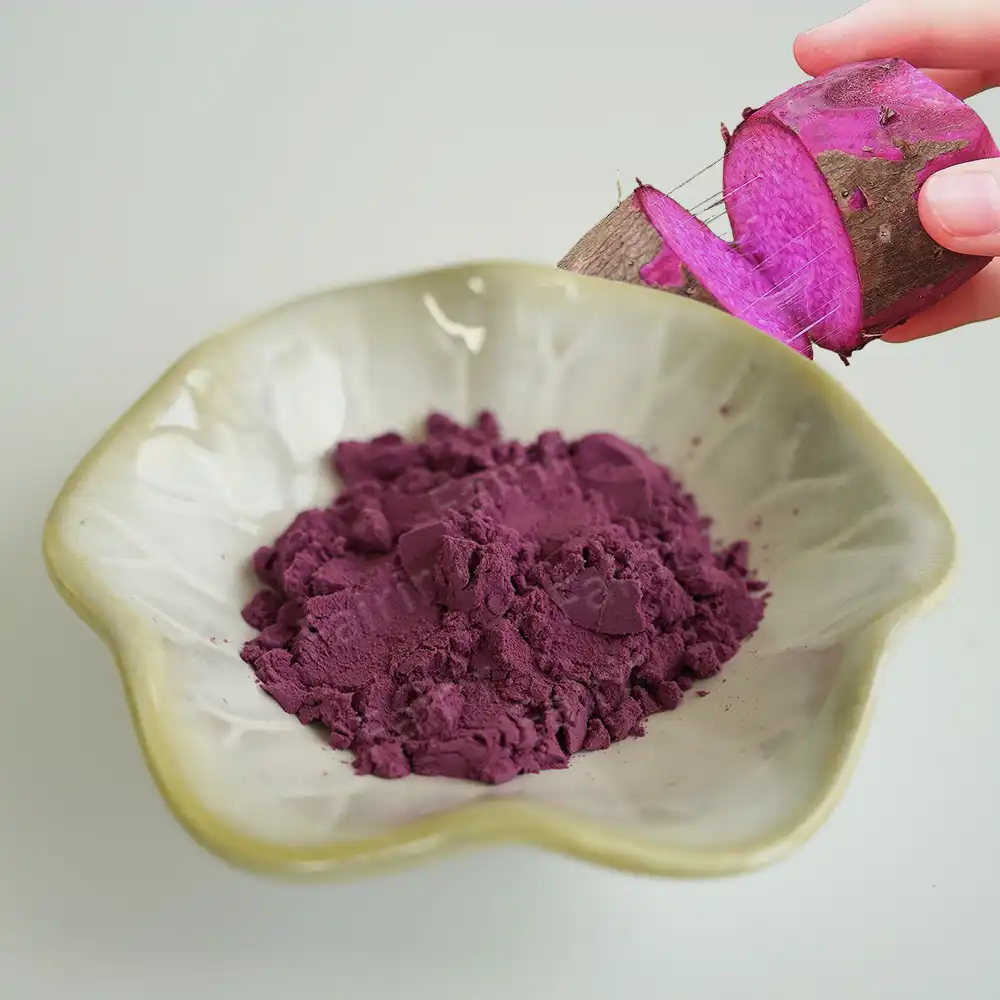
Understanding Ube Powder: Composition, Production, and Benefits
Ube Powder is an advanced botanical extract that is made through controlled processing that keeps the bioactive chemicals and gives the powder a consistency that is good enough for commercial use. Unlike fresh potatoes or frozen pulp, the powder form goes through a set of steps for extraction and drying that keep the phytochemicals stable and concentrate their useful qualities.
Manufacturing Process and Quality Standards
Using modern spray-drying and vacuum belt drying methods, purple yams are turned into a fine powder while keeping the anthocyanins that give it its distinctive violet color. Facilities that are GMP-certified and have constant countercurrent extraction methods make sure that the quality of each batch is the same, which is very important for large-scale production. Verification using high-performance liquid chromatography (HPLC) confirms the profiles of active compounds, and verification using UV spectrophotometry confirms measures of color intensity that have a direct effect on how the finished product looks.
Nutritional Profile and Functional Properties
The ingredients include fiber, antioxidants, and vitamins that are found naturally, all of which support the clean-label stance. Anthocyanin levels in food vary from 50 mg to 200 mg per 100g, based on the type of plant and how it is processed. This substance has strong antioxidant properties that are valuable in the development of functional foods. The powder dissolves easily in water and doesn't change color when heated. This means that it can be pasteurized and baked, which normally breaks down fake colorants. Under controlled humidity conditions, storage stability lasts for 18 to 24 months, which means that buying teams that manage bulk goods don't have to worry about inventory turnover as much.
Advantages Over Alternative Forms
The dried powder version is cheaper to ship than frozen puree or liquid extracts because it doesn't need to be kept cold. It's also easier to organize in the warehouse. Standardized moisture level below 5% stops microbial growth without using preservatives, which is in line with standards for natural products. When you use exact weight amounts instead of guessing the number needed for liquid ingredients, you can get more accurate dosing. This also improves production consistency across runs.
Commercial Food Applications of Ube Powder
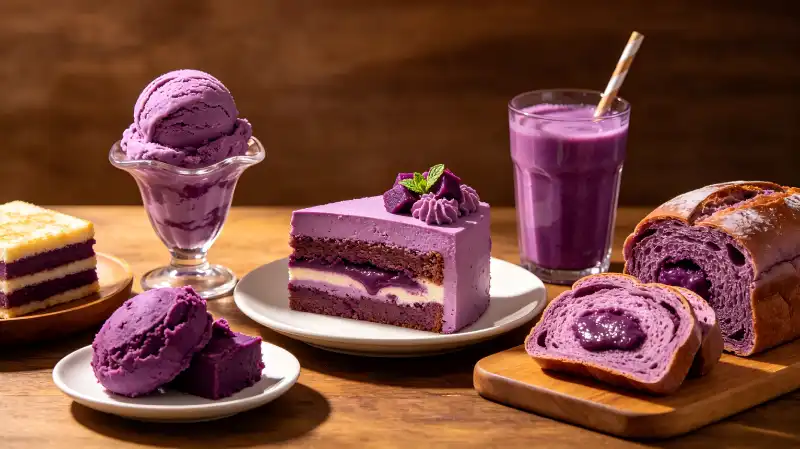
Ube Powder can be used in a lot of different types of food and can help with a lot of different recipe problems while still giving food its own unique taste. Industrial food experts like that the powder can be used with both wet and dry processing methods, which makes it easy to add to current production processes.
Bakery and Confectionery Products
Commercial bakers use the powder to add a natural purple color to their cakes, cookies, muffins, and specialty breads instead of adding fake colors. Most of the time, usage rates are between 2 and 5 percent by weight in dough systems. For premium goods that need strong color saturation, concentrations can reach 8 percent. The mildly sweet taste goes well with vanilla, coconut, and chocolate flavors that are often used in sweets. Manufacturers of ube-flavored pastry ingredients mix the powder with sugar, modified starch, and flavor boosters to make goods that can be stored for a long time and sold to bakers and food service outlets.
Frozen Desserts and Dairy Applications
Ice cream makers use the extract to make purple yam tastes that are popular right now and sell for a lot of money in the specialty frozen treat market. The powder mixes evenly in dairy bases and doesn't clump, so the texture stays smooth even after freezing. Companies that make yogurt add it to fruit mixtures and swirls to make them taste more unusual, which appeals to people who like to try new things. For freezer uses, the usual amount is between 15 and 30 grams per liter of base mix, but this can be changed depending on how strong the taste and color should be.
Beverage Innovation
The beverage business uses purple yam powder in a lot of different ways, such as in ready-to-drink smoothies, bubble tea bases, and gourmet coffee. Because the powder dissolves easily in both hot and cold liquids, it can be spread out quickly, which cuts down on handling time in high-volume production settings. It is used as a natural colorant and a useful ingredient by companies that are making plant-based milk replacements. This makes the products healthier without changing the way they taste. The security of the extract helps powdered drink mixes for food service accounts keep their bright look through longer shelf life and reheating processes.
Snack Foods and Convenience Products
Purple yams are being used more and more as a unique ingredient in extruded snacks, energy bars, and quick dessert mixes. The powder can handle being extruded at high temperatures and adds natural color that stays true through shipping and packing. It is added to granola clusters and breakfast bars by companies that make ready-to-eat cereals to appeal to health-conscious consumers looking for new plant ingredients. In uses like instant soup and noodles, the extract adds color and nutrition without making the cooking process harder.
These different uses show why procurement professionals look for sellers who can keep quality high even when they're making a lot of things. Because the powder works well in a wide range of working conditions, it is very useful for companies that want to make more products while keeping their operations running smoothly.
Comparing Ube Powder Types and Choosing the Right Product for Your Business
To get around in the market for purple yam ingredients, you need to know about small differences that have big effects on how well formulations work and how well they follow regulations. Buying things depends on being able to spot quality indicators and match the skills of suppliers with the needs of production.
Product Specifications and Grading
Ube Powder for sale usually has mesh sizes between 80 and 120, which affects how it mixes and the shape of the finished product. For beverage uses that need quick solubility, superfine grades below 200 mesh work well. Coarser grades, on the other hand, work well in baked goods where particle size integration happens during mixing. Specifications for moisture content are very important—products with more than 6% moisture risk caking during storage and being less stable on the shelf. Analytical reports should show that the tests for heavy metals, microbial counts, and pesticide residues meet FDA guidelines for botanical ingredients that are brought into the country.
Organic Versus Conventional Options
Organic purple yam powder costs 30 to 50 percent more than regular purple yam powder, but it gives you access to natural and organic product categories that are growing quickly. For USDA Organic or similar certificates, tracking must be proven from planting to processing, which means that suppliers must go through a lot of checks and balances. Conventional choices are cheaper for uses where organic claims don't really set them apart in the market. When choosing between grades, procurement teams should compare how much customers are willing to pay for extras to how much it costs to get certified.
Evaluating Supplier Capabilities
Reliable providers show they can make things by showing proof of production numbers. Usually, their facilities process more than 50 tons of plant extracts every month. ISO 22000 or FSSC 22000 certifications show more advanced food safety management systems, while GMP certification shows the basic standards. Analytical tools, stocks that include HPLC, rotating evaporators, and UV spectrophotometers, show a commitment to quality control that is necessary to keep specifications consistent. A grade of more than 95% for extraction efficiency means that the technology is advanced, which means that the product is more effective and cheaper.
When a supplier has more than one production line, the risk of a supply interruption during equipment repair or capacity limits is lower. Technical support, such as help with preparation and application testing, adds strategic value above and beyond the price of an item. As a sign of a partnership attitude rather than transactional relationships, look at how quick communication is and how willing people are to change specs.
Procurement Strategies: Where and How to Buy Ube Powder for Commercial Use
To get a steady supply of Ube Powder, you need to use smart buying methods that balance making sure the quality is high with cutting costs. Instead of depending on complex transportation networks, big food companies usually work directly with companies that make botanical extracts.
Direct Manufacturer Relationships
When you work with GMP-certified extraction facilities, you can get benefits like unique specs, cheap bulk pricing, and priority placement when supply is limited. For standard grades, the minimum order quantity is usually 100 kg, and bulk savings start to apply at 500 kg or more. With direct buying, you don't have to pay markups to distributors that can be anywhere from 15% to 30%. This has a big effect on the costs of ingredients for high-volume uses. When a company has its own research and development team, it can help with preparation and make sample batches for testing in different applications. This speeds up the product development process.
Distributor and Trading Networks
Importers who focus on Asian botanical products keep stock for smaller buyers who can't meet the minimums set by the maker directly. These middlemen handle customs clearance, regulatory paperwork, and local operations, which makes it easier for food producers in the region to get what they need. Prices will be 10–20% higher than if you bought directly from the factory, but the lower administrative load and the ability to buy in any amount will make up for it. Check the certifications of the distributors and the conditions of the warehouse. FIFO inventory management and temperature-controlled storage help keep the quality of the products during the delivery rounds.
Strategic Procurement Considerations
Framework deals should be negotiated that set price, quality standards, and delivery times for the next 6 to 12 months. Include ways for design checks to happen, and keep samples from each production batch so that they can be tracked. Ask for certificates of analysis (COA) that show that the physical, chemical, and bacterial factors meet the agreed-upon standards. Use dual-sourcing methods when the volume supports having two suppliers. This will help keep the supply chain running smoothly, even if there are problems with production or delays in shipping.
Instead of just looking at FOB prices, you should look at the total landing costs, which include freight, taxes, and storage fees. Shipping costs are lowest for container loads, which are usually 8 to 12 metric tons. However, there needs to be enough storage space and a high enough turnover rate to support large agreements.
Ensuring Quality and Consistency in Ube Powder Applications
To make sure that the integrity of Ube Powder is maintained from purchasing them to production, suppliers must work together and follow systematic quality control practices. When color variations or contamination problems hurt finished foods made for sale, the companies that make them risk their image.
Storage and Handling Best Practices
To keep things from sticking and absorbing water, warehouse temperatures should stay below 25°C and relative humidity should stay below 60%. To keep the anthocyanin strength for a longer time, store the powder in sealed, food-grade containers that are flushed with nitrogen. Use FIFO rotation methods and date coding to keep your goods from going bad before the manufacturer's suggested shelf life. Cross-contamination from allergenic ingredients or strongly flavored plants that could ruin taste profiles can't happen in designated storage areas.
Quality Verification and Testing
Random sampling and simple quality checks, such as judging color, moisture content, and particle size distribution, should be part of incoming inspection processes to make sure the COA is accurate. Heavy metal content, microbial specs, and active chemical amounts are checked by a third-party lab every 5–10 batches. Set clear acceptance standards and processes for rejection when parameters are not within acceptable ranges. Write down all of the test results and keep a record of how ingredient lots are linked to end product batches.
Supplier Partnership and Technical Support
Leading plant extract makers have application experts who can help with things like finding the best dose, making suggestions for processing, and fixing problems with formulation. Ask for sample runs when moving from bench trials to mass production to make sure that the performance of the bigger manufacturing lots stays the same as it was in the pilot scale. If a supplier is willing to do workplace checks and share information about the production process, it shows that they are committed to quality and openness. Collaborative relationships make it possible to talk about changes in crops, changes in processing, or supply estimates that affect plans for purchases before they happen.
Regular performance reviews of suppliers that look at uniformity of quality, dependability of delivery, and technical response find relationship strengths and areas for improvement. Preferred supplier programs that offer price stability and capacity promises in return for volume commitments are good for both parties and help a business grow over the long run.
Conclusion
Commercial food companies that want natural color options, functional benefits, and ways to set their products apart in a crowded market can use Ube Powder as a key element. Procurement workers can make smart choices about where to buy things by knowing about composition traits, application versatility, and quality evaluation criteria. For successful product creation, it's important to form relationships with qualified makers who offer uniform standards, technical support, and reliable supply chains. As the need for real, clean-label ingredients among consumers grows, getting reliable access to fine purple yam extract gives food companies a chance to stay ahead of the competition and grow their product lines.
FAQ
1. Can ube powder be used directly in commercial baking without additional processing?
For industrial baking, Ube Powder can be added straight to dry ingredient mixes. It should be mixed with flour, sugar, and leavening agents in the usual way. Hydration happens automatically as the dough is being made, so there is no need for any extra steps. Use rates of 2 to 5 percent by weight of the flour give it color and a light taste. For higher amounts, the recipe may need to be changed to account for how well it absorbs water.
2. What shelf life should procurement teams expect for bulk purple yam powder?
Standard shelf life is between 18 and 24 months if kept correctly in sealed cases in a cool, dry place. Moisture levels below 5% and cool storing temperatures keep the anthocyanins' strength and stop microbes from growing. Packaging that is filled with nitrogen keeps things stable for longer by reducing oxidative breakdown. When making purchases, you should keep an eye on 12-month inventory cycles to make sure that products are used up before their quality starts to decline and affect their performance.
3. How does organic purple yam powder differ from conventional grades in commercial applications?
When it comes to color, taste, and handling, organic-certified powder works the same way as other powders. The difference is in how the plants are grown, what certifications are needed, and how much they cost. Organic options are good for product lines that are aimed at natural and organic consumers, since approval lets them stand out as expensive options. When consumers don't see much value in organic claims, like when they're used in food service, where certifications aren't easy to see, conventional grades are cheaper.
Partner with Fairir for Premium Ube Powder Supply
We at Shaanxi Fairir Biotech Co., Ltd. know how important constant, high-quality botanical extracts are for the success of your industrial food production. Our 10,000-square-meter plant is GMP-certified and has cutting-edge equipment for extracting and drying purple yams. It delivers Ube Powder that has been tested and meets strict quality standards. With 14 stainless steel extraction tanks and 2 fully automatic production lines that are 98% efficient, we can meet the needs of large-scale manufacturing with a stable stock supply.
Our scientific tools, such as HPLC, UV spectrophotometry, and thorough testing methods, make sure that every batch meets all of your exact needs. Whether you need private labeling, unique formulations, or technical help to make the best use of a product, our expert team can help you quickly and at a reasonable cost. We have been making Ube Powder for a long time and have built our name on consistent quality and relationship dependability. Contact our team at sales@fairirbiotech.com right away to talk about your purple yam powder needs and find out how Fairir's knowledge can help you come up with new products and feel more confident about your purchases.
References
1. Rodriguez-Amaya, D.B. (2019). "Natural Food Pigments and Colorants." Current Opinion in Food Science, 7, 20-26.
2. Truong, V.D., McFeeters, R.F., Thompson, R.T., Dean, L.L., & Shofran, B. (2007). "Phenolic Acid Content and Composition in Leaves and Roots of Common Commercial Sweetpotato Cultivars in the United States." Journal of Food Science, 72(6), C343-C349.
3. Lee, C.H. (2018). "Functional Properties and Applications of Purple Sweet Potato in the Food Industry." Food Science and Technology Research, 24(3), 385-394.
4. Xu, J., Su, X., Lim, S., Griffin, J., Carey, E., & Katz, B. (2015). "Characterisation and Stability of Anthocyanins in Purple-Fleshed Sweet Potato." Food Chemistry, 186, 90-96.
5. Padda, M.S. & Picha, D.H. (2008). "Quantification of Phenolic Acids and Antioxidant Activity in Sweetpotato Genotypes." Scientia Horticulturae, 119(1), 17-20.
6. Bovell-Benjamin, A.C. (2007). "Sweet Potato: A Review of its Past, Present, and Future Role in Human Nutrition." Advances in Food and Nutrition Research, 52, 1-59.