_1751965378790.webp)

Why Choose Raw Wheat Grass Juice Powder for Supplements?
Raw Wheat Grass Juice Powder is the best option for supplement makers because it has the highest quantity of accessible nutrients in a stable, flexible form. Juice powder gets all the nutrients from young Triticum aestivum by cold-pressing it and then drying it at low temperatures. This is different from fresh juice, which needs to be drunk right away, or regular grass powders, which contain fiber that the body can't handle. This way of preparing keeps the chlorophyll, amino acids, and antioxidants while getting rid of the problems that come with having to store food in a fridge and having it go bad quickly. The result is a concentrated superfood ingredient that works well in pills, tablets, drink mixes, and even cosmetics. It meets the needs of the pharmaceutical, vitamin, and functional food industries.
Understanding Raw Wheat Grass Juice Powder and Its Core Benefits
The element comes from the young cotyledons of common wheat plants that were picked when they were jointing, which is before the grains start to form. During this stage of growth, the grass blades are at their healthiest. They have the highest amounts of vitamins A, C, E, and K, as well as all the necessary elements and amino acids. People who study nutrition call this superfood "green blood" because it has a lot of chlorophyll, which is very similar to human hemoglobin at the chemical level.
Health-Boosting Properties That Matter to Consumers
Clinical findings show that this ingredient helps with a lot of different aspects of health. Antioxidant chemicals fight oxidative stress, which may slow down the aging process of cells that affect the skin's look and flexibility. The alkalizing minerals help keep the pH levels of different parts of the body in balance, which many people think leads to more energy and better cellular function. Natural enzymes may help the body absorb nutrients and keep the digestive tract comfortable, which is good for digestive health. Because it has so many uses, the powder is good for formulas that aim to detoxify, lose weight, and boost overall health.
Comparative Advantages Over Alternative Green Supplements
Compared to barley grass, the nutrient density shows similar levels of chlorophyll but higher amounts of some B vitamins and amino acids. However, wheat grass has a softer, less aquatic flavor than spirulina. This means that it mixes better with popular drinks without overpowering the flavors. The powder form is also more stable when stored than fresh options; when properly packed, it can stay effective for 18 to 24 months, while fresh juice goes bad in just a few hours. This stability immediately Raw Wheat Grass Juice Powder means that producers will waste less and make more money.
How Raw Wheat Grass Juice Powder is Produced and Quality Factors to Consider
Agricultural methods that determine the integrity of the end product are the first step in production. To get organic approval, crops must be grown without using synthetic pesticides, herbicides like glyphosate, or genetically modified seeds, and the growers must carefully follow the rules set by the USDA NOP or the EU. When you harvest is very important. Cutting the plant at 7–10 days of growth gets the most nutrients while keeping it soft and full of juice.
From Field to Finished Powder: The Manufacturing Journey
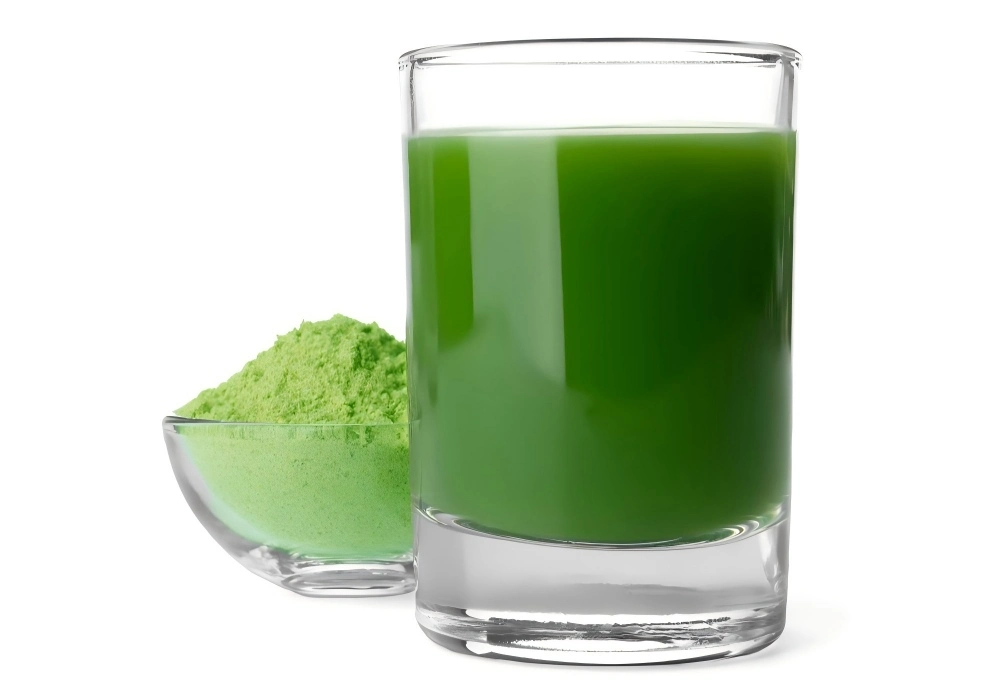
After the harvest, makers use cold-press juicing technology to manually extract liquid without heating. This keeps vitamins and enzymes that are sensitive to temperature. This makes a bright green drink extract that has the water-soluble nutrients and no longer has the indigestible cellulose fibers. In the next step, drying, vacuum belt dryers or spray-drying rooms that work below 40°C are usually used to quickly remove the water while keeping the nutrients intact. Modern labs with double-effect concentration systems and constant countercurrent extraction tools can handle large amounts of material while keeping consistency between runs.
Critical Quality Indicators for B2B Procurement
Before making a commitment to a provider, serious buyers should check a number of specs. GMP approval makes sure that the factory meets the strict cleanliness standards for pharmaceuticals, which lowers the risk of pollution. It is very important to have the right lab equipment. Labs with HPLC, UV spectrophotometry, and rotary evaporators can test thoroughly for active chemicals, heavy metals, microbial contamination, and herbicide residues. Particle size, usually 200 mesh, affects how well recipes mix. Finer particles make end goods with smoother surfaces, but they may make it harder for them to flow during encapsulation processes. As more people expect ethical supply lines, it becomes more important to be clear about where the materials come from. Suppliers should be happy to give you certificates of analysis, information about where the plants were grown, and testing records. Certified organic goods usually cost 15–30% more than regular ones, but they can reach quickly growing markets where people are willing to pay more for ingredients with a verified clean label.
Making an Informed Procurement Decision: Market Options and Pricing Insights
When choosing between product forms and supplier partnerships, procurement workers have to think about a lot of things. Depending on the style of the final product and the tastes of the target market, each version has its own benefits.
Product Format Analysis for Different Applications
The powder form is the most flexible because it can be easily added to protein blends, green superfood mixes, and vitamins that are encapsulated. Bulk density usually falls between 0.4 and 0.6 g/mL, which impacts shipping costs and storage needs. When comparing source prices, buyers should figure out volumetric weight. Tablets are convenient for consumers, but they need binding agents and compression tools, which makes production more difficult. Fresh juice is still popular with juice bar owners and people who want to drink it right away, but it's hard to get it to other places because of the cold chain procedures that go along with it.
Wholesale Pricing Benchmarks and Negotiation Strategies
Prices for organic certified Raw Wheat Grass Juice Powder on the market right now run from $45-85 per kilogram when buying 100 to 500 kg, and prices go down as promises for larger amounts. In general, non-organic versions cost 20–35% less. Geographical buying affects prices. US suppliers often charge more for shorter lead times and easier import compliance, while Chinese and Indian suppliers offer reasonable prices but need to be carefully checked for quality consistency and regulatory compliance. To negotiate well, you need to use promises to buy in bulk against unit prices. Many makers offer tiered prices, which means that if you commit to buying 500 kg or more every three months, you can save 12 to 18% on each unit. Payment terms are also important. Net-30 or net-60 terms are better for managing cash flow than advance payment terms, though sellers may offer 2-5% savings for prepayment or letter of credit terms.
Evaluating Manufacturers and Distribution Partners
There are a few things that set top-tier sellers apart from others. When scaling, production capacity is important. Facilities with fully automatic production lines and multiple extraction tanks ranging from 500 to 3000 liters can handle more orders without affecting delivery times. Ratings of extraction efficiency above 95% show advanced processing skills that get the most out of raw materials, which helps prices compete in the long run. Respondent technical support is very helpful during recipe development because it helps buyers find the best ingredient amounts and fix problems with stability.
Best Practices for Using Raw Wheat Grass Juice Powder in Supplement Formulation
To make a good formulation, you need to find a balance between how well it works, how well it tastes, and how efficiently it can be made. Knowing the right way to use Raw Wheat Grass Juice Powder makes sure it gives the benefits you expect and meets legal requirements.
Dosage Recommendations and Safety Protocols
Based on clinical usage trends, daily serving amounts of 2 to 9 grams are likely to be useful for general health purposes. Conservative formulations aimed at general consumers usually start at 3 grams per dose to keep digestive adjustment times to a minimum. This is because the ingredient's high nutrient profile can cause mild digestive reactions in people who aren't used to it. Higher concentrations, up to 9 grams per day, may be used in detoxification products. However, makers should include graduated dosing directions that tell customers to start with smaller amounts and slowly increase them over 7 to 14 days. Most people don't need to worry about safety, but buyers should know that the element comes from wheat plants. Even though the grains are picked before they form gluten, very sensitive celiac patients may still have problems, which is why they need to be labeled as allergens. Good providers test for gluten and can show proof that amounts are below the 20 ppm mark, which is needed for many places to say that something is gluten-free.
Innovative Application Scenarios Across Product Categories
The ingredient can be used in a lot of different types of products, not just vitamin pills. It's added to ready-to-drink smoothies, wellness shots, and powdered drink mixes, and the natural green color lets customers know that the drinks are good for them. Skincare formulators use antioxidants in face masks that clean the skin. The fine powder particles make it easy for the powder to spread out evenly in clay bases or cream emulsions. When properly made, the powder stays chemically stable in both water and fat, but makers should test its stability over the whole time it is supposed to be stored. When ingredient providers help with technical preparation, business-to-business partnerships often work out well. Partners who give small-batch sampling for R&D let product developers try how well an ingredient works with other ingredients, how well it masks tastes, and how stable the color is under different processing conditions before committing to full production runs.
Future Trends and Opportunities in Raw Wheat Grass Juice Powder Procurement
As customer tastes change toward plant-based nutrition, Raw Wheat Grass Juice Powder and brands that focus on being honest, the market will continue to change. These trends open up new business possibilities for buying teams that are willing to think ahead.
Growing Demand Drivers in Organic and Plant-Based Segments
Consumer research shows that people are becoming more and more ready to pay more for organic certification. For example, recent surveys show that 67% of supplement buyers actively look for certified organic goods. This choice comes from worries about chemical exposure and protecting the Earth. More and more people are switching to plant-based diets. The market for plant-based supplements is expected to grow at a yearly rate of 8.9% until 2028. This will create a steady need for products like Raw Wheat Grass Juice Powder that fit with vegan and vegetarian lifestyles.
Technological Advancements Enhancing Product Quality
Processing innovations keep making it easier to keep nutrients in food and lower the cost of production. At the moment, freeze-drying is more expensive than regular spray drying, but it saves up to 15% more heat-sensitive chemicals and makes better reconstitution qualities, which some high-end brands use to set themselves apart. It is possible to separate certain bioactive chemicals for regulated extracts using supercritical CO2 extraction methods, but these specialized goods cost a lot more. Manufacturers who have high-tech analysis tools like HPLC and UV spectrophotometers can give thorough phytochemical profiles that back up marketing claims and set their products apart in a crowded market.

Supply Chain Transparency as Competitive Advantage
Traceability systems that keep track of farming methods, crop times, and processing conditions are having a bigger impact on buyers' choices. Blockchain-based tracking systems let brands give customers information about where their products come from that they can check. This builds trust, which leads to brand loyalty. Suppliers who put money into these openness systems become the first choice for brands that want to work with ethically aware customers who are willing to pay more for items that were made in an ethical way. Facilities that have both ISO certification and organic badges show that they are committed to quality management systems, which lowers the risk of buying for buyers who are in charge of more than one product line.
Conclusion
For supplement companies looking to meet customer demand for nutrient-dense, clean-label functional foods, Raw Wheat Grass Juice Powder offers a strategically valuable ingredient. When proper farming methods and advanced extraction technology are used in the production process, a shelf-stable concentrate is made that keeps the bioactive chemicals that people want for cleansing, energy support, and general health. For procurement to go well, sellers need to be judged on a number of factors, including their ability to produce goods, their quality control systems, their certifications, and their expert support. As the market moves toward organic certification and clear supply chains, working with well-known companies that run GMP-certified factories with a wide range of analysis tools can help you stay ahead of the competition. Because the ingredient can be used in pills, drinks, and even cosmetics, it gives product development teams the freedom to come up with new ideas for growing market areas where plant-based nutrition is becoming more popular.
FAQ
1. What is the recommended daily dosage for supplement formulations?
Depending on how the product is marketed, an effective serving size of Raw Wheat Grass Juice Powder is usually between 2 and 9 grams per day. Most mainstream health supplements are made with 3 grams of protein per dose to find a good mix between effectiveness and user comfort. Higher concentrations may be used in detox products, but makers should suggest a slow introduction starting with half-teaspoon servings and rising over a few days to give the digestive system time to get used to the nutrient-dense ingredient.
2. How does this ingredient compare to barley grass powder?
Both have a lot of chlorophyll and chemicals that make the body more alkaline, but wheat grass usually has more of some B vitamins and all the amino acids your body needs. Different foods have slightly different tastes. For example, wheat grass has a softer taste that mixes better with flavored drinks. Processing methods and particle size requirements have a bigger effect on the end product's properties than differences in plant source.
3. What quality certifications should buyers prioritize when selecting suppliers?
GMP approval proves that the product was made according to pharmaceutical-grade standards. This lowers the risk of contamination, which is very important for supplement use. Organic approval from the USDA NOP or a similar program proves that the crops were grown without using GMOs or synthetic poisons. ISO standards show that quality management is done in a planned way. Lab skills are also very important. Suppliers with HPLC, UV spectrophotometers, and full testing methods can give you thorough certificates of analysis that show the amounts of active compounds, microbial safety, and heavy metal screening.
Partner with Fairir for Premium Organic Wheat Grass Juice Powder
Shaanxi Fairir Biotech Co., Ltd. operates a 10,000-square-meter GMP-certified manufacturing facility specifically designed to meet the demanding requirements of pharmaceutical manufacturers, nutraceutical companies, and cosmetic brands seeking reliable organic Raw Wheat Grass Juice Powder suppliers. Our production infrastructure includes 14 stainless steel extraction tanks ranging from 500 to 3,000 liters, supported by continuous countercurrent extraction equipment and vacuum belt drying systems that preserve nutritional integrity while achieving extraction efficiency reaching 98%. Quality assurance remains non-negotiable—we maintain comprehensive analytical capabilities including HPLC, UV spectrophotometry, and rotary evaporators, enabling thorough testing of every production batch. Our technical team provides responsive formulation support, helping clients optimize ingredient integration, whether you're developing capsules, beverage mixes, or specialty applications. We welcome procurement professionals, distributors, and R&D teams to discuss your specific requirements. Contact our team at sales@fairirbiotech.com to explore customized supply solutions backed by consistent quality, competitive pricing, and the reliable service that long-term partnerships require. Our commitment extends beyond transactions—we aim to become your trusted partner in delivering the botanical extract solutions your innovation depends upon.
References
1. Kulkarni, S.D., et al. "Evaluation of Comparative Antioxidant Activity of Wheatgrass and Barley Grass." Journal of Pharmaceutical Sciences and Research, vol. 8, no. 9, 2016, pp. 1121-1124.
2. Parit, S.B. and Dawkar, V.V. "Nutritional Quality and Antioxidant Activity of Wheatgrass (Triticum aestivum) Unwrap by Proteome Profiling and DPPH and FRAP Assays." Journal of Food Science, vol. 82, no. 10, 2017, pp. 2355-2363.
3. Rajpurohit, L., et al. "Phytochemical Analysis and Antibacterial Activity of Wheat Grass (Triticum aestivum L.)." Journal of Pharmaceutical Science and Technology, vol. 2, no. 1, 2010, pp. 154-157.
4. Shakya, G., et al. "Hypoglycaemic Role of Wheatgrass and Its Effect on Carbohydrate Metabolic Enzymes in Type II Diabetic Rats." Pharmacognosy Communications, vol. 6, no. 3, 2016, pp. 131-137.
5. Durairaj, V., et al. "Phytochemical Screening and Analysis of Antioxidant Properties of Aqueous Extract of Wheatgrass." Asian Pacific Journal of Tropical Medicine, vol. 7, no. S1, 2014, pp. S398-S404.
6. Chauhan, M. "A Pilot Study on Wheat Grass Juice for Its Phytochemical, Nutritional and Therapeutic Potential on Chronic Diseases." International Journal of Chemical Studies, vol. 2, no. 4, 2014, pp. 27-34.